
Microservices Architecture: Problems and Solutions with Pattern and Principles
In this article, we are going to see potential Problems and available Solutions when we are following the Microservices architecture.
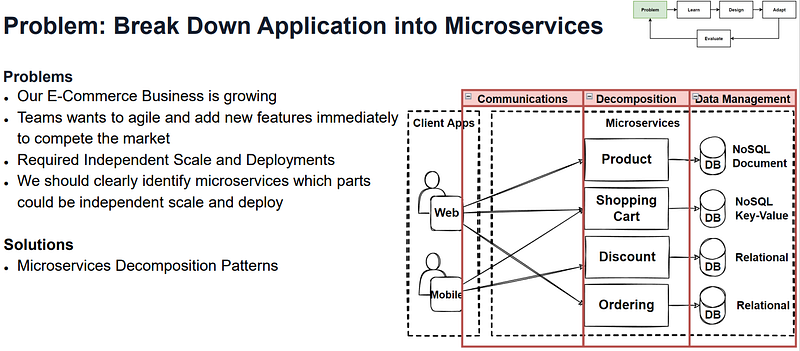
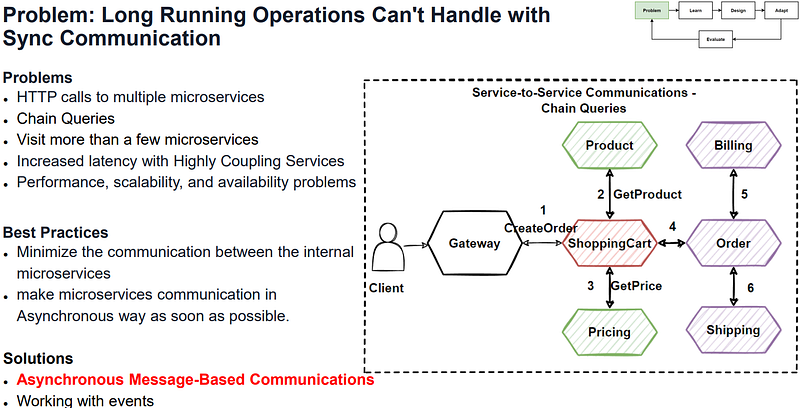
In previous article, we have learned “Software Architecture: Way of Learning for Microservices” with creating Way of Learning flow. So with this article, we will apply this flow into our potential problems that we face when implementing microservices architectures.

I have just published a new course — Design Microservices Architecture with Patterns & Principles.
Problems of Microservices Architecture
Designing a microservices architecture comes with several challenges that we can group these problems like;
- Complexity: Microservices architecture adds complexity to the system by breaking down monolithic applications into smaller, independent services.
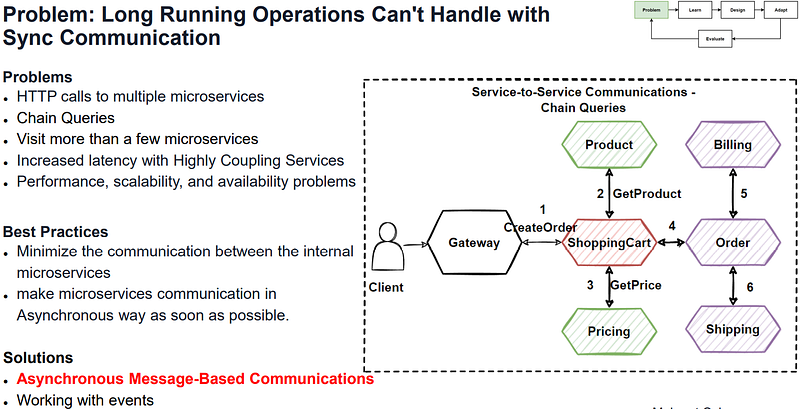
- Inter-service communication: Effective communication between services is crucial to the success of a microservices architecture.
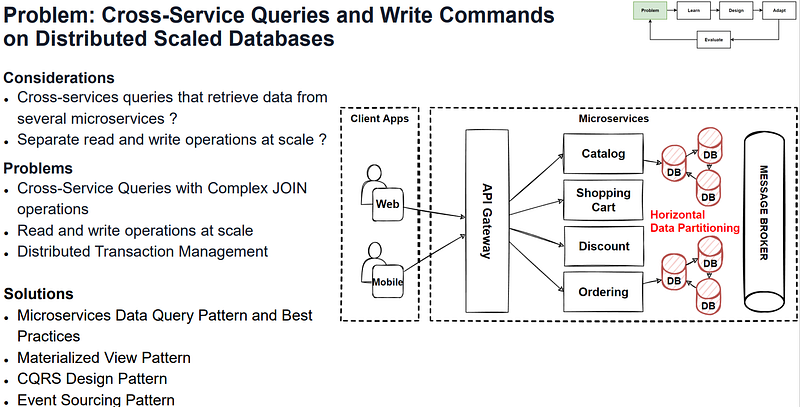
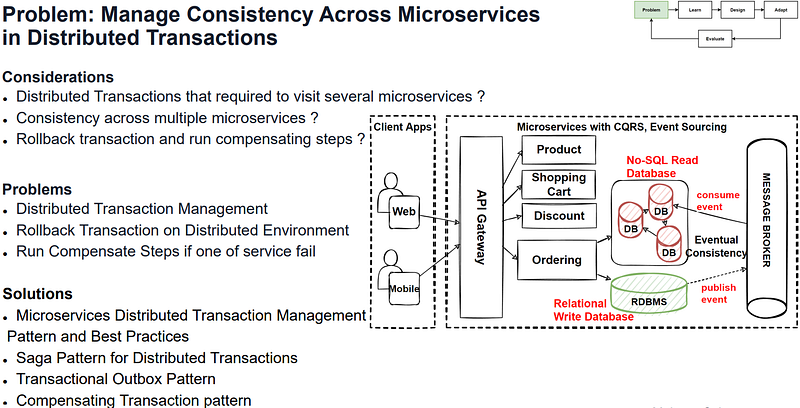
- Data consistency: Keeping data consistent across services can be challenging in a microservices architecture.
- Monitoring and testing: Monitoring and testing microservices can be more complex than in a monolithic architecture.
These challenges are not easy to solve, but they do require careful planning, design, and implementation to overcome. Effective use of tools and best practices can help mitigate these challenges and ensure the success of a microservices architecture.
Based on my own experience after working as a software architect for many years, I’ve created a learning flow of any architecture type. You can see the flow at image below;
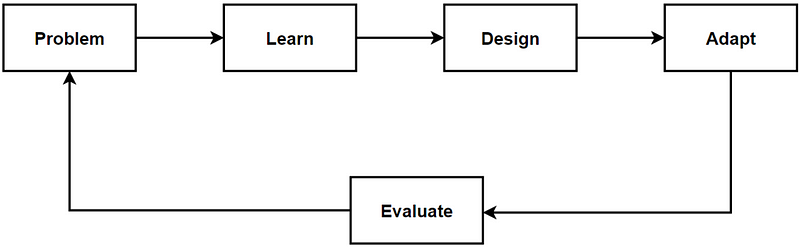
According to this flow, We will always start with a problem. That means before design any architecture, we should find business related, valid problem that everyone accept the problem should be fixed.
E-Commerce App Problems with Microservices Implementation
According to this flow, we can start with very common problem to create e-commerce architecture:
Problem : Sold products on the internet Learn : e-commerce domain, required specs, monolithic Design : microservices Adapt : tech stack, java or .net ecosystem Evaluate : pros-cons , what’s wrong this design
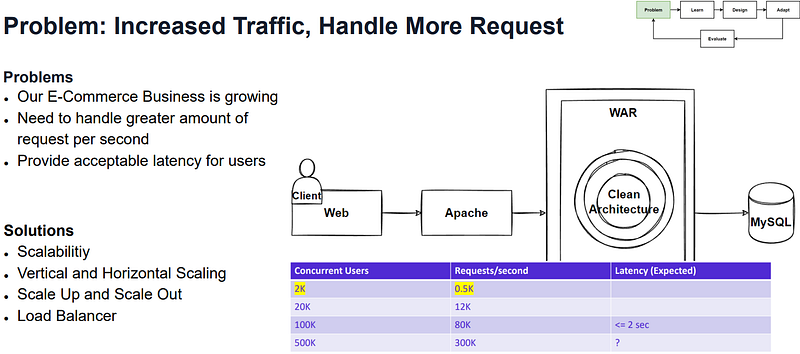
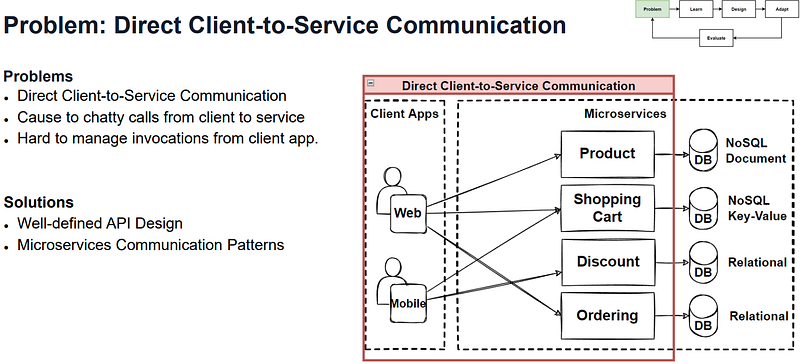
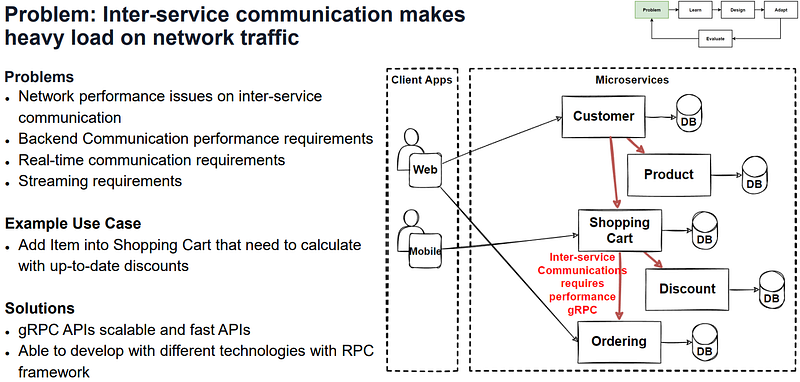
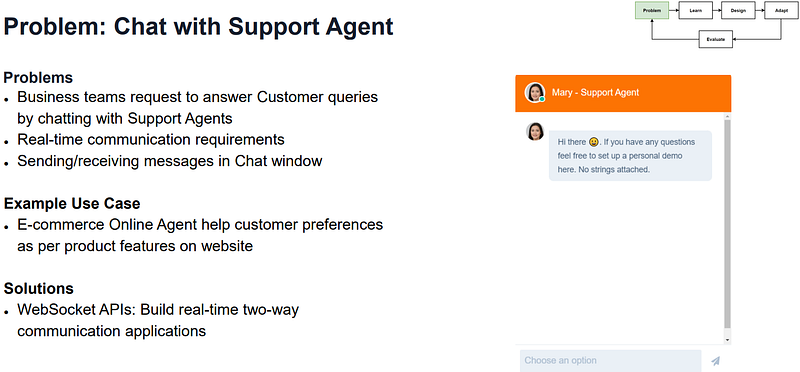
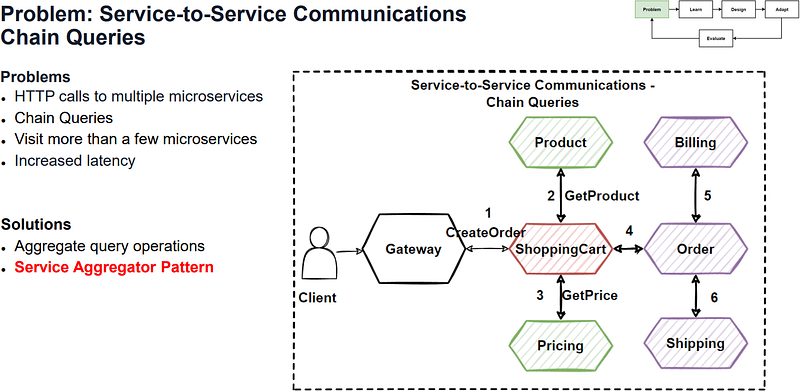
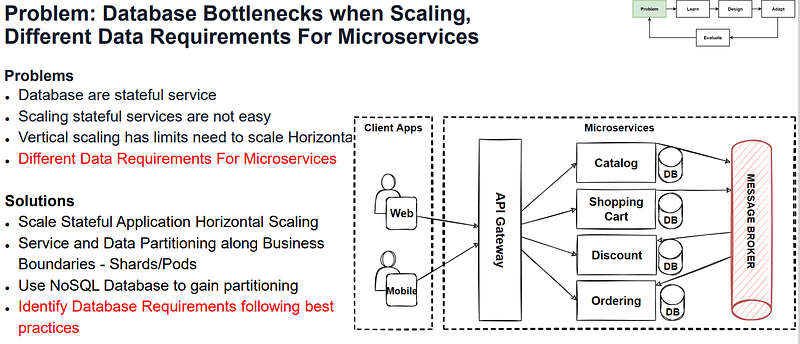
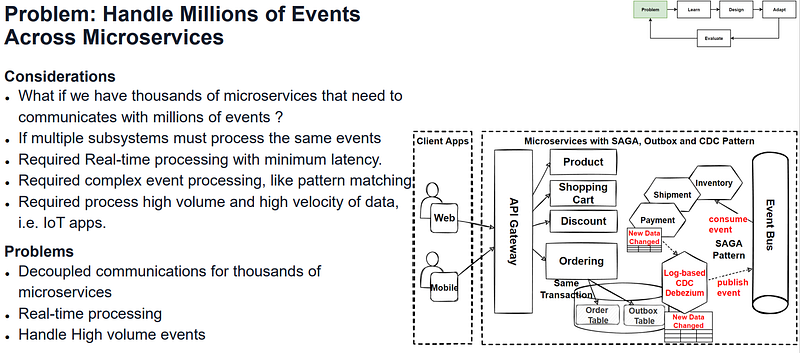
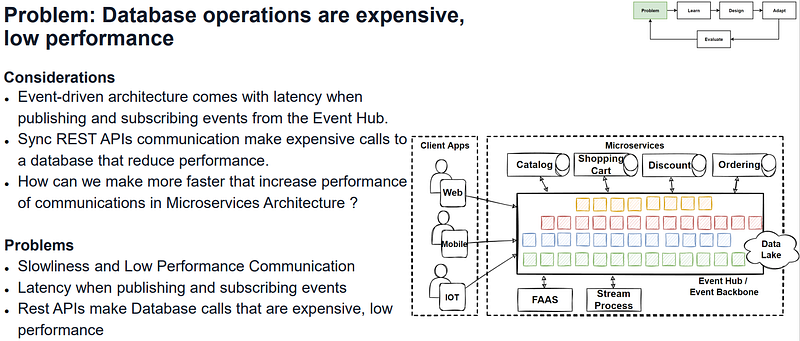
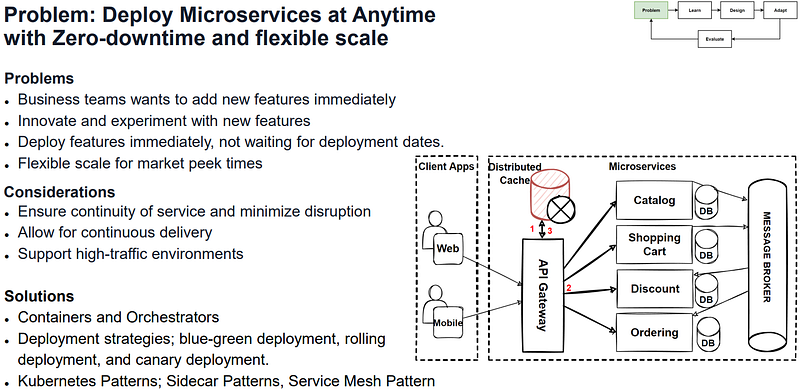
And this process will restart for every problem that we faced. So now, Lets discover the problems of e-commerce microservice application that we will solve into my Udemy course. You can see the problems and solutions as a slide format:
Conclusion
This process should never end with continuously learn and improve your hand-on experience into your job. Because, software architecture is a constantly evolving field, and it’s important to stay up-to-date on the latest developments and best practices. Continuously learn, improve, and experiment with new approaches and tools to become a skilled software architect.
What’s Next ?
- Macro-services to Nano-services: Evolution of Software Architecture
- Microservices Checklist — Cover All Aspects with exploring vertical topics of Microservices Architecture.
Step by Step Design Architectures w/ Course

I have just published a new course — Design Microservices Architecture with Patterns & Principles.
In this course, we’re going to learn how to Design Microservices Architecture with using Design Patterns, Principles and the Best Practices. We will start with designing Monolithic to Event-Driven Microservices step by step and together using the right architecture design patterns and techniques.


