avatarThe Pareto Investor

Free AI web copilot to create summaries, insights and extended knowledge, download it at here

1494

Abstract

er 11, 2007, that the broader market began to acknowledge the crisis, with the S&P 500 reaching its peak. By March 10, 2009, the S&P 500 had collapsed to just 676 points, a 57% plunge from its peak. This market turmoil translated into massive profits for Burry, who personally gained 100 million and secured over 700 million for his investors. Despite this success, Burry faced relentless criticism from the investment community and his own investors leading up to the crash, ultimately leading him to shut down his fund post-crisis.</p><figure id="9e53"><img src="https://cdn-images-1.readmedium.com/v2/resize:fit:800/1*72i_Ffxv5bVkSx3-yYm0Bw.png"><figcaption>The US job market is turning around. This usually coincides with the start of a recession.</figcaption></figure><h1 id="3080">Recently, parallels are being drawn between the 2008 crisis and current market conditions</h1><p id="7c41">Burry has been vocal about the risks of high inflation as a result of the Federal Reserve’s significant monetary stimulus. Initially, his views were against the mainstream, but as inflation has surged to 8.6%, his predictions are gaining attention. Burry suggests that the current economic and market downturn is only in its early stages, with a potential further 50% decline in the S&P 500.</p><p id="8985">Burry’s analysis points to a trend where the bottom of a current market crash is typically lower than the previous one by about 10 to 15%. He predicts that the S&P 500 could

Options

fall to around 1,862 points, representing a significant downturn from current levels. Despite recent market rallies, Burry views these as temporary, suggesting that larger declines are yet to come. He emphasizes the relatively low trading volumes during the downturn, indicating that significant selling is still on the horizon, which could lead to steeper market drops.</p><h1 id="4e09">Burry also expresses concern over the state of U.S. consumer finances</h1><p id="e2a6">He notes the fall in personal savings to levels last seen in 2008 and a surge in credit card debt, despite the influx of stimulus funds. This scenario, according to Burry, could lead to a consumer recession and further impact company earnings negatively.</p><p id="0cd3">Burry’s perspective is shaped by his experience and observations of past market cycles, including the dot-com bubble and the 2008 financial crisis. He draws parallels between current market trends and those preceding major economic downturns, suggesting a repeating pattern of human behavior in financial markets.</p><h1 id="6551">In conclusion</h1><p id="8d52">Michael Burry’s current outlook is profoundly bearish, anticipating further economic challenges and stock market declines driven by factors such as inflation, interest rate hikes, and diminishing consumer savings. His views, shaped by historical trends and his analysis of current economic indicators, suggest a cautious approach to the unfolding economic landscape.</p></article></body>

Michael Burry’s Warning for the 2024 Stock Market Crash

The US job market is turning around. This usually coincides with the start of a recession.

On May 19, 2005, Michael Burry, foreseeing the impending housing crisis, bought $60 million in credit default swaps from Deutsche Bank, targeting six different bonds at $10 million each. His conviction stemmed from observing the gradual deterioration of the U.S. mortgage-backed security market, which he saw as increasingly treacherous due to rampant greed and corruption. Burry’s approach was meticulously researched, not mere speculation.

Also, to read:

However, it wasn’t until October 11, 2007, that the broader market began to acknowledge the crisis, with the S&P 500 reaching its peak. By March 10, 2009, the S&P 500 had collapsed to just 676 points, a 57% plunge from its peak. This market turmoil translated into massive profits for Burry, who personally gained $100 million and secured over $700 million for his investors. Despite this success, Burry faced relentless criticism from the investment community and his own investors leading up to the crash, ultimately leading him to shut down his fund post-crisis.
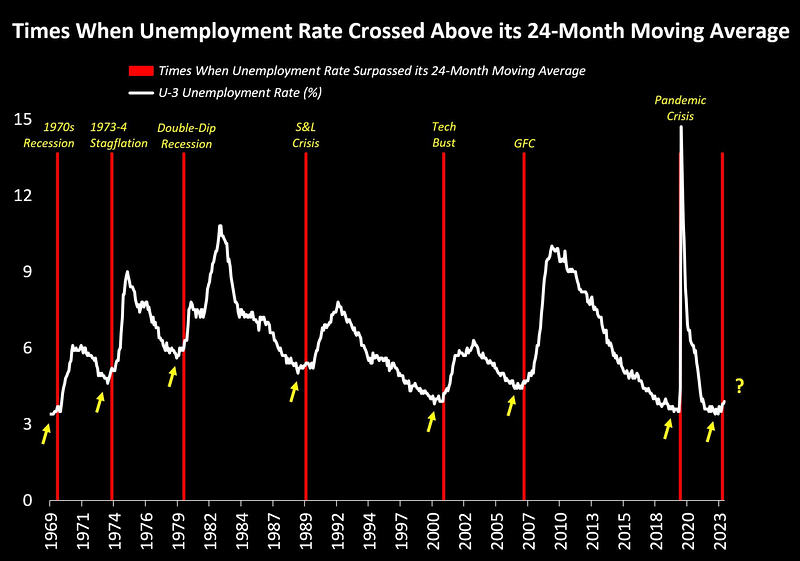
The US job market is turning around. This usually coincides with the start of a recession.

Recently, parallels are being drawn between the 2008 crisis and current market conditions

Burry has been vocal about the risks of high inflation as a result of the Federal Reserve’s significant monetary stimulus. Initially, his views were against the mainstream, but as inflation has surged to 8.6%, his predictions are gaining attention. Burry suggests that the current economic and market downturn is only in its early stages, with a potential further 50% decline in the S&P 500.

Burry’s analysis points to a trend where the bottom of a current market crash is typically lower than the previous one by about 10 to 15%. He predicts that the S&P 500 could fall to around 1,862 points, representing a significant downturn from current levels. Despite recent market rallies, Burry views these as temporary, suggesting that larger declines are yet to come. He emphasizes the relatively low trading volumes during the downturn, indicating that significant selling is still on the horizon, which could lead to steeper market drops.

Burry also expresses concern over the state of U.S. consumer finances

He notes the fall in personal savings to levels last seen in 2008 and a surge in credit card debt, despite the influx of stimulus funds. This scenario, according to Burry, could lead to a consumer recession and further impact company earnings negatively.

Burry’s perspective is shaped by his experience and observations of past market cycles, including the dot-com bubble and the 2008 financial crisis. He draws parallels between current market trends and those preceding major economic downturns, suggesting a repeating pattern of human behavior in financial markets.

In conclusion

Michael Burry’s current outlook is profoundly bearish, anticipating further economic challenges and stock market declines driven by factors such as inflation, interest rate hikes, and diminishing consumer savings. His views, shaped by historical trends and his analysis of current economic indicators, suggest a cautious approach to the unfolding economic landscape.

Money
Finance
Stock Market
Investing
Investment
Recommended from ReadMedium