
A Few of the Pros & Cons of Mexico’s Underground Economy
Not everything about Mexico’s underground economy is great, but it certainly makes the food scene superior
When the transit police open 20 de Noviembre to traffic in the morning, usually around six or seven a.m., two lanes of cars begin to pass my apartment. They swoosh by like metal waves and every so often a motorbikes roars, breaking through the monotony of my urban ocean sounds and jolting me awake.
Today is Sunday, and the truck buying used goods passes around 8 a.m., blasting its signature marketing reel — “cochones, microondas, lavadoras, refrigeradoras” — and the man who sells gas tanks that he carries up untold flights of stairs on his back all morning moans — ‘gaaaaaaaaaas’ — his deep baritone voice reverberating through our apartment and into the homes of neighbors starting the day.
It’s Sunday, a quiet day for El Centro Historico. But quiet here is still noisy. There will be honks and horns as traffic picks up, fruit vendors will run their sales’ reels full blast — “Que barbaro! Que barbaro!” — the kid who plays saxophone will show up around 2 p.m. to play sad, flat notes over Latin classic instrumentals. The organ grinders will repeat ‘Besame Mucho’ with their out-of-tuned organs, and muffler-less motorcycles will zip through traffic and run red lights in front of the transit police who, despite their job titles, will simply watch.
Where I live, there are no laws against sound pollution, and if there were, just like the supposed traffic laws, they wouldn’t be followed or enforced anyway. In Mexico, in most cases, the law is just a suggestion, a recommendation, a flexible guideline to be ignored when common sense prevails. Here, four people on a scooter with no license, helmets, or insurance, can weave through traffic and blow a red light in front of a cop and nobody thinks twice. If a cop does do something, they’re more likely to extort the culprit for a bribe than to issue a ticket or fine — which would likely be ignored anyway.
I have had only had three interactions with the police in Mexico. The first time, I was questioned for having marijuana, but let go once the cop realized I was a foreign (and I didn’t have marijuana). The second time, my cousin and I were extorted for about $30 for ‘Driving While Gringo.’ And the third time, after witnessing two prostitutes destroy an ice cream shop and attack my girlfriend when she intervened, I spoke to the cops briefly and witnessed a level of incompetence and unconcern unlike anything I’ve ever seen in the States or elsewhere.
Unsurprisingly, Mexico ranks low on the global rule of law indices. It scores near the bottom in areas of transparency, corruption, judicial system effectiveness, and human and due process rights. And you can see it every day in the heart of the capital where I live.
Motorcycles zip down “pedestrian only” streets while cops play with their phones — people run red lights left and right — cars make right turns from the left lane, cutting off two lanes of traffic without a care in the world. Here, the rules of the road seem to be something like “use common sense” and “survive.”
However, though the traffic violations can be annoying, I’m not certain if the lax laws on the road lead to more accidents than in places where cops are out to get anyone who doesn’t use their blinker. After all, no one on the road has a death wish. They simply don’t want to wait for the light to turn green if no on-coming traffic is coming.
The flexibility of Mexican law is also apparent in another sector as well — business. And yet, when it comes to commerce, the results seem to be much different.
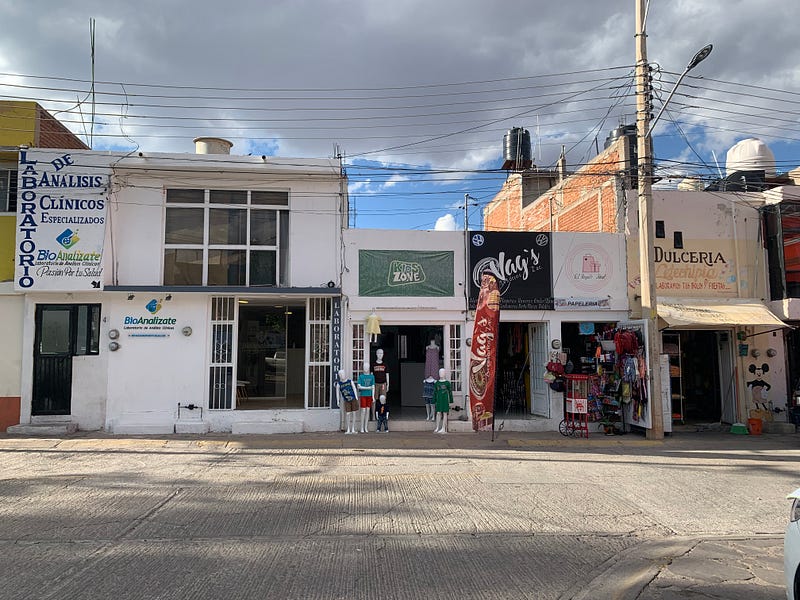
Mexico City and the country as a whole pulsates with underground commerce; people walk the streets selling loosie cigarettes and chicles, pop-up tables on the corner with chicharrones, Nacho Locos, elotes and esquites, tacos de canasta from the back of a bicycle, quesadillas cooked on flat grills laid over shopping carts, shoe-shiners, knife sharpeners, indigenous women with blankets spread out in front of the pharmacy selling herbs, ginger, gloves of garlic bussed in from the city outskirts.
According to World Economics, nearly 30% of Mexico’s economy is informal — neither taxed nor monitored by the government. And these businesses, though technically illegal, are fundamental to the lifeblood of the country.
One reason the underground economy is so big in Mexico is because the government provides almost no lifelines or safety nets, no food stamps or government housing, no welfare or unemployment checks (although this is beginning to change). Most folks have no or very little coming in the way of social security as well, other than what they set aside themselves.
I remember when the pandemic hit, nobody I knew looked to the government to save them. Instead, they relied on friends, family, community, and the laxness of the law and acceptance of the informal economy to allow them to keep doing business while cops and health inspectors looked the other way.
But while the idea of no safety nets may sound horrifying for Americans and Europeans, especially for those on the Left, the difference here in Mexico is that people are allowed to work, to sell, to hustle, and create. In fact, there’s so much hustling going on in Mexico that I’ve had difficulty explaining the concept of the word ‘hustle’ to my wife. Hustling here is a normal part of life, a way to make a living — not something gangsters and criminals do.
As a result of this ‘free market,’ Mexico City looks much more like Walt Whitman’s America — vibrant, dynamic, bustling, diverse — than anywhere in America does today. The America I know is a land of big businesses and corporations, where most of us work for a company or corporation because the cost of opening our own business is so high that we never get the chance to try.
When the pandemic hit in the U.S., we shut down the few mom and pop businesses that still existed and kept the Targets and Walmart’s open. It is obvious who the U.S. government is allied with, and it’s certainly not small business. Our politicians continually tighten regulations “to keep us safe,” but the other effect their regulations have is it makes the cost of doing business so high that regular people are priced out. Of course, this is ideal for the existing businesses who’d prefer less competition, or better yet, no competition at all. McDonald’s is happy with more regulations because it can foot the bill. The woman in New Orleans who cooks real food that will make your soul glow, is not.
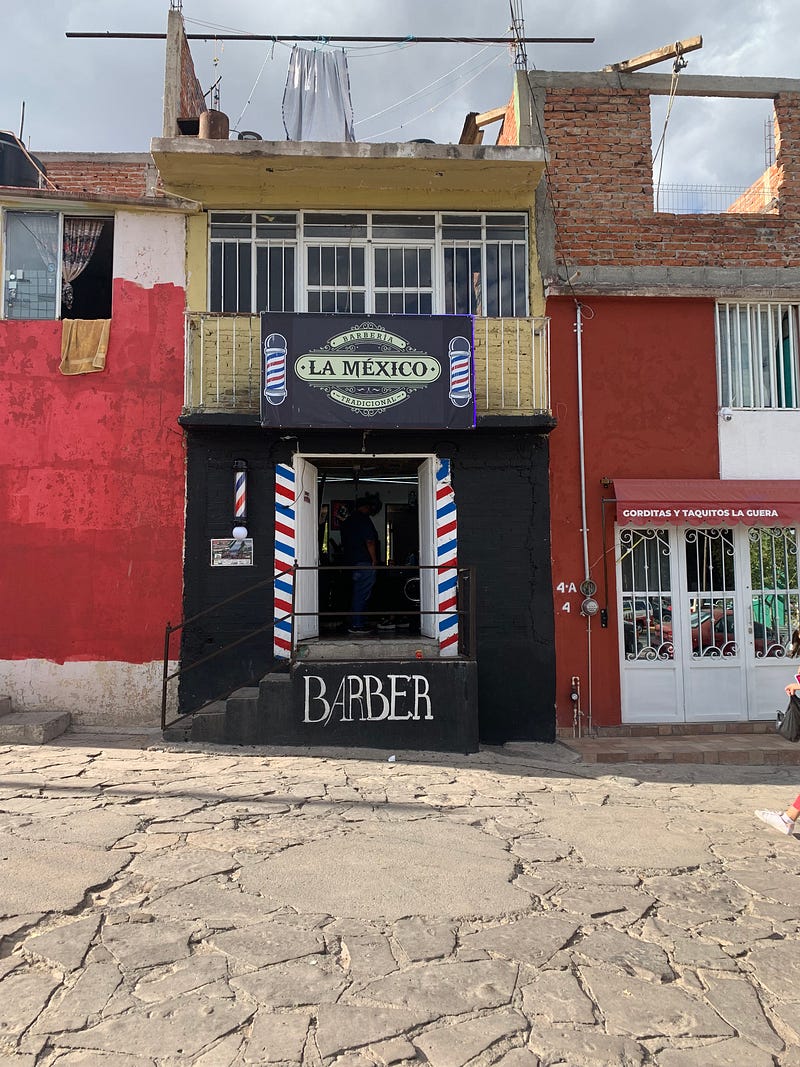
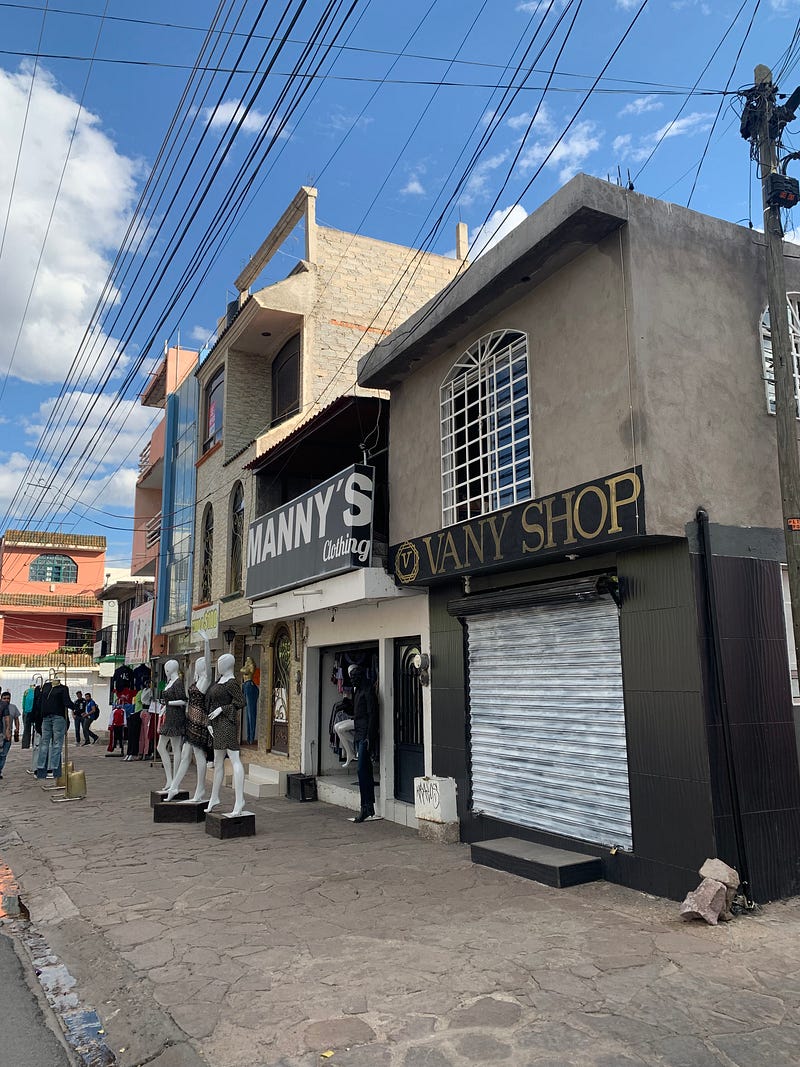
Mexico, on the other hand, is a country of entrepreneurs and small business owners. I’ve spent 8 years here, and I know more small business owners (by a factor of 20X) than in my thirty years in the U.S. In fact, there is so much small business here that, unlike in the States, no one romanticizes the family business because so many businesses are family-owned and run that there’s nothing unique or special about it. It’s expected. It’s part of the culture.
The underground economy in Mexico also breeds a level of creativity, especially when it comes to food, that is off the charts. I’ve seen people do more with a shopping cart and a makeshift grill than many American establishments can do with a full restaurant. Since people selling food in the street must compete with each other and with established restaurants, the result is that the diversity of food in Mexico is far superior to anything in the U.S., and the prices stay affordable. Cops, teachers, businessmen, artists, city workers and the likes can be found dining together, eating healthy, cheap, home cooked meals.
Furthermore, in Mexico, lower class people are not motivated by the market to eat Fast Food, which in Mexico is more of a middle and upper-class treat or novelty than anything else. Instead, they go the market, a local restaurant, or to a street vendor, where the food is cheaper and far superior. On a personal level, I would take Mexican street food over 90% of American restaurants any day of the week.
Another result of the underground economy is that lower class people in Mexico have a certain level of pride, dignity, confidence and dare I say contentedness that I think comes from working for themselves. Is anyone more existentially miserable than a McDonald’s, Walmart, or Walgreens worker?
Even most disabled people in Mexico, for better or worse, must work or rely on their families to support them. And the cops, as nonchalant as they are, aren’t choking people out for selling loosie cigarettes: They are purchasing them. In America, on the other hand, the cops are employed to some extent to protect the corporation, even if they’re not fully aware of it.
After all, the U.S. is a country of a Law and Order (it’s no coincidence that the show of the same name is the longest-running series on television). But America, for all its talk about opportunity, has also become a closed market — a playground that’s only open for the Corporation and the Rich.
Mexico, on the other hand, is not a country of Law and Order by any means, and one result of that fact is that the underground economy survives and thrives as an accepted and respected part of life. Although the lack of law has severe repercussions in other areas of Mexican life (ie. the narcos), when it comes to food, and in my opinion, the overall happiness and well-being of regular people, there are many benefits to the underground economy worth considering.
Note: There are many terrible aspects of Mexican’s underground economy, such as the presence of the Cartels and their extortion of businesses, etc. I will speak to those aspects at a later time. I’m also not suggested all social safety nets are bad. This is simply an observational piece, notes that I’d like to get down as work towards developing a more thorough examination of the underground economy in Mexico.