Free AI web copilot to create summaries, insights and extended knowledge, download it at here
3798
Abstract
oduced? According to the<a href="http://www.iags.org/methanolsources.htm"> Institute for The Analysis of Global Security</a>, most methanol is manufactured from natural gas and is used for industrial purpose.</p><p id="c8b5">Do living things produce methanol then? Certainly! Some <a href="https://www.ncbi.nlm.nih.gov/pmc/articles/PMC5028366/">microorganisms can produce methanol through fermentation</a>. Microorganisms such as <i>Erwinia carotovora, Clostridium butyricum</i>, <i>Clostridium thermocellum</i>, <i>Clostridium multifermentans</i>, and <i>Clostridium felsineum </i>can produce methanol through fermenting <b>pectin</b>. Pectin is an organic material builds plant cell wall. With the right conditions (pH, oxygen level and temperature), the presence of these microorganisms along with plant materials can yield methanol. Scientists also found that certain strains of <i>Saccharomyces </i>(your brewing yeast) can also <b>ferment pectin</b> and <b>yield methanol</b>.</p><p id="dc02" type="7">A small change in chemical makeup makes a lot of difference in their toxicity.</p><h1 id="7e44">Methanol is lethal even at a small dose</h1><p id="9452">The Iranian outbreak is not the first methanol outbreak. Many previous cases have been linked to the consumption of alcohol without realising the difference between enjoyable ethanol and lethal methanol.</p><p id="9042">BBC News reported that in Indonesia, many <b>home-brewed alcohols</b> were poorly manufactured. Poor quality control means <b>a greater odds of the pectin-fermenting microorganisms being present as contaminants</b> during the brewing process. <a href="https://www.who.int/environmental_health_emergencies/poisoning/methanol_information.pdf">WHO</a> has warned that this poorly regulated alcohol often has no food label, yet have been found to be sold as “<b>speciality alcohols</b>” in some bars. Hence, WHO specifically warned tourists to be extra careful when purchasing cheap local alcohols. The <a href="https://www.who.int/environmental_health_emergencies/poisoning/methanol_information.pdf">countries</a> with reported outbreaks of methanol poisoning were Cambodia, Czech Republic, Ecuador, Estonia, India, Indonesia, Kenya, Libya, Nicaragua, Norway, Pakistan, Turkey and Uganda.</p><div id="25b0" class="link-block"> <a href="https://www.bbc.com/news/world-asia-46423180"> <div> <div> <h2>Death by ignorance, taboo and methanol</h2> <div><h3>Every few months, reports circulate of large numbers of people falling ill after a wedding or other gathering. The…</h3></div> <div><p>www.bbc.com</p></div> </div> <div> <div style="background-image: url(https://miro.readmedium.com/v2/resize:fit:320/0*U-vuL9KOKtZiVtv7)"></div> </div> </div> </a> </div><p id="0cd5">Other similar news related to methanol poisoning have been reported:</p><div id="1e6f" class="link-block"> <a href="https://edition.cnn.com/2019/02/24/asia/india-alcohol-poisoning/index.html"> <div> <div> <h2>Toxic moonshine kills 154 people and leaves hundreds hospitalized in India</h2> <div><h3>At least 154 people have died and more than 200 others have been hospitalized after consuming tainted alcohol in India…</h3></div> <div><p>edition.cnn.com</p></div> </div> <div> <div style="background-image: url(https://miro.readmedium.com/v2/resize:fit:320/0*2qpYPHH8H2lsdAz_)"></div> </div> </div> </a> </div><div id="0026" class="link-block"> <a href="https://edition.cnn.com/2019/07/21/americas/co
Options
sta-rica-alcohol-poisoning-methanol-intl/index.html?no-st=1563837346"> <div> <div> <h2>Tainted alcohol kills 19 in Costa Rica, ministry says, urging caution</h2> <div><h3>Nineteen people have died from consuming alcohol tainted with toxic levels of methanol in Costa Rica, where the…</h3></div> <div><p>edition.cnn.com</p></div> </div> <div> <div style="background-image: url(https://miro.readmedium.com/v2/resize:fit:320/0*9GzZVKw6qaZNUYUn)"></div> </div> </div> </a> </div><p id="e4ca">How does the human body metabolise ethanol and methanol?</p><p id="fae1">All alcohol is toxic for the body when exceeds a specific threshold. What makes methanol so dangerous is that it has a very low threshold for toxicity than ethanol. Both ethanol and methanol are metabolised by the liver using a liver enzyme known as <b>alcohol dehydrogenase</b>. This enzyme converts ethanol into <b>acetaldehyde</b>, this molecule is the culprit for your feelings of <b>hangover</b>. Once the acetaldehyde is further metabolised, you will feel normal again. The same enzyme converts methanol into formaldehyde and then into <b>formic acid</b>. Instead of giving you a hangover, <b>formic acid metabolised from methanol causes breathlessness, blindness and death</b>.</p><p id="1d91" type="7">Instead of giving you a hangover, formic acid metabolised from methanol causes breathlessness, blindness and death.</p><h1 id="0fb4">What works outside the body do not necessarily work inside the body</h1><p id="e282">It is quite sad that misinformation has resulted in hundreds of Iranians died of methanol poisoning. They believed alcohol that kills virus outside the body must be able to kill the virus inside the body. Unfortunately, they were not aware that alcohol (methanol) can kill them too.</p><p id="4f17">It’s a moment of <i>ipse dixit</i>. For them, the misinformation delivered to them made so much sense that they did not ask for evidence. Since Iranians are Muslims, they are prohibited from alcohol drinking. Hence, they are probably not properly educated about alcohol and don’t understand the difference between ethanol and methanol.</p><p id="2bfa">Before a drug can be marketed to cure a disease, scientists have to bring the drug to go through the following steps:</p><ol><li><b><i>In vitro</i> testing</b>: To test the drug can effectively neutralise the disease in a test tube as a proof of theory.</li><li><b><i>In vivo </i>pre-clinical testing</b>: To test the drug can effectively neutralise the disease in an animal model and its safety.</li><li><b>Clinical testing</b>: To test how does the human body process the drug, whether it is safe, and the dose required to effectively neutralise the disease with minimal side effects.</li></ol><p id="03d2">Without going through these tests, <b>a self-proclaimed drug</b> should not be trusted. The same goes with nutrition supplements although supplements are not as tightly regulated as drugs. Some drugs or supplements showed high efficacy outside the human body, but not inside the human body. One of the famous examples is the antioxidant supplement.</p><h1 id="f5f0">Take-home message</h1><p id="a135">Finally, we should increase public awareness about the difference between ethanol and methanol. Quality control is in place for a purpose, to safeguard the quality of food and drinks we consume. The presence of pectin-fermenting microorganisms in the fermenting liquid is a dangerous contaminant.</p><p id="7513" type="7">WHO has warned that this poorly regulated alcohol often has no food label, yet have been found to be sold as “speciality alcohols” in some bars.</p></article></body>

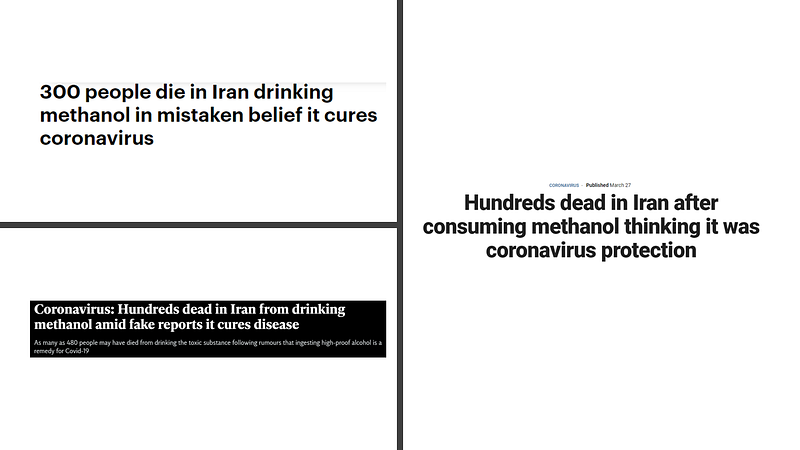
The headlines published on famous news sites in late March showed hundreds of Iranian died after drinking methanol.
So, let’s talk about a little about the production of ethanol and methanol, the danger of methanol and the danger of assuming “what works outside the body must be working inside the body”.
All alcohol is toxic for the body when exceeds a specific threshold. What makes methanol so dangerous is that it has a very low threshold for toxicity than ethanol.
The alcohol that we normally drink is chemically known as ethanol. Alcohol is prepared by sugar fermentation using brewing yeast (genus Saccharomyces). Yeast, like any living things, consumes sugar, but under the condition of oxygen deprivation, it produces ethanol out from the sugar. Yeast can ultimately generate 12–18% ethanol to the fermenting liquid.
Wait a minute, Vodka has more % alcohol, right? True, high % alcohol in a beverage is done post-fermentation by concentrating it. This is because the yeast can die of alcohol poisoning when the ethanol around its “living environment” is greater than 18%.
What’s the difference between ethanol and methanol?
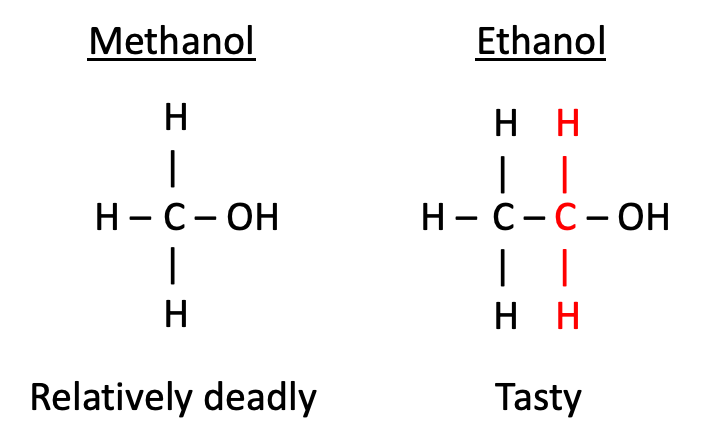
A small change in chemical makeup makes a lot of difference in their toxicity.
If a large quantity of ethanol can be produced from living things, how can a large quantity of methanol being produced? According to the Institute for The Analysis of Global Security, most methanol is manufactured from natural gas and is used for industrial purpose.
Do living things produce methanol then? Certainly! Some microorganisms can produce methanol through fermentation. Microorganisms such as Erwinia carotovora, Clostridium butyricum, Clostridium thermocellum, Clostridium multifermentans, and Clostridium felsineum can produce methanol through fermenting pectin. Pectin is an organic material builds plant cell wall. With the right conditions (pH, oxygen level and temperature), the presence of these microorganisms along with plant materials can yield methanol. Scientists also found that certain strains of Saccharomyces (your brewing yeast) can also ferment pectin and yield methanol.
A small change in chemical makeup makes a lot of difference in their toxicity.
The Iranian outbreak is not the first methanol outbreak. Many previous cases have been linked to the consumption of alcohol without realising the difference between enjoyable ethanol and lethal methanol.
BBC News reported that in Indonesia, many home-brewed alcohols were poorly manufactured. Poor quality control means a greater odds of the pectin-fermenting microorganisms being present as contaminants during the brewing process. WHO has warned that this poorly regulated alcohol often has no food label, yet have been found to be sold as “speciality alcohols” in some bars. Hence, WHO specifically warned tourists to be extra careful when purchasing cheap local alcohols. The countries with reported outbreaks of methanol poisoning were Cambodia, Czech Republic, Ecuador, Estonia, India, Indonesia, Kenya, Libya, Nicaragua, Norway, Pakistan, Turkey and Uganda.
Other similar news related to methanol poisoning have been reported:
How does the human body metabolise ethanol and methanol?
All alcohol is toxic for the body when exceeds a specific threshold. What makes methanol so dangerous is that it has a very low threshold for toxicity than ethanol. Both ethanol and methanol are metabolised by the liver using a liver enzyme known as alcohol dehydrogenase. This enzyme converts ethanol into acetaldehyde, this molecule is the culprit for your feelings of hangover. Once the acetaldehyde is further metabolised, you will feel normal again. The same enzyme converts methanol into formaldehyde and then into formic acid. Instead of giving you a hangover, formic acid metabolised from methanol causes breathlessness, blindness and death.
Instead of giving you a hangover, formic acid metabolised from methanol causes breathlessness, blindness and death.
It is quite sad that misinformation has resulted in hundreds of Iranians died of methanol poisoning. They believed alcohol that kills virus outside the body must be able to kill the virus inside the body. Unfortunately, they were not aware that alcohol (methanol) can kill them too.
It’s a moment of ipse dixit. For them, the misinformation delivered to them made so much sense that they did not ask for evidence. Since Iranians are Muslims, they are prohibited from alcohol drinking. Hence, they are probably not properly educated about alcohol and don’t understand the difference between ethanol and methanol.
Before a drug can be marketed to cure a disease, scientists have to bring the drug to go through the following steps:
Without going through these tests, a self-proclaimed drug should not be trusted. The same goes with nutrition supplements although supplements are not as tightly regulated as drugs. Some drugs or supplements showed high efficacy outside the human body, but not inside the human body. One of the famous examples is the antioxidant supplement.
Finally, we should increase public awareness about the difference between ethanol and methanol. Quality control is in place for a purpose, to safeguard the quality of food and drinks we consume. The presence of pectin-fermenting microorganisms in the fermenting liquid is a dangerous contaminant.
WHO has warned that this poorly regulated alcohol often has no food label, yet have been found to be sold as “speciality alcohols” in some bars.
Alexandru LazarImprove your life and get ahead of your peers in 10 simple steps
Gowtham OletiLet’s skip past the usual suspects like YouTube, WhatsApp and Instagram. I want to share with you some less familiar apps that have become…
UnbecomingIt’s August in Northern Virginia, hot and humid. I still haven’t showered from my morning trail run. I’m wearing my stay-at-home mom…
Karolina KozmanaBy rejecting alcohol, you reject something very human, an extra limb that we have collectively grown to deal with reality and with each…