avatarSusannah MacKinnie

Free AI web copilot to create summaries, insights and extended knowledge, download it at here

1403

Abstract

is a fortune teller named Penelope at this point in 514 BC. A combination of a curse and her own powers has allowed her to live several centuries and travel the known world. She visits the temple of Athena Polias, the patron deity of the city of Athens.</p><p id="8102">She once lived in a temple. There were cruel men there too.</p><div id="6cda" class="link-block"> <a href="https://readmedium.com/the-villains-a73237e96264"> <div> <div> <h2>The Villains</h2> <div><h3>The emperor and the magician attack the high priestess</h3></div> <div><p>medium.com</p></div> </div> <div> <div style="background-image: url(https://miro.readmedium.com/v2/resize:fit:320/1*[email protected])"></div> </div> </div> </a> </div><figure id="23fa"><img src="https://cdn-images-1.readmedium.com/v2/resize:fit:800/1*1GjFVaIOF9fJVHKLwPqSTg.jpeg"><figcaption>Vintage book illustration, Public Domain</figcaption></figure><blockquote id="65d1"><p>In folklore, a mermaid is an aquatic creature with the head and upper body of a female human and the tail of a fish. Mermaids appear in the folklore of many cultures worldwide, including the Near East, Europe, Asia, and Africa. ….Mermaids are sometimes associated with perilous events such as

Options

floods, storms, shipwrecks, and drownings. In other folk traditions (or sometimes within the same tradition), they can be benevolent or beneficent, bestowing boons or falling in love with humans. Historical accounts of mermaids, such as those reported by Christopher Columbus during his exploration of the Caribbean, may have been sightings of manatees or similar aquatic mammals. While there is no evidence that mermaids exist outside folklore, reports of mermaid sightings continue to the present day. Mermaids have been a popular subject of art and literature in recent centuries, such as in Hans Christian Andersen’s literary fairy tale “The Little Mermaid” (1836)…….Wikipedia</p></blockquote><p id="50e6">I started thinking about mermaids when I read this aquatic poem from <a href="undefined">Nidhi Agrawal</a> which features beautiful artwork from the author.</p><div id="17d6" class="link-block"> <a href="https://readmedium.com/freedom-584d4041b23f"> <div> <div> <h2>Freedom</h2> <div><h3>Free-flowing verse</h3></div> <div><p>medium.com</p></div> </div> <div> <div style="background-image: url(https://miro.readmedium.com/v2/resize:fit:320/1*U2EFN3ly4-xZrbpmKuUzmg.jpeg)"></div> </div> </div> </a> </div></article></body>

The Fortune Teller | Athens, Greece in 514 BC

Mermaids

Magic in motion
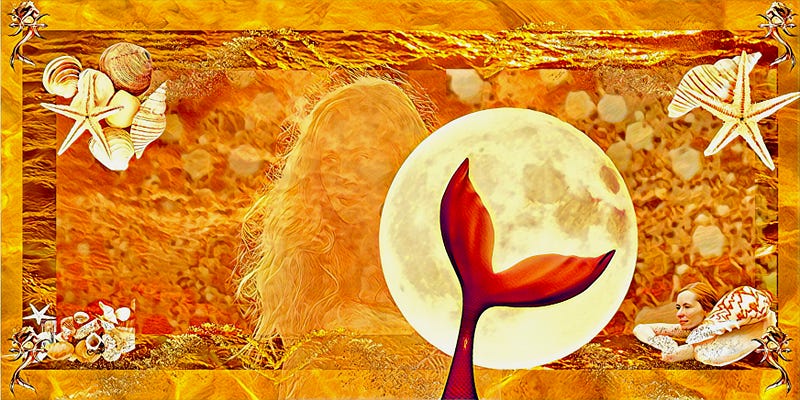
Image created by the author on Canva and Prisma

‘Who is it loves me? who loves not me?’ I would comb my hair till my ringlets would fall Low adown, low adown, From under my starry sea-bud crown Low adown and around, And I should look like a fountain of gold Alfred, Lord Tennyson

We croon lullabies to the tides, Coax shy fishes, tucking them Into nighttime’s safe crevices, Hidden from the hungry hunters.

We put the oysters to bed. We lock up the pearls.

Musical murmurs Sooth the restless sharks. We sing enchantments With the whales.

Our songs are not for men. Our songs are for the sea.

Men accuse my sisters in magic, the mermaids, nymphs, and sirens, of luring them with their beauty and songs. In reality, it is the men who hunt and pursue them. Such pursuits often end in the deaths of the men and, less frequently, of my sisters. I am neither so alluring nor so powerful. My seeming humanity overlaying my power has long kept me safe. Penelope

This is a fortune teller named Penelope at this point in 514 BC. A combination of a curse and her own powers has allowed her to live several centuries and travel the known world. She visits the temple of Athena Polias, the patron deity of the city of Athens.

She once lived in a temple. There were cruel men there too.
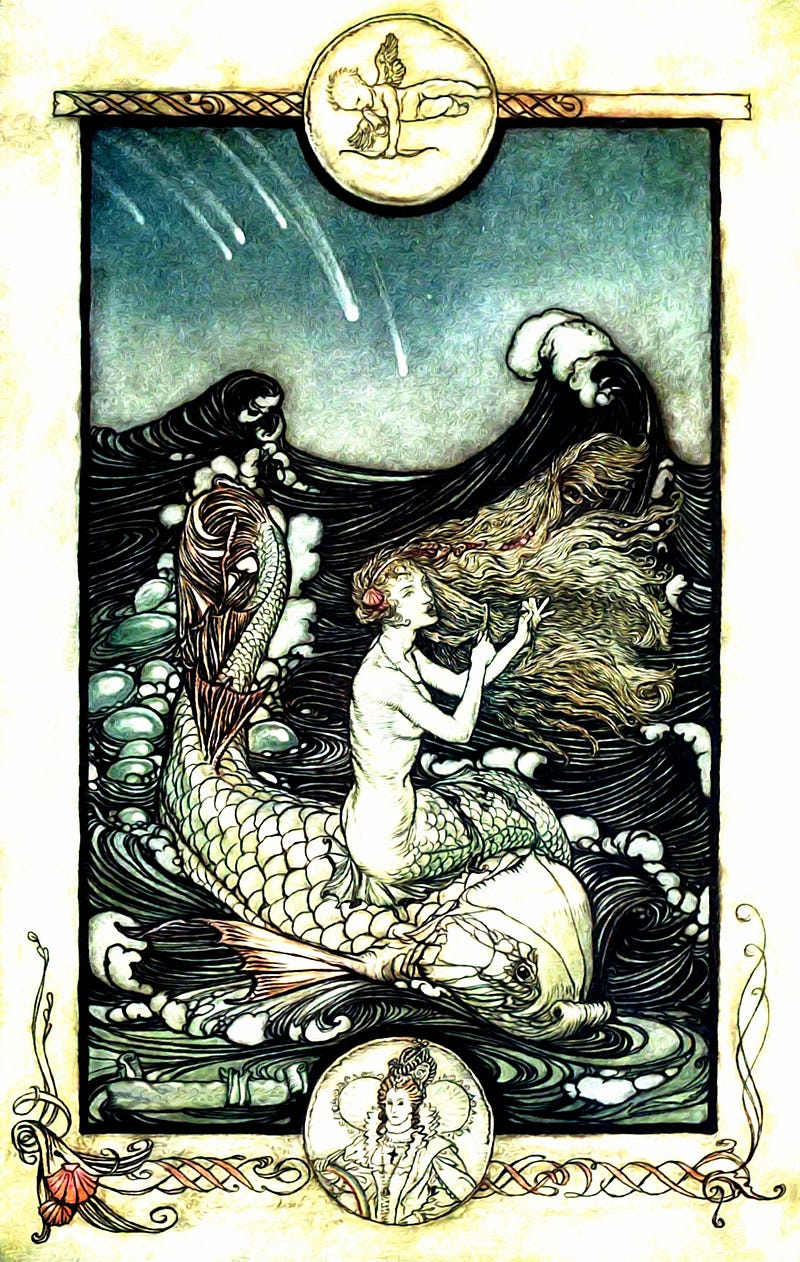
Vintage book illustration, Public Domain

In folklore, a mermaid is an aquatic creature with the head and upper body of a female human and the tail of a fish. Mermaids appear in the folklore of many cultures worldwide, including the Near East, Europe, Asia, and Africa. ….Mermaids are sometimes associated with perilous events such as floods, storms, shipwrecks, and drownings. In other folk traditions (or sometimes within the same tradition), they can be benevolent or beneficent, bestowing boons or falling in love with humans. Historical accounts of mermaids, such as those reported by Christopher Columbus during his exploration of the Caribbean, may have been sightings of manatees or similar aquatic mammals. While there is no evidence that mermaids exist outside folklore, reports of mermaid sightings continue to the present day. Mermaids have been a popular subject of art and literature in recent centuries, such as in Hans Christian Andersen’s literary fairy tale “The Little Mermaid” (1836)…….Wikipedia

I started thinking about mermaids when I read this aquatic poem from Nidhi Agrawal which features beautiful artwork from the author.

Poetry
Fiction
Story Quilt
Susannah Stewart
The Fortune Teller
Recommended from ReadMedium