
Meowing: A Purrfect Alternative Communication Tool
Relationship accessibility for disabilities that affect communication doesn’t need to be boring
My partner and I are a unique pair. We broke up six years before we professed our undying love for each other. He is easily the exception to the “never get back with your ex” rule.
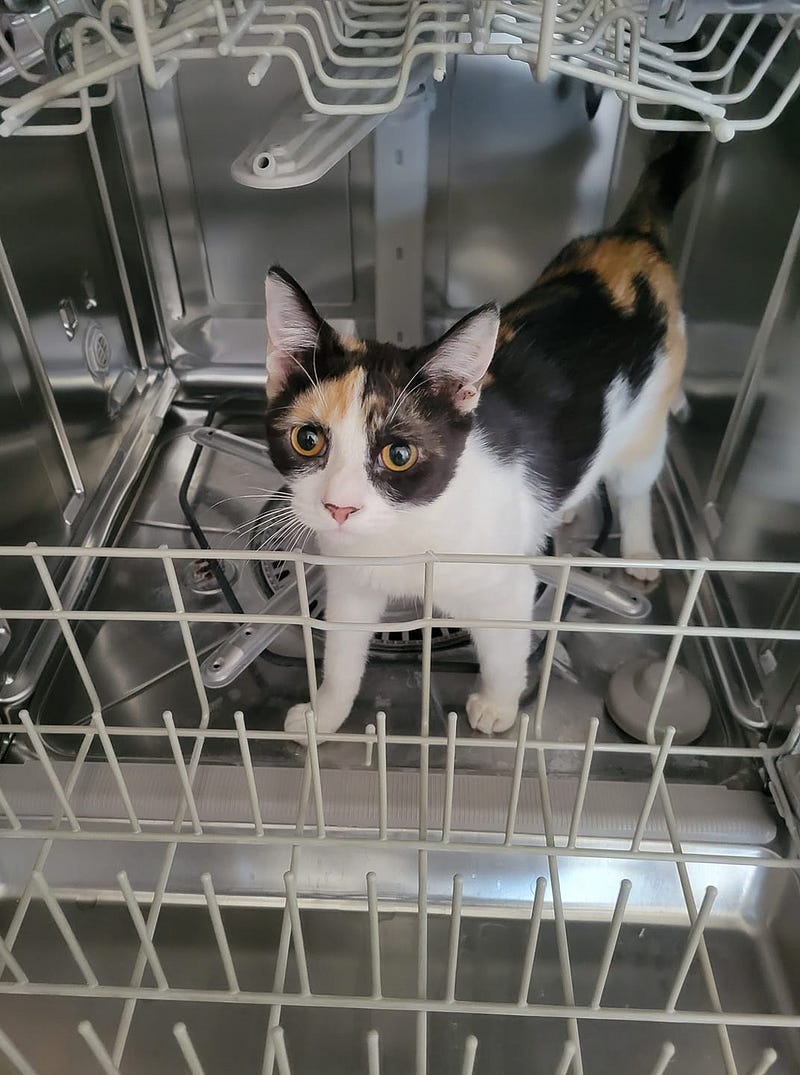
We live easily together. We’re silly and we love spending time together. My time here isn’t permanent since this house is a little small for two cockatiels and a very playful cat. Plus, I need space to get a service dog without said cat pouncing on them. But we still live together harmoniously in the meantime and stay madly in love with each other, even though our lifestyles are quite different.
What’s our secret?
Meowing.
Go ahead. Get your laughing out of the way. A linguistic anthropologist would view us as a Christmas gift.
Where it Started

The first time he meowed at me was the day after we started dating the first time.
When reflecting on where it took a life of its own, neither of us really knows. It didn’t start immediately after the first “meow.” But it developed pretty quickly. We also hiss at things that are mildly inconvenient, but that’s more because it’s funny.
We both agree it probably started out as a cute joke. We didn’t realize it had become an advanced communication method until after getting back together and after I had a shiny honors anthropology degree.
As a writer, I can confirm that making words work is hard. We’re both people who have jobs that involve using our brains actively for hours, so we don’t have many words at the end of the day to express our feelings to each other.
Well, there’s one word: Meow.
How we use it
We can express a lot in “meow.” We can sad meow. Tired meow. Happy meow. It is how we check in without the need to say anything. And because we both regularly need assurance that the other person isn’t mad since we pick up on the smallest of emotional changes, meow is perfect to say, “I’m not mad. I’m just exhausted and need time alone.”
The reason I’m writing about how adorable we are is because there is actual psychology behind why this works. First of all, neither of us is neurotypical.
Non-verbal communication is something people with almost all neurodevelopmental disorders struggle with in some way, shape, or form. Autism is just where it is the most pronounced.
Interpreting neurotypical communication is difficult for both of us, and it makes our brains overthink. Plus, we both are slow with auditory processing.

He is hard-of-hearing and has hearing aids, but generally leaves them out for comfort around the house. Sometimes it’s difficult for him to understand my speech. But “meow” is easily understandable and easy to process.
Of course, we have our ways of communicating more complex thoughts. But we don’t like putting more effort than necessary into communicating the basics.
This is silly
That’s the point.
We have this weird cultural idea that all communication between adults must be adult-like. He and I communicate as adults, but we use meowing as a communication tool. It’s a form of Augmentative and Alternative Communication, which is commonly used for people with disabilities that affect hearing, communication, speaking, etc. For people with difficulty in communication, AAC is fundamental in having a decent quality of life. Often, AAC is associated with apps and technology, which are important advances in accessibility, but it blends into manual techniques too.
He and I have talked about feeling childlike for needing to find alternate methods to communicate because it is difficult for us to communicate like able “grown-ups” on a constant basis. But our relationship is healthy and functional. We’re happy. We feel secure and loved. And that helps us function as adults. So who cares?
Accessibility isn’t just structural. It’s interpersonal, and we need to encourage finding new ways to communicate and interact with each other. It’s okay to be creative and silly. If it works, it works. Whatever makes your life and relationships easier and healthier is valid. You’re not always going to find it easy to communicate with the framework taught to us as “mature” and that’s okay. You’re allowed to make it easier.
So if you’re having difficulty expressing basic ideas with a loved one, might I suggest meowing?
Thank you for reading! If you want to read more of my writing, check out my website or newsletter.