
Mental Trauma Persists in Ethnic Enclaves
A refugee’s child shares her view on the challenges of assimilation and mental health of her parents
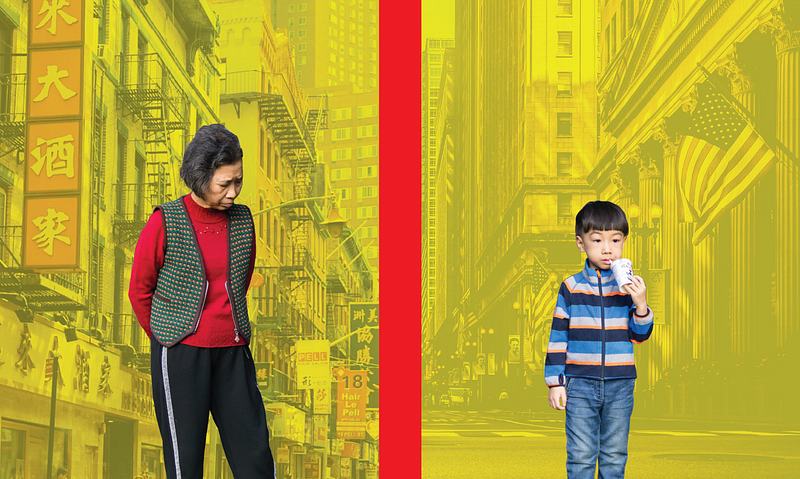
“I don’t feel like an American. America just happens to be the place I landed after fleeing the Vietnam War.” That’s what my dad said to me while we were discussing his immigration to the United States. When my parents arrived in the United States in 1979 after fleeing Vietnam and spending eight months in refugee camps, they landed in Los Angeles. There was already an existing asian ethnic enclave in the San Gabriel Valley area of Los Angeles with a Vietnamese population of 51,000. It was in this ethnic enclave that my parents settled and have lived for forty one years. Although my parents appear settled on the surface, becoming U.S. citizens, working jobs, paying taxes, shopping at Ralph’s and Costco, there is still a big divide between them and America in their minds.
Wendy, my father’s cousin, also fled Vietnam and arrived in the United States around the same time, but landed in the Seattle-Tacoma area of Washington State where there were much fewer Asians already settled. The Vietnamese population in Washington state in 1980 was 13,000. She was forced to integrate into a white community upon her arrival in Seattle. She did not have a large ethnic enclave to support her. She opened a restaurant called Wendy’s Restaurant with American business associates and interacted with white clientele every day. Her English improved dramatically and she has an easygoing approach to life. “Just relax, what is there to stress about?” she’d say to me.
Ethnic enclaves are important support systems for refugees when they arrive in a new country. Many refugees flock to ethnic enclaves after arriving in a new country to find connections with the culture they have left through a community of grocery stores, retail shops, and local newspapers and radio stations in their local dialect. There are people of the same ethnic origin who have been through the immigration process and can translate English documents for refugees if needed. These communities act as important conduits for newly arrived refugees to be able to navigate their new home. Many first generation refugees make their whole new life there, getting married, having kids, and raising kids in these communities.
As helpful as ethnic enclaves are for refugees when they first arrive in the U.S. though, studies have shown that ethnic enclaves in the long term also prevent assimilation in the dominant society. A 2013 study published in the Review of International Economics journal shows that by limiting immigrants’ interactions with the dominant population and participation in civil affairs, ethnic enclaves significantly reduce immigrants’ cultural assimilation. Assimilation which in the long run is important for refugees in order to be fully productive citizens who can speak the local language and maintain legitimate economic means. A 2015 study on the life satisfaction of immigrants showed that full assimilation is positively associated with increased levels of life satisfaction.
A 2001 study on cultural assimilation among Asian Americans conducted by Mark H. Chae of Seton Hall University identified four categories of assimilation outcomes reached by Asians Americans in American society. The four categories from highest to lowest level of assimilation are:
- Type A (assimilation) — the individual chooses to identify with the dominant American culture and rejects the minority Asian culture.
- Type B (integration) — the individual seeks to retain their ethnic Asian culture while incorporating the dominant American culture.
- Type C (separation) — the individual chooses to retain their ethnic Asian culture and reject broader American culture.
- Type D (marginality) — the individual rejects both their ethnic Asian culture and the broader American culture.
While my parents have largely adjusted to their environment in the United States, neither have fully assimilated into American culture. For example, neither have become fluent English speakers. My mother is still intimidated to speak English with strangers and both parents occasionally miscommunicate with me in English, so we converse in Cantonese. My father has worked at an American manufacturing company for thirty years and has had a high level of interaction with Caucasian Americans. His English is much more advanced and he can perform daily functions speaking English the whole day perfectly well. Nonetheless, both my parents retain their Eastern values and view on life, which has caused friction in our relationship when I live by Western values. Thus, my parents are Type C “separation” in their level of assimilation into American culture.
Wendy has assimilated into American culture to a higher degree than my parents due to the nature of her occupation and the lack of an ethnic enclave to support her when she arrived in the United States. She has adopted more laid back Western attitudes to childrearing. For example, she raised her grandson without the high pressure academic expectations that are usually present in traditional Chinese households. Wendy has reached the Type B “integrated” assimilation outcome due to having to adapt more deeply to American culture. The difference in the presence of an ethnic enclave has significantly affected my parent’s and Wendy’s assimilation outcome into American culture.
Yet, there is another layer in the story of Vietnamese refugee assimilation into the United States and their settlement in ethnic enclaves. War-torn Vietnamese War refugees arrived in the United States with mental trauma. In my own family’s case, my mother spent three days at sea crossing from Vietnam to Malaysia. During those three days, she had absolutely nothing to eat and only drank rain water to survive. When she arrived at a refugee camp, she starved for another four days before finally obtaining some food. Her experience is not uncommon, and has left many refugees like her traumatized. This additional challenge of mental trauma has made assimilation more difficult than it already is for many Vietnamese immigrants and continues to do so.
Starvation, watching relatives die at sea or during war, and being raped by Thai pirates, left many Vietnamese refugees with post traumatic stress disorder (PTSD) and depression, according to Jeanne F. Nidorf who is a psychologist at the University of California at San Diego (UCSD). Many refugees still feel a “constant sense of insecurity,” according to Pham Cao Duong, a former professor of Vietnamese history at the University of Saigon. Even after living in the United States for many years, research shows Vietnamese Americans still experience depression, anxiety, loss of status, marital conflict, school adjustment, and intergenerational conflict, making it difficult for them to assimilate.
Unfortunately, many Vietnamese refugees do not seek therapy due to cultural shame and language barriers. Chae’s research and others affirm that Asian Americans consistently underutilize traditional psychological treatment. The admission of facing mental distress is viewed as a sign of shame in Asian communities, and reflects poorly not only on the individual but also the entire family. Thus, most Vietnamese refugees and immigrants choose to “tough it out” and suffer through their depression alone. Some lapse into gambling addictions which provides short-term relief.
The persistence of mental trauma in Vietnamese immigrants and their lack of assimilation also spills over into the next generation, creating intergenerational conflict. The difference between first generation refugees and their second generation children leads to conflict when the first generation of Vietnamese immigrants try to impose their values on their children, and the second generation does not understand this set of values in which they were not raised. The lack of connection leads to lower life satisfaction for both generations.
Mental trauma itself can be passed on from one generation to the next. Refugees with mental illness that is not resolved after their arrival continue to live with the symptoms such as uncontrollable anger every day, affecting the lives of their families and eventually their children. The symptoms often do not go away without any active intervention. Their children may also develop these same problems later in their lives if they do not actively seek help to solve these issues.
There have been few empirical follow up studies of Vietnamese immigrants to understand their level of assimilation into American society thirty years after having arrived in the United States and their recovery from the mental traumas of the Vietnam War. It is clear to those who live and serve the ethnic enclaves where the majority of Vietnamese immigrants reside that many mental trauma scars still persist in the community and have been left to fester while this population ages. A recent 2018 study conducted by Aina Basilier Vaage showed mental trauma levels remained higher among Vietnamese refugees than the broader community after 23 years.
In 1983, about ten years following the first wave of Vietnamese immigrants, professor of sociology at UCSD Ruben G. Rumbaut found that 55 percent of Vietnamese immigrants were still living below the Federal Government’s poverty line. He also found that mental trauma was prevalent in the Vietnamese immigrant community in high degrees than the average population with:
- Only 23% of refugees showing good mental health compared to 74% of Americans tested.
- 32% of refugees displaying minor depression compared to 16% of Americans tested.
A clear indicator of the lack of assimilation and low life satisfaction is the phenomenon of Vietnamese immigrants choosing to move back to Vietnam to live out their retirement. According to The Vietnamese Americans author Hien Duc Do, this is because the older population of immigrants have immense difficulty learning a new language and often find themselves confined to the house because they are unable to navigate public transport. They do not see their children often as they are busy working and their grandchildren who are often in school. Thus, they are often miserable and prefer a life in Vietnam where they can interact with their community.
Although these Vietnamese immigrants will most likely continue to live within ethnic enclaves with limited exposure to American society and thus not reach an integrated assimilation level, they do not need to continue suffering from PTSD. The statistics show that this group still needs attention from the medical community and can benefit from tailored care, education, support groups, and increased availability of Asian therapists who speak Vietnamese and can reach older immigrants who are less likely to help themselves.


