
Mental Health In Light Of COVID-19
Mental health and psychosocial considerations during the COVID-19 Outbreak
COVID 19 is a virus that wreaked havoc and changed the world we live in.
Gone are the leisure days strolling around the park, spending late nights hanging out in movie theaters, and grabbing a drink in local pubs and bars.
All schools closed, public gatherings banned, and various sporting events canceled. Life stood at a standstill as everyone was encouraged to stay at home.
The first days were like a breath of fresh air. An impromptu vacation we used to postpone due to the demands of our day-to-day lives. Netflix and chill in our homes’ comforts were the regular stories posted on our various social media accounts. We loved every moment of it.
The next few weeks passed by like a blur. When the dust finally settled down, the uncertainty of when our lives would restart became a constant fear looming at the back of our minds. Bills were racking up, and monetary funds were becoming slowly depleted. We coped up with the reassurance that matters would be controlled with the newly implemented guidelines set up by our government.
A month turned two, and before we knew it, life was put on hold for more than three months. Business attire and uniforms were traded to more comfortable clothing such as tracksuits and pajamas. We slowly eased our way to the new normal and adapted to the situation we were thrown into. Social distancing is now the “new thing” and working from home now became the new way of life.
The Father of Evolution, Charles Darwin, once said
It is not the strongest of the species that survives, nor the most intelligent that survives. It is the one that is the most adaptable to change.
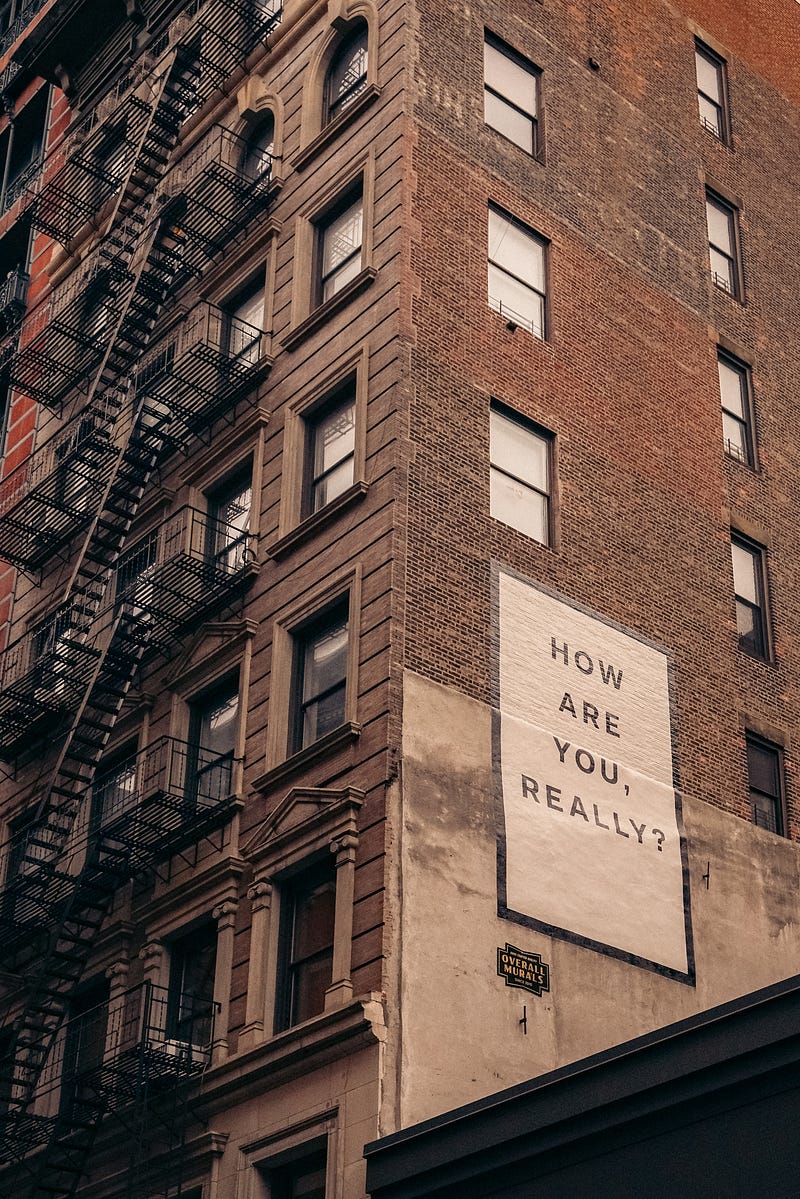
So how are you really?
How have you adapted to the situation that no one has ever dreamt of happening in your lifetime?
Coping Mechanism is defined by Dictionary.com as,
“An adaptation to environmental stress that is based on conscious or unconscious choice and that enhances control over behavior or gives psychological comfort.”
As individuals with unique personalities and identities, we all equip ourselves with various coping mechanisms to adapt and survive. These coping mechanisms could either be adaptive or maladaptive as we choose to sink or swim amidst these trying times.
Mental Health is a broad subject matter that spans physical, mental, and social well-being. According to the World Health Organization,
Mental health is an integral part of health and is more than the absence of mental disorders. Multiple social, psychological, and biological factors determine a person’s mental health at any point in time.
Mental Health Promotion aims to promote individual competencies, resources, and psychological strengths, thus strengthening community assets to prevent mental disorders. Not only does this enhance well-being but also the quality of life for both people and communities.
The World Health Organization has its stand on Mental Health Promotion and states,
Mental health promotion involves actions that improve psychological well-being. This may involve creating an environment that supports mental health.
So how is done?
How do we promote our psychological well-being in the light of COVID-19?
Minimize watching, reading, or listening to news about COVID-19.
Photo by Jon Tyson on Unsplash
I believe in the famous saying by Thomas Gray found in the poem Ode on a Distant Prospect of Eton College.
“Where ignorance is bliss, ’tis folly to be wise.”
Constant monitoring and updates as to regards to the COVID 19 situation often lead to anxiousness and distress. However, we cannot deny that knowing FACTS can help minimize our fears.
One way to go through this dilemma is by seeking information only from trusted and verified sources. This is one way to take practical steps to prepare your plans and protect yourselves and your loved ones.
Search for new updates at designated times during the day, maybe once or twice. Remember to collect facts, not rumors and misinformation.
The World Health Organization website and Centers for Disease Control and Prevention are reputable sources to gather information at regular intervals.
Protect Yourself and Be Supportive To Others
The 40th President of the United States of America, Ronald Reagan, once said,
We can’t help everyone, but everyone can help someone.
Assisting others, especially in their time of need, can benefit both the person receiving the support and the helper.
Don’t hesitate to check through call or text any neighbors or people in your community who may need some extra assistance. Reach out to the elderly and the vulnerable population if they need a helping hand in their grocery shopping or other errands.
Older Adults with underlying conditions find it difficult to access their maintenance medications at this time of the pandemic. You being their social contact can ensure that they have up to two weeks of regular stock medications.
No matter how simple the deed, it still goes out a long way.
Being of help to others creates a ripple effect. It is a stepping stone in creating solidarity, and together as one, let us address COVID- 19 as a community.
Take Care of Yourself At This Time
A beautiful quote by L.R. Knost says,
Taking care of myself doesn’t mean ‘me first.’ It means ‘me, too’.
A proven and helpful coping strategy that boosts our mental health and our immune system is getting enough rest and sleep.
The National Sleep Foundation recommends that the sleep duration for Younger Adults (ages 18–25) and Adults (ages 26 to 64) is 7–9 hours.
The National Sleep Foundation, boasting of an expert panel consisting of 6 sleep experts, provides scientifically grounded guidelines on the amount of sleep we need each night to improve millions of individuals’ sleep health.
Another way of taking care of ourselves is by eating a sufficient meal consisting of nutritious food.
England’s NHS has published The Eat Well Guide that demonstrates the quantity and quality of food that needs to be taken to achieve a healthy and balanced diet.
Lastly, engaging in physical activity is a solid way of taking care of the body that is not only beneficial today but also in the long run.
As stated by the World Health Organization, “Physical activity and exercise should not be used interchangeably. Exercise is a subcategory of physical activity and is defined as a planned, structured, repetitive form of physical activity that aims to improve or maintain one or more components of physical fitness.”
We also need to keep in mind that everyone possesses a unique body type and a state of well-being. No exercise fits all. To be guided accordingly, the Centers for Disease Control and Prevention promulgated Physical Activity Recommendations for Different Age Groups.
Avoid Using Unhelpful Coping Strategies Such as Use of Tobacco, Alcohol, and other Drugs
No one knows you better than you. So, therefore, you are the best person who knows how to de-stress. Maladaptive coping strategies such as drinking and drug use in the long term worsen your overall mental and physical well-being that does more harm than good.
Do not be hesitant in keeping yourself psychologically well.
The Alcohol Rehab Guide states that “Mixing alcohol and other drugs together can lead to serious physical, behavioral and health complications. Due to the stigma and negative connotations associated with alcohol and drug abuse, many people may deny they have a problem at all.”
Retrieved from the Alcohol Rehab Guide are the following questions to identify whether you or a loved one may be suffering from alcohol and drug abuse:
- Have you felt irritated by the concern or criticism of your alcohol or drug use by those around you, like family members, friends, a colleague or teacher?
- Have you ever thought of reducing your drinking or drug intake?
- Have you felt guilt over your drug and alcohol consumption?
- Do you find yourself craving a drink and other substances periodically throughout the day?
- In the last year, have you failed to meet an obligation because of drinking and drugs?
- Have you or someone else been injured due to your alcohol and drug abuse?
In the advent that you have answered “yes” to one or several of these questions, it is recommended that you should seek help from a medical professional. The following answers derived from the questions do not provide an official diagnosis; however, it could be warning signs of potential substance abuse factors.
Do not hesitate to get help today.
Keep regular routines and schedules as much as possible.
In times of uncertainty, the only way to find a semblance of normalcy is to keep a routine. Whether it is keeping to the old or creating a new, keep a schedule to guide you in your daily life.
Create a planner, start a journal, or find a person that could be accountable for you. These are the many methods to start up your routine.
According to the American Journal of Lifestyle Medicine, during one of the studies conducted in the United Kingdom, “it was found out that it took 66 days before habits became automatic for participants.”
Start a new habit within the comfort of your home. Engage in regular exercise, cleaning, and daily chores. Get involved in new hobbies that you never heard of or have always dreamt of doing. Explore your talents and learn a new skill.
Most of all keep in regular contact with your loved ones, whether it is through call, email, social media or video conference.
This pandemic has no set timeline nor expiration date. No one can dictate when it can be eradicated.
The coronavirus was first identified in humans in the 1960s and has taken many forms. Certain strains have been responsible for epidemics in the Middle East and Asia that have caused Middle East Respiratory Syndrome and Severe Acute Respiratory Syndrome respectively.
From 2002 to 2003, Severe Acute Respiratory Syndrome Coronavirus (SARS-CoV) infected 8,000 people, with a fatality rate of 10%. Since 2012, Middle East Respiratory Syndrome Coronavirus (MERS-CoV) has infected more than 1,700 people, with a fatality rate of 36%.
The coronavirus belongs to the family Coronaviridae and has the largest genome among all RNA viruses. Despite being microscopic and unseen by the naked eye, Coronaviruses are capable of adapting to new environments through mutation and recombination with relative ease that will surely enable them to survive for many years to come.
Let us not be beaten by the coronavirus’s resiliency to survive. Let us be like them, capable and able to survive.