
RESEARCH/ MENTAL HEALTH AWARENESS MONTH
‘Mental Health Care’ has Reached a Critical Need
A local news report points to how bad it’s become
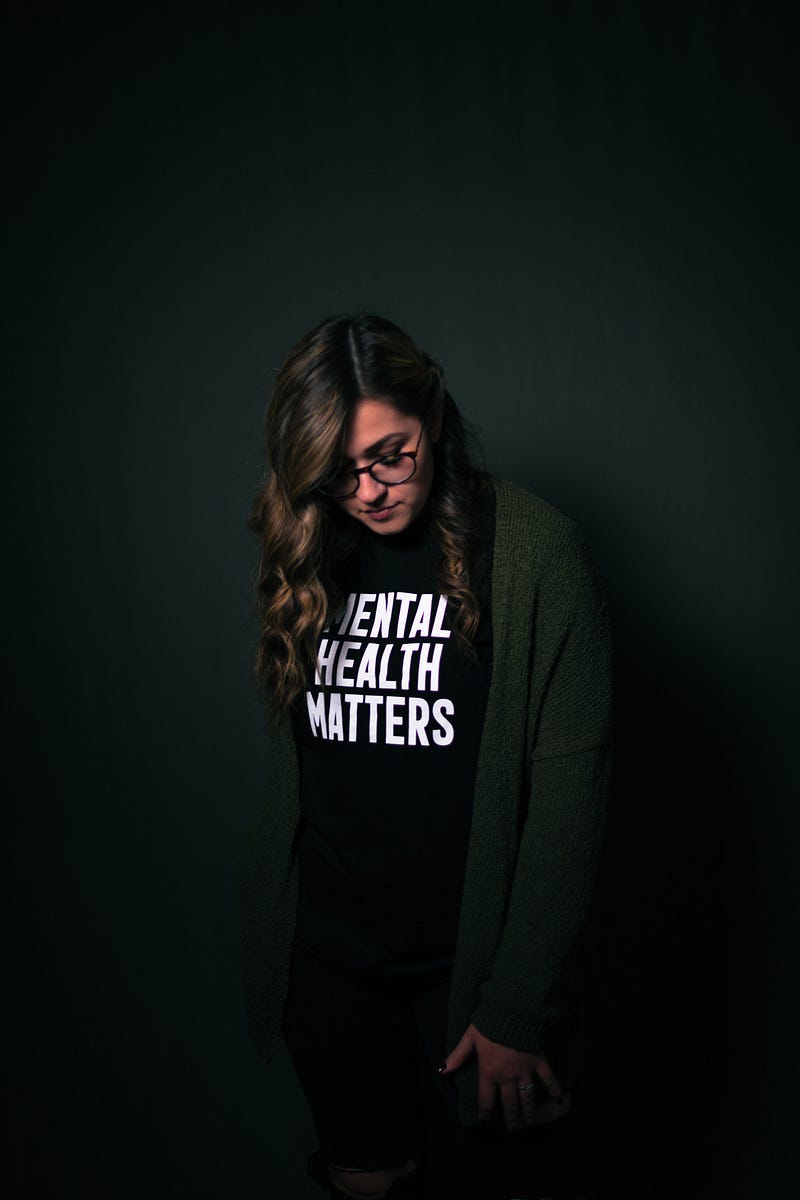
This is just one case in a small town an hour away from me and there are thousands of similar ones happening daily in cities all across our country.
From KAKE TV — Hutchinson, Ks. “A young man in his 20’s was arrested today which will hopefully lead to him getting some much-needed mental health care, his family reported. Last month in April, this man’s mother called the local police begging for them to “do something to help my son.” She explained that he was now threatening “to go and shoot up his last place of employment.” He has no health insurance. She added that he had also been talking about ‘committing suicide by cop’ and that he had even worked out how he would do it.” This is what led the police to finally go after the man and they were able to arrest him on charges of personal and public endangerment.
Luckily he told his family about his plans, otherwise, he may have gone through with them and many more lives would be lost to someone with mental health issues having a gun.
May was National Mental Health Awareness month which first began in 1949' to raise awareness about mental health and overall wellness.
However today, per health officials nearly 60% of people with mental illnesses did not seek treatment last year, and half of all mental illnesses begin to show symptoms in children by age 14. The stigma to get help for these young people is much higher than for adults, so getting professional help stalls at a time when it can prevent bad outcomes for a young person and society.
Availability of help: On top of this, the availability of mental health beds in hospitals is grossly short. In fact, more than 112 million Americans live in areas where mental health providers are scarce. States like MO, AZ, SD, MT, and WA are all currently in need of mental health professionals. It comes down to a matter of the publics need being greater than anticipated. On the national level, research shows that the U.S. is likely to continue to experience a shortage of mental health professionals through 2025.’
Cost: Spending on mental health treatment and services reached $225 billion in 2019' and that’s up 52% since 2009.’ This includes spending on therapy and prescriptions, as well as stays in psychiatric and substance abuse rehabilitation facilities. A diagnosis of severe depression can carry a heavy lifetime burden of cost as it requires an average of $10,836 a year to treat, as compared to a yearly treatment for diabetes at $4,800.
Insurance payments:
Just 56% of psychiatrists accept commercial insurance compared to 90% of other, non-mental health physicians. Per my research, this is due to the fact that insurers pay licensed mental health professionals, like psychiatrists and therapists, lower negotiated rates for their services compared to doctors with similar backgrounds and educational levels, and they are subjected to more paperwork. As a result, it’s estimated that less than half of Americans who have a mental disorder get proper treatment.
What can be done?
It’s hoped that the new dynamic of the expansion of telehealth and teletherapy will be effective in treating many mental disorders. Online counseling services like Talkspace and Betterhelp can cost less than traditional in-person therapy sessions with prices ranging from $60 — $90 per week, and Talkspace is covered by many major insurers, including Cigna, Humana, and Premera BC/BS.
Also, legislative and regulatory changes are on the horizon, but for now, there’s Kimball’s organization, NAMI, that has a helpline that offers free assistance and advice Monday-Friday, 10 am — 8 pm and they can be reached at 1+800–950–6262. They also offer a free text 24/7 crisis line that can be reached by texting NAMI to 741–741.
Please, if you or a loved one is experiencing what you believe is a mental health crisis — reach out to your doctor or one of the above-listed helplines. We don’t take serious risks to our health for granted and we should do likewise with our mental health, for everyone’s sake.
Thank you for reading and thoughtful writing everyone.


