
Menopausal Madness
A time-limited period of temporary insanity
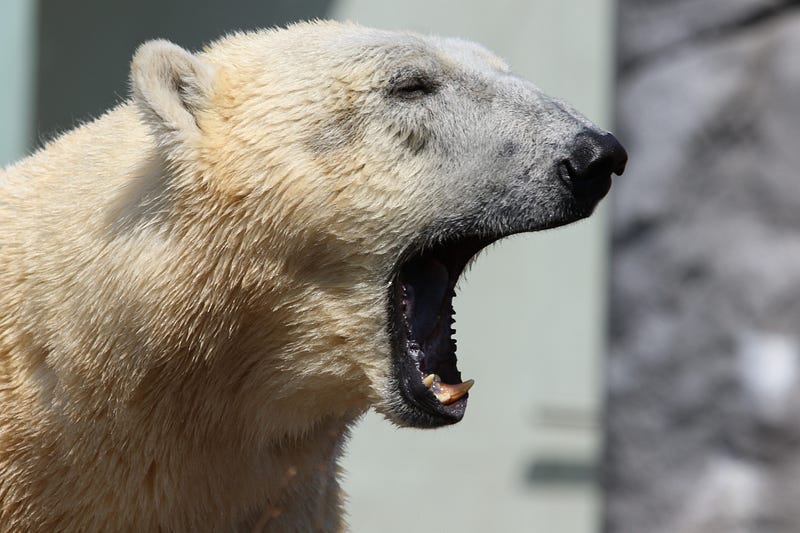
My stepfather had a friend who described adolescence as, “a temporary period of insanity followed by an excellent prognosis.” Menopause is a lot like this. Big and little shifts happen and if we don’t remind ourselves that we are in a period of temporary insanity, it can feel totally overwhelming.
Menopause is on my mind lately. Natural, chronological life changes combined with subtle, hormonal shifts have left me with a feeling of moodiness and irritation and a persistent lack of joy.
My daughter is one year away from leaving home. She needs minimal parenting so my role with her feels like it’s slowly evaporating.
I have a stable, normal job that keeps me from traveling the world like my boss, ten years my senior, who’s preparing for a year-long sabbatical. That makes me feel like I’m left behind to hold the boring bag. I feel a little bit lost, like someone dropped me here and I’m not quite sure what to do with myself.
Polar Bear Pause
I can’t help thinking about a paragraph I read a few weeks ago in Heartbreak: A Personal and Scientific Journey by Florence Williams. The book, a memoir mixed with the exploration of scientific questions and answers about aging and emotions, begins when the author is fifty years old and going through an unexpected, unwanted divorce.
At one point in the book, Williams shares a scene from a conversation she had with an anthropologist about his work with an Inuit woman. After completing his interviews, the anthropologist says to the woman,
“I see everything but the years from when you were 50–54.”
“Oh, I have no words for those years,” she replied.
“Why not?”
“In those years,” she told him, “I was a polar bear.”
Since reading that I’ve been obsessed with the concept of this Polar Bear Pause women enter during menopause. For the woman interviewed, her pause was the years between the ages 50–54. In those years, she felt like a polar bear. I wonder if she felt like a polar bear because she was having hot flashes and she felt like a polar bear out of the artic — hot and bothered all the time.
I’m 53. Lately, I am struggling to find joy. I ask myself, “Laura, what brings you joy?” And nothing comes. I like to walk around my neighborhood. I like to spend time with my family. I like to hike in the woods. I like to feel like I get a win at work. I like to bake.
But I don’t feel the presence of JOY the way I have in the past. Maybe right now I’m a polar bear and I miss my home. I don’t belong here among these humans who don’t understand that I’m a polar bear. I’m hot and itchy and uncomfortable.
Yesterday I went for a walk with a friend who just turned 54. As we walked I thought to myself, “This brings me joy.”
“I’ve been experiencing these crazy bouts of deep depression,” my friend told me. “They last three days and then they are gone.” She went on to describe how intense those three days are; how despairing and hopeless she feels.
I wonder if polar bears feel that hopelessness and despair as they witness the ice caps around them melt as they sleep.
Every year for the last five years I’ve co-hosted a retreat for menopausal women called, Put Some Claws in Your Pause. At the retreat, we learn about the physiological, emotional, and social aspects of menopause. We talk about our personal experiences. We support each other. We laugh. We celebrate. We are polar bears among polar bears and we romp and play and experience the joy and camaraderie of this shared life experience.
Menopause is different for every single woman.
I have a friend who experienced it when she was in her early thirties. She was totally alone. No one, even the doctors, understood what was going on for her.
I’ve just started to notice the physical changes in my body— loss of my period, roll around the belly, achy knees, hot flashes. Many of my friends report that (and I can relate) they are inexplicably mean and impatient with their spouses and children.
Hearing about the experiences of other women — like my friend who has come to recognize these bouts of depression are probably related to menopause — helps. It reminds me that my peers and I are polar bears right now. We miss the north pole. We feel lost and scared and protective of ourselves and each other. We may get depressed and angry. We may claw and snarl at the humans who get too close.
But this won’t last.
Menopause is a temporary period in time. A time for women to be polar bears.
Right now I’m in a dark hole, trying to find the light. I long for something different, like a polar bear might long for the fully formed glaciers that they used to call home. It helps to spend time with my other polar bear friends, to share our woes and laugh together, and to remind ourselves and each other that we won’t live here forever.
Laura Culberg- Welcoming Opposites. Laura writes about seemingly mundane experiences that are relatable because we are human. Subscribe to her on Medium or on Substack: lauraculberg.substack.com. For more information about the Menopause retreat go here.


