
Mended by Daybreak
A celebration of sunrises through the seasons
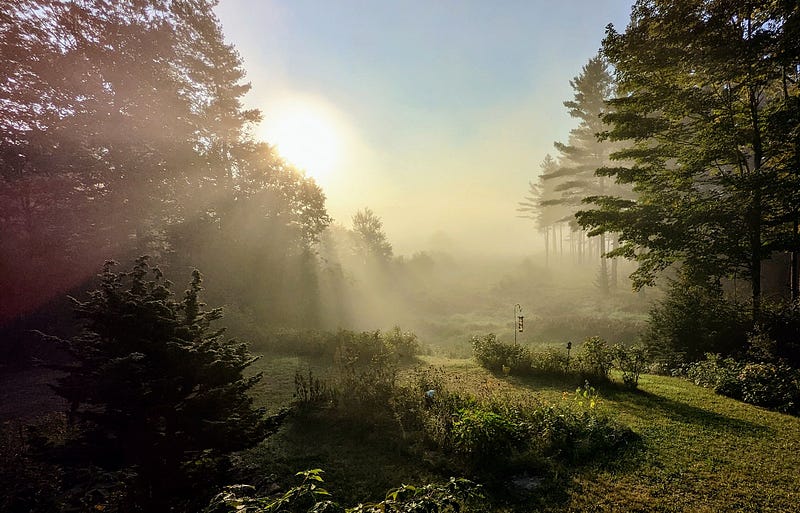
We’re fortunate to live in a place where we have an unobstructed view of the sunrise. We wake each morning to look out over a wild, undeveloped landscape that includes a pond, a marshland, and surrounding hills.
Living in a place for a number of years can de-sensitize you to its beauty. We‘re grateful that the opposite has been true. The longer we live here, the more details we notice, the more memories we have, and the more we have to look forward to. The longer we live here, the more the landscape itself sustains and heals us. Tomorrow, the sunrise will be different than it is today.
In the photo above, the lush greens of summer are brought to life by the morning sun. The humid air of summer allows shorter wavelength blue light to reach the earth. Here, the pure morning sunlight is for a few fleeting minutes diffused by mist. It seemed like only moments before the mist burned away.
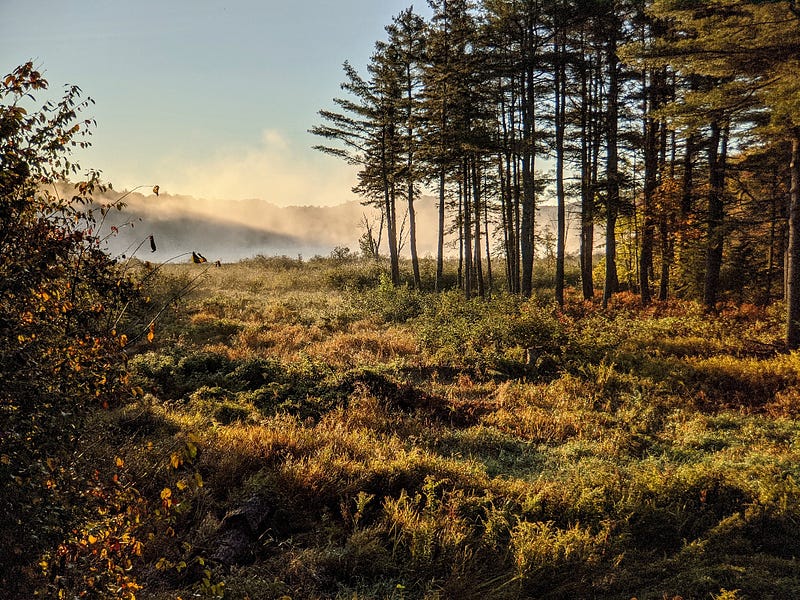
The cooler temperatures of early autumn have turned some of the greens to browns. The air from the surrounding hills cools the moist air over the pond and forms a mist that brilliantly reflects and diffuses the morning light.
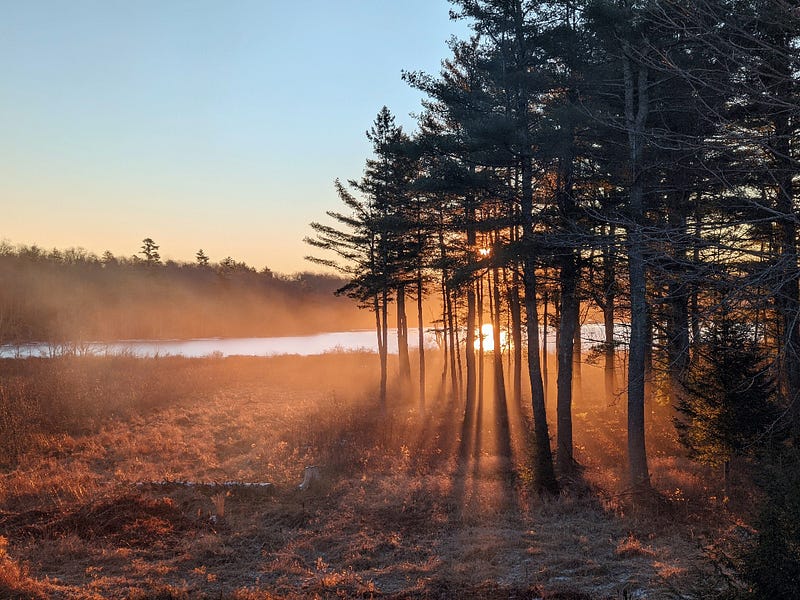
The drier air of this autumn sunrise contains dust that bends the blue wavelengths of light away from the earth, allowing us to see the wavelengths that are golden and orange. Here, a thin morning frost is tinted by the rising sun. The pines separate the light into long orange hallways — and cast their tall shadows in between.
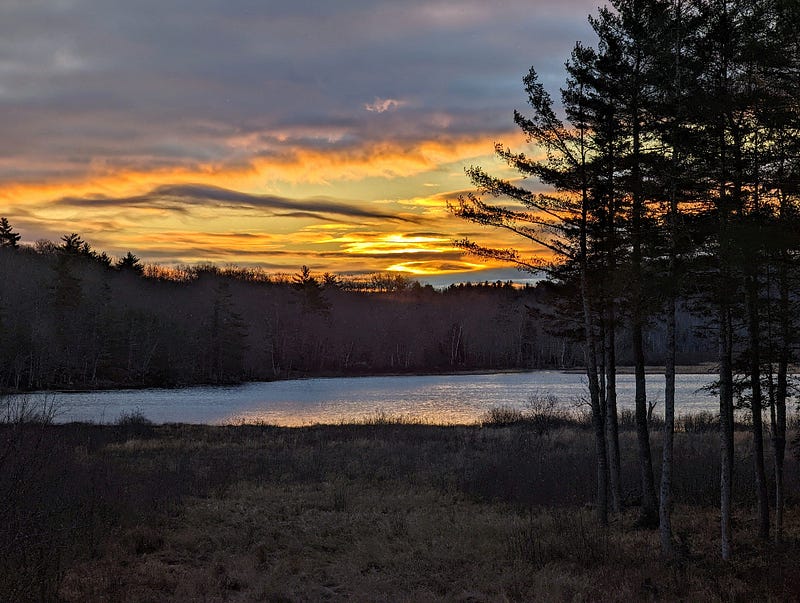
A cold dry November morning before sunrise. The pond reflects light that the clouds have reflected. This process can begin when the sun is still 18 degrees below the horizon. At this time of year, in the morning light, it can be difficult to tell if the surface of the pond is water, or if it’s ice.
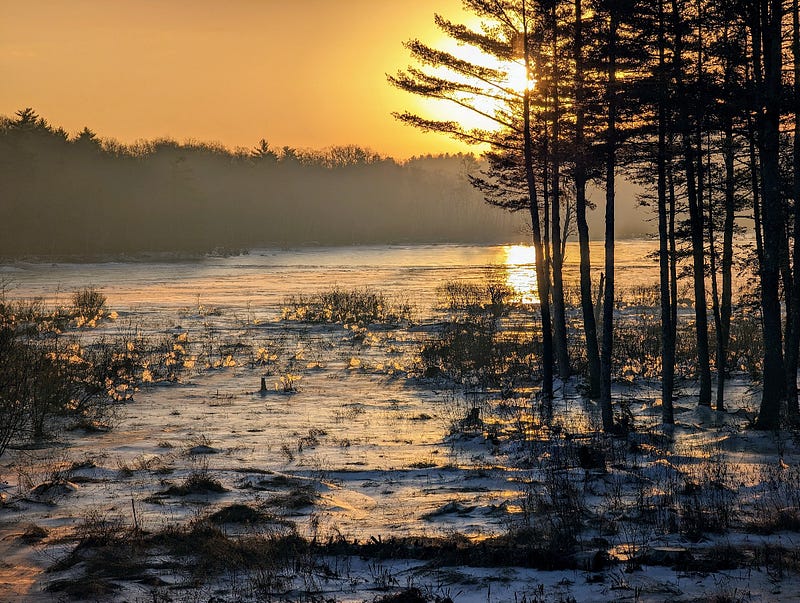
A flood and then a cold snap and then a yellow sunrise. Shards of ice that hung up in the branches when the ice settled now serve as yellow window panes, each reflecting its tiny share of the dawn.
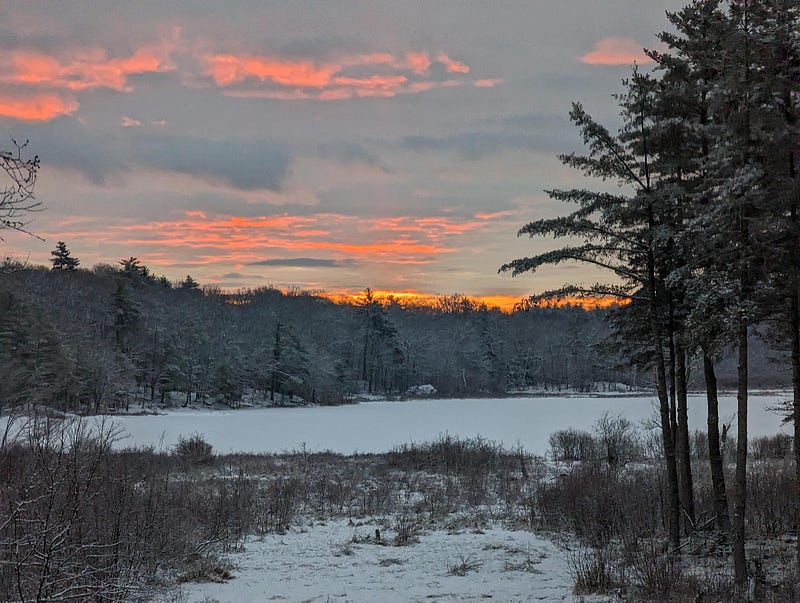
December brings an annual reset of snow and reduced light. The subtle oranges and yellows of this sunrise give us hope for brighter days.
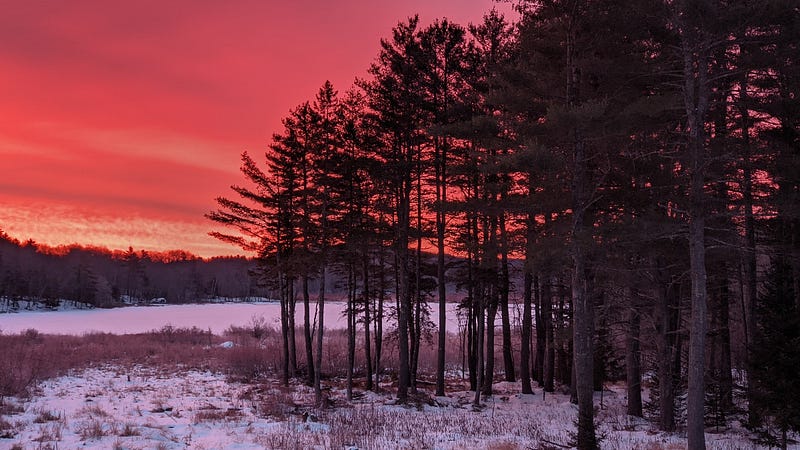
The lower angle of the winter sun makes the sunrise last longer. The most vivid colors are often 45 minutes before sunrise. The drier air holds more dust and particulates, making the sunrise more colorful. These factors combine to make each winter sunrise a don’t-miss event. Sunrises are easy to miss, though, if you are still sleeping — or scrambling to get ready for work.
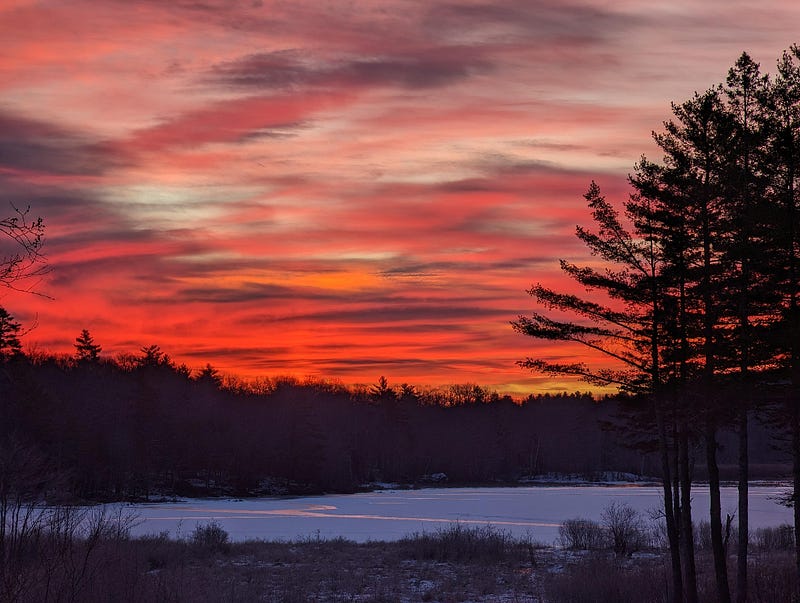
For four decades of my working life, like a lot of people, I largely missed out on sunrises like this one. Now, I am grateful to be able to savor them, to stay in one place and watch the colors in the sky as they shift and evolve, and to watch the lines of light that reach across the pond.
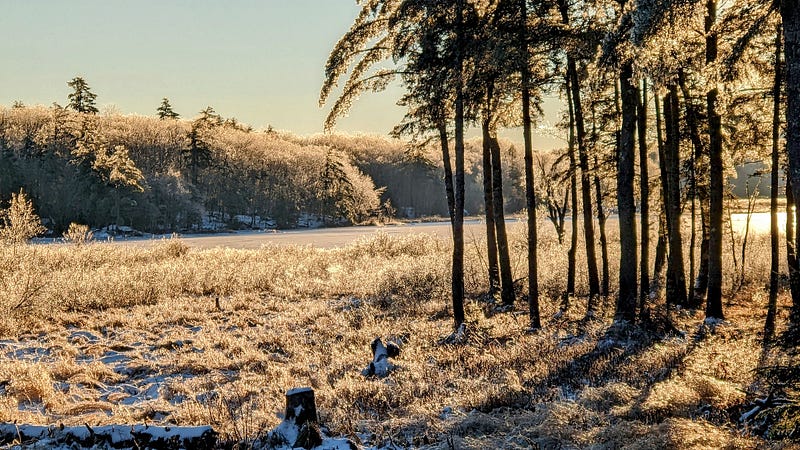
And then there is this early January sunrise. No color added — or needed. The ice outlining each branch, each needle, and each leaf doubles and redoubles the already growing power of the post-solstice sun.
Which of the above is your favorite sunrise? Which would make you feel the most positive about the day ahead?
If you enjoyed this piece, you may also enjoy:
Enjoy even more on Medium. Become a member with the link below.
Your $5.00 Medium membership will grant you unlimited access to my stories and the stories of many interesting writers. (I will receive a small commission if you use this link.)