avatarCarol Townend

Free AI web copilot to create summaries, insights and extended knowledge, download it at here

3024

Abstract

ong all the time.</b></li></ul><p id="db28">There is not a human whether male or female that I know in this world who can be strong all the time.</p><p id="6272" type="7">We all have feelings no matter whether we are are a man or a woman. We are all human, and we all need to be able to open up about our mental health and daily life.</p><p id="a66e">I have been grieving recently, and my male friend has just lost his mum. Grief is painful for anyone to deal with, and I have lost friends to suicide in the past after their parents have past away because they have felt unable to talk about it.</p><p id="feb8"><b>Two of those friends were male.</b></p><p id="9d4a">As a woman, my mental health is important to me. I battled for years with stigma and shame, and I was made to feel more ashamed after I opened up about it.</p><p id="674d">I was made to feel even worse about it once I became a parent.</p><p id="0595">Fact:</p><p id="41dd"><b>Some men are parents too, and male parents still have to deal with mental health problems.</b></p><p id="2e92">When anyone, whether male or female is unable to talk about their mental health, no matter how big or small, it can lead to:</p><ul><li><b>A feeling of not belonging anywhere</b></li><li><b>Deep sadness</b></li><li><b>Higher <a href="https://www.nhs.uk/every-mind-matters/mental-health-issues/anxiety/">anxiety</a></b></li><li><b>Loneliness</b></li><li><b>Increased depression</b></li><li><b>Suicide</b></li><li><a href="https://www.webmd.com/mental-health/signs-nervous-breakdown"><b>nervous break down</b></a></li><li><b>Isolation</b></li><li><b>Physical illness</b></li></ul><h2 id="3f46">Mine and My Husbands Story</h2><p id="974d">I found myself dealing with severe stigma over my own mental health problems in the past, and I am married to a man who has dealt with his own mental health problems in the past; who now deals with more mental health problems on a regular basis because of how his physical disabilities make him feel.</p><p id="ad84">We find ourselves dealing with:</p><ul><li><b>People discriminate against us over housing</b></li><li><b>People making hurtful comments</b></li><li><b>People jumping to assumptions and making us out to be bad people</b></li><li><b>People trying to cause problems with us, even when we haven’t said anything or done anything to them</b></li><li><b>People making untrue reports about us</b></li><li><b>People don’t talk to us because of misperceptions about our circumstances</b></li></ul><p id="48c9">I also deal with:</p><ul><li><b>Getting dirty looks from people in public, and being leered at because I am supporting a man who used to be a stronger person</b></li><li><b>People tell me that I should no longer be with my husband because he can no longer take care of me</b></li><li><b>People get annoyed when they walk behind my husband because he can’t walk fast. However, when this is me, people don’t say anything.</b></li><li><b>Being told that my husband should be able to cope with the pain because ‘that is wh

Options

at men do.’</b></li><li><b>Getting funny looks and being laughed at when my husband breaks down in tears in public.</b></li><li><b>Being ignored when out with people, when I try telling them that my husband needs to rest.</b></li><li><b>People get angry when my husband becomes confused. I was once told, <i>‘He is a man, and he was a nurse so he should be able to deal with it.’</i></b></li></ul><p id="3a75">There have been many times when my husband has broken down in tears with the pain which can be so bad that it does affect his mental health. However, people view it as <b>‘attention seeking.’</b></p><p id="821b">As one person that I spoke to put it,</p><p id="9332">If he stopped attention-seeking, he wouldn’t make it worse. He is a man, and he still needs to take responsibility for it.</p><p id="11b2">(Anonymous.)</p><p id="0be9"><b>Really?</b></p><p id="8e8f">If I took the views of those people, my husband would become housebound because the pain would become so severe that he wouldn’t be able to go out.</p><p id="294d">I have to support my husband with the pain on a daily basis because the pain can be so chronic that:</p><ul><li><b>He can’t move by himself</b></li><li><b>He would be at risk of hurting himself</b></li><li><b>It would become too stressful for him to manage alone.</b></li><li><b>Too much pain would double the mental pain that he goes through on a regular basis.</b></li></ul><p id="6477" type="7">I would rather stand up to society’s stigma than see my man or any man suffer.</p><h2 id="a3a1">Conclusion</h2><p id="d1fd">Mental health can affect anybody. <b>It does not have a specific category of people or a gender preference.</b></p><p id="80b2">It is important that we start to recognize that men have mental health problems too, and</p><p id="6017" type="7">It is important that society starts to recognize men as human beings with feelings. All humans have feelings, even animals do.</p><p id="55db">Men deserve as much help with their mental health as women. They deserve to live healthy lives and look after themselves just as much as we do.</p><p id="4e4d">Society must remember that men have feelings too. They cry they break down, they deal with their own pressures of daily life, they experience breakdowns, and they also deal with mental health problems.</p><p id="c515" type="7">Men have feelings too.</p><div id="e6eb" class="link-block"> <a href="https://buffy36.medium.com/membership"> <div> <div> <h2>Join Medium with my referral link - Carol Townend</h2> <div><h3>Read every story from Carol Townend (and thousands of other writers on Medium). Read more great stories like these on…</h3></div> <div><p>buffy36.medium.com</p></div> </div> <div> <div style="background-image: url(https://miro.readmedium.com/v2/resize:fit:320/0*PnS0jLN9Qv3MDlG5)"></div> </div> </div> </a> </div></article></body>

Men Cry Too

And Society Still Needs To Change Its Views On That.
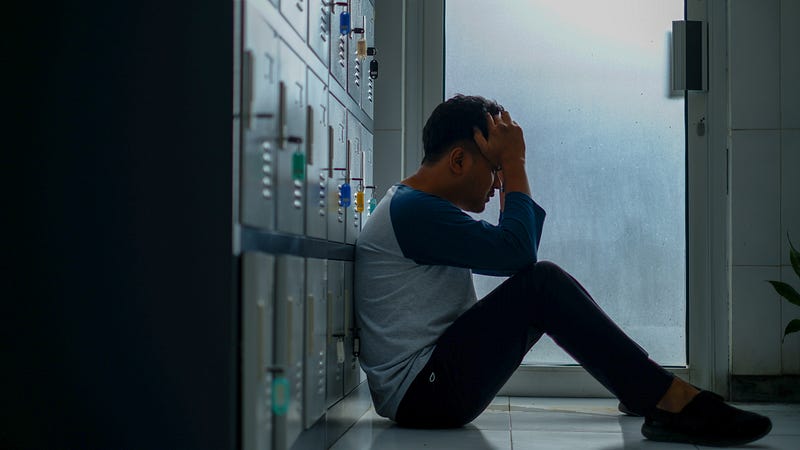
Photo by Yosi Prihantoro on Unsplash

The Stigma Against Men

There is nothing that gets my back up in the world than hearing people say the following to a man when he is upset:

  • Men don’t cry
  • Don’t be a coward
  • Man up
  • Be a hero
  • Don’t be a girl
  • It’s not manly to cry
  • You can handle it, you’re a man.

Many of my male friends get picked on for crying, usually by other men, and one of my close male friends was dumped by his girlfriend for being diagnosed with depression, and having tearful moments.

I had a recent conversation with my friend’s girlfriend about this, and here is what she said:

I’d rather be with a man who can act like a man. I don’t want to be with a cry-baby for the rest of my life

(Anonymous)

We are saying that men are not allowed to cry and have feelings because they are male.

This is a stigma aimed toward our men, and it comes from the past when men were not seen as men for showing emotions and feelings,

A past that still exists in our present.

According to mental health.org

  • three times as many men as women die from suicide.
  • Men aged 40 to 49 have the highest suicide rates in the U.K.
  • Only 36 referrals to NHS talking therapies are for men.

Societies’ Perceptions Of Men

Societies’ perceptions are changing, but there are still some views about men and mental health that I hear regularly and find shocking. These men are supposed to be strong

  • Men are not supposed to be crybabies
  • Men are supposed to be strong
  • It’s not masculine for men to show their feelings
  • Men are our leaders; they are supposed to protect women. Crying isn’t protecting women

This kind of stigma leads to:

  • Men feeling ashamed of themselves for having feelings
  • Men feeling bad about talking about their mental health
  • Men feeling guilty for grieving
  • Men feeling they are not allowed to be protected
  • Men feeling they have to take the lead and be strong all the time.

There is not a human whether male or female that I know in this world who can be strong all the time.

We all have feelings no matter whether we are are a man or a woman. We are all human, and we all need to be able to open up about our mental health and daily life.

I have been grieving recently, and my male friend has just lost his mum. Grief is painful for anyone to deal with, and I have lost friends to suicide in the past after their parents have past away because they have felt unable to talk about it.

Two of those friends were male.

As a woman, my mental health is important to me. I battled for years with stigma and shame, and I was made to feel more ashamed after I opened up about it.

I was made to feel even worse about it once I became a parent.

Fact:

Some men are parents too, and male parents still have to deal with mental health problems.

When anyone, whether male or female is unable to talk about their mental health, no matter how big or small, it can lead to:

  • A feeling of not belonging anywhere
  • Deep sadness
  • Higher anxiety
  • Loneliness
  • Increased depression
  • Suicide
  • nervous break down
  • Isolation
  • Physical illness

Mine and My Husbands Story

I found myself dealing with severe stigma over my own mental health problems in the past, and I am married to a man who has dealt with his own mental health problems in the past; who now deals with more mental health problems on a regular basis because of how his physical disabilities make him feel.

We find ourselves dealing with:

  • People discriminate against us over housing
  • People making hurtful comments
  • People jumping to assumptions and making us out to be bad people
  • People trying to cause problems with us, even when we haven’t said anything or done anything to them
  • People making untrue reports about us
  • People don’t talk to us because of misperceptions about our circumstances

I also deal with:

  • Getting dirty looks from people in public, and being leered at because I am supporting a man who used to be a stronger person
  • People tell me that I should no longer be with my husband because he can no longer take care of me
  • People get annoyed when they walk behind my husband because he can’t walk fast. However, when this is me, people don’t say anything.
  • Being told that my husband should be able to cope with the pain because ‘that is what men do.’
  • Getting funny looks and being laughed at when my husband breaks down in tears in public.
  • Being ignored when out with people, when I try telling them that my husband needs to rest.
  • People get angry when my husband becomes confused. I was once told, ‘He is a man, and he was a nurse so he should be able to deal with it.’

There have been many times when my husband has broken down in tears with the pain which can be so bad that it does affect his mental health. However, people view it as ‘attention seeking.’

As one person that I spoke to put it,

If he stopped attention-seeking, he wouldn’t make it worse. He is a man, and he still needs to take responsibility for it.

(Anonymous.)

Really?

If I took the views of those people, my husband would become housebound because the pain would become so severe that he wouldn’t be able to go out.

I have to support my husband with the pain on a daily basis because the pain can be so chronic that:

  • He can’t move by himself
  • He would be at risk of hurting himself
  • It would become too stressful for him to manage alone.
  • Too much pain would double the mental pain that he goes through on a regular basis.

I would rather stand up to society’s stigma than see my man or any man suffer.

Conclusion

Mental health can affect anybody. It does not have a specific category of people or a gender preference.

It is important that we start to recognize that men have mental health problems too, and

It is important that society starts to recognize men as human beings with feelings. All humans have feelings, even animals do.

Men deserve as much help with their mental health as women. They deserve to live healthy lives and look after themselves just as much as we do.

Society must remember that men have feelings too. They cry they break down, they deal with their own pressures of daily life, they experience breakdowns, and they also deal with mental health problems.

Men have feelings too.

Mental Health
Mens Mental Health
Men
Stigma
Health
Recommended from ReadMedium