
Men Are The Default, Women Are The Exception
How and why we ignore half of the world’s population
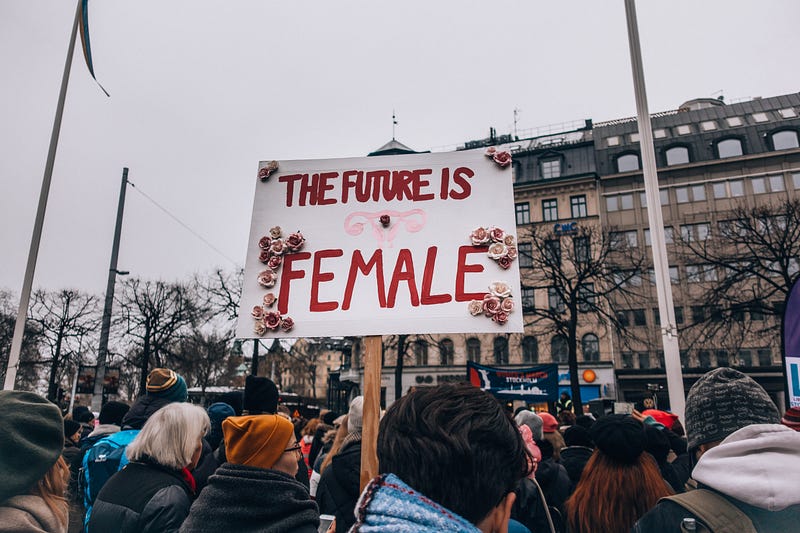
“When researchers in one study attempted to prompt participants to see a gender-neutral animal as female by using female pronouns, children, patents and carers still overwhelmingly referred to the animal as ‘he’. The study found that an animal must be ‘super-feminine’ before even close to half of the participants will refer to it as she rather than he.”
Caroline Criado Perez, Invisible Women
Immaculately researched, lucidly written and passionately argued. Perez’s data-driven expose of the seen and unseen inequalities that plague our 21st-century world is unputdownable. Pulling data from all walks of life, Perez’s “feminism for dummies” is an essential guide for identifying inherent male-bias, understanding the unintended consequences of inequality and a call to action to fix the widening gender data gap.
It’s unquestionably a man’s world. Jobs, medicines, automobiles, room temperatures or anything else you can think of is built, designed and optimised for men. Because seeing humans as men is the default. The archetypal human body is male and women are inferior. Women, as Perez says, are treated as “scaled-down men” and as Aristotle put it, “mutilated males”. And this “male, unless otherwise” perception leads to an enormous gender data gap, i.e., the unconscious bias where there is simply a dearth of sex-disaggregated data on women’s experiences. Here are a few examples sourced from the book (Perez cites from over 200 research papers!) that show how.
Language
- French, Spanish and German are a few examples of gender-inflected languages. Guess what the “default” gender is? Yup. Male. The German word for “lawyer” is Anwalt. But the literal translation is male lawyer, not a lawyer. Countries with gender-inflected languages are the most gender-unequal. English isn’t gendered i.e. there is no word for “female banker” or “male nanny” but what gender pops up in your head for astronaut or athlete or professor? That’s the male default. That’s the gender data gap.
- The world’s fastest-growing langue is Emoji (:D). Do you know what the emoji of a running man was called? Runner. Not “running man”. A male police official? Police officer. Not policeman. Male default, female exception. This was since corrected by Unicode in 2016.
Work
- Women do 75% of the global unpaid work. Childcare, maintaining the household, caring for elderly relatives — these are examples of unpaid labour. What we mean by “labour” is actually “work done by a man that’s paid for”. Men work and have leisure time; women work and then complete unpaid work and then, have some leisure time. Women have always worked (paid and unpaid) but the traditional workplace hasn’t worked for women. It is tailored to an unencumbered worker, i.e., the male default. But what about crying babies, homework, bullying, hunger, cleaning? Of course, flexible workhours in wealthy countries is an improvement to the traditional workplace — but what of most women living in poor countries?
- Perez shows how meritocracy in the workplace is a myth that simply provides cover to institutional, male bias. Psychology studies have shown that a belief in your own personal objectivity or a belief that you are not sexist, makes you more likely to behave in a sexist way. Because of the male default. Because it reinforces the myth to the people who benefit from the myth that their achievements are due to their merits. It cements homophily, reinforces the gender data gap and leaves us not knowing what we don’t know.
- Job adverts that used terms like “aggressive”, “persistent”, “ambitious”, had fewer than 5% of women applicants while adverts using “enthusiasm” and “innovation” had over 40%. Using male-biased language in job postings dissuades women from even applying to the role. Most women in this survey rationalised this by saying they didn’t apply for the job due to “personal reasons”, when in fact, the language used discriminated against them.
- The formula for setting the standard office temperature was developed in the ’60s and was based around the metabolic resting rate of the average forty-year-old man weighing 70kg. This male default persists, and current offices are five degrees too cold for women.
Technology
- Imagine if you paid the same price for a gadget as I did, and had a worse experience? Would you be miffed? What about this then: smartphones are primarily designed for men’s hands because they drive flagship phone sales. Male default: men have larger hands than women — so, phone sizes get larger. The negative experience of half of the world’s population is seemingly not even being considered. Maybe that’s why Apple is finally launching a full-fledged, top-spec iPhone mini?
- Voice-recognition systems are 70% more likely to recognise male voices — and that’s testing the Google Home, which is arguably the best-in-market solution today.
- At Siri’s launch, she could find prostitutes and Viagra suppliers. But, not abortion providers. Male default, much?
- Why isn’t there a “safest” route option on Google maps along with the “quickest” option?
- The “plough hypothesis” states that societies that had historically used the plough tend to be less gender-equal than those who didn’t. This holds up even today. Using the plough required superior upper body strength and a firm hand grip, both traditionally male attributes. Further, learning the skill of using a plough needs time and access. With unpaid work taking a bulk of their time, women never had any access to it. Ploughs are also capital-intensive investments; with the bulk of the money being controlled by males in a household, this was yet another barrier to entry to women.
Health & Medicine
- Why are the queues to the women’s loo so long? Women are statistically more likely to be one or more of these: elderly, disabled, menstruating, accompanying children, pregnant or suffer from urinary tract infections (8 times as common as men). On average, it takes women 2.3 times longer to visit the bathroom. So, having equal or gender-neutral bathrooms for men & women is unequal. Equality doesn’t only mean having an equal number of something, it also needs to incorporate access and experience. The gender data gap does not account for this.
- Women in India make up the majority of the 86% of Indians who work in the informal economy. And the lack of public toilets causes disease (when more than 90% of surface water is contaminated where else are women meant to go?), shame (women avoid drinking liquids, suffer from an increased risk of dehydration and heat illness) and even prevents women from joining the police force — how does this impact responses to crimes against women and girls?
- Females aren’t even included in animal studies on female-prevalent diseases! E.g. women are 70% more likely to suffer depression but animal studies on brain disorders are five times more likely completed on male animals. Why? Because, how males react is how humans react. Gender data gap. Male bias.
- A study of daytime heart attacks shows higher survival rates when compared to heart attacks that occur during the night. But when the study was re-done using female mice, the result was the exact opposite. The gender data gap persists in research. Anatomically, men and women are superficially similar but at the cellular level, they aren’t. And yet, it’s the male default model that dominates research.
- The specific effects of many existing medications on women are unknown.
Economics & Psychology
- GDP calculation has a woman problem. Contribution of unpaid work — cooking, cleaning, caring, childcare — is vital to the economy as it keeps it functional but is not counted anywhere in the GDP equation.
- The economic boom in the USA in the mid-’70s was hailed as “productivity growth”. All that happened was women were now going out to work and productivity had simply shifted from the invisibility of the female sphere to the male-dominated public sphere. No wonder then that sales of pre-cooked food in the supermarket shot up. As did sales of children’s clothes as women were no longer stitching them as part of their unpaid workload.
- Women’s workload is not merely an innate instinct for shelter and care; the whole of society depends and benefits from it. And women time and again, are berated for this.
- Psychology research from 2017 showed that while white male politicians get praised for promoting diversity & inclusion, women and ethnic minority politicians get penalised for it. Imagine Trump saying, “We should have more women in the police force”. Now imagine, AOC saying it. One appears progressive. The other, pandering. Research also shows that women don’t forget about other women as easily as men do.
Cars
- “Nothing confuses a man more than a woman driver who does everything right.” Hilarious. Here’s some data: men are more likely than women to be involved in a car crash. But women are 47% more likely to be injured and 17% more likely to die. Why? Cars, like almost everything else we’ve seen so far, are designed for the male default. Female crash test dummies are used for testing purposes. But only in the passenger’s seat. And, a typical female crash test dummy is literally a scaled-down male test dummy.
- We still haven’t developed a seatbelt for pregnant women. Is it because the female body is unfathomable, or because we haven’t realised we have a problem because of the gender data gap?
So, there you have it. This is a revelatory book that is a tough, inquisitive, infuriating read. But it’s essential. It taught me that it has never been a level-playing field for women and there’s still so much more to do before anything resembling equality can be reached. Perez’s masterpiece brings this to the fore, warts and all and is an appeal to bridge the gender gap. Pick it up, imbibe it, question it, share it and introspect. In case you are sceptical about the evidence I had listed above, here’s another example to show how entrenched male-bias is: hysterical is from the Greek word “hystera”, meaning womb. Oh and the next series you binge-watch? Make sure it passes the Bechdel Test.