Memory and Oblivion
James Milne
James Milne on ‘Memory and Oblivion’
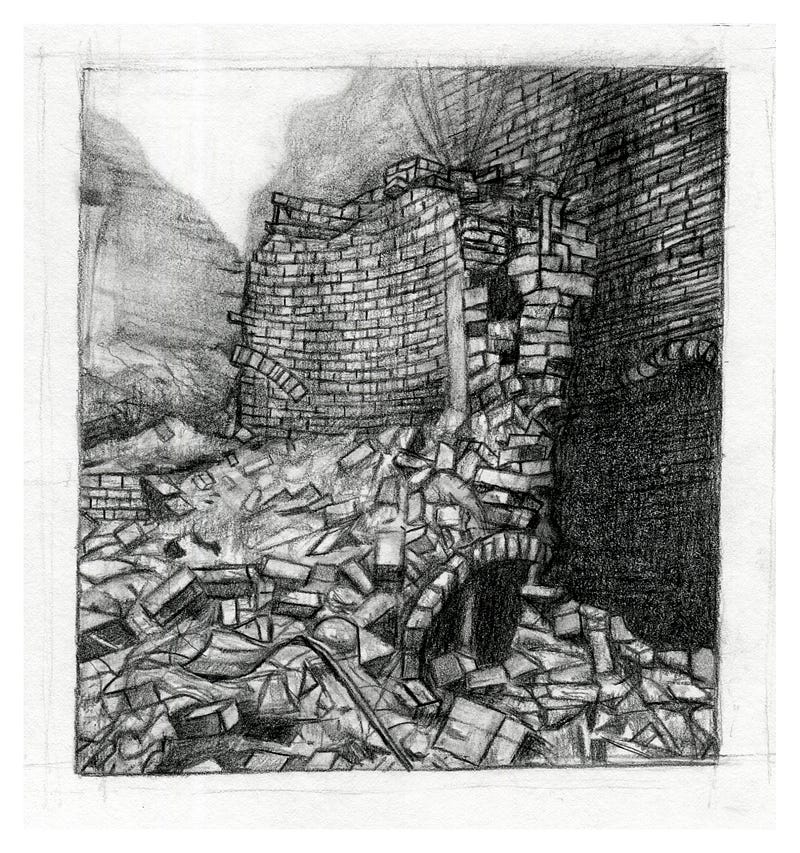
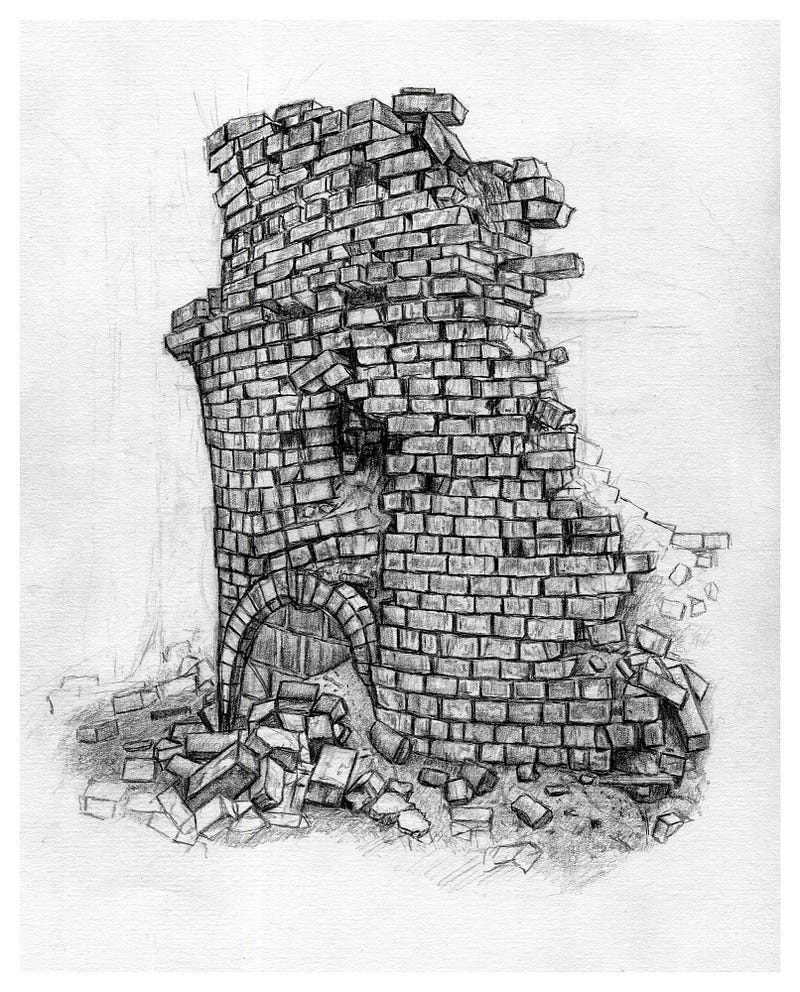
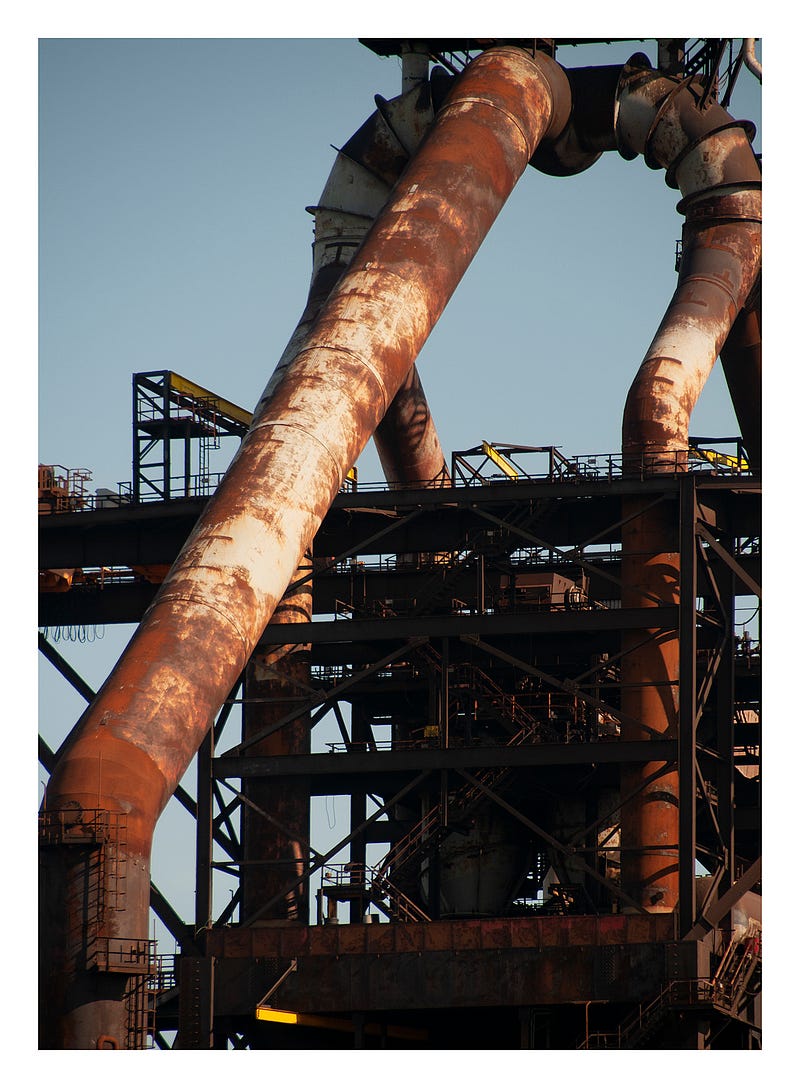
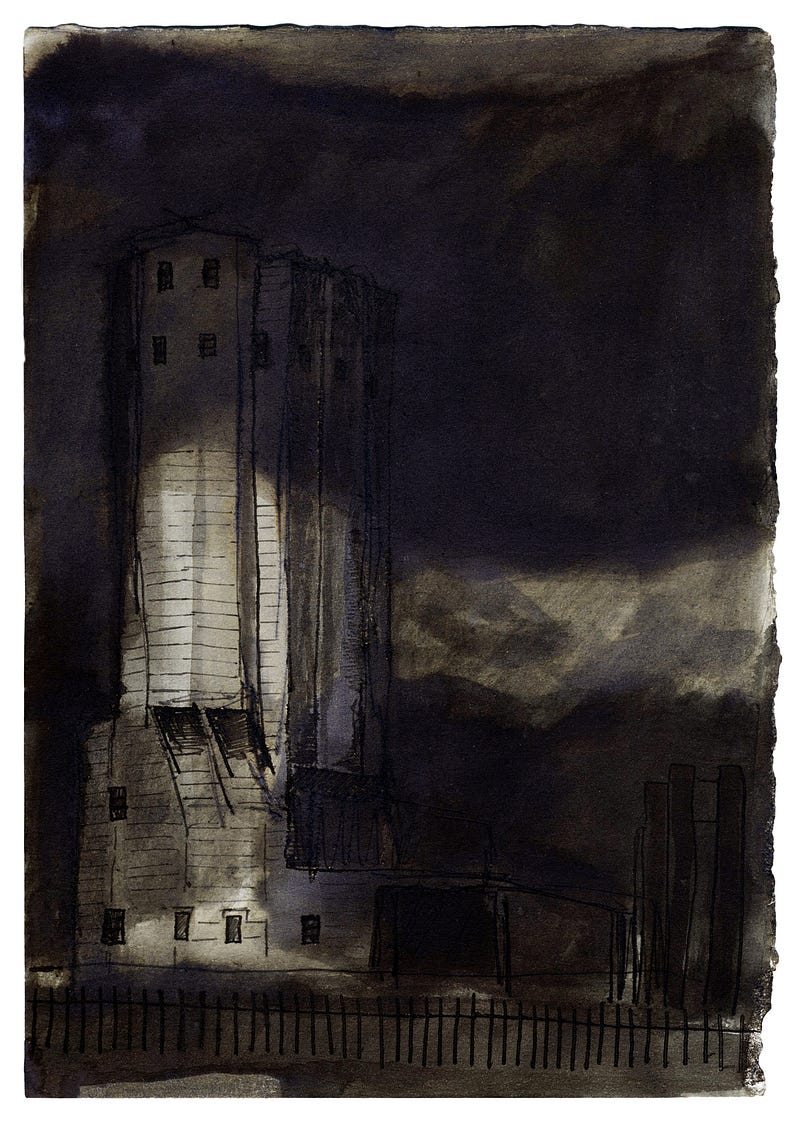
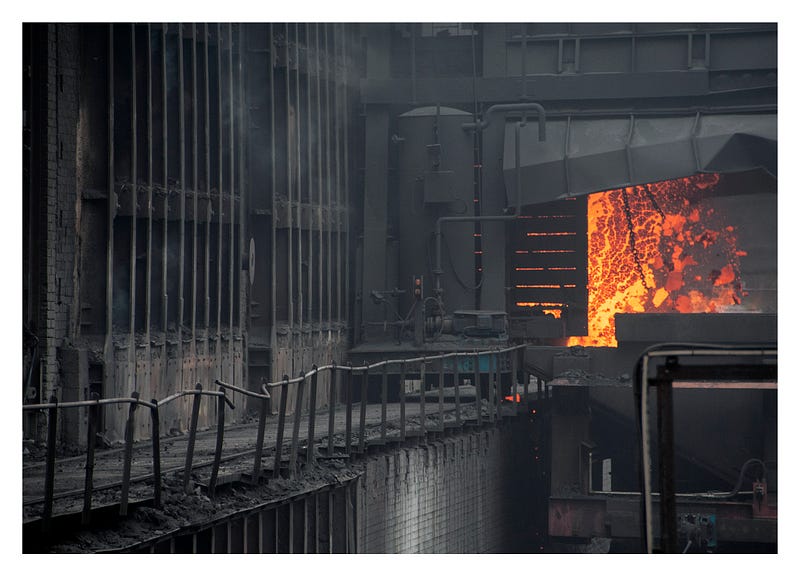
When researching a site, I’m drawn toward the periphery, recording overlooked or prosaic traces. This includes photographing or drawing debris or vernacular buildings left behind by demolition or clearing. I also utilise a range of sources such as public archives, inexpensive postcards or found imagery to aid the direction and focus of my practice.
I regard drawing from the photographic document as a space for beginning a process of translation and redirection that encourages further reflection from the viewer. I am keen to avoid associations with the picturesque, which are often associated with traditional landscape representation. I see my work as responding to palimpsests or traces within landscapes rather than a preoccupation with vistas.
Fragmented remains constructed from concrete — previously perceived as the material of modernity and progress — paradoxically now hover between memory and oblivion, drawing out reactions including loathing and aesthetic attraction. This is an area I find particularly engaging and is something evident in my work, addressing the relationship between architectural structures and the varying responses they create.
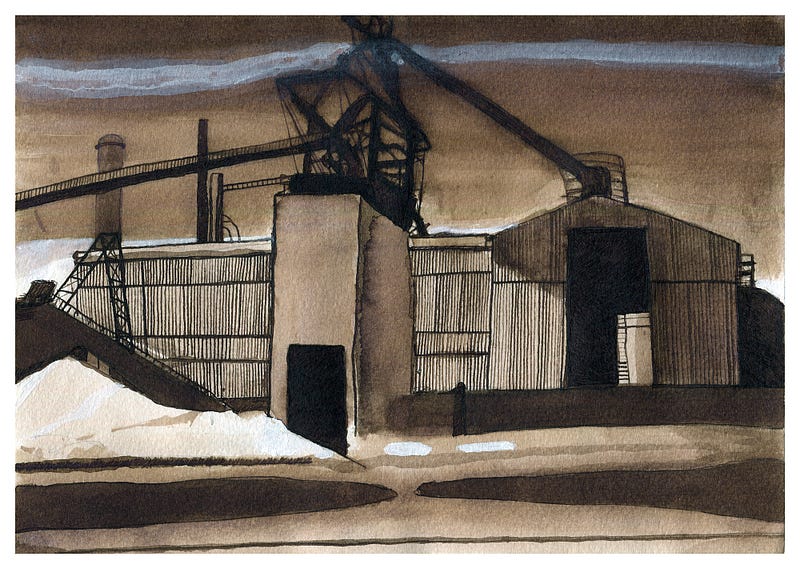
At present, my work is focused on post-industrial sites, many of which have witnessed significant changes since the early 1980s. I see my artistic practice as responding to architectural sites which have become culturally invisible. While fitting into a history of record and documentary photography, the artistic responses I create extend this tradition by offering a space for pause and further reflection.
James Milne