
Meeting the Expectations of a Mother’s Instinct
How it’s not always right, and that’s okay.
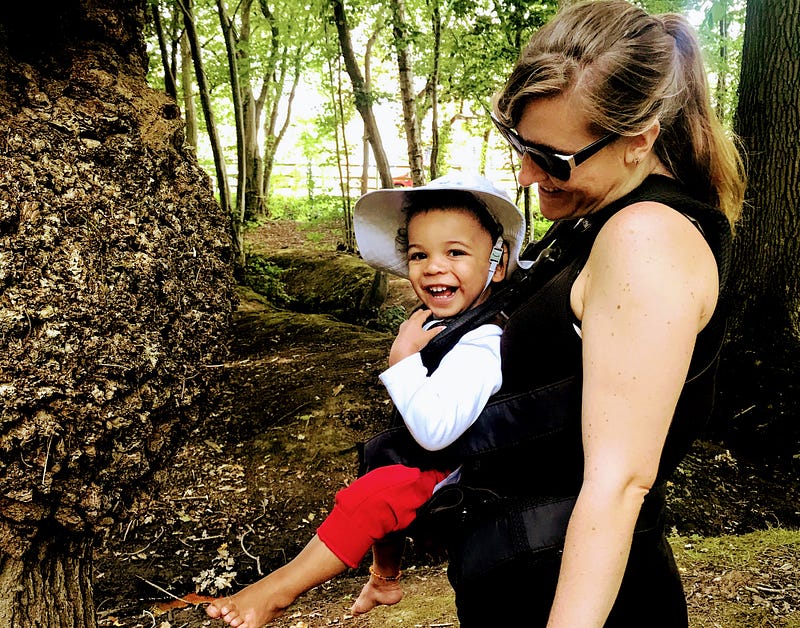
When I woke up in the middle of the night to the sound of my newborn son struggling to breathe, I was scared. Andriel’s nose was very blocked for the first time and I couldn’t find the nose sucker. I was alone, it was the middle of the night, and I started to cry because I felt stuck.
I didn’t know whether his body would just naturally make him breathe through his mouth as he was only a few weeks old at the time, or if that was a learned thing. Could babies die from a blocked nose or was I panicking for no reason?
I found a nasal spray for babies after what seemed like forever and that helped almost instantly, thank God. My adrenaline had kicked in and I was a bit shaky, but I was relieved. Crisis averted.
A few minutes later he fell asleep latched onto my breast and although he seemed okay, I couldn’t sleep for fear that his nose would get stuffed again and I’d sleep through it. I didn’t know if there was anything else I should be doing to help him, or if I was okay to leave him to sleep. The next day, he was fine.
I was not — I was exhausted, but I carried on, because that’s what you have to do as a new mother.
They tell you that you’ll know what’s best for your child.
I spent hours and hours reading about all the possible issues we’d run into with a newborn and the solutions — nappy rash, colds, sleep (or lack thereof), breastfeeding, colic… But nothing can prepare you, really, and you can’t possibly know what you’ll do until you're put to the test, and if it’ll be the right thing.
Conflict of Instinct
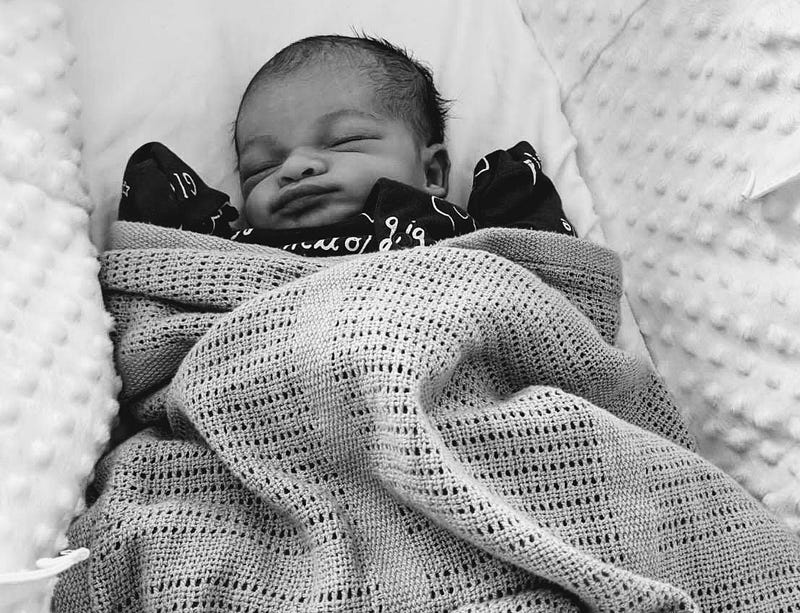
My son was born small, weighing just 5lb5oz (or if you prefer, 2.5kg). Do you know that it’s common for babies to lose weight in their first 5 days of being alive? Well, mine put on weight. He was surpassing goals from day one.
When he was 8 weeks old I took him to an emergency doctor’s appointment because I noticed his fontanel (the soft spot on the top of a baby’s head) was sunk, which is a sign of dehydration. The doctor thoroughly checked him over and concluded he was not dehydrated and that he was fine.
That was the end of that.
But months 3 and 4, suddenly, Andriel stopped gaining weight, and actually lost 3 ounces in a space of 2 weeks. Now, this is less than 100 grams, it’s really nothing, but for such a young baby to not put any weight on for 6 weeks, and in fact lose a tiny bit, is worrying.
Something was not right, but my instinct wasn’t telling me that. In fact, I told myself that since he had energy and was such a happy baby, that he was good.
I must admit I did feel pain while breastfeeding in the beginning, but I was told some pain was normal. He was latching correctly so none of the doctors or midwives who had seen him up until now had spotted a problem, other than the lack of weight gain.
Andriel was referred to the paediatrics’ ward at the hospital for an emergency appointment eventually because the health visitor who had seen him throughout the months to weigh him was concerned for him. The doctors did some blood tests which all came back fine. I was told once again I just had a skinny baby. We came home and carried on with our lives.
2 weeks went by and there was still no weight gain. It was at this point I started to get a bad feeling and second guess the doctors’ opinions, and sway more with the health visitor. I had a happy baby who had shown me no signs of illness or being in pain, but whose body was getting visibly thinner. I could see and feel his ribs. I made some phone calls and pushed for more tests to be done.
Why had I had no instincts telling me something was wrong sooner? Where was this all-knowing mom brain I was promised would be there for my son? I had alarm bells now, but was I too late?
Something was wrong all along, but I didn’t know. My instinct was late.
I was a bad mother.
Problem -> Solution
A home visit was booked with a lactation consultant to make sure Andriel was in fact feeding well. He was 4.5 months old at the time.
Louise came to the house to make sure he was latching on to my breasts correctly and feeding normally. It turns out, my milk supply was rather low. There didn't lie the only problem, though. That was the result of an underlying problem — my son had a tongue tie, and had been struggling to extract my milk all along, meaning my breasts had slowed their milk production.
I didn’t have a clue.
Mothers are supposed to see the signs of their baby’s tongue tie when they breastfeed— bleeding nipples, extreme painfulness while breastfeeding, sometimes even infection. But I had none of that. Most of all, I had lacked the feeling that something was wrong.
Louise was amazing. She hugged me when she saw tears starting to roll down my face as I heard the news, telling me that this was not a huge problem — and most importantly, that there was a solution. She reassured me how common this was and how easy it is to miss.
She explained that this had happened to her own child and it wasn’t spotted until much later, which is what motivated her to become an expert in the field.
She knew exactly why I was so sad. I was worried about my son, but I was beating myself up for not knowing.
She knew what that guilt felt like and tried to fight it for me. She pieced all the appointments together and said I had done the right thing at every possible opportunity, even if nothing was done sooner. She told me just for getting through the days I was a wonderful mother.
Even the guilt I felt right then was a manifestation of how good a mother I was, in fact.
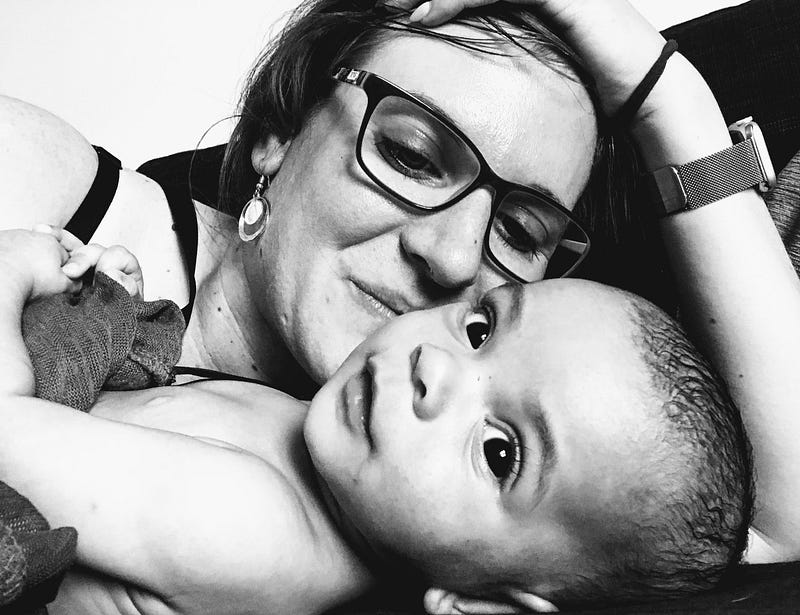
One week later, Andriel had a procedure to cut the tongue tie. Everything went swimmingly, my milk supply increased, and he started gaining weight just days later.
His cheeks got chubby for the first time.
His arms weren’t like sticks anymore. It’s then I learned what it really felt like to breastfeed. Turns out, my nipples had gone really numb up until that point and they started to heal when Andriel latched on correctly. In hindsight, breastfeeding was really uncomfortable before the procedure.
I didn’t mind the pain to the point I had suppressed it! I have to highlight here how powerful the body and mind are.
I felt relieved.
After the procedure, I was still worried about his weight gain and continued to weigh him daily on our baby scales, right up until he turned one. Making sure he was gaining weight was my main objective (alongside sleep) even when he was on solid foods.
He is 20 months old today, and it’s only now that I am really working on letting go of that guilt.
I understand that toddlers can go through fussy phases and sometimes eat more or less, but every time he eats less, my mind travels back to a particular memory of him lying in his rocker, looking extremely skinny and almost ill. I know it’s the anxiety playing its part, and I have to fight against this instinct telling me something might still be wrong. Where I should’ve followed my instinct and didn’t all those months ago, now I must tell it to stop nagging me.
Andriel is strong, tall, and very active. He may go through fussy eating phases, but he generally is very good with food. He’s fit and healthy.
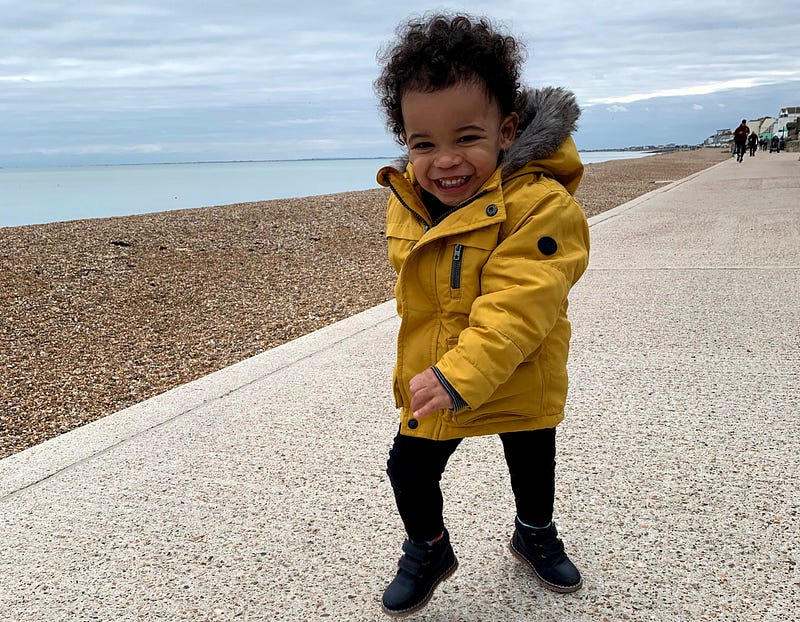
I’m Winging It
Some of the stuff I do for him is based on instinct, but mostly, I have researched extensively and brought in help where necessary. We paid someone to help us sleep-train Andriel despite the negative connotation around it.
I recognised that I did not have the sleep thing down. I was constantly tired which made me moody, irritable, and almost depressed. In fact, it wouldn't surprise me if sleep deprivation played a big part in postnatal depression in some cases. Andriel needed to learn how to sleep independently of me for his and my own sake, so we could enjoy the awake times.
I had the choice of either going through motherhood just about getting through each day like a zombie, or get help.
It was nothing like the idea that you’re traumatising a baby by letting him cry it out. In fact, it was incredibly supportive and we saw results just days in. He looks forward to going to bed most days now and, so do I!
Final Thoughts
I have accepted that my instinct isn’t always right — I didn’t know something was wrong in the beginning despite being told I would just feel something was not right. I also didn’t know how to teach him to sleep on his own and treated him like a newborn when he no longer was one.
The pressure we are lumped with by society is huge, but the pressure we put on ourselves is far greater. I am learning every day that, I do in fact do an awesome job, while admitting that I’m not always right. And that’s okay.
Either way, he gets me for a mother. All my choices will affect him somehow, and all I can do is my best. And that, I assure you, am doing every day, just like most mothers.
Sylvia Emokpae, thinker and philosopher, is passionate about self-love, motherhood, and pro-race. See more work like this.


