avatarJane Frost (Jane Grows Garden Rooms)

Free AI web copilot to create summaries, insights and extended knowledge, download it at here

2000

Abstract

the dog bowl in any given season. With new fledglings they seem to take one each and show them how to forage. Shortly after we had moved in I observed him bringing a fledgling to the bowl, ever watchful, monitoring the environment. On the third day Zara appeared. She chased the fledgling away from the bowl and then warbled in Henry’s face. It seemed like she was berating him for teaching the young one this foraging shortcut. We didn’t see them again for a couple of weeks until the whole family came to check the dog bowl. It seems the fledglings must be taught “proper” and “healthy” foraging before Zara allows her youngsters what must be the bird equivalent of fast food.</p><figure id="657d"><img src="https://cdn-images-1.readmedium.com/v2/resize:fit:800/1*u-nI6ITsrR9jzvbzczJPSA.jpeg"><figcaption>2021’s demanding fledgling, as yet unnamed, but very noisy. We suspect that she is female. Photo by Author.</figcaption></figure><p id="1099">Each season there are two fledglings. One is always noisy, demanding and takes longer to mature and become “black” like her Black Backed Magpie parents. I say “her” because we suspect that the noisy ones are female. The other fledgling is far more independent and tends to start a lot of fights with the noisy sibling. We used to name the fledglings, but as they are invariably kicked out before the next breeding season, we don’t bother any more.</p><figure id="c3b8"><img src="https://cdn-images-1.readmedium.com/v2/resize:fit:800/1*io3Afdr6jpIpe9wOEDSdyQ.jpeg"><figcaption>2021’s independent fledgling, as yet unnamed. We suspect he is male. Photo by Author.</figcaption></figure><p id="0423">The last fledgling we named was a noisy sibling. We called her “Anastasia” because she acted like a princess and didn’t want to be exiled from her kingdom. She held on for months, disappearing only to return again when her parents weren’t around. She would perch right next to us on the patio and sing on request. Eventually the disappearances grew longe

Options

r between each visit until she didn’t return. I still think fondly of her sitting beside us and warbling away until a parent heard and came to usher her over the border. <a href="https://youtu.be/8zro4EloODs">Click here</a> for a YouTube clip of Anastasia singing.</p><figure id="5598"><img src="https://cdn-images-1.readmedium.com/v2/resize:fit:800/1*LjjwvDlwYafNBgQNjx1Jew.jpeg"><figcaption>Anastasia, noisy fledgling of 2019, suspected female, known singer. Photo by Author.</figcaption></figure><p id="1b8e">Every breeding season the Magpies disappear for a few weeks before returning alone with bald heads and weary eyes. Apparently raising young is physically taxing for these parents and they must share the load because until the young fledge we only see one parent at a time. There are a few weeks when they disappear altogether. We suspect this is when the young are being taught to forage “properly”. The return happens when Henry dares to bring a fledgling to the dog bowl and eventually the other fledgling and Zara return too. For the next four or five months the family of four visits regularly and, since our dog passed, battles with the local Kookaburra family to feast on any scraps we might have. Over these four or five months the parents slowly return to peak condition, re-feathered and glossy.</p><p id="add8">Australian Magpies have a “reputation”. They are known for swooping and attacking people during the breeding season. However, they are an intelligent bird with the ability to recognise human faces and differentiate individuals. If you make friends with a Magpie, they remember. We have never (touch wood) been attacked by our Magpie family.</p><p id="f1fe">It’s a lovely thing to connect with nature on a daily basis and we’re grateful to share the garden rooms with this friendly family. They also serve to add weight to the opinion that animals too have individual personalities, quirks and eccentricities. I hope they’re around for a long time.</p></article></body>

Meet the Trotters: a family of Magpies

In the garden rooms with an Australian Magpie family.
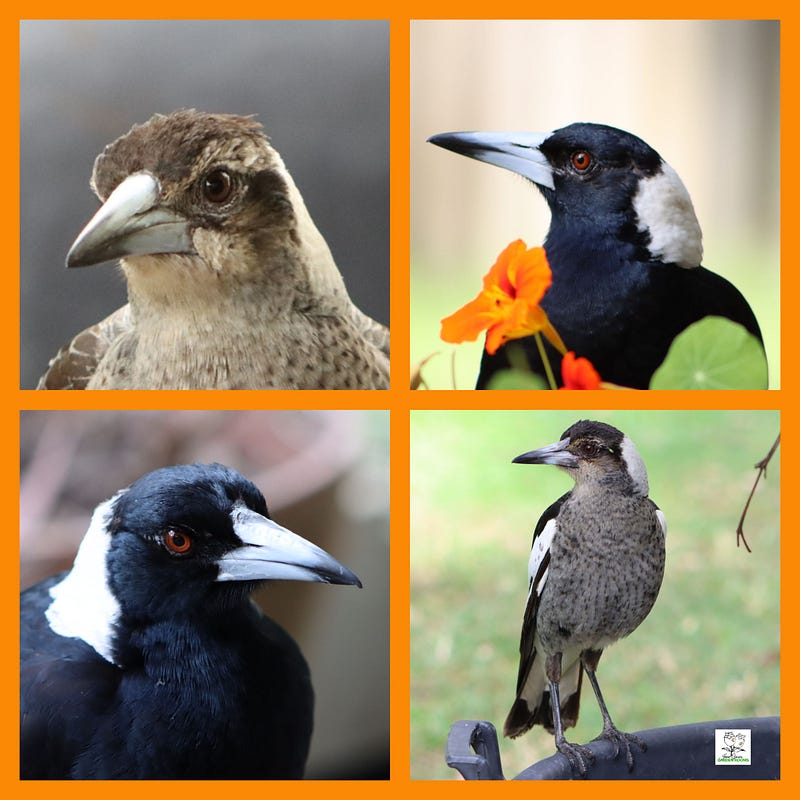
The Trotter Family 2021 — Photo by Author

Zara and Henry Trotter are a handsome black and white pair of Australian Magpies. They have lived in the garden rooms longer than us.

They first made their presence met around the dog bowl. Our dog, Elle, would watch them eating her biscuits and sometimes she would chase them away. It was a game.
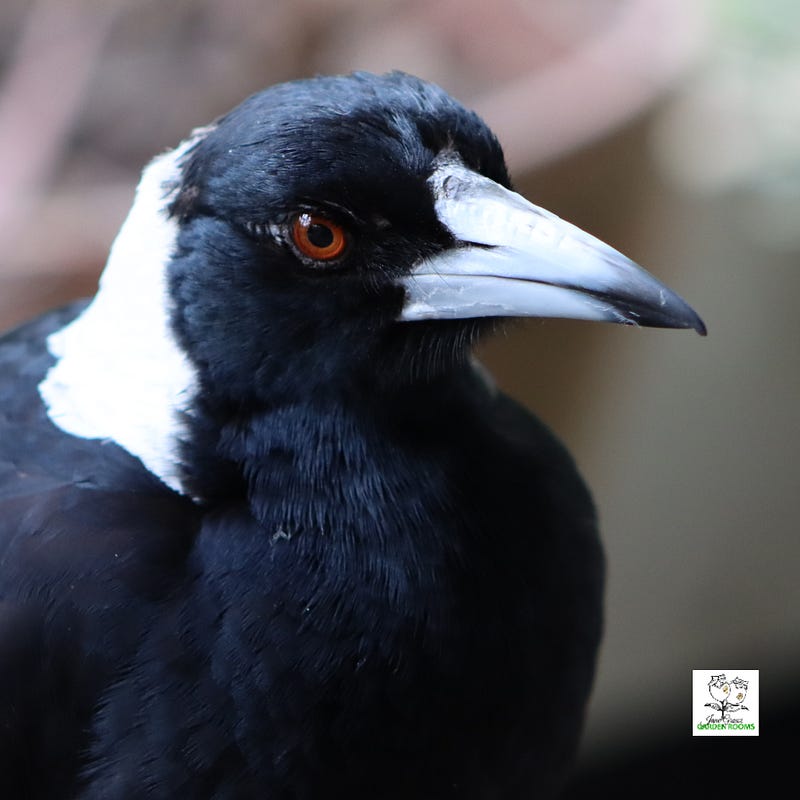
“Stop taking photos and feed me!” Zara, the Magpie matriarch, glaring, as usual. Photo by Author

My daughter named Zara, the matriarch. She is a formidable bird and takes no nonsense. She was the first to eat from our hands and she still is. The others usually don’t even try to approach if she is still eating. If they get too impatient and accidentally creep closer she gives them a verbal warning and they invariably back off. If there is no food in the dog bowl she will sit next to us, glaring, until some is delivered. The longest I have lasted is 45 minutes, the average is probably more like 10 minutes. It’s a hard glare to ignore. If we’re indoors, she warbles until we appear. We know she is female because the feathers on the back of her neck are not pure white but mottled with grey.
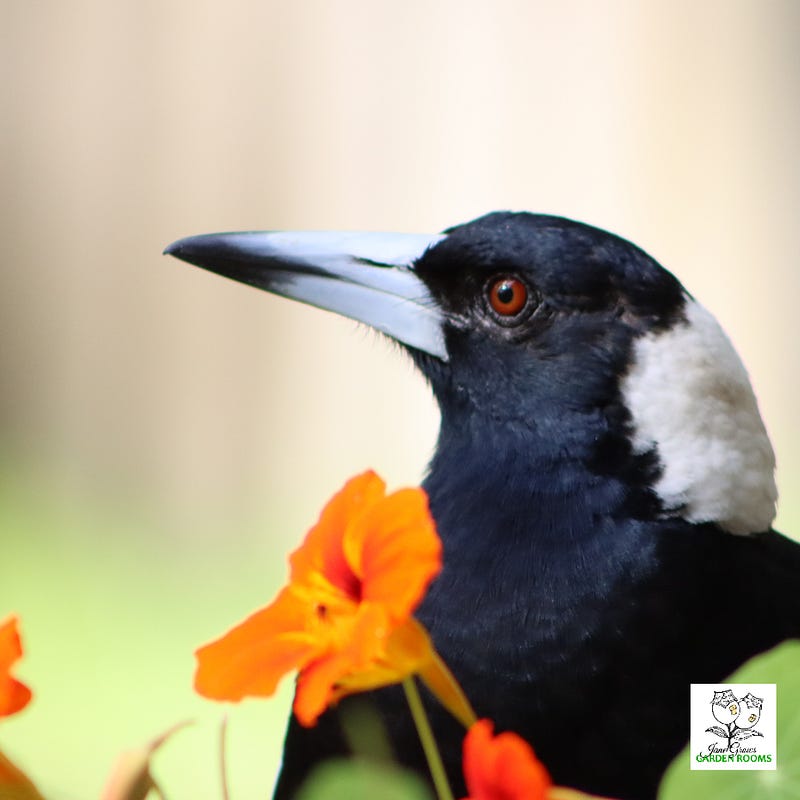
Henry Trotter amongst the Nasturtiums. Photo by Author.

Henry Trotter, named by my son, tolerates Zara’s dominance when she is present but likes to strut when she is elsewhere. He is always the first to show his children the dog bowl in any given season. With new fledglings they seem to take one each and show them how to forage. Shortly after we had moved in I observed him bringing a fledgling to the bowl, ever watchful, monitoring the environment. On the third day Zara appeared. She chased the fledgling away from the bowl and then warbled in Henry’s face. It seemed like she was berating him for teaching the young one this foraging shortcut. We didn’t see them again for a couple of weeks until the whole family came to check the dog bowl. It seems the fledglings must be taught “proper” and “healthy” foraging before Zara allows her youngsters what must be the bird equivalent of fast food.
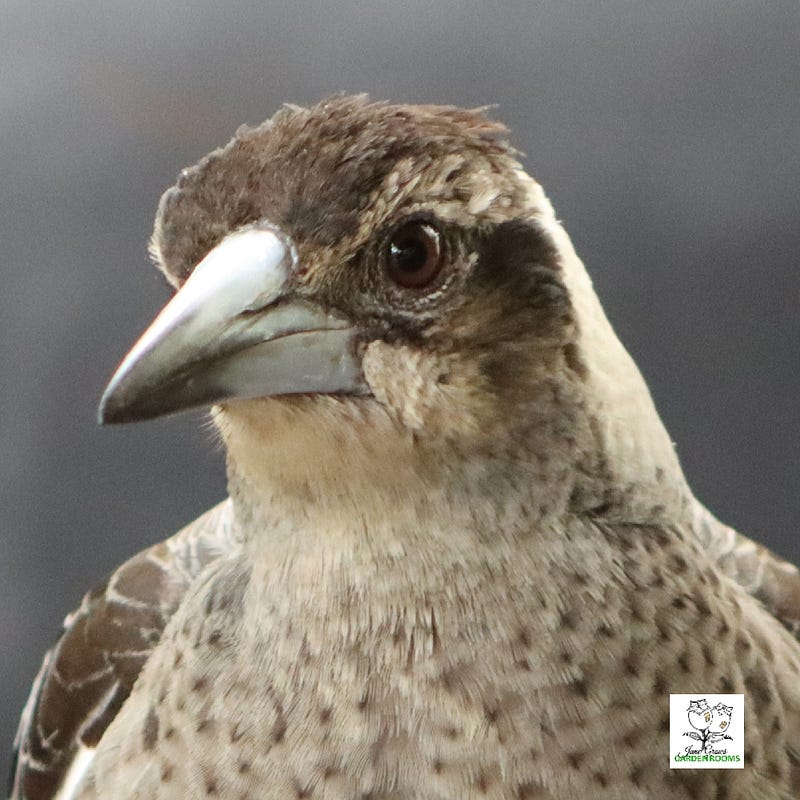
2021’s demanding fledgling, as yet unnamed, but very noisy. We suspect that she is female. Photo by Author.

Each season there are two fledglings. One is always noisy, demanding and takes longer to mature and become “black” like her Black Backed Magpie parents. I say “her” because we suspect that the noisy ones are female. The other fledgling is far more independent and tends to start a lot of fights with the noisy sibling. We used to name the fledglings, but as they are invariably kicked out before the next breeding season, we don’t bother any more.
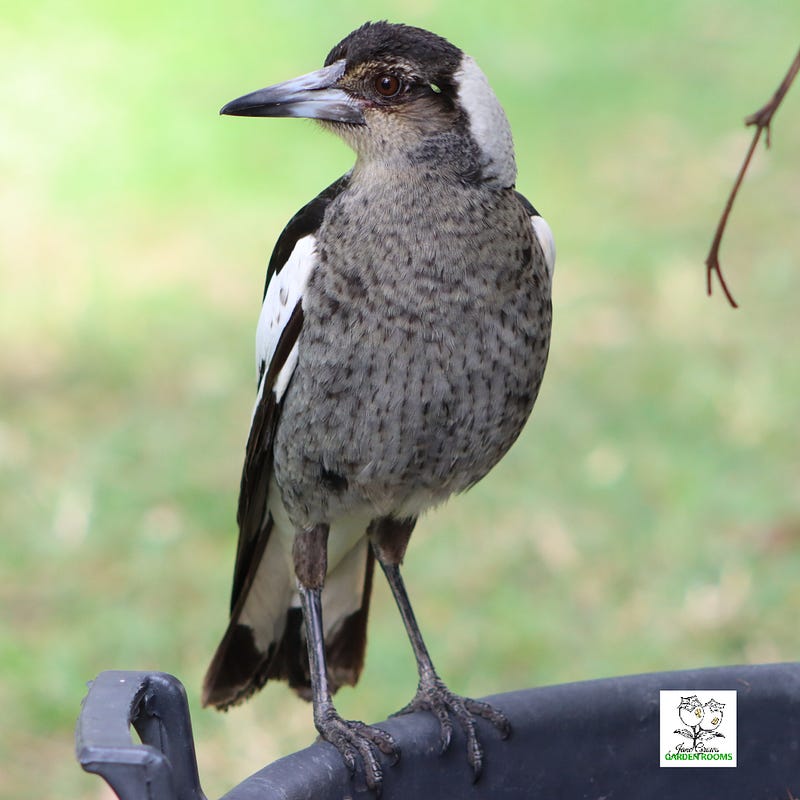
2021’s independent fledgling, as yet unnamed. We suspect he is male. Photo by Author.

The last fledgling we named was a noisy sibling. We called her “Anastasia” because she acted like a princess and didn’t want to be exiled from her kingdom. She held on for months, disappearing only to return again when her parents weren’t around. She would perch right next to us on the patio and sing on request. Eventually the disappearances grew longer between each visit until she didn’t return. I still think fondly of her sitting beside us and warbling away until a parent heard and came to usher her over the border. Click here for a YouTube clip of Anastasia singing.
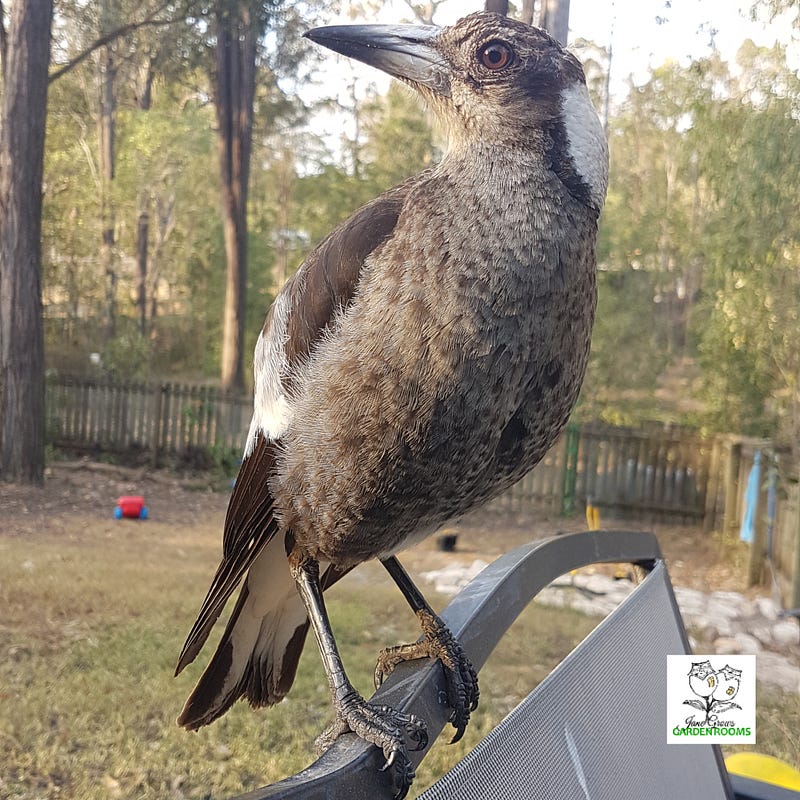
Anastasia, noisy fledgling of 2019, suspected female, known singer. Photo by Author.

Every breeding season the Magpies disappear for a few weeks before returning alone with bald heads and weary eyes. Apparently raising young is physically taxing for these parents and they must share the load because until the young fledge we only see one parent at a time. There are a few weeks when they disappear altogether. We suspect this is when the young are being taught to forage “properly”. The return happens when Henry dares to bring a fledgling to the dog bowl and eventually the other fledgling and Zara return too. For the next four or five months the family of four visits regularly and, since our dog passed, battles with the local Kookaburra family to feast on any scraps we might have. Over these four or five months the parents slowly return to peak condition, re-feathered and glossy.

Australian Magpies have a “reputation”. They are known for swooping and attacking people during the breeding season. However, they are an intelligent bird with the ability to recognise human faces and differentiate individuals. If you make friends with a Magpie, they remember. We have never (touch wood) been attacked by our Magpie family.

It’s a lovely thing to connect with nature on a daily basis and we’re grateful to share the garden rooms with this friendly family. They also serve to add weight to the opinion that animals too have individual personalities, quirks and eccentricities. I hope they’re around for a long time.

Birds
Magpies
Nature
Garden
Birds In Backyards
Recommended from ReadMedium