Meet SPOT: Where Immigration and Tech Intersect
Is it Ethical To Use Robotized Dogs at the US-Mexico Border?
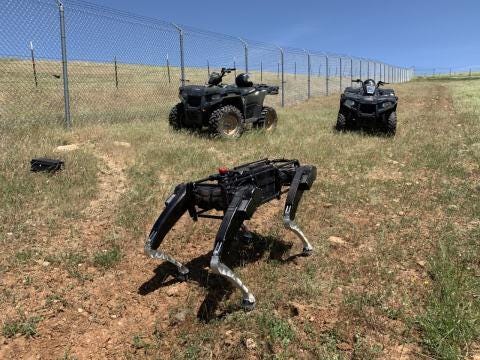
The US Department of Homeland Security just released their latest update on February 1, 2022, and, boy, are they proud! Homeland Security is upping their tech game to identify, apprehend and deport “migrants”.
The US has already been at a net zero immigration from Mexico since the end of 2015 or so. Central American countries have been experiencing extreme climate change and hurricanes, which has prompted more out-migration. Immigrants are now stuck at the border under the Remain in Mexico/MPP Program and Title 42, which legally keeps im/migrants out of the US due to public health concerns related to the pandemic.
However, DHS has lost no time in proving we can further terrorize immigrants with programmable robotic dogs that they are calling “Spot.” Spot is not just one prototype but many. Several versions are being tested by the Department of Customs and Border Patrol (CBP) across various terrains, including the Arizona desert, with different weight loads, during the day and night in diverse weather patterns. They are also programming them using multiple platforms to ascertain the best types of interface to use, given extreme heat or cold, atmospheric changes and light levels.
This is not some far away development. To quote the article, “Don’t be surprised if in the future we see robot “Fido” out in the field, walking side-by-side with CBP personnel.” The current team from Ghost Robotics is in El Paso, Texas, “evaluating” their various versions in “real world conditions.”
It seems futuristic, like Mad Max, but it’s already here and the military is moving at a fast clip to get these “dogs” deployed.
To be honest, as a daughter of im/migrants and a researcher on immigration, this article chilled me to the bone. The cost is unimaginable but so is the potential damage that these machines could inflict. Imagine if they were fashioned to have, let’s say, an automatic weapon.
Is the US so full that we will literally kill any migrants on sight?
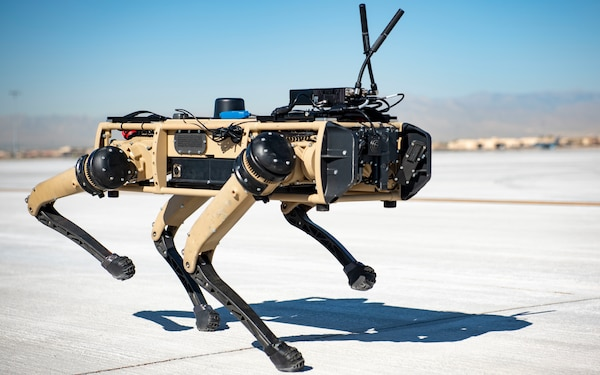
There are major ethical considerations to this endeavor. First, there seems to be a paucity of information being shared with the public. Is it ethical to develop these “dogs” with virtually no input from the public?
I wonder. Do US citizens even condone this use of technology?
Next, the use of these dogs means that human Customs and Border Patrol (CBP) agents will play a diminished role. Who will actually conduct mandatory credible fear interviews? At what point, if ever, will we ask questions that might determine that these “migrants” are either victims of human trafficking or legitimate asylum seekers? If they fall into either category, they should be allowed entry according to current law.
This is a huge part of the role of the CBP. It is a key step in determining the fate of the im/migrant. When and where will these interviews take place?
Finally, what is the ultimate role of the robot dogs? They have been designed to run at high speeds. Do we want them to “chase” migrants until they are exhausted? And, then what? At what point will these machines “learn” to follow a humane process or protocol? What will their jobs actually be?
Are we willing to completely violate the UN Universal Declaration on Human Rights to which we are a signatory?
Currently, there are more questions than answers. The US has a responsibility to patrol our borders, but that responsibility also includes treating human beings in a respectful and humane manner under international law. According to this feature story, one wonders how these robotic dogs assist us in this effort. You can read the full article here: https://www.dhs.gov/science-and-technology/news/2022/02/01/feature-article-robot-dogs-take-another-step-towards-deployment.
If you are concerned about how these new robots will be utilized, contact the US Congressperson who represents you if you are a US citizen. If you would like to directly contact the US DHS or the President, those emails are public knowledge; however, expect that a lower level staff person will read and respond to you. Here is the link to contact the White House: https://www.whitehouse.gov/contact/
Alayne Unterberger lives in Tampa FL with her miniature poodle Giovanni and newly adopted peekapoo Charlie Chan. She is an anthropologist, researcher, Hurricane Irma survivor, non-profit executive, adjunct professor, and life-long learner who loves to travel. Follow me @Dr Alayne.
When you become a medium.com member and use my link, you can support my writing habit because I get a portion of your monthly subscription: https://dralayne.medium.com/membership
Please buy me my SECOND coffee: https://ko-fi.com/alayneu (I love tips!)