
Meet Benedicte Bodard: The Tile Doctor of Barcelona, Spain
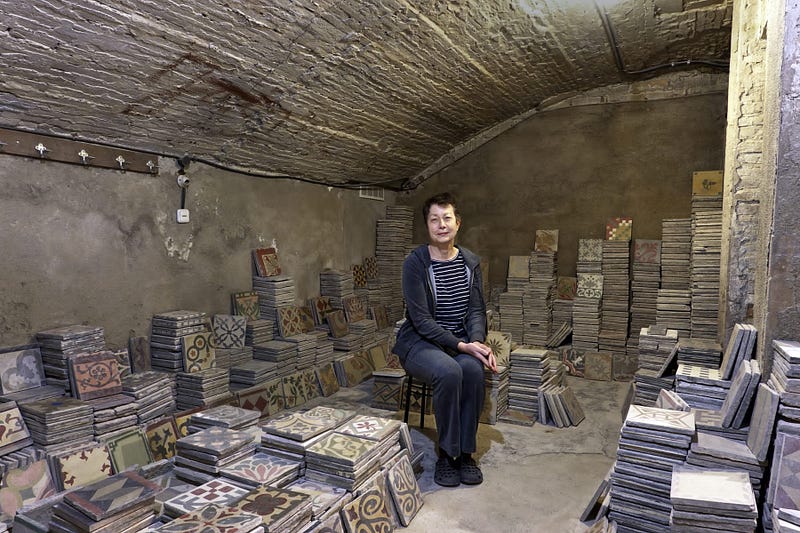
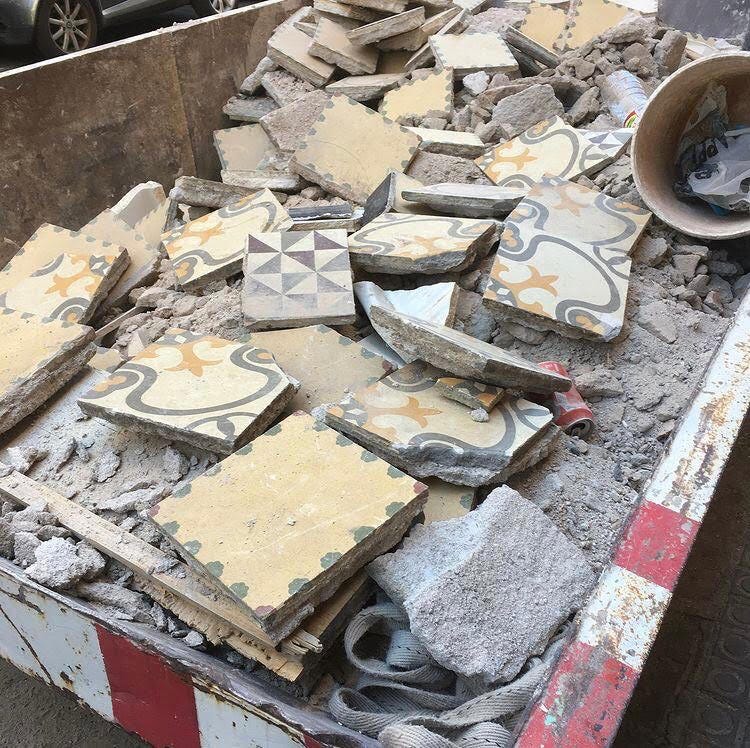
From 2005–2015, Benedicte Bodard pushed a Bugaboo baby stroller “hundreds of miles” across the Eixample district of Barcelona, known for its gridded streets and dazzling modernist architecture. The French artist often turned heads. Not for the luxury stroller, but for what was inside. The pram was, often, bursting with dozens of modernista hydraulic tiles that Bodard had just dumpster-dived for.
“People would say ‘how dare you put tiles in that stroller.’ They were horrified,” said Bodard, owner of Mesa Bonita, a recycled furniture company. But where most saw rubble, Bodard saw 150-year-old artworks that offered rich insights into Catalonia’s history.
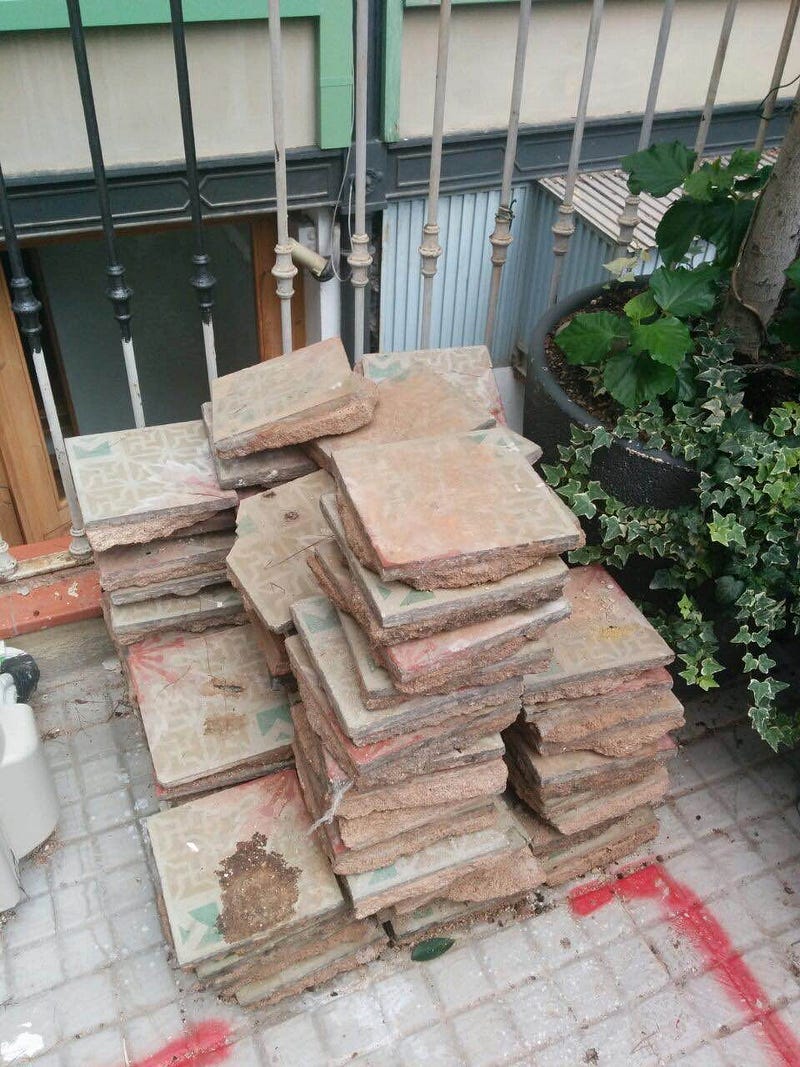
Modernista tiles were once the go-to flooring for middle-class and wealthy Catalan homes in the late 1800s. Homeowners, spurred by the need to renovate to meet Barcelona’s real estate market demands, have gutted these colorful bricks by the bagful over the past two decades in exchange for more chic, contemporary floor coverings.
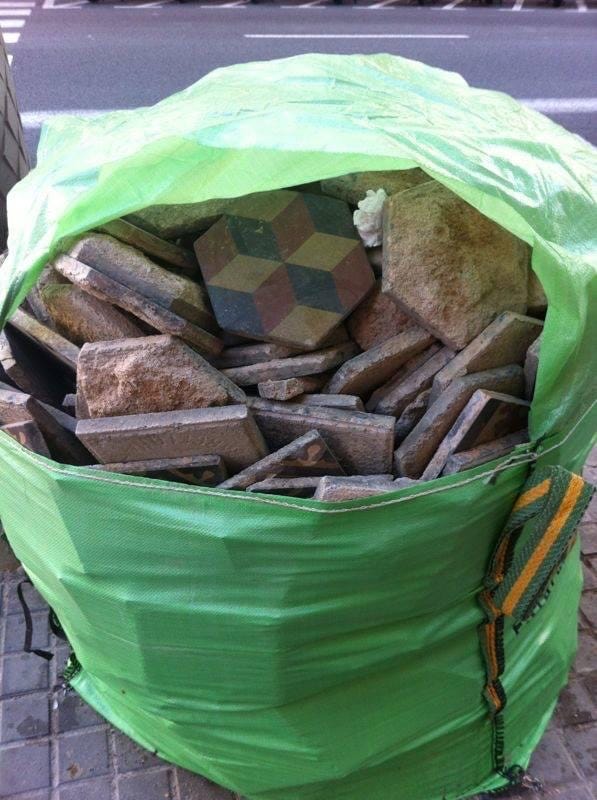
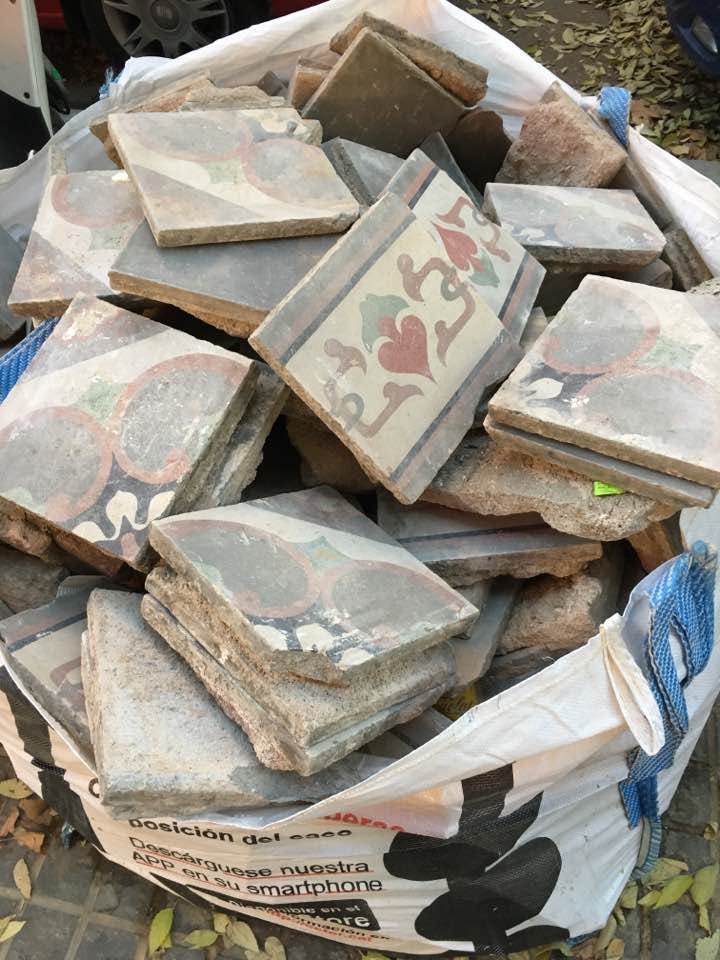
“It’s horrific,” said Bodard who has dedicated the past two decades to rescuing the relics from canvas trash bags parked on Barcelona’s street corners. To date, the French artist said she’s salvaged and lugged around 13,000 tiles into her basement workshop, many weighed down by six to eight additional pounds of thick concrete. Bodard routinely hammers several layers of the cement off the backs and polishes each tile, a process that can take four to eight hours.
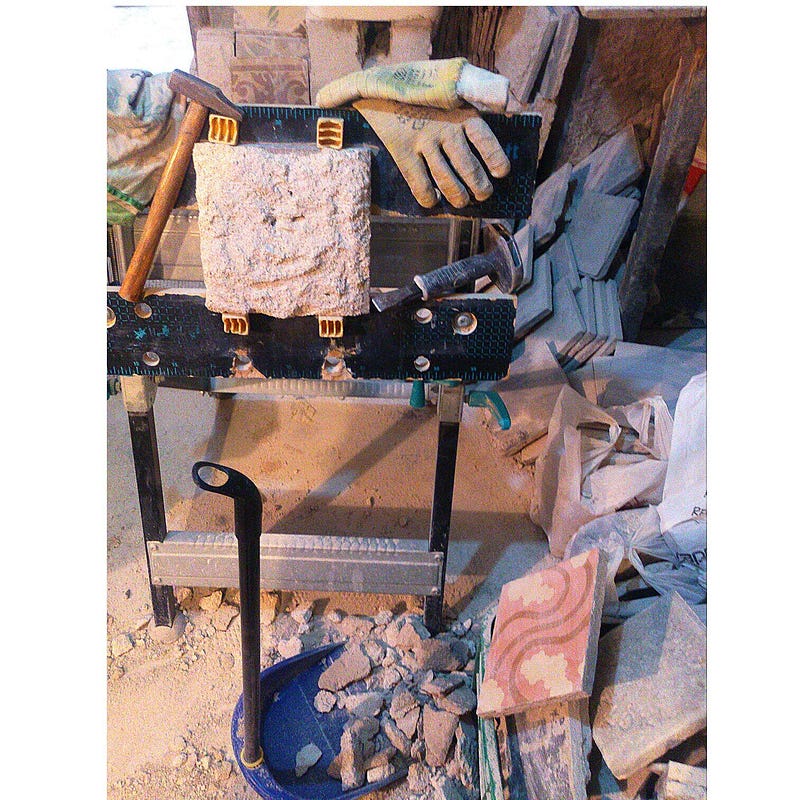
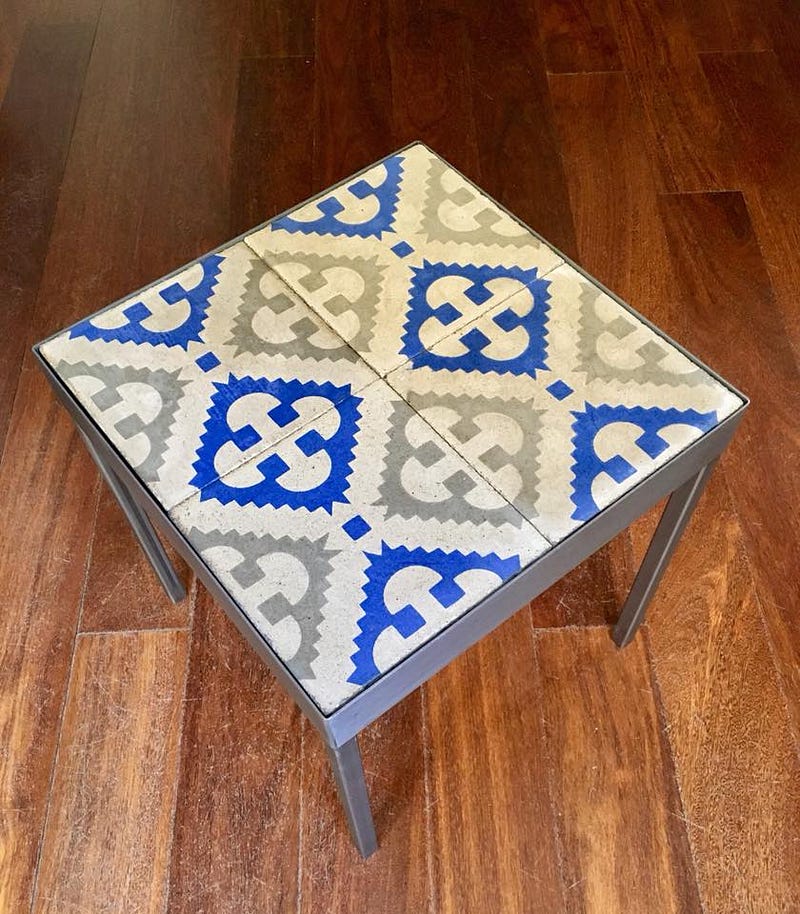
Bodard, then, gives them new life as coffee tables, nightstands, and trivets, ranging in cost from $125 to several thousand dollars.
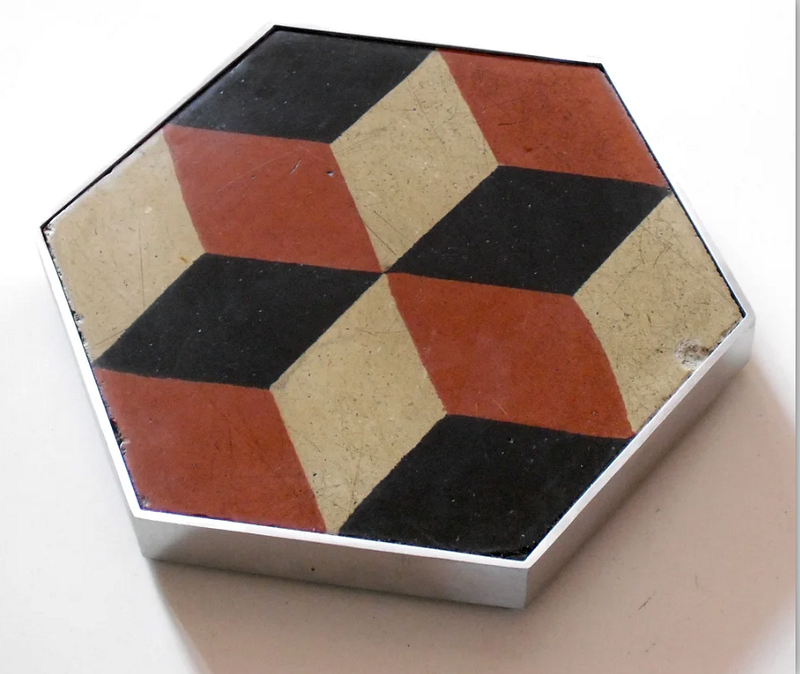
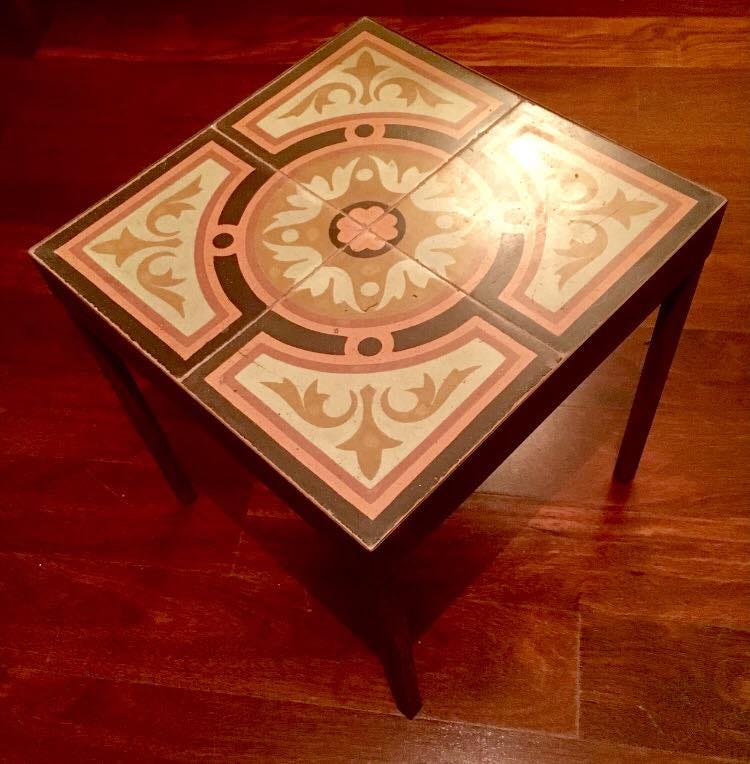
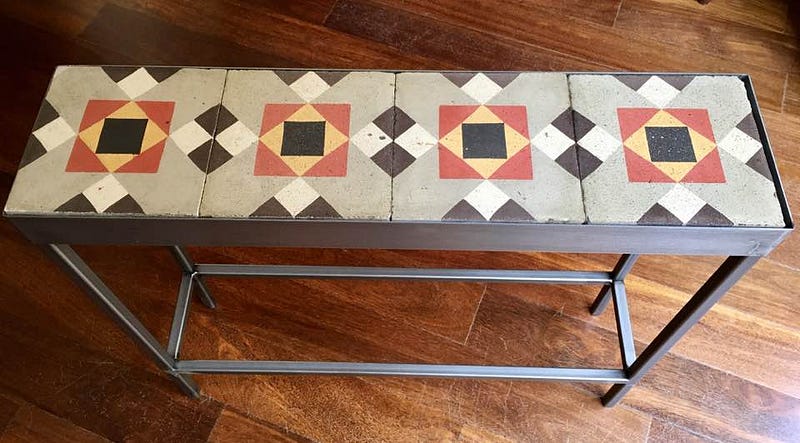
“The idea was to take something that’s truly beautiful, extremely sturdy, but has been stepped on for hundreds of years that would otherwise be thrown away and disappear forever and preserve it,” Bodard said.
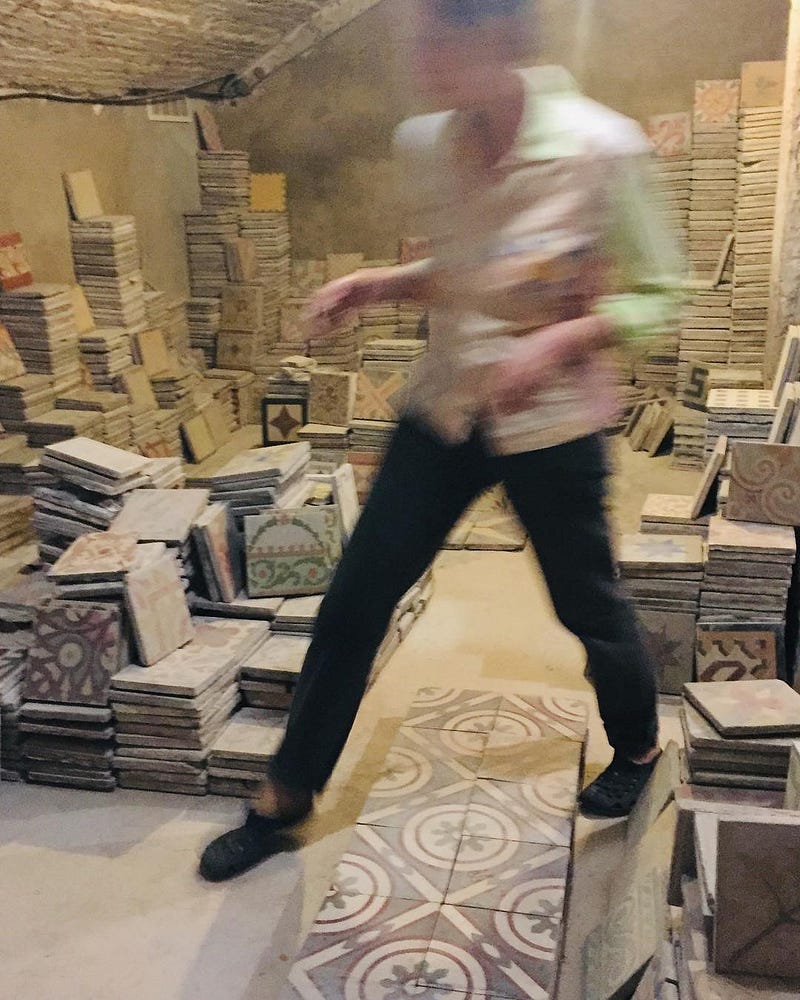
Bodard ambles through her basement studio in Barcelona’s industrial Sants district. Thousands of dust-caked tiles pile towards the ceiling, accented by splinters of light from the open door above. There are rows of cobalt blues and sunset pinks, parallelograms, and flower coils— each depicting an aesthetic era, from Classical or Romanticism to Art Nouveau.
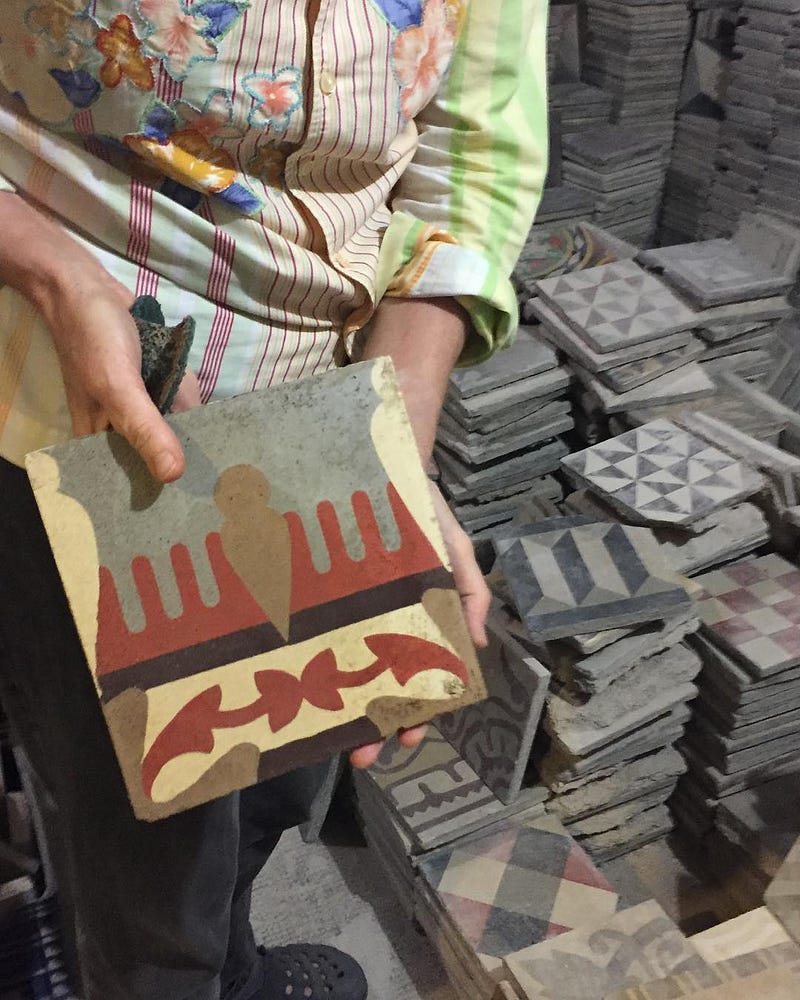
The patterns are bold — geometric and floral prints coiled into reds, greens, and creams, and designed by Barcelona’s most well-known modernist architects, from Antoni Gaudí to Lluis Domènech i Montaner.
The artist points to one of her rarer rescues — a cobalt blue tile created by Marià-Carles Butsems. Formed in 1873, Butsems’ company was the only one to use cobalt in the pigment for their royal blue tiles. “To this day, 160 years later, the cobalt blue is still very vibrant,” Bodard said.
Next, Bodard holds up her favorite tile — a design by the Escofet factory. The floral tile has eyelash-shaped petals, spun from pink, white, and grass-green pigments.
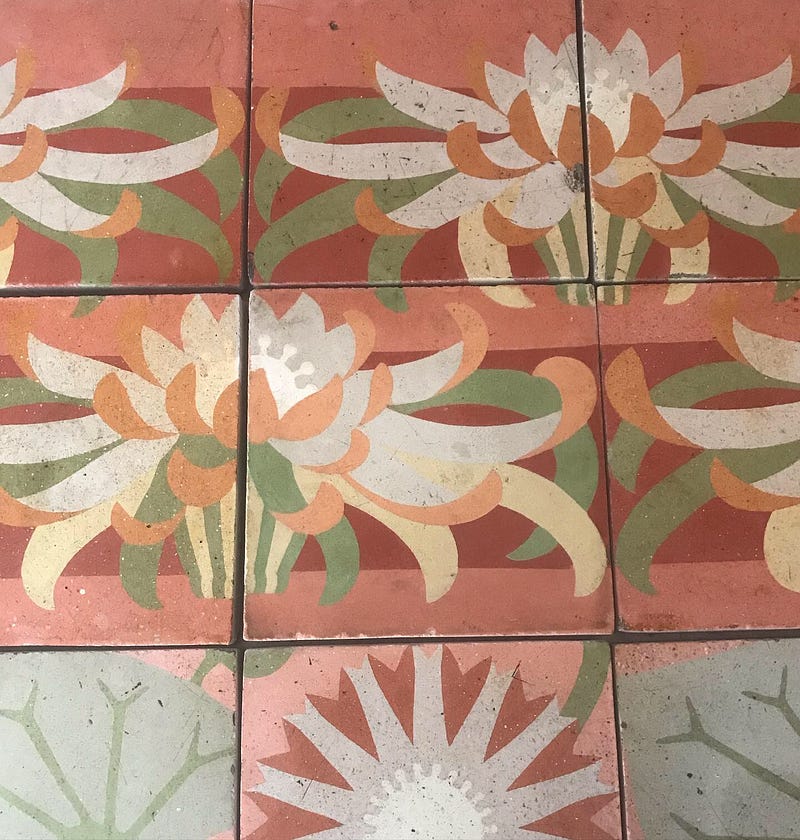
“Lluís Domènech i Montaner liked this particular style so much that he used it in a great number of his masterpieces,” Bodard said, referring to the modernist Catalan architect.
Bodard is one of a handful of Barcelona’s tile conservators, including Joel Cánovas, the Tile Hunter of Barcelona, who has partnered with Mainardo Gaudenzi to digitally catalog the colors and shapes of Catalan hydraulic tiles. Hailing from France, Bodard worked for nearly 20 years as a wardrobe stylist for film and television sets in Hollywood before moving to Barcelona in 2001. Spurred by her appreciation of aesthetics and history, she started collecting the discarded tiles, researching the intricate history with each discovery.
“One story leads to another and suddenly I became familiar with 10,000 patterns.”
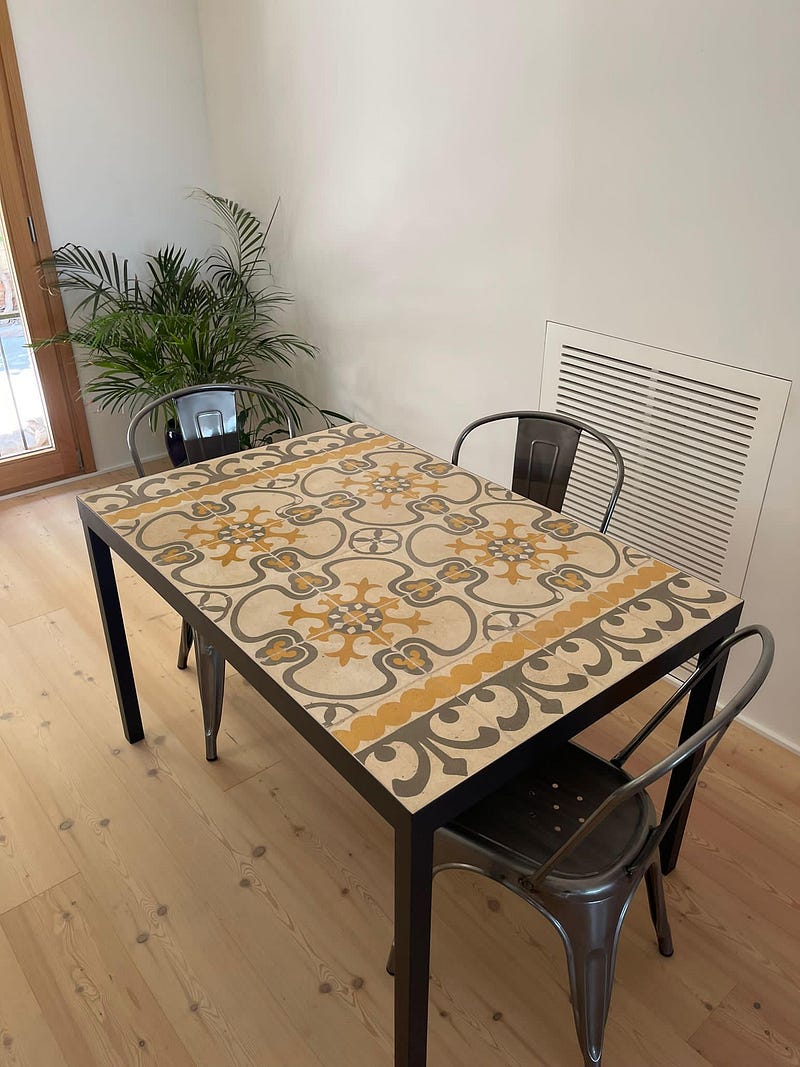
Today Bodard’s rescued tiles line the tables at Starbucks’ flagship Madrid restaurant near El Prado, were exhibited for history enthusiasts at Antoni Gaudí’s La Pedrera in 2015, and fill the homes of thousands of Barcelona locals and tourists.
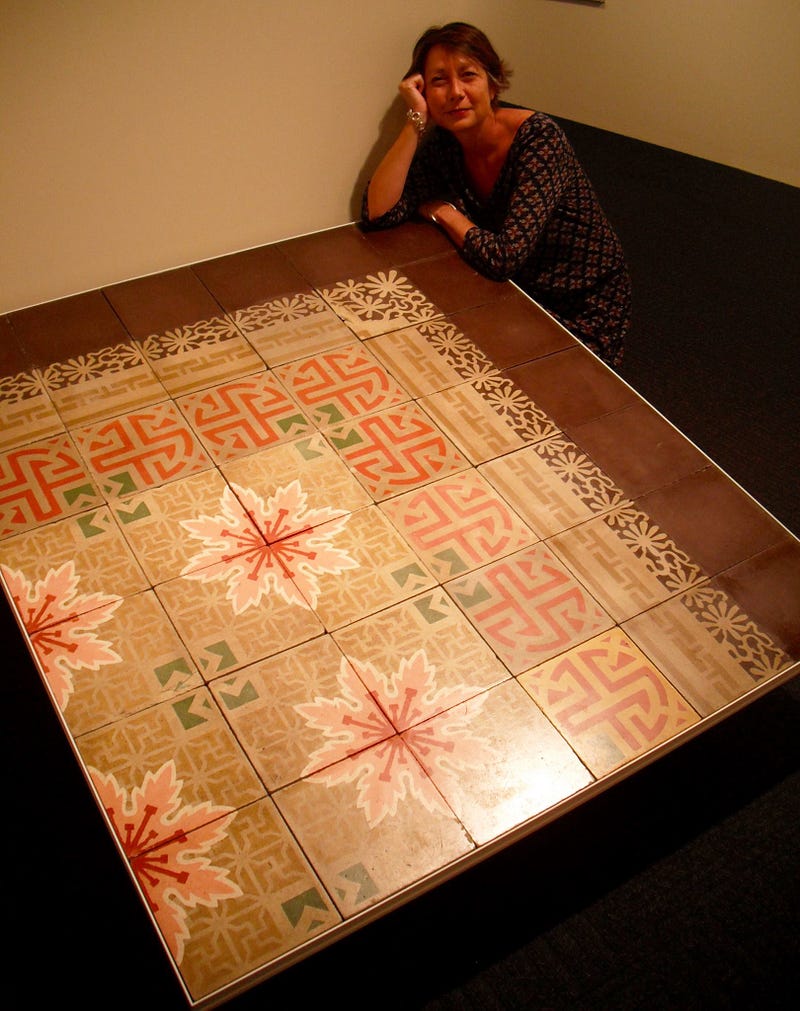
“I’m giving you a piece of Barcelona’s history,” Bodard said.
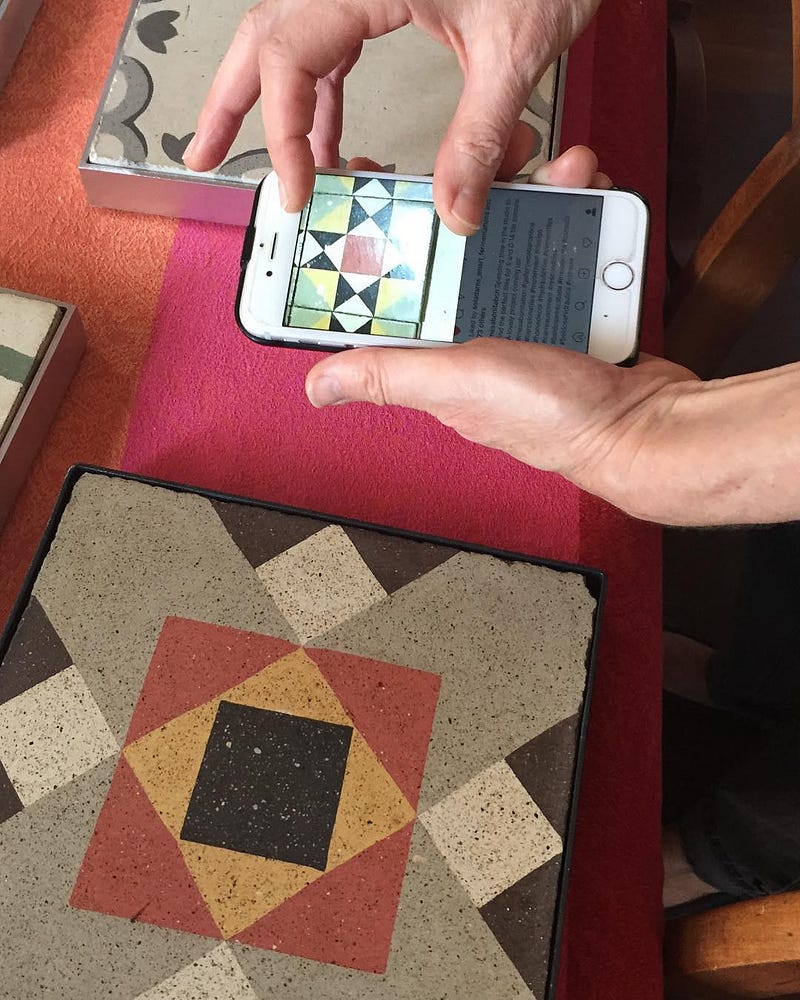
Bodard invites visitors to handpick their selection from up to 10,000 tiles and around 3,000 different designs. After someone selects their art piece, Bodard offers precise details, from the factory name and the location where the tile was rescued to the significance of that tile’s aesthetic.
Beyond Barcelona’s real estate boom, David (a mid-aged Catalan local who didn’t want his surname used), shared more immediate reasons why Catalans remove the tiles from their family homes.
“The tiles are “a reminiscent souvenir of Franco and the past,” he said. An era of dictatorship and censorship that many would prefer to forget. Discarding the tiles indirectly, perhaps, helps facilitate this forgetting. Still, Bodard believes this architectural history is worth preserving. The ‘Tile Gods’ seem to agree.
“It has happened more than once that people who live in Barcelona pick a tile, I get their address and I realize I originally found it on their street and sometimes even in their building.”