
Medrol: A Drug like Dexamethasone That Also Works Against Covid-19
Data shows it lowers Covid-19 mortality, independent of age or comorbidity, and free of substantial side effects.
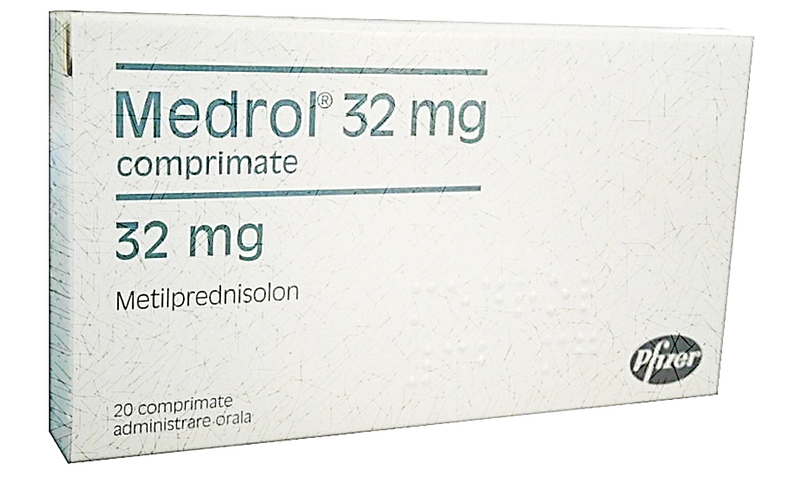

A recent breakthrough is that dexamethasone is the first lifesaving drug for severe cases of Covid-19. A similar class of drug to dexamethasone is methylprednisolone (brand name: Medrol). Both of them are synthetic corticosteroids called glucocorticoids. For the biological mechanisms of how they work, kindly see here:

Methylprednisolone (Medrol) Also Works
A study in Spain, published June 22, back-tracked how 463 hospitalized cases of Covid-19 were treated. They looked at how methylprednisolone treatment fared compared to controls. Of note, the control group also included those with the existing use of steroids. Among the 463 patients, 396 received methylprednisolone and 67 remained as controls, but both groups had similar baseline characteristics. Their results are very encouraging:
- The death rate in the steroid group vs controls was 13.9% vs 23.9%. That is a 41.8% decrease in mortality — nearly 2x lower.
- Among those with acute respiratory distress syndrome (ARDS), the death rate in the steroid group vs controls was 26.2% vs 60% — more than 2x lower.
- In the steroid group, the majority got 1 mg/kg/day of methylprednisolone every day, and about one-fifth received high dose methylprednisolone every 2–4 days. But both treatment regimens were equally effective.
- These results were adjusted for confounds such as age or medical comorbidities; thus, methylprednisolone treatment “was an independent protective factor” against Covid-19 death.
An earlier study in China supports these findings. The China study involves 46 severe Covid-19 patients with similar baseline characteristics. Twenty-six of them received low dose methylprednisolone at 1–2 mg/kg/day for about a week. Results showed that the methylprednisolone group require less mechanical ventilation (11.5% vs 35%) and hospitalization stay (14 vs 22 days). They also had lower levels of inflammatory biomarkers compared to those receiving no methylprednisolone.
A second China study administered a high and single dose of 40–500 mg of methylprednisolone to 15 critical Covid-19 cases. “With this treatment, oxygenation had been improved significantly, and no deaths occurred in these 15 patients. Only 1 of these 15 patients needed mechanical ventilation for 5 days,” the researchers found. “No apparent side effect has been observed during a 1-month follow-up, probably because of the strictly controlled total dosage of methylprednisolone.”
Limitations of Retrospective Design
One crucial point is that these studies are retrospective in design — meaning that data were backtracked. Such a study design — although cheaper, easier, and faster — is inferior to the gold standard of randomized placebo-controlled trials for several reasons:
- Control group is recruited by convenience sampling and, thus, is not randomized and representative of the general population.
- More prone to recall or misclassification biases.
- More difficult to determine causation between an intervention and an outcome — i.e., the temporal relationship.
Dexamethasone vs Methylprednisolone
Current evidence by the RECOVERY trial support dexamethasone as a lifesaving drug for severe Covid-19. Although peer-review is not yet done, at least the clinical trial is government-funded, hugely sampled, and conducted in a randomized placebo-controlled manner — arguably the most robust study to date. In contrast, studies supporting the efficacy of methylprednisolone for Covid-19 is retrospective in design. It is comparatively weaker, but the results are promising and certainly warrants a further randomized controlled trial.
Data now show that those cheap and widely available glucocorticoids (dexamethasone and methylprednisolone) could save lives from Covid-19.
An article by Joyce Kamen, a co-coordinator of the Frontline Covid-19 Critical Care Working Group (FLCCC), written on behalf of their team of physicians, also endorses methylprednisolone usage for Covid-19. She further argued that methylprednisolone, in theory, might be more effective than dexamethasone. But no experiments have compared the two glucocorticoids so far. For more information, kindly see her article here:
Surprisingly, a low dose of methylprednisolone of 1 mg/kg/day — but not dexamethasone — is already part of the National Health Commission & State Administration of Traditional Chinese Medicine’s seventh treatment protocol for severe Covid-19 as of March. Perhaps methylprednisolone has already saved lives since then.
This article is inspired by Joyce Kamen and Don Moren.