
Mediterranean: Poseidon Files Complaint Over Refugee Crisis; Europe Consults Etiquette Guide
Middle Eastern and African refugees consult GPS for alternative routes, as Europe collectively checks spam folder for missed SOS emails — Satire by John James
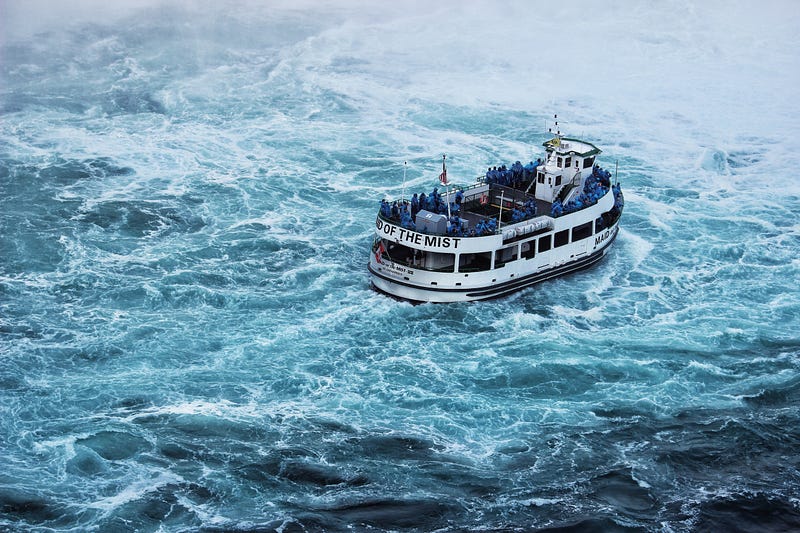
Mediterranean Sea, Off The Coast Of Somewhere — In a tragic turn of events, refugees fleeing the Middle East and Africa have found themselves not only navigating perilous waters but also contending with Poseidon, the God of the Sea, who has filed an official complaint at the International Tribunal for the Law of the Sea over the state of his domain.
The legendary Greek god, brandishing a trident and accompanied by a chorus of merfolk, announced that he is “fed up with the state of affairs.” Poseidon’s attorney, a sardine named Finny McLawyerfish, argued that the excessive number of boats and “the constant wailing of souls” are disturbing the delicate ecosystem of mythical sea creatures.
Meanwhile, as countless souls face peril, European nations have reportedly been flipping through the “International Etiquette for Dummies” guidebook, seeking an appropriate chapter on how to react to drowning refugees without causing a diplomatic faux pas.
Humanitarian organisations and advocates for refugees have long sounded the alarm about the dire situation unfolding in the Mediterranean. In an act of desperation, the refugees themselves have started to look for alternative routes on their GPS devices. A consortium of camels was recently seen offering desert-crossing services as “Plan B.”
Back in Europe, the situation is escalating. In an act of seeming indifference, European Parliament members have reportedly invested in industrial-sized earplugs and deluxe spam filters to block out the cries for help and the barrage of emails from concerned citizens.
In an act of serendipity, a piece of the True Cross floats across the Mediterranean and arrives at the Vatican. Pope Francis, seeing this as a sign, announces a new crusade, but not the kind you’re thinking of. Instead, he dons a wetsuit and declares a humanitarian crusade to aid the refugees. The Pontifex is seen taking surfing lessons to personally assist in the rescue operations.
In response, various European governments decide to convene an emergency meeting to discuss the refugee crisis. However, the meeting soon devolves into a debate about what to order for lunch and whether gluten-free options should be mandatory. After twelve hours, they release a statement that reads, “We will form a committee to consider the possibility of pondering over the option of evaluating the situation.”
With Poseidon growing more irate, a representative of the sea creatures addresses the United Nations. A giant octopus named Inky, using three of its arms to hold documents and another to adjust the microphone, delivers a moving speech, imploring world leaders to take action. “For too long, we have watched from the depths as lives are lost. The time for action is now,” Inky passionately proclaims.
As the world reacts to Inky’s speech, an underground movement begins. Led by an alliance of mythical creatures, surfers, and retired naval officers, they initiate “Operation Safe Passage.” The Kraken is deployed to protect boats, mermaids sing calming songs to the refugees, and surfers from around the world use their boards to create makeshift bridges.
Simultaneously, a group of hackers named Ctrl+Alt+Empathy manages to break into the email accounts of European officials and changes their spam filter settings. Suddenly, a flood of emails from concerned citizens and refugee advocacy groups fills their inboxes.
As European officials choke on their gluten-free sandwiches, the emails are brought to their attention. In a startling moment of realisation, the officials make a unanimous decision to act.
The European Union announces a comprehensive plan called “Humanity at the Helm,” dedicating a significant portion of its budget to search and rescue operations, as well as establishing safe and legal routes for asylum seekers.
Meanwhile, Poseidon, who has been closely monitoring the situation, decides to temporarily calm the seas and give his mythical entourage a day off. This unprecedented cooperation between the natural and supernatural facilitates the largest rescue operation in history.
As word of “Operation Safe Passage” spreads, Elon Musk announces that SpaceX will launch a series of floating space-stations, dubbed ‘SeaHabs,’ to serve as temporary shelters for refugees in the Mediterranean. Each SeaHab is equipped with essential amenities, free Wi-Fi, and a team of translators fluent in 187 languages.
Private citizens, touched by the rallying cries of Inky and Poseidon, start their own initiatives. A network of floating libraries, dubbed ‘Hope Floats,’ is established, providing education and entertainment to those in transit. Chefs from across Europe gather on rescue ships to serve gourmet meals, replacing meagre rations with culinary symbols of the homes the refugees left behind and the new homes they seek.
In North Africa and the Middle East, activists and artists create monumental sea-facing murals and installations, celebrating the bravery of those who embarked on perilous journeys. The artwork, visible from the sea, serves as both a farewell and a reminder of the solidarity that transcends borders.
In the midst of this wave of humanity, an obscure historian from Transylvania unearths an ancient scroll that foretells the rise of a new era led by “the ones who crossed waters.” This revelation sparks a worldwide movement as schools and universities start offering scholarships and programs for refugee students.
With safe passage now an established reality, Europe begins to witness an influx of diverse cultures. Towns and cities are enriched as the newcomers share their music, art, cuisine, and traditions. European leaders, with their spam filters disabled and earplugs discarded, finally begin to appreciate the value of diversity.
As the global community comes together, an international holiday, “Poseidon’s Day,” is instituted to commemorate this pivotal moment in history. Celebrated across the world, the day is marked by acts of kindness, maritime festivals, and honouring the lives of those who perished in the journey.
Months later, the Mediterranean Sea, once a harrowing reminder of global indifference, transforms into a symbol of unity and hope. Poseidon, satisfied with the progress, withdraws his complaint at the International Tribunal and instead proposes an annual Sea Pageant where maritime creatures and humans collaborate to celebrate life.
As refugees find new homes and build new lives, Europe undergoes its own transformation. The continent that once hesitated at the crossroads of humanity now stands as a beacon of what can be achieved when empathy triumphs over indifference.
In an act that brings everything full circle, the refugees, now settled in their new homes, embark on a project to clean up the Mediterranean and establish marine sanctuaries. The project, led by the very people who sought refuge across these waters, is seen as a final tribute to the sea that both took so much and heralded a new beginning.
In a world where it seemed like priorities were adrift, the refugee crisis in the Mediterranean proves to be the anchor that the global community didn’t know it needed. Through a combined effort of deities, mythical creatures, passionate individuals, and, eventually, the very governments that seemed so indifferent, humanity rediscovers its capacity for compassion, innovation, and unity.


