
Spiritual Saturday Prompt
Meditation — Ways, Types, And Benefits
Research indicates that meditation positively impacts both physical and mental health.
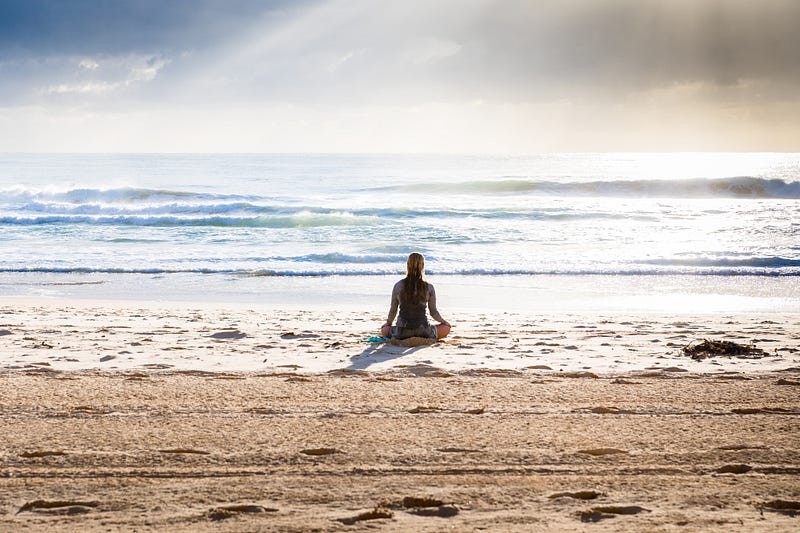
What Is Meditation
Meditation is a process of systematic focusing of one’s mind and thoughts. It is used to direct one’s mind from negativity to a positive one and to increase the general awareness of one’s surrounding and thoughts. It is disciplining the mind towards acceptance and gratitude.
Meditation can either be carried out in silence or by chanting. It is a spiritual practice, not a religious one.
7 Main Types Of Meditation
1. Transcendental Meditation
This is where a participant sits in silence and recites an assigned mantra repeatedly for at least twenty minutes daily. It sometimes can have background low music or sound. You must close your eyes. Transcendental meditation is effortless, and your body and mind soon relaxes and settles to a state of inner peace.
2. Mindfulness Meditation
This is a state of being aware of what you are doing, as well as your surrounding. You do not necessarily react to what’s going on, but you definitely take note. Mindfulness meditation can be practised anywhere, even while on your commuting. It is important to observe what is going on in your thoughts and mind and allow them to pass without passing any judgement whatsoever.
3. Yoga Meditation
Involves mainly physical exercises and postures with controlled breathing. It is important to focus on the postures to obtain the calmness of the mind. There are different postures, and it is better to start with a simpler one and work gradually towards a more complex one. Ultimately, you will find the one you are most comfortable with. The aim is to be in union with your mind and body, both mentally and physically.
4. Chakra Meditation
This refers to targeting the seven Chakra (wheel) of the body. It is believed in Sankirt that each Chakra is colour coded, and are interconnected to the centre of energy and spiritual power in the body. Chakra Meditation aims to bring harmony and balance to each Chakra by focussing on each at a time.
5. Vipassana Meditation
This is ‘to see things as they are’’, taught through self-observation. Vipassana teaches that you observe what is going on in your body, and connects your mind towards this for perfect health and happiness. Vipassana disciplines the mind, and body as one is required to abstain from sex, killing any animal, alcohol, stealing, lies etc during the ten days practice period.
6. Guided Meditation
This is just simply meditation led by a guide or a teacher. It does not mean the presence of a physical guide or teacher, it can be imaginary or simple visualisation, video or audio. Guided Meditation involves the use of senses, like sound and smell to invoke relaxation and calmness.
7. Metta Medication
This is also known as Loving Kindness Meditation. It is the practice of directing loving thoughts towards others. You start by sitting down peacefully in silence, then you first invoke the loving thoughts to yourself by saying,
‘’MAY I BE HAPPY, MAY I BE WELL, MAY I BE SAFE, MAY I BE PEACEFUL, MAY I BE AT EASE.’’
Then you start by mentioning those you want to bless and mention their names, repeating the mantra. People are advised to bless those they have a problem with and those who are in one form of difficulty or another, especially those who need healing both physically and mentally. You then finish the Metta Meditation by concluding that:
‘’May all being everywhere be happy’’
6 Main Benefits Of Meditation
1. Emotional Health
Having a positive outlook on life greatly enhances one’s emotional health according to research on 3,500 participants. It was discovered that those who practice meditation had a lower level of the inflammatory chemical cytokines, which signifies a positive mood level and therefore eliminates stress-related depression and anxiety.
This positive mood level is equally experienced with those who engage in one form of dance classes, examples are Tai Chi, Argentina Tango and Spanish Zumba, etc.
2. Reduced Age-Related Memory Loss
In a test that involves older adults, it is evidenced that there is improved mental alertness and lower cognitive decline.
3. Meditation Makes You A Better Person
The effects on people are becoming kinder and willing to help and support others. This is a spiritual reformation of the inner person which is bound to happen if one takes meditation seriously. A study of fifty participants proved that there is increased inter-personal relation among those who practised meditation.
It also helps you become a better individual, especially in the area of self-disciplined, in the everyday aspect of living. It helps you with eating healthily, control addiction, sympathetic towards others, show empathy and affection.
4. Meditation Reduces High Blood Pressure
A study of participants with high blood pressure shows that meditation reduces their stress level, which enhances the body ability to produce antibodies to normalise the body system, including blood pressure. If meditation is combined with a relaxation technique, then the result can be significant in those with high blood pressure experiencing a good result.
5. Can Improve Sleep Quality
Meditation does help with quality sleep. This is because meditation helps the mind to be disciplined and relaxed, by removing disturbing thoughts and negativity. This prepares the brain for good quality sleep and fights insomnia.
6. May Reduces Loneliness In Adults
A study of 40 participants of age ranges of 55–85 years, were offered eight weeks of guided meditation for thirty minutes a day. Their blood samples were taken before and after.
It was discovered that the adults’ pro-inflammatory gene expression in their immune cells at the beginning of the study. These were significantly reduced at the end of the study. This study indicates that adults gene expression can be modulated by psychological intervention. This is significant as inflammation is the cause of many older adults issue that results in loneliness. The research team agrees that more work still needs to be done here.
The Takeaways
There are other variations of Meditation apart from those mentioned above, and you have to find out which suits or benefits you as a person.
Although meditation is being practised by religious organisations, it is nevertheless a spiritual exercise, and the main goal is to awaken the inner man towards the alignment of the body soul and spirit.
It is then that humanity can enjoy optimum life of happiness and bliss that is his birthright.
“The goal of meditation is not to get rid of thoughts or emotions. The goal is to become more aware of your thoughts and emotions and learn how to move through them without getting stuck.” Dr P. Goldin