
Meditation — Exploring The Science Of Breathing
How to get started step-by-step
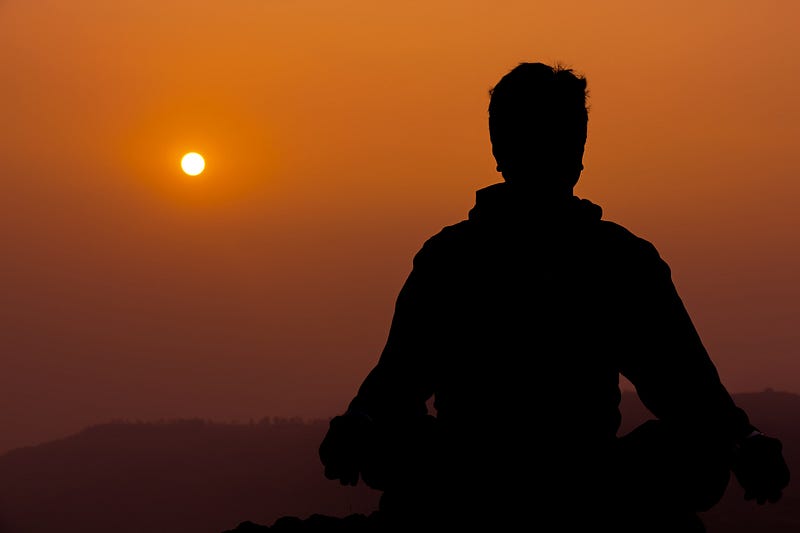
Did you ever wanted to start meditation but did not succeed or did you begin but were distracted by mind saying it’s impossible or do you want to start but don’t know how, why and what to do. If yes, you might get your answer here. It’s normal that initially, you will find it challenging to start meditation or even if you start, your mind will continuously wander to get lost in the ocean of million thoughts. Quality of mind is to stay in a continuous flow of ideas, views which can further fill one’s mind with a sense of un-accomplishment or disappointment thereby raising doubts such as meditation is not achievable or is too difficult. I will cover the essential items required for you to start if you are thinking of embracing this journey and even for people who have already embarked in that journey but find it challenging to continue.
To begin with, we should go a step back from meditation by giving some more insights into concentration defined below:
“Concentration is achieved by an action performed by mind to give utmost attention to one thing at a particular moment”

For example, you might have studied in your school days subject such as “Science” or “Geography” or “Any Language” and various concepts involved in it. While understanding, you would have concentrated your mind to memorize multiple concepts. You would have either pictured the idea with real-world objects or with fictional objects or just learned concepts to recall at the latter time. Hence, the action of reading the idea with all thought process to understand it properly at that particular moment by your intellectual mind results in “Concentration”. This Intellectual mind depending on how deeply you have concentrated the concept will recall the information when required at some moment of your life.
So identifying the central idea here, concentration is something which your brain does daily by memorizing it such as learning a new subject, reading, observing everyday things like groceries list, car location, office route etc. Any healthy individual would have achieved such concentration already in their life, and some of them might have been very good, good, average or weak. The goal is not to point which level you are but to let you know that concentration is something which your mind performs consciously on a required basis. Further, your mind recalls information when needed depending on its intensity when you observed or studied it.
Allowing yourself to concentrate on a particular thing needs control of your mind. However, the mind is something which should be healthy, active and steady to be in control of your body. Many assume that mind is uncontrollable and automatic and is not in our control. Though it can go through a million thoughts, you can train the brain to be in control with regular practice. Example of studying concepts in your school days should already let open the gate of your mind. It reminds you what you have already achieved by controlling your mind at some instance of your life. You might be successful or unsuccessful, but that does not matter. The identification of the process is essential to be known and refine it further.
Let’s now define Mediation, which is dependent on the concentration explained above:
“Meditation is an act of refining concentration or steadying your mind for a prolonged time”
If you concentrate on any particular thing for more time, it results in the process of meditation. For training your mind to extend the focus on one thing, you will need to allow it to be steady on that thing. But how? Mind continuously wanders to a million other thoughts. And why does that happen? Because it needs to be busy. It cannot be at rest. That’s the nature of your mind. So what’s the solution? Well, below is the trick:
Occupy Your Mind With One Physical or Mental Action. Keep Your Mind Busy!Quality of mind is to wander, and we need to bring it one place and train it consciously. The method above might sound strange, but it’s not. Did you realize that we have just reduced the thought process of your mind from going to multiple thoughts to only one? Hold on steady; we are progressing to another trick.
Now the question is which physical or mental action you should perform to achieve further progress. There are many different actions to keep your mind focused, but we will explore the most beneficial that is directly responsible for keeping your mind in a good position. This action is called “Breathing”. It is performed by your body at regular intervals and is one of the vital signs that show your body is alive and functioning.
You might ask : Why “Breathing” ?
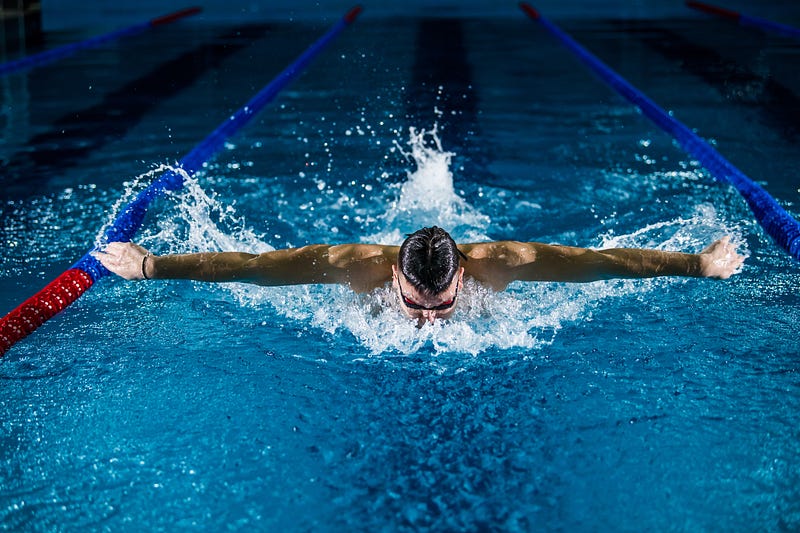
Have you ever observed or seen an athlete, a swimmer, a yoga teacher or someone with an excellent physique? What is common among all of them? They have learned to regulate and control breath and achieve great feats in their respective fields. Breathing cycle of such people is far better than an average individual. How did they accomplish that? By practising their sport daily and concentrating on one thing for an extended time. So why you should stay away from enhancing the natural process of breathing and daily practising to accomplish exemplary achievements in your field and life. Understandably, not all people would want to be an Olympic swimmer or athlete, etc., but you would want to excel at something in your life. Your body and mind can help you achieve such feat at a much higher speed if you can regulate, control your mind and breath at your own will.
As we have answered, meditation experienced by allowing your body to practice breathing is one of the efficient methods. Hence what we need to understand is the process of normal breathing, then simplify concentration of breathing at any given moment and once that learned, we should further progress on the intensity of breathing for a prolonged time.
Breathing
Living organisms inhale and exhale air and is known as breathing. Living beings can breathe via particular organs and even through the skin.
Human beings are blessed to have specialized organs such as Nose, Airways Diaphragm, Lungs, Heart etc. which are part of standard “Respiratory System”. Through the process of inhalation and exhalation, the air is pumped in and out of the Lungs. Lungs extract oxygen from the inhaled air and pass it to the bloodstream. Lungs also collect the waste residue carbon dioxide from its tissues and the respiratory system throws out the waste through the nose via exhaled air.
It is widely accepted by many experts that to stay healthy and energetic human being needs oxygen and glucose through different sources like air, food, etc. Inhaled air provides the body with oxygen, and when oxygen mixes with bloodstream along with glucose, it nourishes body cells through respiration and gives them refreshed energy to perform well. Oxidation of body waste product is also required to throw waste out of the human body and hence maintain the body’s digestion. Once digestion is managed correctly, the body is free of diseases and therefore healthy. You might have observed if your bowels are not regular then how it impacts your health and in-turn even your mind. Thus, the respiratory system is responsible to not only maintain breathing but an excellent digestive system.
Breathing also has the third state apart from inhaling and exhaling, and that third act is “Retention or Pause”. One breathing cycle is usually: Pause before inhaling, Inhaling, Pause before exhaling and Exhaling. The body’s respiratory system organs help not only to breathe but control the flow as per one’s strength and will. The brain nerves do this control, and the body’s respiratory system is directly dependent on the state of the brain. Thus, a healthy mind is required for a sound respiratory system. If your brain is disturbed or not healthy, it might impact your way of breathing.
The above process is explained in a more straightforward way to stick to the goal of this article, and by now you should have got the central idea about why control over the mind is required to gain control over breathing and concentration.
An average adult person breathes around 12 to 20 times per minute at rest. However, note that this rate varies based on the person’s age and physical state. A living human body performs either :
- Un-Conscious Breathing or
- Conscious Breathing
Un-Conscious Breathing
As you were reading this blog, you might have spent more than a minute. Your body has still taken around 12–20 breathe per minute. This act of your body where-in without your mind focusing on your breathing still breaths is called “Un-Conscious Breathing.”
Conscious Breathing
Now Stop reading this blog for a minute and keep a note of how you breathe. Check how you inhale and exhale air from your nose.
After a minute, try to answer the below questions:
- Did you notice the period when you inhale and exhale?
- How many breathes did you take in a minute?
- Did you inhale faster and exhale slower or vice versa?
- While taking note of your breathing, did your mind wander to some other thought instead of observing your breath?
If you can answer, points 1–3 to some extent, then you were in a state of “Conscious Breathing.”
If your answer to point 4 is yes, you moved from Conscious breathing to Un-Conscious breathing.
Meditation is done with conscious breathing as concentration is achieved in conscious state of mindAs we have unfolded some fundamental and essential things, let’s uncover this science with some practice tips and steps to perform daily.
The science of breathing is called “Pranayama” which is a “Sanskrit” word. In the context of meditation, “Prana” means breath and “Ayama” means prolongation or stretch. In short:
“Pranayama” means stretching or prolongation of breath in a conscious manner.
Breathing Practice (Pranayama)
Before we go ahead with practice, let’s also see few requirements which are essential and will help to give you a proper path for your daily practice:
- Place to practice
- Time to practice
- Physical state and
- Mental State
Place
Look for an area or room which has fresh air and is quiet. Sit on a flat and firm surface. Avoid sites which have disturbance and is not clean.
Time
Best time to practice is in the morning before sunrise or evening after sunset. However, this is not a strict rule, and you can practice based on your free time. But note that once you start, try to practice at the same time every day and with the same posture.
Do not perform immediately after meals and when you are starving or hungry. Maintain 3–4 hours of difference between meals and breathing exercises. Drinks, water, tea, coffee can be taken 30 min — 1 hour before starting pranayama.
Physical State
You should always practice with one crucial aspect: keep your head, neck and back in straight line upfront and immovable OR at rest. Any position that can achieve such a state can be used for pranayama. Highly recommended posture is sitting on the flat floor with legs folded on blanket or mat(Lotus Pose or Padmasana).
Your body should be in a relaxed state and not under any tension or exertion before starting pranayama. If you have performed any physical activity such as running, weight exercise or even yoga asanas, then do not proceed immediately with pranayama. Let the body relax and clam down to room temperature till heartbeats are relaxed.
Empty your bowels and bladder before starting pranayama is recommended.
Mental State
Keep your thoughts fresh, clean and positive. Forget all worries of your life during practices. Try to concentrate on your breathing. It’s hard to do in the beginning, but by training mentioned below, it will help to move forward with less distraction. Remember the key is to keep the mind busy with focus on physical action, i.e. breathing and your thought process behind conscious breathing
Practice Regular Breathing
If you are already experienced with regular breathing practices, and concentration in those breathes, you can skip to the next method. If you are doing this for the first time or were not perfect before, I would highly recommend starting with this practice.
- Sit in a comfortable position on the flat floor with a blanket or mat in Lotus Position or Padmasana.
- Keep your wrist on your knees and body, head and neck straight with spine erect.
- Close your eyes and explore inwards at the centre of both eyes without stressing too much on your eyeballs.
- Listen to your inwards voice and breathing while doing below three steps.
- First, exhale out air from the lungs and move to the next step. Note that do not stress too much on your abdomen while performing this step. Do it normally.
- Inhale regular intake of air through your nostrils. Make sure your chest gets filled and expanded instead of your stomach. Since the air passing through your nostrils, airway tubes and filling your lungs. Feel your breath.
- Hold the air inside the lungs for a while as per your strength.
- Exhale the air through your nostrils slowly and steadily. Feel the air passing through your lungs nostrils, airway tubes and out through your nostrils. Feel your breath.
- Pause for a while and Repeat step 6 to 8, for ten more times.
If you have performed until step 8, you have completed one breathing cycle. Note this is standard breathing practice and what we are achieving here is making your mind focus on the breathing process and keeping it occupied so that it does not run towards other thoughts.
Once you perform more breathing cycles, try to answer the below questions:
- Did you hear the breathing rhythm while your body inhales and exhales?
- Were you able to concentrate on the middle of your eye centre during the whole process?
- Did you maintain your posture while performing the above steps?
- Is there a difference between your first breathing cycle and the last?
If you have heard your breathing, the inhalation and exhalation process would have created a soothing rhythmic voice. If your posture was stable, and you could concentrate without stress at the eye centre while maintaining rhythmic breathing, you are in a state of conscious breathing and meditation. You will also notice that the time taken from first breathing cycle to last gets improved.
If you keep practising above process daily by starting from 10 and increasing till 50–60 breathing cycles per day, you will begin to notice the following:
- Your breathing cycles period has increased
- Your mind is more fresh and energetic
- Your concentration has increased
- Your facial muscles are more relaxed
Practice Controlled Breathing
Let’s define the goal first. We have so far performed normal breathing, and you should now be able to inhale and exhale by concentrating on the breath according to your capacity. Remember, in the first practice session; you were focusing on the breath and listening to breathe voice. Consider your breathing voice as one variable, and we are going to add another variable in this exercise to get control breathing. This variable is to count inhale, retention and exhale period of your breadth. You might have guessed by now, to control anything we need to measure and that’s precisely what we will be doing:
- Sit in a comfortable position on the flat floor with a blanket or mat in Lotus Position or Padmasana.
- Keep your wrist on your knees and body, head and neck straight with spine erect.
- Close your eyes and explore inwards at the centre of both eyes without stressing too much on your eyeballs.
- Listen to your inwards voice and breathing while doing below three steps.
- First, exhale out air from the lungs and move to the next step. Note that do not stress too much on your abdomen while performing this step. Do it normally.
- Inhale regular intake of air through your nostrils until the count of 10. So your brain should now instruct two senses here. One is to hear the breath inhale through your ears, and second is to count through your mind numbers from 1–10. You decide the speed with which you will count based on your capacity. Note that your physical activity is still one thing, i.e. breathing and you are instructing your brain to help control it using another sensory system to count so that it can be regulated.
- Hold the air inside the body for the count of 40. Note that, the frequency with which you counted inhale in step 6, try to maintain the same speed. In this step, there is no inhale and exhale so your brain should ask you to count and explore inwards through the centre of your eyeballs.
- Release the air through your nostrils for the count of 20 very steadily. Try to maintain the same frequency for the count. Your brain should instruct the same senses as step 6.
- Repeat step 6 to 8, for ten more times.
For beginners, the count of 40 might be difficult to achieve. If that’s the case, perform inhalation of air with the count of 5, Retain air in lungs with a count of 20 and exhale the air with count 10. If you feel tired or too exhaustive in the beginning take rest, let breathing be usual and then start from step 3 again. Remember that you do not have to stress too much in any of the actions above. Know your capacity for breathing and slowly increase the breathing cycle.
Now open your eyes, make sure your body is in the same posture and if it’s not aligned, then correct it as said in step 2. Sit for 5 minutes in the same pose.
If you keep practising above process daily by starting from 10 and increasing till 50–60 breathing cycles per day, you will begin to notice following more changes along with one discussed above during normal breathing:
- Your sleep has improved
- Your anxiety reduced
- You have started to think more positively and efficiently
- Your digestion is improved
- You are less tired now than before and are more energetic
There are several advantages which you will find yourself and feel the difference if you practice regularly.
So let’s recap what have we seen so far:
- Concentration and example of how you did it before
- Meditation and how it relates to the concentration
- Focusing Mind on Breathing as a tool
- Conscious and Un-Conscious Breathing and which one to use for meditation
- Pranayama, the science of breathing and requirements to practice
- Regular breathing practice to identify the breathing process and where to concentrate
- Controlled breathing to instruct brain for the regulation of breath based on the count.
What Next
Practice, Practice and Practice and improve your health to the next level. Few more next actions given below, but I only recommend those once you are good at controlled breathing:
- As you develop your breathing cycle, try to count slower the breathing cycle periods. Remember always to know your body’s capacity and do not stress too much. Slowly and steadily, your breathing cycle will improve.
- Remember, I have asked to listen to your breathing voice. Once you improve your practice, try to sense the breathing and reduce your breathing voice. However do this progressively and slowly to train your mind till there is no breathing noise, just breathing which you can sense.
- Initially try controlled breathing or pranayama from 5 min to 20 min of practice per day. Perform two times per day if your time permits.
Good Luck!!!
True concentration is an unbroken thread of awareness — B.K.S Iyengar


