
Family Violence Framed As A Battle With Mental Health
Families can become fragile in the face of ‘loving’ power
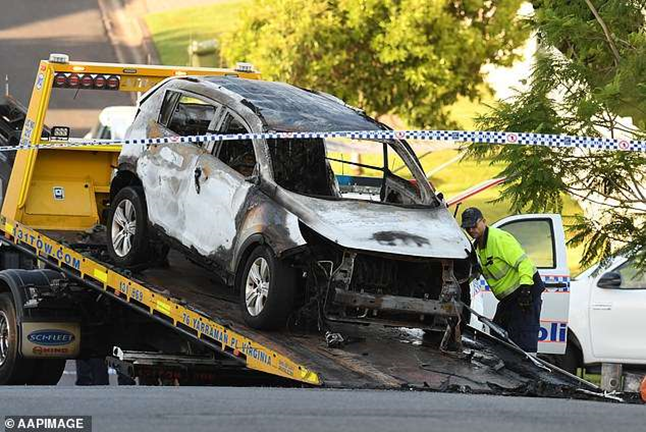
Hannah Clarke and her three young children died violently on February 19, 2020, in Australia, at the hands of someone who should have been looking out for all of them.
Although I don’t know all the circumstances of the deaths, I know the attitudes and actions of similar people in these situations.
How do I know this?
I worked in acute medical situations with little security, where patients and partners became violent.
I conducted family home visits to mothers, discharged from the hospital with new babies. I carried a duress alarm.
I worked in operating theatres assisting in repairing the damage inflicted on one another by family members.
I was the wife of the country cop where locals believed they had access to my husband and our home 24/7 to sort through individual problems and family “disputes.”
Hot summers and weekends are significant times for domestic violence calls to police. The worst day of the year for family violence in Australia is Christmas Day.
Family life
We all have issues.
We all have problems.
That’s life.
Troubles can be a part of daily family life for many people.
And domestic violence can be a part of everyday family life for many people.
We don’t all have the skills or rational thinking to control or protect ourselves and others from violent acts of anger. The majority of us couldn’t stop domestic violence from turning into murder. However, all of us have a responsibility to learn how to put a stop to these violent acts through prevention and education to change behavior and attitudes.
Emotions were running amok
Reflected in heightened emotions last week was:
- grief-stricken outrage from extended family members;
- a few quietly spoken answers in interviews with residents in the street where the family lived; and
- shocked and disbelieving first responders’ replies to journalists’ questions.
Some journalists themselves were horrified at what they were reporting. However, they framed their stories carefully until the facts were confirmed. Most journalists were aware this wasn’t an “accident,” or something acted out by a “monster.”
The perpetrator was an angry man.
The perpetrator was an angry man who came prepared.
The perpetrator was an angry man who came prepared and wanting retribution for his pain.
The perpetrator was a man who supposedly loved the ones he killed.
Who protected Hannah?
Hannah and her children were set on fire in the family car, by Hannah’s partner and father of her children. He then killed himself.
Focusing on the harangued perpetrator is an easy way to avoid the statistic of one in three Australians who believes when a woman doesn’t leave her abusive partner, she is responsible for the ongoing violence.
One in five Australians believes domestic violence is a normal reaction to stress. Hannah’s death was portrayed by most of the media as a normal reaction to stress by her partner.
One article did exhibit evidence of the power and control that preceded the murders by documenting Hannah’s partner as the subject of a domestic violence order meant to protect Hannah. He stalked and harassed her. He kidnapped one of his daughters for four days.
Law enforcement emotions were also running awry
Journalist Julia Baird stated the old:
…anger about victim-blaming erupted on Thursday when Detective Inspector Mark Thompson was speaking about the investigation of the deaths of Hannah Clarke and her three children, who were doused in petrol and set alight by their father in Brisbane’s suburb of Camp Hill. — Julia Baird
As the detective assigned to the case, he released his thoughts on the matter, prematurely as it turned out, to the media, as:
Our job as investigators is to keep a completely open mind. We need to look at every piece of information and — to put it bluntly — there are probably people out there in the community that are deciding which side, so to speak, to take in this investigation.
Is this an issue of a woman suffering significant domestic violence and her and her children perishing at the hands of her husband, or is this an instance of a husband being driven too far by issues that he’s suffered by certain circumstances into committing acts of this form? — Mark Thompson
Following this inappropriate statement, Mark Thompson was stood down by his Commissioner of Police. Thompson said Queensland Police was not excusing violence; he was, however, anticipating people in the community would make allegations that Hannah’s husband had been driven too far by circumstances.
Really?
His comments may explain why some domestic violence victims have confirmed they don’t feel supported, only blamed by police.
This information came to light following a former Governor General’s authored Report into domestic violence in Queensland, “Not Now, Not Ever.” The Report, released in 2015, included 140 recommendations, and all were accepted and implemented by the Queensland Police.
None of us is blameless
Resources and guidelines are now available to journalists to improve reporting on family violence. However, Anne Blatchford, from the University of Melbourne’s Law School, finds it difficult to comprehend why the isolated story of someone provoked to kill continues to play out in the media.
In the very human attempt to make “sense of the senseless,” … this story became about the “rugby star,” the “picture perfect” family photos [on social media], and the horrific scene of the crime … at the expense of the broader and blatantly obvious problem of domestic violence which sees on average, one Australian woman murdered every week — Anne Blatchford.
Many readers were not surprised to see Hannah’s partner remembered and lauded as an ex-Warriors NRL player. This tragedy was so newsworthy the New Zealand Herald reported the murders in the sports section rather than the crime section.
Then there is the social media information
From this cosmos of personal data came images of what so many media outlets called the “picture perfect” family, intensifying the horror of such a random and shocking event, happening to such ordinary people.
The Courier-Mail editor reflected on the social media videos and the family’s lifestyle, as
…so suburban, so normal, so … Brisbane. — Chris Jones
“Not Now, Not Ever” hasn’t changed the culture
One outcome of Dame Quentin Bryce’s Report was the criticism of police when dealing with domestic violence. Family violence and its victims were disregarded as “just a domestic,” within the inappropriate culture of law enforcement.
These victims confirmed their frustration when giving statements about breached domestic violence orders. One young woman, whose estranged and violent husband pursued her for two months, said the police had outstanding requests detailing her husband as “wanted for questioning,” but the police did nothing about the breaches.
The media re-published posts written by Hannah’s partner, painting a picture of a virtual recluse who was possibly suffering from mental health problems. More media articles documented mental health helplines, for the benefit of readers needing help, than the domestic violence helpline 1800 RESPECT.
Media coverage
In some of the less sensational media reports of this catastrophe were tell-tale signs of family violence. Some journalists connected this tragedy with the ongoing epidemic of family violence by citing statistics, systemic failures, and society’s responsibility to make further changes more quickly.
Despite these moments of consciousness, most of the media coverage was oblivious to the reality of family violence.
The dialogue we need to have
Dame Quentin acknowledged the Not Now, Not Ever Report wouldn’t change things immediately, but said:
We don’t talk enough about the perpetrators, about the failures of so many apprehended violence orders ignored — in the meantime, a terrible tragedy strikes.
Dame Quentin indicated we need to:
- throw everything we’ve got at this horrific human rights issue in our society;
- be even more responsive;
- have a greater focus on perpetrators;
- have early intervention with better, stronger, longer-term programs for perpetrators;
- dedicate more resources to combating the issue;
- make sure we keep the pressure on;
- gather more resources; and
- do it harder and better and with more determination.
Contributing to change
We can also work towards a better acknowledgment of circumstances needing change. We can encourage better outcomes by reporting incidents. We can promote prevention education. And we all need to be onboard to recognize and offer better protection.
There are many attitudes we must change, and services we can implement before this happens.
Prevention can be helpful. Tracy Howe from Domestic Violence New South Wales says,
We need to treat domestic violence the same way we would treat a natural disaster. If you’re in danger, call 000, or the DV hotline. — Tracy Howe
To provide safety at home or following a Domestic Violence Order, women are now considering using a SafeTCard, a personal emergency duress device. This device is operated on an inbuilt 3G sim card and monitored 24/7. It has a lanyard rip alarm and a two-way speaker. Women with violent ex-partners, who used it during a trial in Victoria, said it worked well as a deterrent to further abuse.
Individual responsibility for change
We can communicate better.
We can take responsibility by not reacting immediately to our emotions.
We can take stock of our angry outbursts and seek counseling or help with our addictions.
We can protect the vulnerable from the known imbalance of power. We know and understand in situations such as family members being assaulted or murdered, there’s always an imbalance of power and unequal strength.
And about changing attitudes?
How do we change attitudes?
This change is going to take some time as very little has altered in the Australian community, Queensland policing, or media attitudes in the five years since the release of the Not Now, Not Ever Report, and the implementation of all 140 recommendations.
A few journalists are telling Hannah’s story.
However, the real story remains hidden behind our prejudices.


