Media Mindfulness
Finding Calm in the News Storm
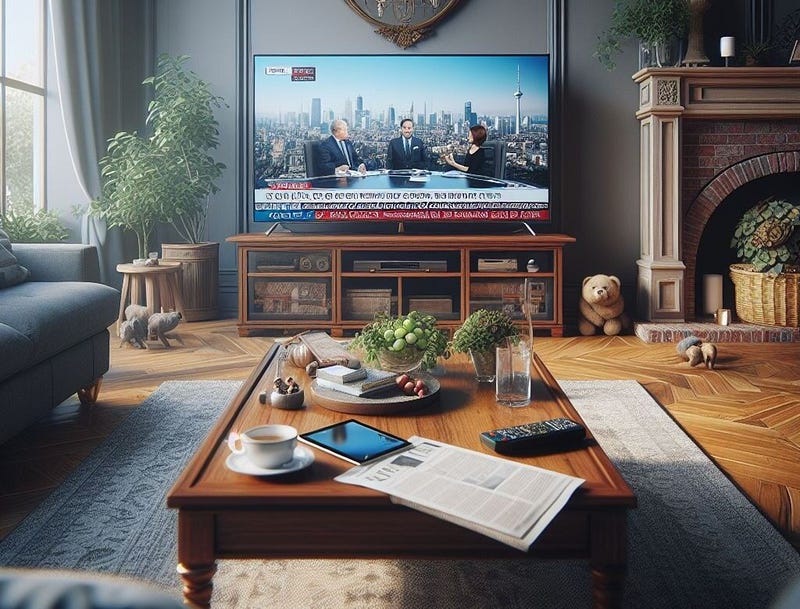
As I stepped through the door after my post-dinner stroll, I found my mom sitting in the living room, holding the phone in her hand, visibly upset and distressed. Assuming her phone was broken, I took it from her and asked what the problem was. She explained that there was nothing wrong with the phone; she simply wanted to know how to comment on a YouTube video.
I could sense that she was agitated and enraged. The video she wanted to comment on was a news clip. I clicked on the comment button and asked her what she wanted to write. She expressed her desire to say that she hated all politicians. Handing back her the phone, I felt saddened knowing that while her expression might temporarily relieve her distress, it wouldn’t have any lasting impact.
This incident made me wonder how news consumption is affecting older generations who rely on TV and media for entertainment. They’re becoming overwhelmed and feeling helpless. My mother keeps herself updated with world affairs, but lately, as the election approaches, I’ve noticed her getting more and more irritated after watching debates and discussions on TV.
Unable to voice her opinions in any meaningful way she is feeling stressed. Nowadays, news coverage goes beyond being a benign source of information and facts; it’s saturated with opinions and views that can subtly influence your subconscious and disrupt your lives in unexpected ways. Events are blown out of proportion to get you worked up and upset. False or propaganda stories impact individuals who don’t know how to fact-check. Social media clickbait headlines and posts highlight negative or dramatic news, further contributing to the overwhelm.
We are living in a world where news is everywhere. The constant influx of news delivery ecosystems like podcasts, streaming services, social media, and websites bombards us with information from morning to night. Even if we try to avoid it, news finds its way to us. Those who don’t actively seek out news updates can still be exposed to current events through social media connections or people sharing news clippings with them.
We can probably justify them as necessary evils. But let’s be honest, much of the value we derive from consuming the news is having something to talk about in social settings with others who also follow the news, like conversation fodder.
So, if the news isn’t delivering facts or information that directly impacts our lives, what exactly is it doing? To my mind, the aim of news today is to encourage further consumption of news by providing emotionally charged content of minimal relevance creating skewed and inaccurate perceptions of the world, especially for those who excessively consume it.
So, the next time you catch yourself checking the headlines for the hundredth time that day across various social media feeds, remember: news overconsumption will sneak into your subconscious and meddle with your life in surprising ways. The repeated exposure to news regarding matters beyond our influence leads to passivity. It wears us down, shaping a worldview characterized by pessimism and desensitization. The scientific term for it is “learned helplessness”.
Regarding my mom, I intend to gradually reduce her exposure to toxic news consumption. I’m currently exploring different ways to achieve this. At the moment, I’ve purchased an adult coloring book for her and I’m also introducing her to board games as alternative activities.
Thanks for reading.