
Meconomy
Greed-Based Economy
Meconomy: Greed-based Economy
Today’s popular (as well as official) wisdom is that the more you consume the happier you are — or will be, once you consume.
Naturally, this has to be the Washington D.C. view since the wheels of government are fueled and greased by money which is an unfortunate but unavoidable side product of consumption.
We need money to buy things.
It takes money to make things to need.
It takes money to make people need things (e.g., ads, commercials)
It takes money to make money (the investor’s mantra).
I once saw a Wiley Non Sequitur cartoon where the guy asking his banker for a third mortgage on his house in answer to the banker question: “What do you need the money for?” answers: “To buy stuff.”
This guy was not happy before needing more money to buy stuff, and he will not be happy once he’s bought the stuff. And, of course, unhappier still once he gets the new, revised mortgage statement.
A car can be a good thing. I have a 2008 Yaris which these days is nothing more than a glorified shopping cart as I drive to the supermarket and back once every three days to top up on fruits and vegetables. Rice and lentils I get online.
My Yaris has an engine and four wheels. It starts when I want it to and it stops when I want it to. It gets me there and back safely.
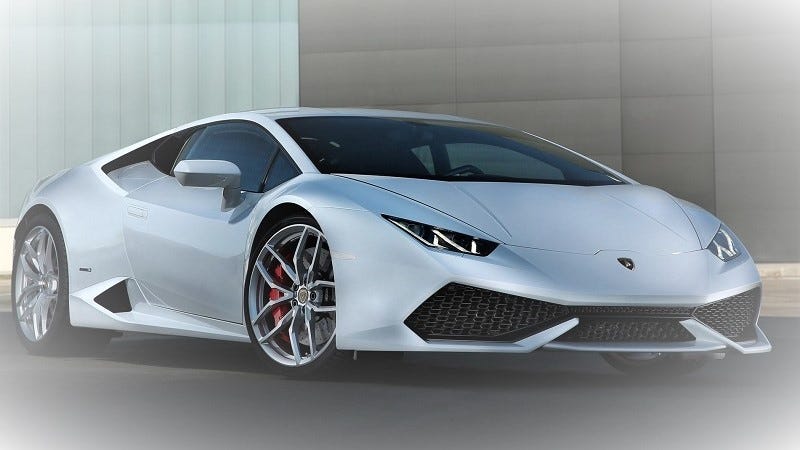
The same could be said of a Mercedes or a Maserati or a Lamborghini. Four wheels, starts when you want it to, stops when you want it to. Gets you there and back (relatively) safely.
Price tag difference: ten to twenty years of my current annual income.
I am content with what I have.
I am not an ideal consumer.
I am the marketeer’s nightmare.
I haven’t seen a commercial or an ad in a coon’s age — no television.
Even so, unfortunately, this is a consumer’s world. It is a me, me, me world; at least as far as our modern, western world goes. Perhaps we should call it our “first world” world — as opposed to that, over there somewhere, “third world”, you know.
Google supplies an interesting aside: The term “second world” was initially used to refer to the Soviet Union and countries of the communist bloc. It has subsequently been revised to refer to nations that fall between first and third-world countries in terms of their development status and economic indicators. (Who knew?)
And which countries would that be? one wonders. Croatia? Greece? Who-knows-istan?
End of interesting aside.
I find it both interesting and revealing that every contemplative tradition in the world today (or ever, pick your time frame) — whether Buddhism (Theravada, Mahayana, Vajrayana, or Zen), Advaita Vedanta, Yoga (not the stretching kind), Taoism, Hinduism et al. — all not only recommend (should you have spiritual happiness aspirations) but stress a simplified lifestyle not driven or dictated by greed and consumption.
A true statement follows this sentence. The happy man is he who is content with what he has, be it little, much, or nothing at all. The same for the happy woman, obviously.
And contemplative traditions all point to the greed of consumerism as one of the main fetters that tie us down, that in effect imprison us.
And to think that this poison (see below) is our “first world” solution to the happiness problem: take out a third mortgage and buy more stuff.
Meanwhile, while you have been reading this little essay up to this point, about fifty children have starved to death (at approximately 10,000 a day) on this planet.
Yes, all in the “third world”, which, thank God, is not even next door but one set of worlds over (the other side of the “second world”), i.e., as far away from us as we can get it. Yes, let’s thank God again. We must be His chosen folk.
Incidentally, the Buddha taught that humans are afflicted with three basic poisons: greed, hatred, and ignorance.
It doesn’t take much of a look around our Meconomy driven first world to see how rampant they all run today.
© Wolfstuff
P.S. If you like what you’ve read here and would like to contribute to the creative motion, as it were, you can do so via PayPal: here.


