avatarDanielle Herring

Free AI web copilot to create summaries, insights and extended knowledge, download it at here

5261

Abstract

ref="https://commons.wikimedia.org/wiki/File:Lewis_Gompertz.png">Wikimedia Commons</a> Public Domain</figcaption></figure><p id="ba8c">The updated version of this vehicle failed to catch on, not due to the design, but to the lack of paved roads. Legislation against riding draisines was also enacted soon after their invention, barring their use on footpaths or at night in many major cities.</p><p id="bd8d">Inventors across Europe continued to tinker with these early designs. Improved versions of Von Drais’ original invention, with pedals added, now referred to as velocipedes were introduced. By the 1860s, several <a href="https://www.history.com/news/bicycle-history-invention">French inventors</a> created new prototypes of velocipedes with pedals attached to the front wheel. These were the first bicycles, although they were colloquially called <a href="https://www.britannica.com/technology/velocipede">boneshakers</a>. The heavy iron and wood frames and lack of springs in the construction of the first bicycles meant their riders were often shaken around as they tried to navigate uneven paths or cobbled streets. The <a href="https://ageofrevolution.org/200-object/velocipede/">penny-farthing bicycle</a> was developed from these designs, both faster and easier to steer, but difficult to balance or climb onto. The winning design that would be the basis for most modern bicycles was the <a href="https://www.si.edu/spotlight/si-bikes/si-bikes-safety">safety bicycle</a>, with a seat lower to the ground, and balanced, equally sized wheels turned by chains connected to pedals.</p><figure id="4022"><img src="https://cdn-images-1.readmedium.com/v2/resize:fit:800/0*Y9q6qPe2-ufqjd4Q"><figcaption>Illustration of a Velocipede from “The Velocipede; Its History, Varieties, and Practice” 1869 <a href="https://ageofrevolution.org/200-object/velocipede/">Wikimedia Commons</a> Public Domain</figcaption></figure><p id="7a9e">Sometimes referred to as <a href="https://www.google.com/books/edition/The_American_Bicycler/Y6cXAAAAYAAJ?hl=en&amp;gbpv=1&amp;pg=PA6&amp;printsec=frontcover">mechanical horses</a>, the reception of the bicycle was much warmer than the draisine. Public pressure from <a href="https://www.vox.com/2015/3/19/8253035/roads-cyclists-cars-history">wealthy cyclists</a> who wanted more options to ride their bicycles in the city as well as their country estates resulted in improvements to roads and greater accessibility for bicycles to become a viable means of transportation for the everyday person.</p><p id="8add">While the concern for horses may not have extended to eliminating all horseback riding as a point of activism for most vegetarians, many saw the health benefits of using this new invention.</p><p id="6801">Vegetarian publications encouraged the use of bicycles, publishing <a href="https://www.google.com/books/edition/Herald_of_the_Golden_Age/4Nj5XPoAmdEC?hl=en&amp;gbpv=1&amp;pg=PA69&amp;printsec=frontcover">testimonials</a> from vegetarians about the wellness improving regime of a meatless diet in combination with bicycle riding.</p><blockquote id="2e3b"><p>The blessings which have been brought into my life through adopting a reformed and bloodless diet, have been so great that I feel it my duty to conquer a natural shrinking from any publicity, and to give my testimony for the benefit of other sufferers. For ten years I was in the hands of the doctors and consulted several eminent physicians, who dosed me upon the old lines and made me undergo painful operations in the vain endeavour to cure me of a chronic internal complaint. […] In the autumn of that year I attended a lecture with my husband, and we learned that it was not only possible but also beneficial to live without flesh-food. Simultaneously with the knowledge of this fact, a powerful conviction was impressed upon our minds concerning the intense suffering inflicted on animals on cattle boats in the shambles, and we concluded butchery and flesh-eating must be wrong. We resolved therefore never to touch butcher’s meat again. […] My health at once commenced to improve […] I am now able to undertake comparatively long walks and to ride a bicycle with enjoyment.” (p. 69)</p></blockquote><p id="a88e"><a href="https://www.google.com/books/edition/the_dietetic_reformer_and_vegetarian_mes/ZgQFAAAAQAAJ?hl=en&amp;gbpv=1&amp;pg=RA3-PA223&amp;printsec=frontcover">Vegetarians</a> also found that the bicycle allowed them to demonstrate the stamina their diet gave them, and could turn critics to converts.</p><blockquote id="440e"><p>A BICYCLIST’S TESTIMONY. — I am able occasionally to put Vegetarian food to the test by long and fatiguing rides on the bicycle. A short time ago an intelligent youth had spoken rather disparagingly of Vegetarianism, and as is usual, doubted whether a long journey on a bicycle could be done without the use of a more stimulating diet. So to test the matter we took a ride of 40 miles, in which I never dismounted once, and was quite ready and willing to continue; but my friend cried “Hold!” and returned by train. He vowed he would never say another word against the system, and, I believe, has since tried it. At any rate he circulated the story, and ever since my opinions have been respected, and

Options

enquiries and questions asked. — W.G.H.E. (p. 223)</p></blockquote><p id="99a6">Advertisements promoting bicycles for sale, as well as bicycle adjacent products, like cycling magazine subscriptions could also be found in late 19th century vegetarian periodicals.</p><figure id="38e0"><img src="https://cdn-images-1.readmedium.com/v2/resize:fit:800/0*tJbvezLKRjqUCBSC"><figcaption>Advertisement from The Dietetic Reformer and Vegetarian Messenger (1883) <a href="https://www.google.com/books/edition/the_dietetic_reformer_and_vegetarian_mes/ZgQFAAAAQAAJ?hl=en&amp;gbpv=1&amp;pg=RA3-PA70&amp;printsec=frontcover">Google Books</a> Public Domain</figcaption></figure><figure id="4a1f"><img src="https://cdn-images-1.readmedium.com/v2/resize:fit:800/0*yPJdp9YGLPt6jmgC"><figcaption>Advertisement from The Vegetarian Magazine (1900) <a href="https://www.google.com/books/edition/The_Vegetarian_Magazine/b6vlAAAAMAAJ?hl=en&amp;gbpv=1&amp;pg=PA19&amp;printsec=frontcover">Google Books</a> Public Domain</figcaption></figure><p id="e0b7">A cycling club for vegetarians was organized in London, gaining <a href="https://www.google.com/books/edition/The_Humane_Review/asRIAAAAYAAJ?hl=en&amp;gbpv=1&amp;pg=PA88&amp;printsec=frontcover">mention</a> in <a href="https://www.google.com/books/edition/Food_Home_and_Garden/8JlXAAAAMAAJ?hl=en&amp;gbpv=1&amp;pg=PA120&amp;printsec=frontcover">vegetarian publications</a>. <a href="https://www.google.com/books/edition/Cultural_Encyclopedia_of_Vegetarianism/EOnEEAAAQBAJ?hl=en&amp;gbpv=1&amp;dq=%22vegetarianism%22%20AND%20%22cycling%22&amp;pg=PA183&amp;printsec=frontcover">Vegetarian cycling clubs</a> began to catch more mainstream notice as vegetarian cyclists <a href="https://www.google.com/books/edition/New_England_Anti_vivisection_Society_Qua/vFM9AQAAMAAJ?hl=en&amp;gbpv=1&amp;pg=RA13-PA10&amp;printsec=frontcover">won races</a>, <a href="https://www.google.com/books/edition/The_Vegetarian_Magazine/qDqgAAAAMAAJ?hl=en&amp;gbpv=1&amp;pg=PA54&amp;printsec=frontcover">broke records</a> and outpaced non-vegetarian cyclists in the 1880s and 1890s.</p><figure id="cc4f"><img src="https://cdn-images-1.readmedium.com/v2/resize:fit:800/0*NK1YJig6c34_7_42"><figcaption>Photograph of H. Sharp (Vegetarian Cycling Club Sub Captain) and Son in Fifty Years of Food Reform (1898) <a href="https://www.google.com/books/edition/Fifty_Years_of_Food_Reform/gYRIAAAAYAAJ?hl=en&amp;gbpv=1&amp;pg=PA157&amp;printsec=frontcover">Google Books</a> Public Domain</figcaption></figure><p id="d700">Like modern vegan athletes, these Victorian vegetarian cyclists wanted to prove that a plant-based diet did not hinder athletic performance. Competing in cycling races or long-distance bike rides was a display of stamina and strength. Vegetarian periodicals reported on the athletic <a href="https://www.google.com/books/edition/Herald_of_the_Golden_Age/4Nj5XPoAmdEC?hl=en&amp;gbpv=1&amp;pg=RA1-PA115&amp;printsec=frontcover">achievements</a> of vegetarian cyclists as proof that vegetarian diets were not only safe, but <a href="https://www.google.com/books/edition/New_England_Anti_vivisection_Society_Qua/vFM9AQAAMAAJ?hl=en&amp;gbpv=1&amp;pg=RA17-PA10&amp;printsec=frontcover">beneficial</a>.</p><p id="7e10">This new interest in vegetarianism allowed vegetarian cyclists to promote their diets to a broader audience. A mainstream cycling magazine,<i> The Wheel and Cycling Trade Review</i> encouraged their readers to <a href="https://www.google.com/books/edition/The_Wheel_and_Cycling_Trade_Review/6fFYAAAAYAAJ?hl=en&amp;gbpv=1&amp;pg=PA134&amp;printsec=frontcover">experiment</a> with <a href="https://www.google.com/books/edition/The_Wheel_and_Cycling_Trade_Review/FfFYAAAAYAAJ?hl=en&amp;gbpv=1&amp;pg=PA11&amp;printsec=frontcover">vegetarianism</a> to see if it improved athletic performance.</p><p id="716f">By the 50th year anniversary of the start of the Vegetarian Society, the book <a href="https://www.google.com/books/edition/Fifty_Years_of_Food_Reform/gYRIAAAAYAAJ?hl=en&amp;gbpv=1&amp;pg=PA152&amp;printsec=frontcover"><i>Fifty Years of Food Reform</i></a> recorded the history of the Vegetarian movement in 19th century England. The work covers the development of the vegetarian cycling club and the achievements of numerous vegetarian cyclists. Bicycles allowed vegetarians and vegans opposed to the use of horses to follow their ethics. They also provided a new avenue to promote plant-based diets from a health standpoint, defeating stereotypes of malnourished and weak vegetarians on the racing track.</p><p id="d378"><b>Note:</b></p><ol><li>Gompertz’s arguments against the use of horses can be found on p. 119–134.</li></ol><p id="9c57"><b><i>Thank you for reading!</i></b></p><p id="cebb">If you love history, plants or the history of plants, consider supporting <i>Plant Based Past</i> by buying me a <a href="https://ko-fi.com/danielleherring">coffee</a>!</p><p id="b682">For more vegan, vegetarian, and botanical histories, follow Plant Based Past on Medium.</p><p id="5714">You can sign up for email alerts to receive the next story when it becomes available, just by clicking the envelope icon.</p><p id="284b"><b>Next Week: <i>5 Toast Recipes from the Past for When You’re Out of Avocados</i></b></p></article></body>

Mechanical Horses and Plant-Powered Athletes: A Vegetarian History of the Bicycle
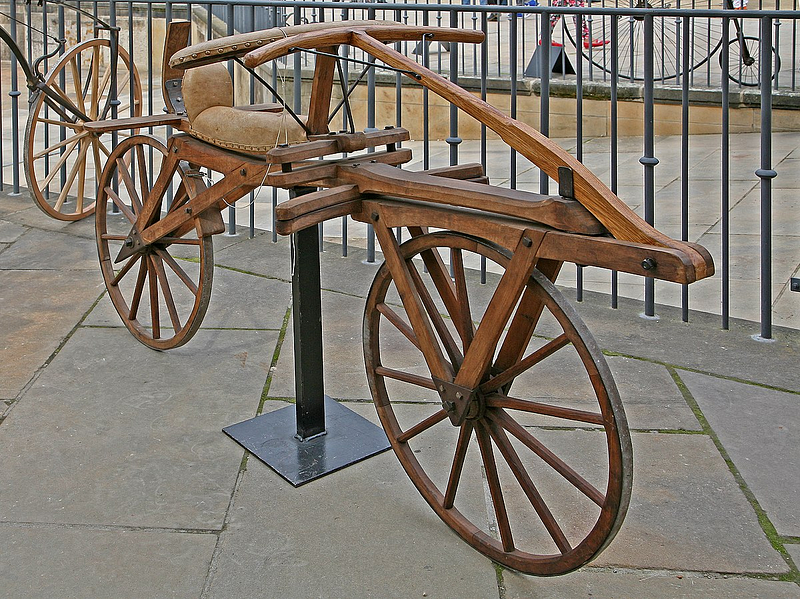
Draisine by W. Bulach Wikimedia Commons Image License

Bicycles conjure many images to mind — an eco-friendly way of getting around, a piece of fitness equipment or a relic of childhood nostalgia. However, these people-powered transport devices were also impactful in the 19th and early 20th century history of vegetarians and vegans in the United States and Britain.

Concern for the welfare of horses was a common cause for early vegetarians and vegans. Articles in vegetarian periodicals condemned harsh treatment of cart horses, the use of curb bits, and tail docking. A smaller minority of vegetarians opposed¹ the use of horses for all forms of transportation. In the late 18th and early 19th centuries, vegetarians who held this position resorted to walking as their only form of transportation. Bicycles would be the initial answer for these early vegetarians and vegans who opposed riding horses or using horse-drawn carriages.

The origins of the bicycle begin with the celerifere. The celerifere was first seen in the 1790s, being ridden through the gardens of the Palais Royal in Paris by the Comte de Sivrac. While the exact origins of the first bicycle are still unknown, the celerifere is considered to be the earliest ancestor of the bicycle.
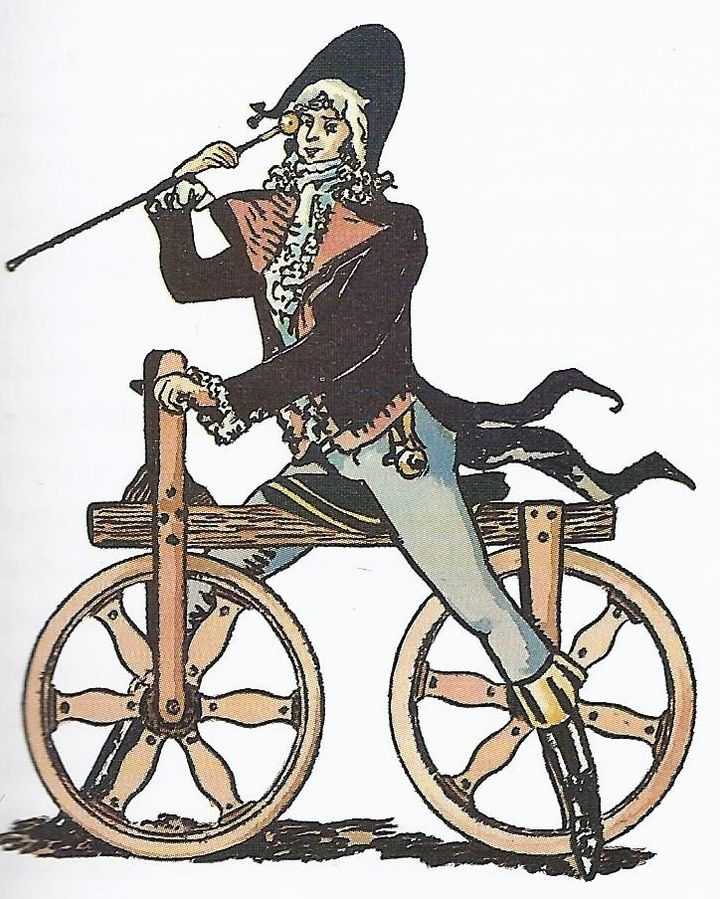
Comte de Sivrac Wikimedia Commons Public Domain

Inspired by the celerifere, draisines were vehicles created by Baron Karl von Drais. Unlike their earlier counterparts, they could be steered. Draisines also resembled bicycles, with two spoked wheels attached together by a frame with a seat. Celeriferes and draisines both lacked pedals. Riding a celerifere or draisine was similar in practice to riding a modern scooter.
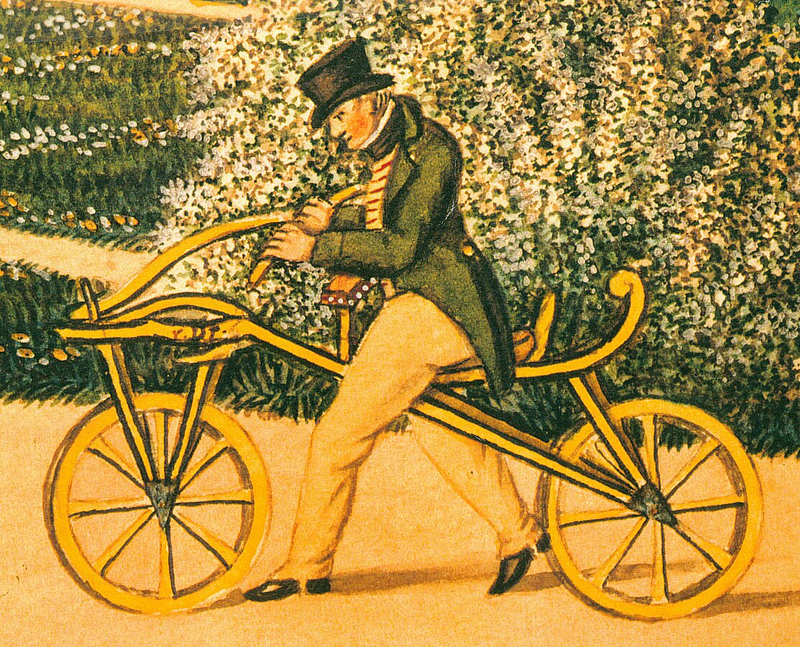
Baron Karl von Drais Wikimedia Commons Public Domain

The draisine was intended to replace horses for riding, but not for animal rights reasons, because of the economic and ecological consequences of the year without a summer. The eruption of Mount Tambora had a domino effect on the earth’s temperature, causing wide-spread crop shortages that resulted in the death and starvation of thousands of people and horses. While the draisine could not pull plows and carriages, it could replace riding horses, with the intention of freeing the supply of horses needed for farm cultivation.

However, the concept of replacing horses with draisines was fortuitous for vegetarians and vegans with ethical concerns about the use of horses in the era before the invention of the motor. Lewis Gompertz, an early 19th century vegan and founder of the RSPCA, saw the animal liberation potential of the draisine, and designed his own version. Gompertz’s update to the draisine added a hand-crank to the front wheel, which increased propulsion.
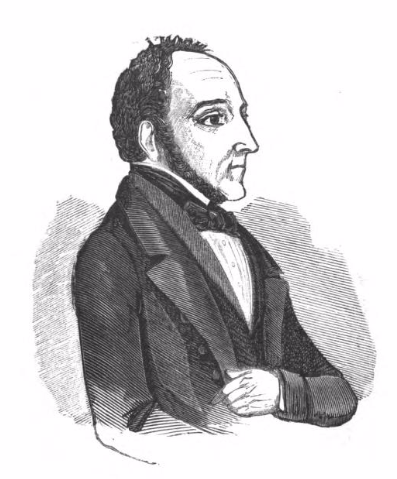
Lewis Gompertz Wikimedia Commons Public Domain

The updated version of this vehicle failed to catch on, not due to the design, but to the lack of paved roads. Legislation against riding draisines was also enacted soon after their invention, barring their use on footpaths or at night in many major cities.

Inventors across Europe continued to tinker with these early designs. Improved versions of Von Drais’ original invention, with pedals added, now referred to as velocipedes were introduced. By the 1860s, several French inventors created new prototypes of velocipedes with pedals attached to the front wheel. These were the first bicycles, although they were colloquially called boneshakers. The heavy iron and wood frames and lack of springs in the construction of the first bicycles meant their riders were often shaken around as they tried to navigate uneven paths or cobbled streets. The penny-farthing bicycle was developed from these designs, both faster and easier to steer, but difficult to balance or climb onto. The winning design that would be the basis for most modern bicycles was the safety bicycle, with a seat lower to the ground, and balanced, equally sized wheels turned by chains connected to pedals.
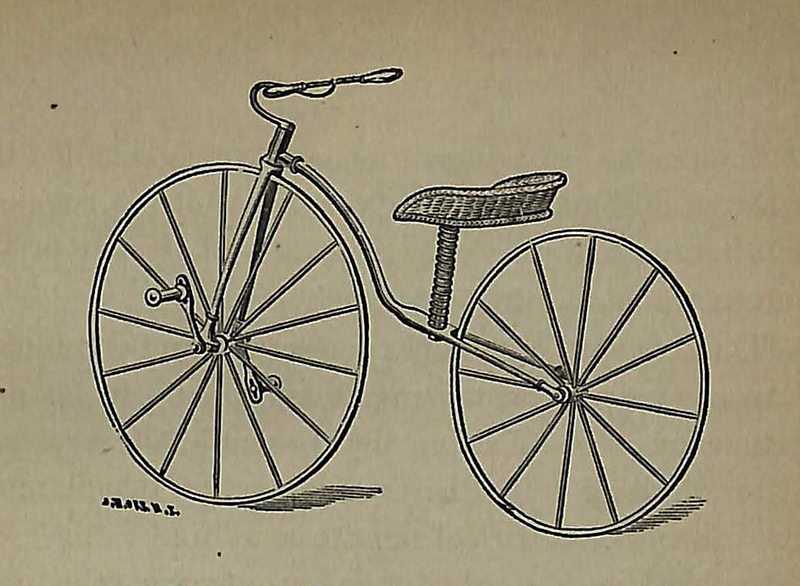
Illustration of a Velocipede from “The Velocipede; Its History, Varieties, and Practice” 1869 Wikimedia Commons Public Domain

Sometimes referred to as mechanical horses, the reception of the bicycle was much warmer than the draisine. Public pressure from wealthy cyclists who wanted more options to ride their bicycles in the city as well as their country estates resulted in improvements to roads and greater accessibility for bicycles to become a viable means of transportation for the everyday person.

While the concern for horses may not have extended to eliminating all horseback riding as a point of activism for most vegetarians, many saw the health benefits of using this new invention.

Vegetarian publications encouraged the use of bicycles, publishing testimonials from vegetarians about the wellness improving regime of a meatless diet in combination with bicycle riding.

The blessings which have been brought into my life through adopting a reformed and bloodless diet, have been so great that I feel it my duty to conquer a natural shrinking from any publicity, and to give my testimony for the benefit of other sufferers. For ten years I was in the hands of the doctors and consulted several eminent physicians, who dosed me upon the old lines and made me undergo painful operations in the vain endeavour to cure me of a chronic internal complaint. […] In the autumn of that year I attended a lecture with my husband, and we learned that it was not only possible but also beneficial to live without flesh-food. Simultaneously with the knowledge of this fact, a powerful conviction was impressed upon our minds concerning the intense suffering inflicted on animals on cattle boats in the shambles, and we concluded butchery and flesh-eating must be wrong. We resolved therefore never to touch butcher’s meat again. […] My health at once commenced to improve […] I am now able to undertake comparatively long walks and to ride a bicycle with enjoyment.” (p. 69)

Vegetarians also found that the bicycle allowed them to demonstrate the stamina their diet gave them, and could turn critics to converts.

A BICYCLIST’S TESTIMONY. — I am able occasionally to put Vegetarian food to the test by long and fatiguing rides on the bicycle. A short time ago an intelligent youth had spoken rather disparagingly of Vegetarianism, and as is usual, doubted whether a long journey on a bicycle could be done without the use of a more stimulating diet. So to test the matter we took a ride of 40 miles, in which I never dismounted once, and was quite ready and willing to continue; but my friend cried “Hold!” and returned by train. He vowed he would never say another word against the system, and, I believe, has since tried it. At any rate he circulated the story, and ever since my opinions have been respected, and enquiries and questions asked. — W.G.H.E. (p. 223)

Advertisements promoting bicycles for sale, as well as bicycle adjacent products, like cycling magazine subscriptions could also be found in late 19th century vegetarian periodicals.

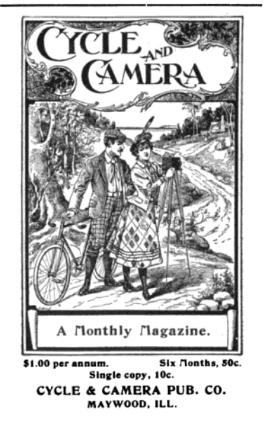
Advertisement from The Dietetic Reformer and Vegetarian Messenger (1883) Google Books Public Domain
Advertisement from The Vegetarian Magazine (1900) Google Books Public Domain

A cycling club for vegetarians was organized in London, gaining mention in vegetarian publications. Vegetarian cycling clubs began to catch more mainstream notice as vegetarian cyclists won races, broke records and outpaced non-vegetarian cyclists in the 1880s and 1890s.
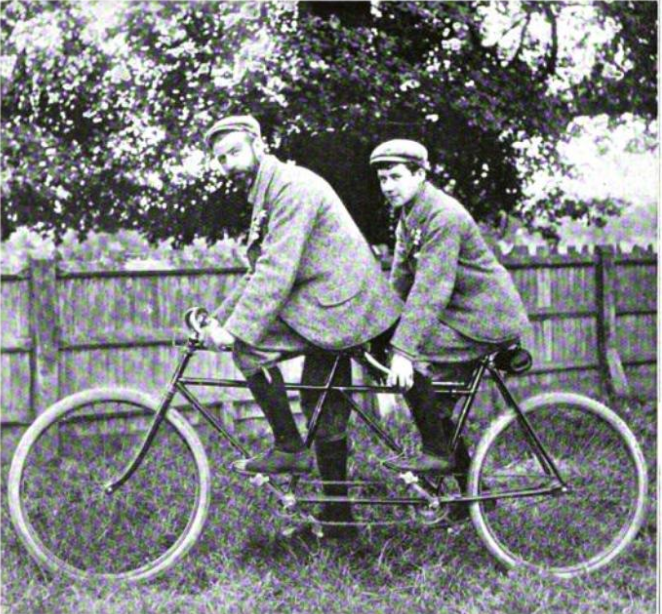
Photograph of H. Sharp (Vegetarian Cycling Club Sub Captain) and Son in Fifty Years of Food Reform (1898) Google Books Public Domain

Like modern vegan athletes, these Victorian vegetarian cyclists wanted to prove that a plant-based diet did not hinder athletic performance. Competing in cycling races or long-distance bike rides was a display of stamina and strength. Vegetarian periodicals reported on the athletic achievements of vegetarian cyclists as proof that vegetarian diets were not only safe, but beneficial.

This new interest in vegetarianism allowed vegetarian cyclists to promote their diets to a broader audience. A mainstream cycling magazine, The Wheel and Cycling Trade Review encouraged their readers to experiment with vegetarianism to see if it improved athletic performance.

By the 50th year anniversary of the start of the Vegetarian Society, the book Fifty Years of Food Reform recorded the history of the Vegetarian movement in 19th century England. The work covers the development of the vegetarian cycling club and the achievements of numerous vegetarian cyclists. Bicycles allowed vegetarians and vegans opposed to the use of horses to follow their ethics. They also provided a new avenue to promote plant-based diets from a health standpoint, defeating stereotypes of malnourished and weak vegetarians on the racing track.

Note:

  1. Gompertz’s arguments against the use of horses can be found on p. 119–134.

Thank you for reading!

If you love history, plants or the history of plants, consider supporting Plant Based Past by buying me a coffee!

For more vegan, vegetarian, and botanical histories, follow Plant Based Past on Medium.

You can sign up for email alerts to receive the next story when it becomes available, just by clicking the envelope icon.

Next Week: 5 Toast Recipes from the Past for When You’re Out of Avocados

History
Bicycles
Vegetarian
Vegan
Animal Welfare
Recommended from ReadMedium