
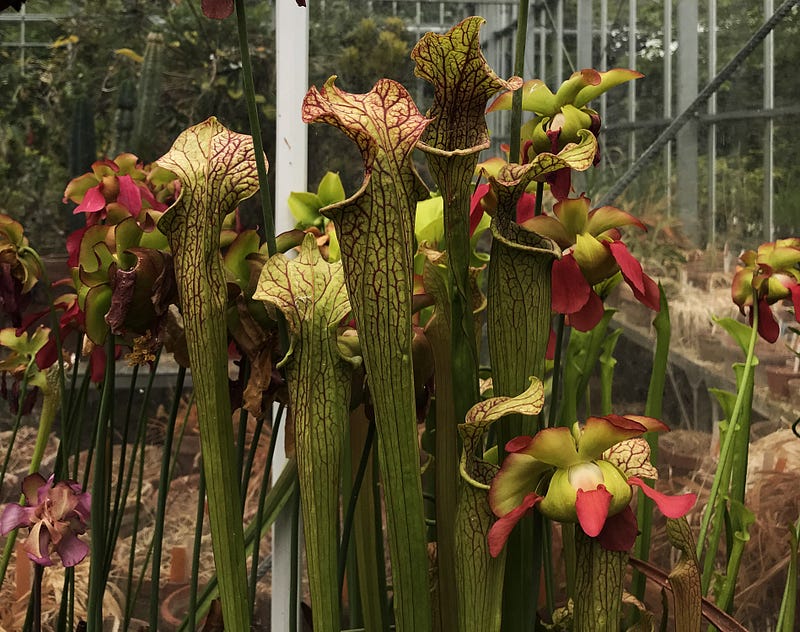
Meat-Eaters of The Plant World
Carnivorous Plants
Carnivorous plants are amazing. They are entirely logical for being the way they are and living the way they do.
They look so exotic, too, as if they’d only be found in ‘exotic’ places, but they grow in most parts of the world, including the US and the UK, usually in wetlands. There are more than 700 species of carnivorous plants around the world.
They frequently grow where all their nutritional requirements are not supplied by the soil. Trapping insects and small animals help carnivorous plants acquire the missing nutrients.
Most people recognise the Venus Fly Trap with its spiky leaves that snap shut on a bug that’s wandered in — they can close in under a second. Spiders are often lured in by the insects already caught, so the Fly Trap gets two for the price of one.
Pitcher plants have hollow leaves filled with water containing digestive acids. Prey that fall in drown and are slowly digested.
Some carnivorous plants have tentacles that close around a bug that suffocates, and is then digested; others have sticky tentacles to which insects get stuck.
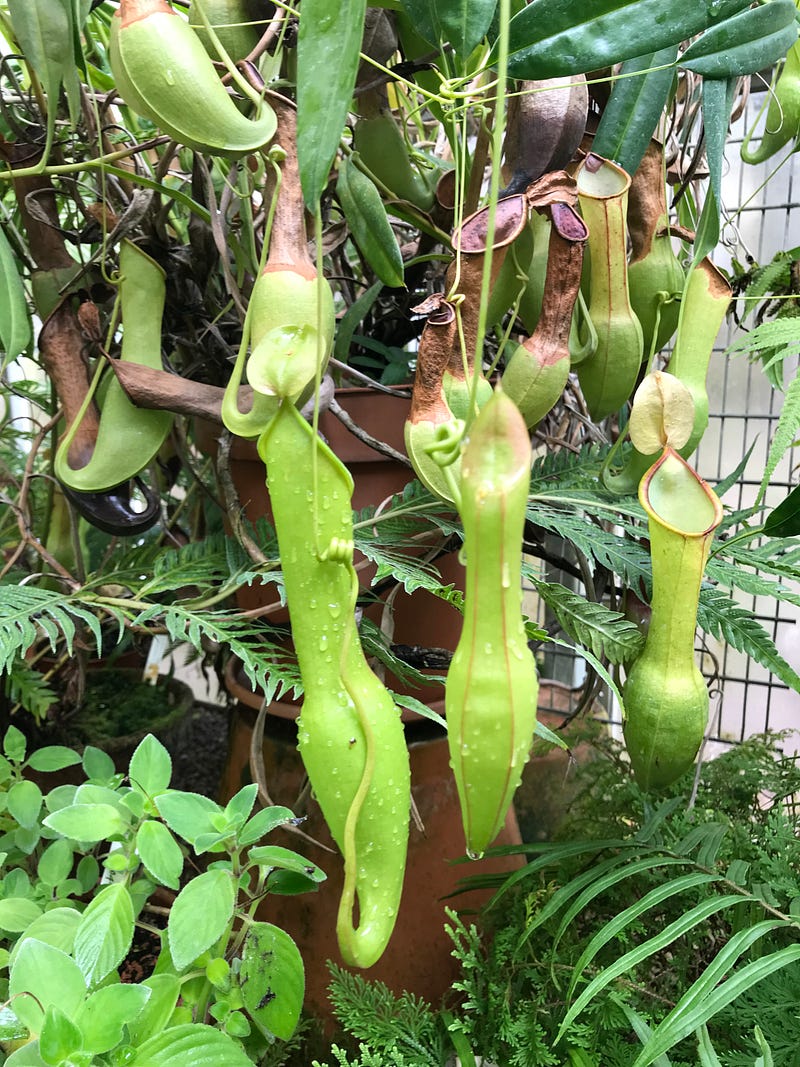
The variety of ‘trap’ is remarkable. Other plants have ‘suction traps’. They literally suck prey in. And then there is the ‘lobster pot’ trap which is where the plant’s roots are hollow with little openings along them into which bugs will crawl — sharp hairs inside force them towards the ‘stomach’ ie the bug can’t turn around — it has to go in the direction of its own doom.
Meat-eating plants need pollinators, too, and often hold their blooms high above their leaves, away from their dinner-traps, so the pollinators don’t accidentally become snacks.
Some pitcher plants have an entire ecosystem in their pools — eg some very small frogs lay their eggs on the pitchers and the tadpoles grow up swimming in the pitcher plant water.
Some have a mutualistic relationship with bats. The tiny Hardwicke’s woolly bat roosts during the day inside tropical pitcher plants. The plant benefits from the bat’s faeces which provide much of its required nitrogen.
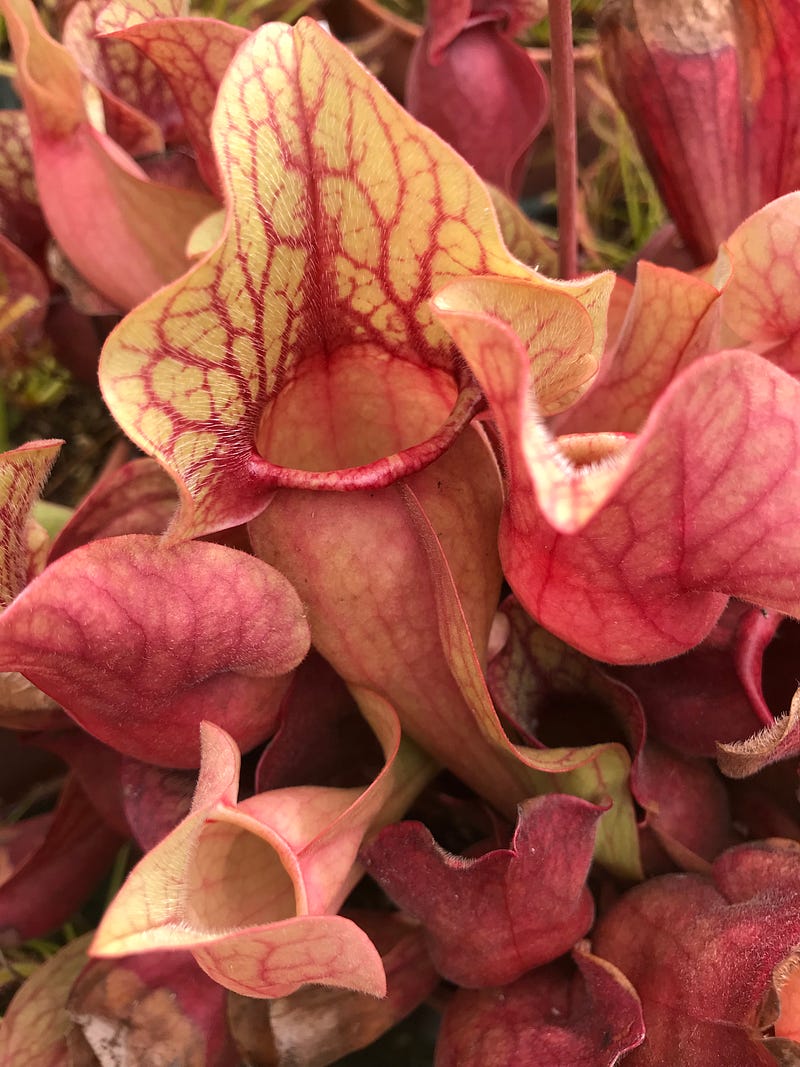
Many carnivorous plant species are at risk from habitat loss, pollution and poaching. If you want such a plant, please buy from a proper nursery and don’t dig one up yourself.
I’m looking forward to going back to the Botanic Garden in Bristol, UK, to see the carnivorous plants.
If you never hear from me again, you’ll know what happened …
Also at the Botanic Garden: Giant Water Lilies of the Amazon Rainforest: