
Meaning in Photography as an Abstract Art
A personal reflection on the photographer as an artist
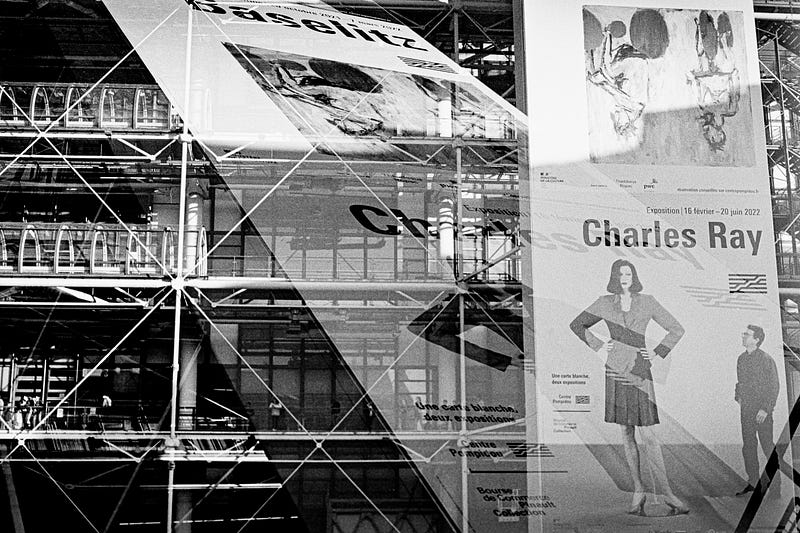
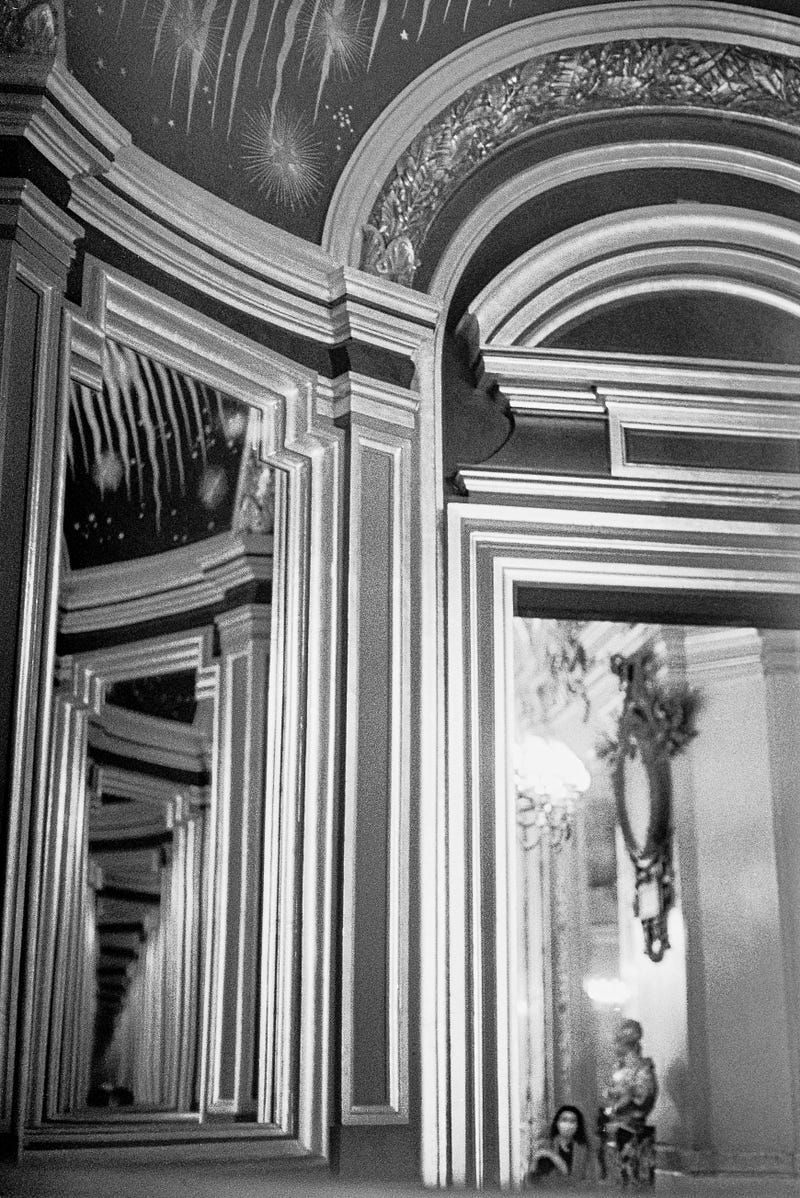
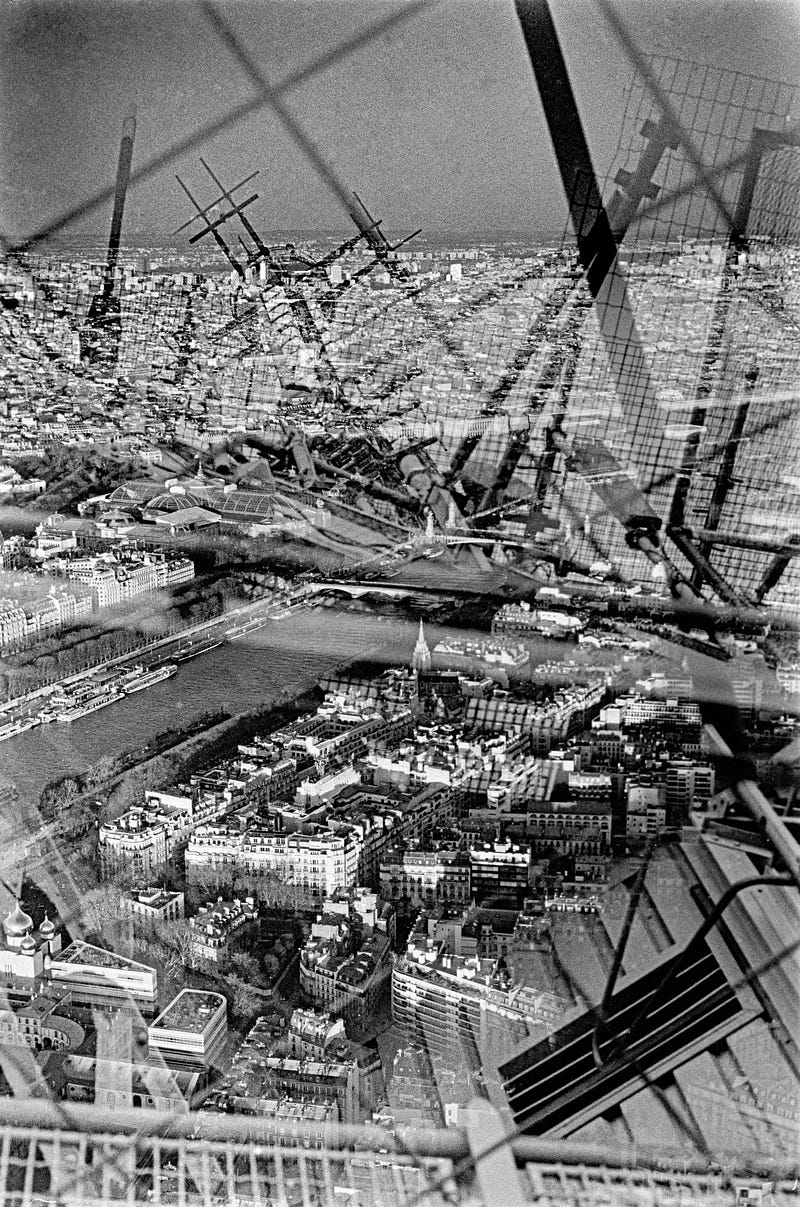
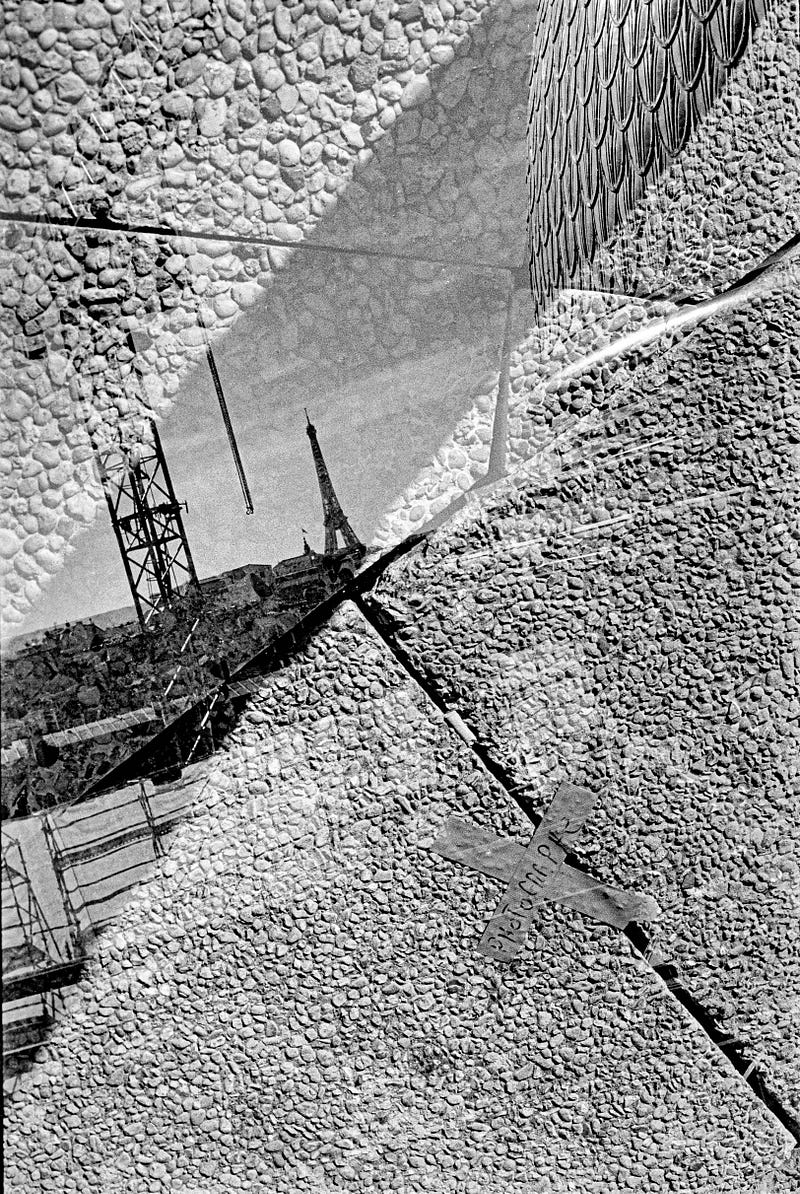
The following is a personal reflection on the photographer as an artist. The main influences are the works in the sources at the end. The ideas in the text are used to support the photos presented. The images are from a trip to Paris in March 2022. The technique used is multi-exposure of images on a single negative except for the image at the Paris Opera.
Fundamental Cultural Revolutions:
- Invention of linear writing — 2nd millennium BC — marking the beginning of recorded history.
- Invention of technical imagery — 1839 — using the photographic lens as a pretext. [2.]
This hypothesis allows for the possibility that other revolutions may have occurred in more ancient times, but it also suggests that they are events that elude our understanding.
The evolution of historical consciousness
In the second millennium BC, individuals emerged who were dedicated to deciphering images by aligning them and so linear writing was invented, translating scenes into processes, thereby initiating historical consciousness. Writing was founded on a new ability to encode plans into lines, abstracting all dimensions except one, that of conceptualization, which allowed for the encoding and decoding of texts. From here, communication transcended the boundaries of space and time, extending knowledge beyond the crude transmission from mouth to ear. In a moment of crisis of images and submissive idolatries, the invention of writing opened new doors and ended the prehistoric era.
The relationship between text and image is fundamental to understanding the history of the West. In the Middle Ages, it took the form of a struggle between textual Christianity and imagistic paganism; in the modern age, the struggle between textual science and imagistic ideologies. In the 19th century, photography sheds new light and becomes the memory of all endeavors, the goal of any action. Scientific, social, and political acts aim to immortalize themselves in technical images, to be photographed and filmed. (Adapted from [2].)
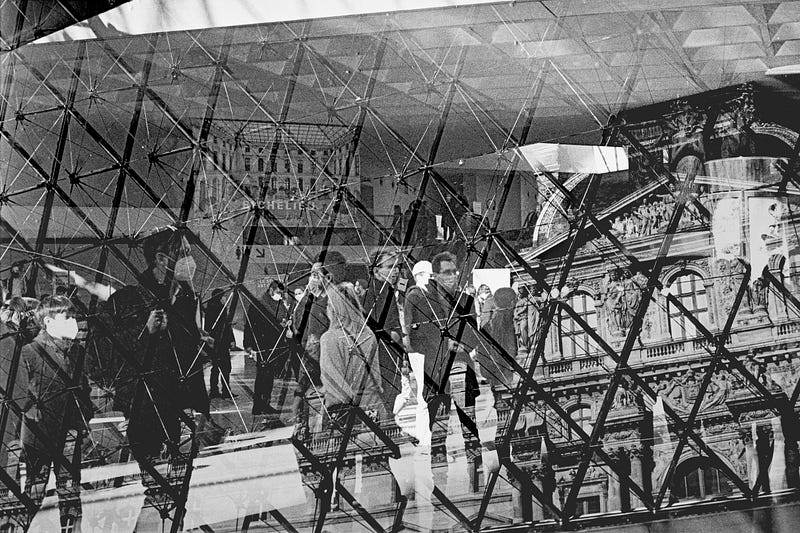
In a massive way, humans are capable of producing information, transmitting, and receiving it. This capacity is counter to nature, as nature as a whole is a system that tends, according to the second law of thermodynamics, to become less organized. Humans are the prime example of the phenomenon capable of deliberately producing information to counter entropy, enhancing the quality of their lives and experiences from more dispersed and chaotic images. In our search of knowing the greatest number of things, humans became capable of transmitting and preserving inherited as well as acquired information. We can specifically call this uniquely human capacity the spirit, and its result, culture. The final product of this system is modern society, where the different angles images give of an act are representations of a spectrum of discontinuous choices and multiple perceptions of reality.
Semiotics or the meaning of actions
Semiotics, or the meaning of acts and the perception of moments, is closely tied to the concept of freedom, stemming from a logic that is expressed in thought.
Retrospectively, the problem of freedom was framed differently. Throughout history, the question was: if everything has a cause and everything is the cause of effects, and everything is determined, where is there room for freedom? The answers to this question can be summarized as follows: the causes are so impenetrably complex, and the effects so unpredictable, that man, limited in space and time (not considering himself a limited being), has the opportunity to act as if he were not determined, with the solution being acquiring experiences.
In the search for an answer, the artist by using photography as their mean of expression, has the role of introducing human elements not foreseen by the apparatus, the freedom to play with it. The philosophy of photography thus appears as a reflection on the possibilities of free living. This is a reflection of the modern notion of embellishment – beauty is not inherent in anything; it is to be found, by another way of seeing – as well as a wider notion of meaning, which photography’s many uses illustrate and powerfully reinforce. The more numerous the variations of something, the richer its possibilities of meaning.
Initially, photography, to impress, captures the remarkable; however, quickly, through a well-known twist, it establishes that what it captures becomes remarkable. The “no matter what” then becomes the sophisticated pinnacle of value. [1.]
The photographic object and the artist intention
Photography as an object has negligible value, making it senseless to desire possession of it. The interest lies not in the object itself, but in the information it conveys. It is this value that it transmits. It is not the photograph that we see; it is always invisible. In the end, it aims to become so dense, so secure, as to attain the dignity of a language. In reality, its language is very powerful; photographs “speak too much,” they make us reflect and provoke feelings and thoughts clearly different from those influenced by words. This is why photography is subversive, not when it disturbs with portraits of hunger or war. This strength is brought forth because photography is unclassifiable, photographers don’t belong to a certain genre as painters do, because there is no exact moment it seeks to reproduce, because an object or a framing is not chosen in advance over another.
And yet, the referent is always present; one cannot deny that the photographable object was there at that moment, and that the pose, more or less extended, is unique within the spatial-temporal moment of the framing. The referent is necessarily real; it is the intention of the photo, and even more, it is its foundations. Beauty emerges because in photography, the referent appears differentiated; it distances itself from the environment in which it is framed but also carries the pose of that moment into the artwork, inevitably defined by the artist’s gaze and thought in the more or less prolonged moments to prepare the shoot. All of this is possible due to this black box system in which the photographer controls the input and output of the machine. If it were not so, the work would be monotonous and a game that would not serve the artist; the work would not be by his intention.
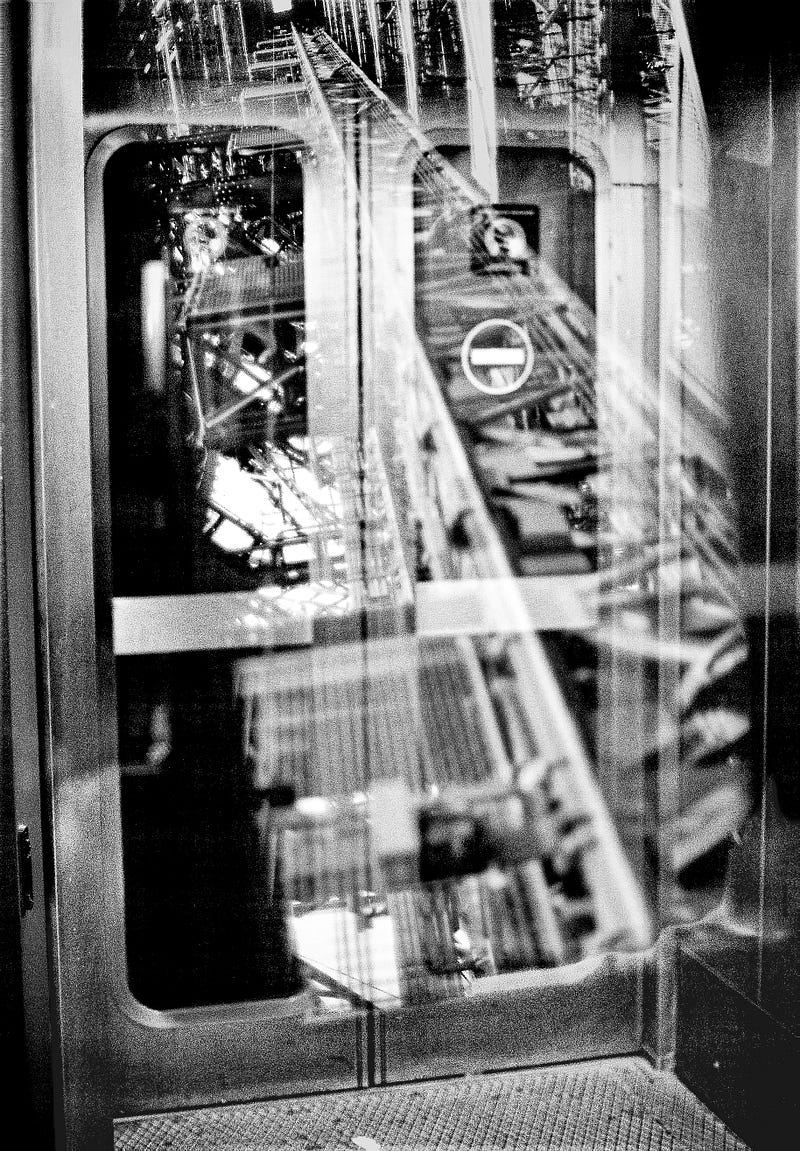
Here, black and white photographs emerge as the magic of theoretical and conceptual intent, resulting in their fascination. The beauty obtained is the revelation of abstract thought, the presentation of its meanings seen through light and the artist’s ability to grasp reality and give it meaning. Photographs are abstract as they cease to be about their subjects in a direct or primary way. I like to use this principle to make studies in the possibilities of photography using multi-exposures in black and white negative film. I have had the need to repeat shots after developing the films and checking the results because I needed to get a better alignment of the several shots or use other apertures to get better details on the multiple exposures. Other times the ability to return and repeat is simply not possible in the near term due to distances or other conditions.
The final product of multi-exposures on a single negative is relatively out of control of the artist. From my point of view this superimposing of several images, shadow areas on burnouts is to some extent undiscriminating, promiscuous, or self-effacing but does not lessen the didacticism of the whole enterprise. This very passivity of this method of photographic recording contributes to the photography’s “message,” adding to its aggression. Using superimposed images as a fashion of seeing things recycles the real and mixes different tastes of the past. Clichés disappear and new meanings get assigned through abstraction, going beyond the distinctions between the beautiful and the ugly, the true and the false. Mixing of different acts, subjects or textures in the same image makes for the interesting, to be admired like or analogous to the real object.
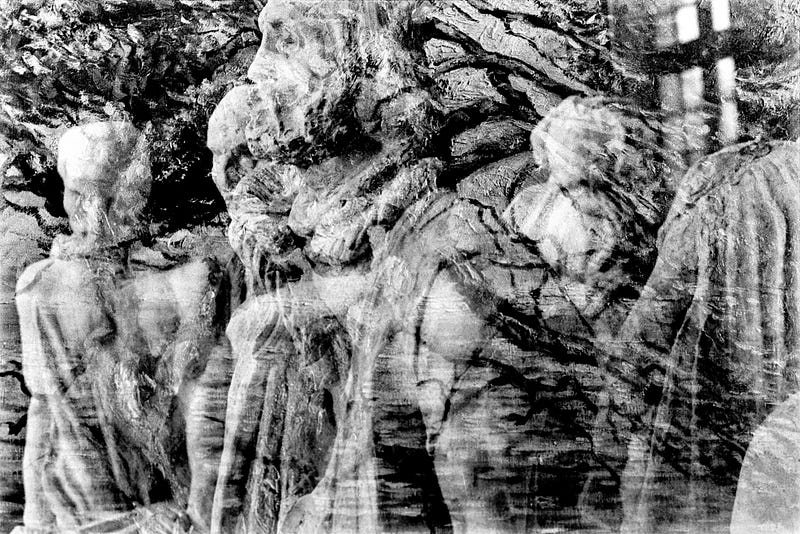
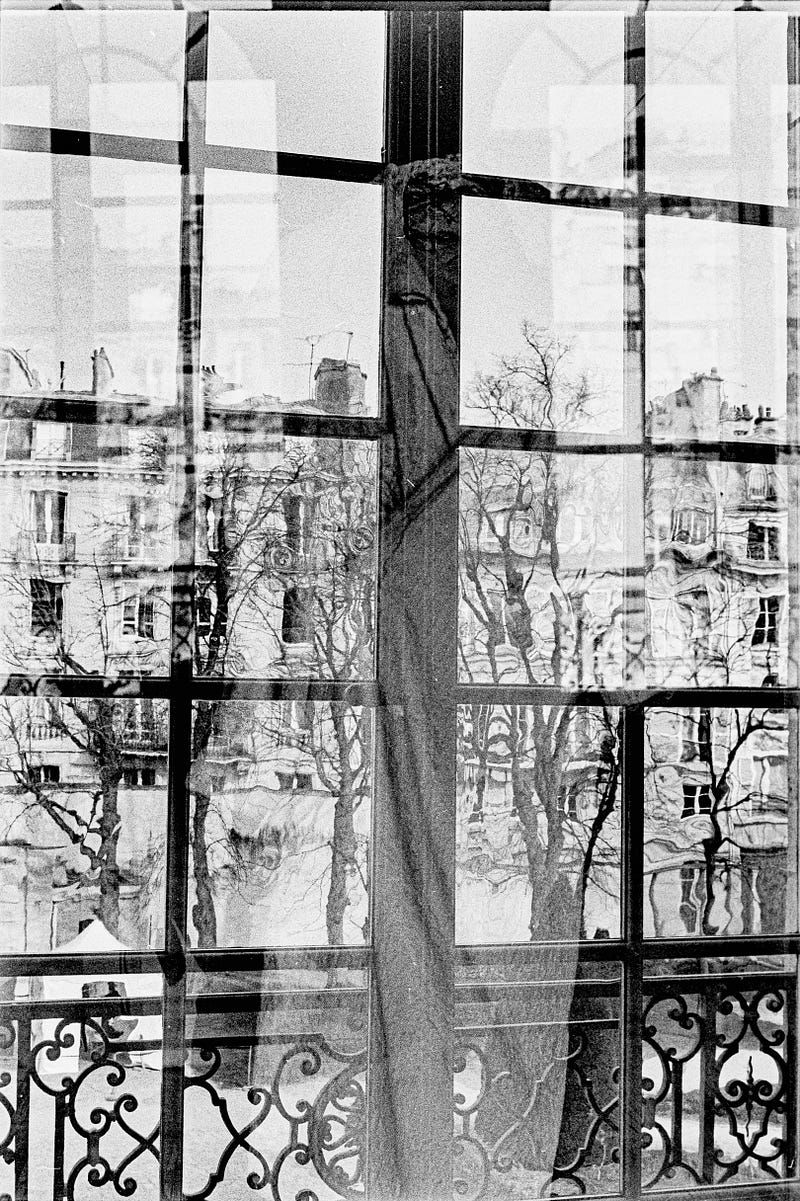
As in a formalist approach, abstract photography will not account for the power of what has been photographed or the way distance in time and cultural distance from the photograph increase its interest. While the authority of a photograph will always depend on a known and perceivable relation to a subject (the viewer must understand what is in the photograph), all claims on behalf of photography as art must emphasize the subjectivity of seeing.
“Though some photographs, considered as individual objects, have the bite and sweet gravity of important works of art, the proliferation of photographs is ultimately an affirmation of kitsch. (…) Photographers, operating within the terms of the Surrealist sensibility, suggest the vanity of even trying to understand the world and instead propose that we collect it.”
– On Photography by Susan Sontag
[1.] La chambre claire, Roland Barthes,
[2.] Towards a philosophy of photography, Vilém Flusser,
[3.] Photography , Gabriel Bauret,
[4.] Camera Work — The Complete Ilustrations 1903–1917, Alfred Stieglitz, Taschen
[5.] The Fixation of Belief, Charles S. Peice, Popular Science Monthly 12 ( November 1877), 1–15
[6.] On Photography, Susan Sontag
[7.]Twentieth century photography, Museum Ludwig Cologne, Taschen
[8.] The Art & Craft of Black and White Photography, George Schaub, NTC Publishing Group
[9.] A History of Modern Art, 4th Edition, H. H. Arnason, Marla F. Prather, Thames and Hudson
You can check other stories on the art of photography in my list below.