
Time To Take Our Masks Off
When we need to keep track of the multiple characters we, as an author, created.
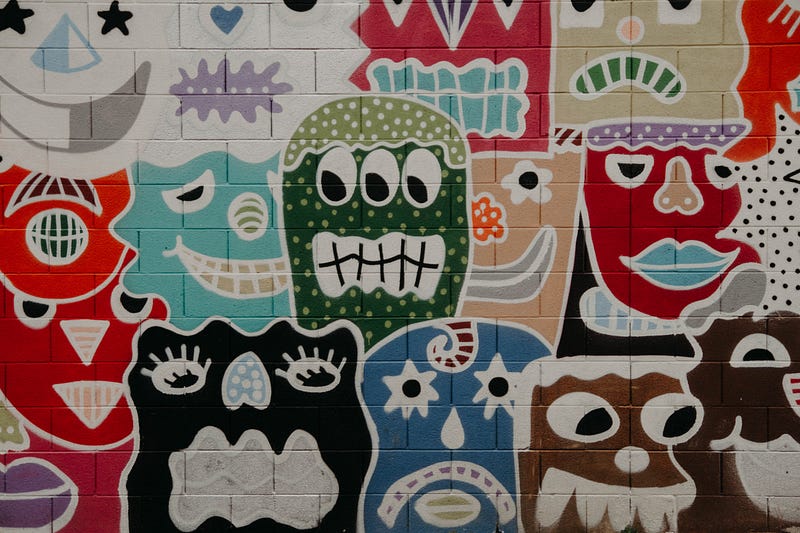
Who are you today? Which one of your characters is reading this right now?
I can recognize quite a few entities within me (though there might be others).
I’m the people pleaser, the easygoing girl, the highly anxious woman, the perpetual procrastinator, the hysterical bitch, the responsible citizen, the caring friend, the withdrawn creature, the smart-ass, the stupid ignorant, the emotionally distant, the supportive therapist, the despicable & the lovely one.
Now, let me get this straight. I think it’s perfectly healthy and normal for personality to exhibit ups and downs. After all, human behavior is not set in stone. Our temperament hides countless shades (definitely well over fifty :). Besides, different scenarios will call for different actions. We face quite a few challenges on a daily basis. As time goes by, we can also alter the way we respond to stimuli. We mature, and we change.
The problem comes when any of these facets leave you feeling you’re not being authentic. You’re acting (out?).

When you’re not being true to yourself, you can usually sense it. If something feels off, you might be playing one of your characters (or one of your characters might be playing you).
Yes, we’re being played by the creation of our own ego.
This happens when we focus our motivation and desires on the external world. Hence, when we act out of fear. After a while, we no longer know who we really are. This results from trying to hide our genuine selves. We lose track of how our real self would react, what we need, where we’re going. Distinguishing our creations from our essence gets harder and harder.
We pay too much attention to what the external environment or our ego (in response to our external environment) would like us to be. So we develop different identities to go out there and represent us. But we never show them the boundaries. They become us.
We turn into a less authentic, more rehearsed version of ourselves, with an embedded “switch role” feature. One persona comes into play as another one is leaving the stage. We become a nonstop endeavor that creates and commercializes “characters on-demand”. Each “identity” is specifically crafted to fit external demands. How do we get paid? In commodities (acceptance, belonging, flattery, you name it).

When we need to control and keep track of our multiple identities, we further lose reliability and authenticity. Then we feel an urge to create additional entities or to strengthen the existing ones to adapt. Can you spot the virtuous circle here? It takes energy to remain in the identity loop. It’s exhausting. Emotionally expensive.
The personae we create end up directing our lives. They're ultimately responsible for most of our failures, and they might be held accountable for many successes too.
Was it really you taking part in today’s business meeting? The one helping your kids with their homework yesterday? How about your argument with your colleague last week, when you said things you don’t feel proud of?
Truth is, it might have been really you, or it might not.
Our characters act on our behalf. And for as long as they are on stage, they have full control.
“When a character is born, he acquires at once such an independence, even of his own author, that he can be imagined by everybody even in many other situations where the author never dreamed of placing him; and so he acquires for himself a meaning which the author never thought of giving him.” — Luigi Pirandello, Six Characters in Search of an Author
The characters create a life of their own. But the hidden darkness of the author shows through them during the play. And in response, they feed themselves on this darkness.
I remember asking myself, “How would I act if I should go through ‘x’ situation again”? Or listening to someone highlighting a personality trait of mine, and thinking, “Is that really me? Why doesn’t it sound like it?”. I’ve lost track of my personality. I’m no longer sure what actions are mine.
The “multiple identity” issue is also a problem when dealing with other people.
Picture this for a moment: some days, it can be already difficult to get along with yourself. It can get even trickier to get along with friends, colleagues, etc. Imagine all of our characters getting along with all of theirs. Nearly impossible. A quick combinatorics analysis would tell us that’s an impressive number of “people” involved. It will go wrong, take it for granted.
That's why it can be so difficult to maintain good relationships within organizations. Each ego with thousands of fabricated personalities.
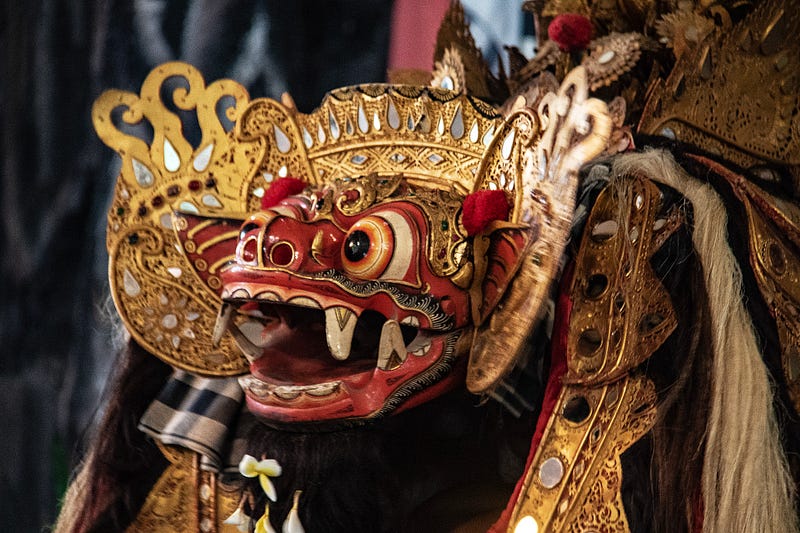
How can we tell the difference? How do we know when our behavior responds to natural nuances of our personality, or if it’s one of our character’s performance? And how can we remain true to ourselves most of the time?
There are certain strategies I’ve used to tell when some obscure entity is acting on my behalf. But most of the time, you can only tell the difference if you learn to be aware of your emotions.
Directing my attention to my inner landscape has proven essential. This includes, but it’s not limited to:
- paying attention to how I’m feeling (or how I felt in a specific situation)
- trying to figure out the “why” of a specific behavior. What drove me to act in a certain way? (the motivations beneath the actions and attitudes). Was my behavior guided by some external motivation/fear?
- does this attitude or action deeply resonate with me?
Also, writing has worked magic. To write, your inner world needs to go through an “awareness funnel”. You can’t write about what you don’t see, feel, think, or sense. In a word, to write about a subject you need to experience it first. And even if you write about the visible surface of your emotions, you can then work on them to find the underlying feeling. Writing has helped me become more aware of my inner world.
Give yourself the opportunity to write. Then go over your writings and try to work on whatever arises. Writing is ALWAYS therapeutic. It’s a pain and pressure relief valve.
I’m on a quest to get myself back. To allow me to be, well, me.
I’m still mostly managed by my characters. But I’m working to develop greater awareness around them. To bring them to light. My keen attention intimidates them. I guess they’re not always fond of the spotlight after all.
My attention diminishes the power my identities have over me. They slowly lose hold of me, and they allow my true self to shine through. I get them out of my way. But this only lasts for as long as I remain focused on my emotions. As soon as my mind’s chatter resumes, my characters get ready for the next performance. They can't help it. That’s their business. It’s their raison d’etre. I created them to be on stage. They don’t fulfill any other purpose. So if they can’t be on the stage, they will die a long and painful death.
It’s difficult to keep on feeding both my real self and my personae. The more I feed one, the more I starve the other. Either you overfeed the characters and starve your real self, or you starve your characters and your pure essence will thrive.
If you gain enough control over these colonizers, you’ll learn to let them take action only when you tell them too (suppose you need a “sales-oriented profile” for your meeting with a client). But be careful, they can be quick to reclaim their control and independence.
Having said that, nothing beats being yourself. Your real self should be good enough and appropriate for any situation. If it isn’t, maybe the situation isn’t appropriate for you. You need not create characters that are suited to your experiences. Each time you force yourself to adapt to a particular situation, you’ll have a freshly brewed persona. It’s a coping strategy. If you learn to pay attention to your inner self, your circumstances will align with you, and not the other way around.

Learn to stay in the moment and to be aware of your emotions, for every single challenge you face. That way you’ll be guaranteed that your successes and failures are on you. You’ll regain access to your inner emotions.
Go set your characters free, you don’t need them anymore. Thank them for their services and just let them go.
You’ll eventually realize the characters lose their power over you, slowly but surely.
This will vastly improve your relationships. It will simplify your life.
Just be yourself, stay here, feel your emotions, sense your surrounding. You’ll be fine.