
Me and Julio Down in The Backyard
Building a relationship one plank at a time
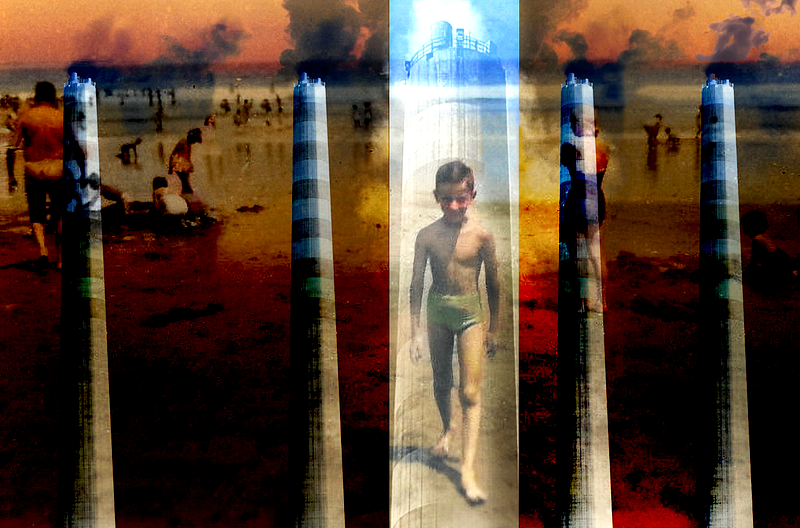
He could have been a giant. Probably the biggest person I had ever seen. Not only was he tall, but his gnarled hands were enormous. They showed the creases and scars caused by decades of manual labour.
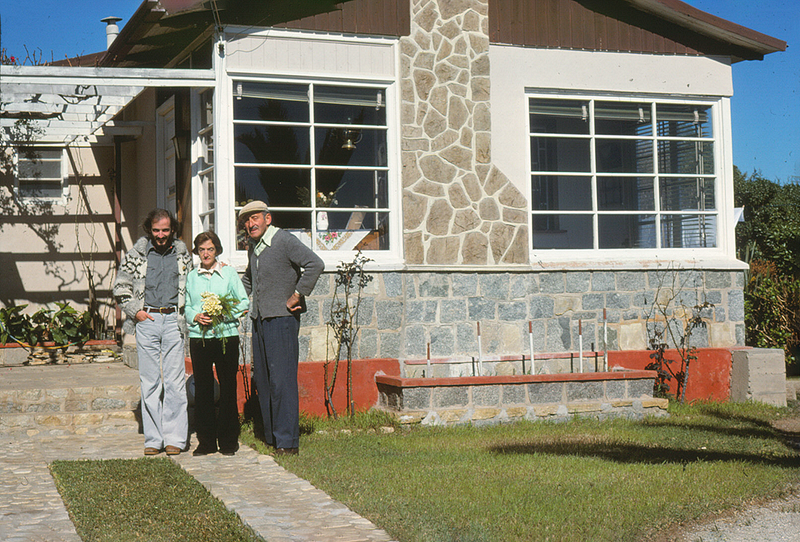
He wore ill-fitting clothes: sweaters that were too small, and pants that were too big. His beloved flat cap rarely vacated his head.
To a scrawny eight-year-old like me my uncle Julio was a towering figure. He lacked the elegance or finesse of city folk. He did not mind getting his hands dirty, or building up a sweat. He was everything my father wasn’t: a hands-on, get on your knees, and muck about kind of guy.
Julio was married to my mom’s youngest sister, who, by contrast, was a diminutive woman. Everyone called her Mimi, which I thought was short for Miniature.
Out to the country
My first prolonged contact with Julio and Mimi — other than occasional family drop-in visits — took place in 1959. My parents sent me to spend my summer holidays at their home.
They lived on the outskirts of Santiago, in a semi-rural area where sizable plots of land allowed people to develop hobby farms. I’m going to guess that Julio’s lot was about the size of a soccer field. The house on the property was tiny.
Julio was a simple man. He would classify as a tinkerer. He had an open-air workshop where he would build or fix things. People would often drop by with items that needed repairs. He was no mechanic, electrician, carpenter, or plumber.
He was a bit of each.
He loved the challenge of taking something apart, and then putting it back together, so it would work again. If the machine he was fixing needed a whatchamacallit replaced, then Julio would fabricate the part, whenever possible.
He was generous with his time and knowledge — always willing to help those around him. If I stitch together the bits of information I remember… I think Julio may have been a retired firefighter, which points to his extensive skill set, his work ethic, and his sense of community.
I don’t know the reason why I was sent to my uncle’s house that summer. I was not given a choice, or an explanation. I am going to speculate, and say that my parents were just too busy establishing our new restaurant to look after me while I was out of school for the summer.
I was still considered too young to be left on my own. The live-in maid who usually took care of me had retired, so there wasn’t anybody at home — on a consistent basis — to keep an eye on me.
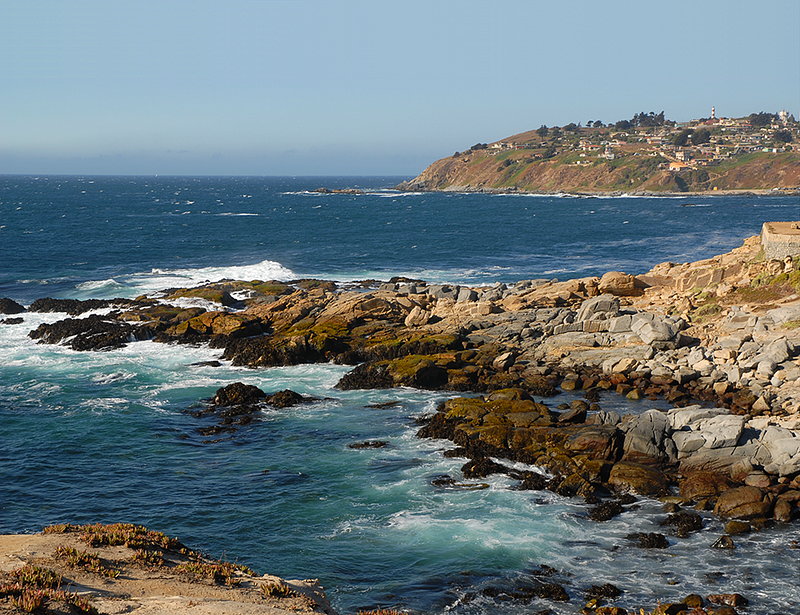
To the beach
Summers away from my parents would become routine. Julio and Mimi left the city and moved to Quintero — a rather sleepy seaside town located a couple of hours away from Santiago.
Julio built a small house on a long narrow lot overlooking the ocean. He would be the first resident on that rocky point called La Puntilla (the spit), so he got the best view.
By the time I arrived in Quintero — for the first time — Julio had begun building a second house right behind the first. He welcomed the extra pair of helping hands.
From that point forward Quintero would become my summer residence. The westerly sea breeze made the summer heat tolerable, and the beaches offered crystal clear waters to swim in. As summer approached I started to look forward to the sound of crashing waves on the rocks of La Puntilla.
I also loved the routine that Mimi had established in her home. She offered the predictable domestic continuity that was missing in my life at home: meals served at the same time, at the same table, with the same company, every single day. I found that comforting.
After Julio finished his second house, he built a third right behind the first two.
Eventually, he ran out of land, so his final project — which I was not a part of — consisted of adding a second floor to the third house. I nailed a lot of siding on the second and third houses.
Julio was a patient teacher. He trained me to perform several tasks over the years. He never seemed to be in a hurry. He would measure, then mark a plank of siding, and just before beginning to cut along the pencil mark…he would rub a piece of pork fat along the teeth of his handsaw to prevent the blade from sticking.
He did not use power tools.
I remember the day he entrusted me with his handsaw for the first time. He started the cut along the pencil line, then he guided my hand with his as I struggled to apply sufficient force to produce sawdust. Eventually, I was able to nail siding, and then trim the plank with a handsaw — unassisted.
The Highs and Lows
By the time I immigrated to Canada in 1968, Quintero had become a vibrant summer destination for the Chilean middle class. What started as an exclusive retreat for the wealthy in 1871 — when billionaire Luis Cousiño Squella purchase large plots of land in the area, and invited members of the Chilean aristocracy to build summer residences there — was now accessible to everyone.
Summer homes sprouted like mushrooms. My sister built a cottage just three doors up from Julio’s home. Everything was going well, until it wasn’t.
The decline of Quintero started innocently enough in 1958 when an hydroelectric plant was built in the area. It would be the first of a series of major industrial projects to be developed in or near Quintero. A copper refinery followed in 1964, and since then a total of TWELVE major industrial plants flooded the landscape.
The lack of environmental regulations meant that the industrial activity in the area eventually poisoned the air and water. High levels of arsenic, mercury, copper, lead, molybdenum, cadmium, and other heavy metals paralyzed the once vibrant fishing industry.
Fishing boats have been replaced by oil tankers. Rampant pollution has affected the reputation of Quintero as a safe family holiday destination.
Quintero has now become one of the most toxic places on the planet. (source)
A number of environmental disasters have plagued the area: a large spill sent 38,000 liters of crude oil into the bay in 2014, and more recently in 2018 a toxic chemical cloud sent hundreds of residents to the hospital.
Cancer cases have spiked. Summer crowds have dwindled — which has reduced economic opportunities for the permanent residents — causing an uptick in illicit drug activity. Let’s not forget that drug activity breeds crime.
My sister’s cabin was broken into, and pretty much gutted — even the metal pipes were removed from inside the walls. She never returned.
My last visit to Quintero was in 2008. I was totally unprepared for what I found: boarded-up homes, graffiti, and litter dominated the landscape. Smokestacks spewed poison into the sky, and oil tankers dotted the entrance to the bay.
I was heartbroken. How was this disaster allowed to happen?
The Sacrifice Zone
What little I know is that the area has been dubbed a “sacrifice zone” where economic development trumps environmental responsibility. Industrial activities in the zone were largely allowed to proceed unrestrained, and their impact was ignored for several decades.
The result: high pollution levels due to historical discharges of petroleum, gaseous pollutants and atmospheric particles, as well as the secretion of heavy metals from diverse industrial facilities, including coal-fired power plants, a copper refinery, and smelter, natural gas terminals, and cement companies.
I don’t think that there is a justification you can make — for this environmental catastrophe — that would make sense to me. Perhaps I am too emotionally attached to the place, so that prevents me from seeing the other side of this issue, but I don’t think so.
I dropped in to visit Julio and Mimi, but they were not at home. A caretaker was guarding the property. There were so many memories attached to that beautiful place. Memories that reflected the innocence of both Quintero, and me, growing up. I wondered where Quintero’s innocence had gone.
How did a summer paradise grow up to become an industrial landfill?
I was surprised to learn that Julio had left the area. Yet I understood that it would have been difficult for him to witness the decline of a community in which he was deeply invested.
He really cared. He was instrumental in establishing the volunteer fire department in Quintero. I don’t know the real reason why he moved to an apartment in nearby Viña del Mar. Perhaps he could no longer maintain his place, perhaps he felt unsafe, perhaps his health had declined.
Whatever the reason, I would not get an opportunity to see Julio again. I would have liked to have been able to express my gratitude one more time. To let him know that he was influential, significant, and that he and his loyal partner truly mattered in my life.


