
McKenna, Zhuangzi, and Our Lost Connection to Nature
The Tao of Farming: Agriculture fueled dualisms
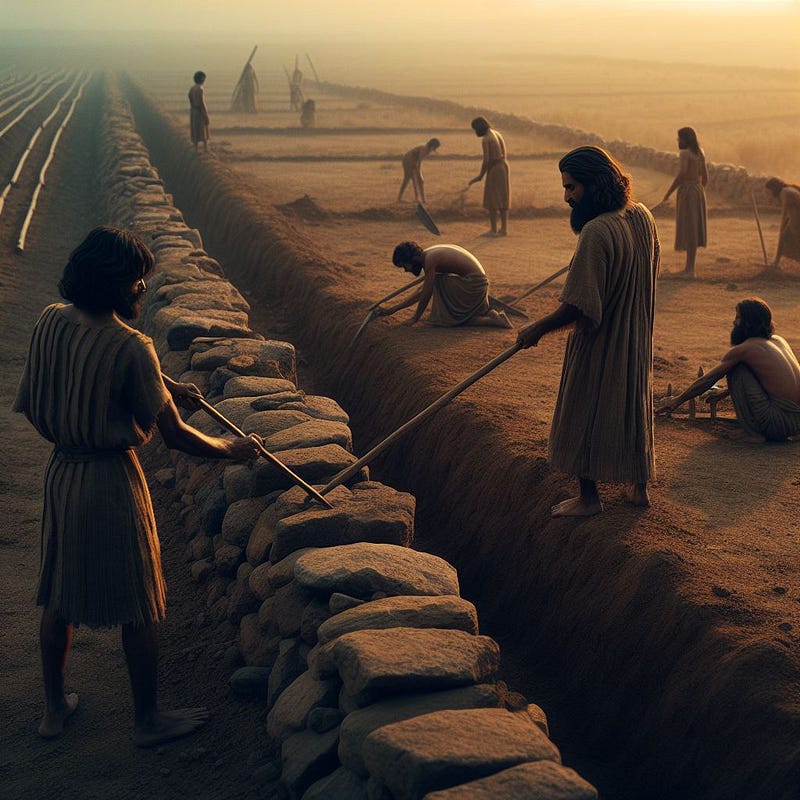
The arrival of agriculture marked a significant turning point in human history, as hunter-gatherer societies transitioned toward sedentary communities and the development of complex social structures. Terence McKenna, an influential thinker, and Harvard scholar, argued that the advent of agriculture not only transformed human society but also had profound implications for human consciousness and our relationship with nature.
10.000 years ago
McKenna’s theories delve deeply into the impact of the agricultural revolution, (about 10.000 years ago), on the human psyche and our perception of reality. He hypothesized that the shift from a nomadic hunter-gatherer existence to a sedentary, agricultural lifestyle radically altered the way humans experienced and interacted with the natural world.
The hunter-gatherer way of life, which had been the norm for most of human history, fostered a profound connection with the rhythms and cycles of nature. Humans were intimately attuned to the patterns of plant growth, animal migrations, and celestial movements, as their survival depended on a harmonious relationship with the surrounding environment.
Diminished sense of interconnectedness
However, the advent of agriculture disrupted this symbiotic relationship with nature. As people began to settle in one place and cultivate crops, they grew increasingly detached from the natural world, focusing instead on the artificial constructs of their settlements and social structures.
This shift, McKenna argued, led to a diminished sense of interconnectedness with the broader ecosystem and an increasing perception of nature as something separate and distinct from human society.
Furthermore, the efficiency of agriculture allowed for the accumulation of surplus resources, which in turn led to the emergence of social hierarchies and the concentration of power. This stratification of society and the rise of ruling classes further exacerbated the detachment from nature, as those holding positions of power became increasingly absorbed in maintaining their status and authority.
Rooted in artificial constructs
McKenna’s theories suggest that this disconnect from the natural world had profound implications for human consciousness. As people became increasingly rooted in the artificial constructs of their societies, they lost touch with the spontaneous and intuitive aspects of their consciousness, which had been cultivated by the hunter-gatherer way of life.
The predominance of rigid social structures and the pursuit of power and control stifled the natural flow of human creativity and intuition, leading to an outburst of “dualisms” and a gradual collective dampening of human potential.
Zhuangzi
This detachment from nature and the rise of artificial social constructs are themes that resonate in the philosophy of Zhuangzi, an ancient Chinese philosopher who lived around the 4th century BCE. Zhuangzi’s teachings, central to the Taoist tradition, emphasize the importance of spontaneity, naturalness, and the rejection of artificial distinctions and categories.
One of Zhuangzi’s most famous and provocative statements is:
“Abolish the saints and liberate the bandits, and the whole world will return to order.”
This call to abolish the “saints” and free the “bandits” challenges conventional notions of morality and social order. According to Zhuangzi, society often venerates figures artificially labelled as “saints” — individuals who conform to rigid moral codes and social expectations.
These “saints” are regarded as paradigms of virtue, but in doing so, they reinforce the very artificial constructs and dualisms that stifle individual freedom and spontaneity.
Bandits
On the other hand, those labelled as “bandits” or outcasts may possess a natural authenticity and spontaneity that could revitalize the world. These individuals, by refusing the boundaries of social norms and expectations, have the potential to embrace their true nature and express themselves in ways that challenge the status quo.
Zhuangzi’s call to liberate the “bandits” is not an endorsement of chaos or criminal behaviour but rather a recognition that true harmony and vitality can only be achieved by allowing for the free expression of individual spontaneity and diversity.
Zhuangzi’s philosophy challenges us to question the very foundations of our moral and social frameworks, inviting us to reconsider what truly constitutes “good” and “evil.” It suggests that the rigid rules and regulations imposed by society often serve to limit individual freedom and repress the natural spontaneity inherent in all beings. By embracing the diversity and unpredictability of human nature, society could cultivate a more fluid and harmonious social order, not bound by artificial constructs but flowing organically from the interplay of individual expressions.
Humanity and the Natural World
In this sense, Zhuangzi’s teachings align with McKenna’s theories on the impact of agriculture on human consciousness. Both thinkers recognize the profound disconnect that has occurred between humanity and the natural world, and both yearn for a reconnection with the spontaneous and intuitive aspects of our being, repressed by the artificial constructs of modern society.
By challenging the “saints” and embracing the “bandits,” Zhuangzi invites us to question the foundations of our moral and social frameworks. He suggests that true harmony and vitality can only be achieved by allowing for the free expression of individual spontaneity and diversity, rather than conforming to rigid social norms and expectations.
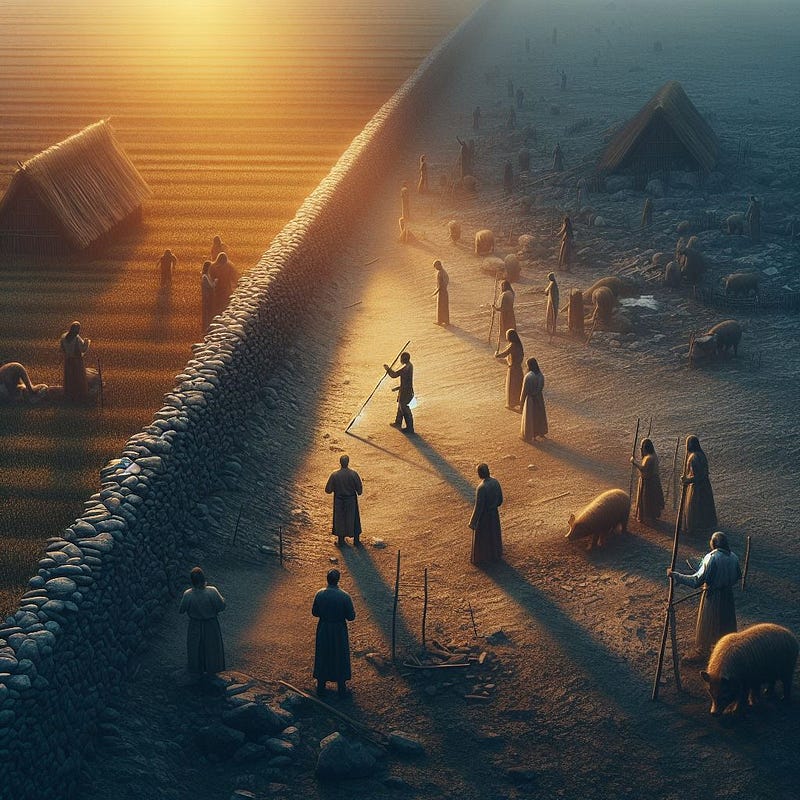
“The rhythm of planting and harvest replaced the rhythm of the seasons, and we lost touch with the cosmic dance.”
“We traded the sacred groves for fenced fields, and our gods retreated to the margins.”
(Terence McKenna)
Dualisms
The idea of “dualisms” that McKenna refers to relates to the tendency in human societies to divide reality into strict binary oppositions — good/evil, civilized/uncivilized, pure/impure etc. McKenna theorized that these rigid dualisms became more entrenched and problematic as humans moved away from the hunter-gatherer lifestyle intimately tied to the fluid, non-dualistic nature of the natural world.
Some examples of these dualisms that likely intensified after the Agricultural Revolution include:
The sacred vs. the profane — Creating strict boundaries between holy/unholy spaces, practices and concepts Humans vs. nature — Perceiving humanity as separate from and superior to the natural environment Reason vs. passion — Privileging rational faculties over emotion, intuition and bodily experiences McKenna suggests these dualistic separations, while useful for certain social/cultural functions, also stunted human consciousness by rejecting the intrinsic unity and interrelatedness of all phenomena.
Transcending dichotomies
Zhuangzi’s philosophy advocated transcending such artificial dichotomies in favour of the spontaneous experience of the undivided whole.
An example of Zhuangzi rejecting dualism is his parable of the eccentric craftsman: While other woodworkers carefully measured and calculated, this craftsman…
“took his attitude from the natural qualities of the wood, complementing what was there by his spirit.”
In other words, he didn’t force rigid distinctions but harmonized with the inherent nature of his material.
Several questions arise
As we reflect on Zhuangzi’s message and its relevance to the modern world, several questions arise:
Who are the “saints” and “bandits” in our contemporary society, and how do their roles shape our perceptions of morality and social order? In our current context, the “saints” might represent those who rigidly adhere to social conventions, pursuing success and status within established systems of power and authority. They are revered for their conformity and ability to uphold the status quo. In contrast, the “bandits” might be seen as those who challenge these conventions, rejecting the artificial constructs of society in search of a more authentic and spontaneous existence.
Social norms
In what ways do our social norms and rules limit individual freedom and spontaneity, and how might we work to promote a more balanced and harmonious social order? Our modern societies are governed by a vast array of laws, regulations, and social expectations that often stifle individual expression and creativity.
From rigid educational systems to inflexible work cultures, we are constantly bombarded with messages about how we should behave, think, and live our lives. To cultivate a more balanced and harmonious social order, we may need to re-examine these structures and create more space for individual spontaneity and diversity to thrive.
Connection
How can we cultivate a deeper connection with nature and the spontaneous aspects of our consciousness, as suggested by McKenna’s theories and Zhuangzi’s philosophy? Reconnecting with nature and our spontaneous consciousness might involve embracing practices that foster awareness, presence, and a sense of interconnectedness with the natural world.
This could include activities such as meditation, spending time in nature, or exploring creative pursuits that tap into our intuitive and spontaneous selves. Moreover, it’s fundamental to question our society, to reflect on our way of living, to contemplate our cultural heritage and the way we view the so-called “others”.
And…so?
By engaging with these questions and exploring the rich and complex ideas presented by McKenna and Zhuangzi, we can gain a broader and more nuanced understanding of the human experience and work towards creating a more harmonious and balanced world.
What do you think about this article?
Feel free to leave a comment.
Thanks for reading.