
SELF-MASTERY
Maybe We Shouldn’t Ignore the Haters
Why self-reliance and resilience can go too far
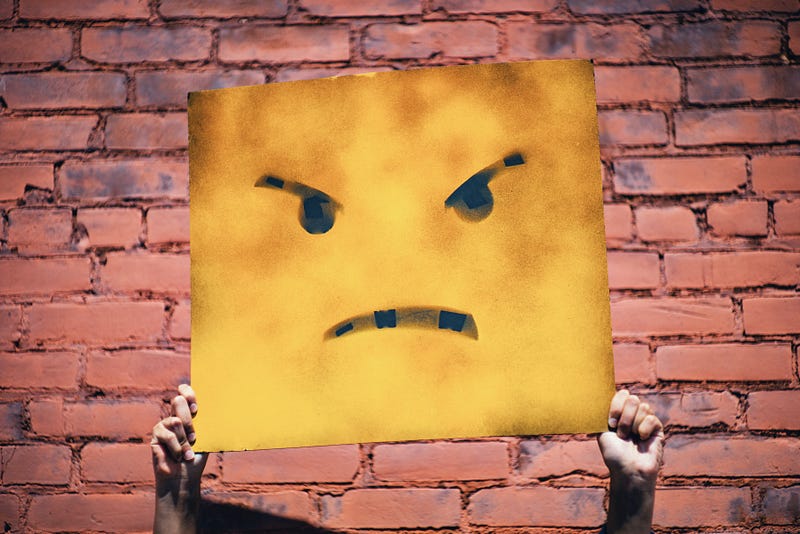
The world seems to be a lot more full of people willing to be thoroughly nasty. Online anonymity or at least a perceived sense of distance is bringing out jealously and trolling behaviors you really have to ignore if you’re going to protect your mental health.
I have a love-hate relationship with Twitter for this reason. On other platforms it seems like you really have to 'put yourself out there' or have a high profile to attract the trolls — I have neither. But on Twitter it’s different. Maybe cause it’s still strongly text-based, but have had my fair share of attacks that seem personal or only interested in making me feel shit rather than actually educating or creating debate.
So I totally understand those people who are become proficient, even skilled at blocking out the hate. Sometimes literally (using a block/mute/report functionality), sometimes just mentally drowning people out with your own personal (internal) mantra.
But what if by doing so you shut off any feedback at all? What if success without feedback is just as big an issue?
My mum always used to share her key to happiness (influenced by Saturday Night and Sunday Morning or Handmaid’s Tale, I’m not sure)— “Keep an open mind, a sense of perspective, and don’t let the bastards grind you down.”
It's a pretty simple approach and one I think most people can relate to. But how do you know who a 'bastard' is in this context?
Haters Don’t Deserve Your Respect
I really want to be clear. People who are ‘out to get you’ — trolls and the like — do not deserve your time. Their ‘feedback’ (I call it that tentatively) is mainly about them. I have tried to quantify this over the years, and I estimate that if you see a ‘flag’ the feedback is bourne out of anger, jealously or a threat to ‘them’ the content of that feedback, no matter how eloquent is 70% about them, 20% about the context (or lack of understanding) and 10% about you.
Some flags are:
- Use of absolutes like ‘always’, ‘never’ — “You never let me speak”
- Contain a manipulation — “You really should try to listen to me more”
- Try to create a barrier — “You can’t go around …”
- Are about self-validation — “Your product won’t beat mine because …”
But in these examples they aren’t true haters, their critique is just not coming from a very ‘pure’ place. The problem is, even if we don’t spot it consciously, we are sensitive to the hidden agenda and reject it.
Sadly we can lose useful information in our rejection, but it’s easy to fully justify dismissing the information because it’s easy to point to what’s wrong — “You just want me to …”.
You could be better than the best of them. Think about it. They might disagree with something that you are saying or doing and have decided to reject you or your idea as a result. You have every right to reject them (block them on social media for example) but is any part of their complaint valid?
10% of Truth
My coaching trainer/mentor uses the question “What’s the 10% of Truth in That?”.
It’s a genuinely insightful question and one that can really help to open up some thinking. I like it because you don’t need a coach to utilise its power. A bit like the phrase ‘many a true word spoken in jest’ there may well be truth in the criticism. After all, every entrepreneur everywhere talks about the value of (customer) feedback.
I’m reminded of a cheesy training video by a guy called Bob Farrell. He had a letter from a customer early in his career saying that one of his servers (in his diner) had asked the customer to pay $0.25 for a side of pickles. The writer thought this was really unreasonable and told him so. He turned this into the rallying cry of customer service —
“Give ’em the pickle”
But I wonder if the letter in the modern era could be dismissed as ‘a hater’ robbing old Bob of a great story, a series of training videos, and maybe a major driver for a successful business.
So we need to turn down the sensitivity to the hate and the agendas of others but assume they might be telling us something important — they’re just caught up with their own crap or delivering it really clumsily.
Here is my guide to using it to unpicking feedback from ‘hate’:
- The first time you hear something from one person, ignore it. This helps with filtering out the noise. One of the reasons ol’ Bob Farrell knew to pay attention to the letter was it took an effort to write. These days a keyboard warrior can cut you to the bone in an instant.
- You should also ignore only one person saying it. Make sure it comes from more than one source, ensure there’s no axe to grind.
- Now you’re at point three more than one person has said something about you that you don’t like. Ask yourself the question “What’s the 10% of Truth in that?”. This helps you to remove defensiveness (you aren’t validating everything they have said) whilst allowing yourself to spot issues with your idea, pitch or product. It might not get others riled in the same way but perhaps for others, it would just turn them off.
- The answer to the question (without a coach) should probably form the style “People are saying [x], I know I am/my idea is/not [y], but I am/it is also [qualifier] [z]”. For example: “People are saying I’m self-absorbed, I know I’m not vain but I am lonely and sometimes I want people to notice me”. “People are saying the app I’m building has been done before, I know it has a USP, but perhaps I need to differentiate it a little more” This statement style unlocks a door. It removes your defensiveness and creates a point of reflection.
- Get others involved. One of my mantras is “No one ever achieved anything alone” so enlist others in understanding what’s going on — particularly if it is about you. But here’s the rules— they must be someone who cares about you and your success and you must NOT tell them the source of the thinking. People who care about you will react as you might have and encourage you to quickly dismiss the haters (which they should as good friends) and not allow you to get the golden nugget of feedback that might exist. You enlist them by saying (continuing the example above): “Hey I have been feeling lonely recently and not really saying it. I’m wondering if I sometimes can come across as needy and get in my own way”. The last part of that statement is really important — you need to make it clear that you aren’t asking for validation from your friend, you are asking them to help you get out of your own way. Or: “I’m worried that my app might not be successful as it could be because we haven’t done enough to promote why it is different. Can you see how we could make it better?”
- Get curious. Ask questions of that person (and, if you can, of yourself) that treats the problem as a challenge, as objectively as possible. You are ‘suspending’ the emotional reaction as much as possible. You can’t take emotion out of it altogether (that would be weird).
- Remind yourself you are not the original comment. Once you find the ‘10% truth’ try not to just revert back to to the original comment — “Maybe I am completely self-absorbed” — that way lies very poor mental health and very unactionable realizations.
- Decide if it's something you care about enough to do something different. This shouldn’t be a self-flagellating exercise. If you have invested this much time so far it suggests you might care. So try to identify if you care enough. So sometimes you can appear a bit selfish — is that OK? Is it a slight overcompensation for years of putting others first? Might it course-correct by itself?
Am I a Hater?
A slightly off-beam inspiration for this article was not in fact my own haters (I'm not significant enough to have them) but my worries having given what I thought was criticism and then later seeing a post about haters. The narrative was roughly this?
- A highly successful person decide to diversify into health & ‘healing’
- They shared views on health with a very large following including advice not to get traditional treatment for cancer
- I point out they have a responsibility to be careful when sharing this stuff because, while definitely not the whole story, traditional treatments are built on predictability and this could cause harm to reject them out if hand
- No response from the target of my criticism but an increase in output talking about ‘haters’ and why you can’t listen to them
- I am now very worried that my criticism (bourne out of experience with both alternative therapies and many connections in the traditional sphere of health) has been easily dismissed. It’s not about my ego it's about trying to avoid another ‘vaccination-style’ rejection of all traditional cancer treatments.
I don’t want to be a hater. I really want people to try new things. But the human ego is a wily thing. It can convince you success in one area means you can (and should) be successful in another because you have the right strategy. People’s keenness to give back can also blind them to their complete unsuitability to give back. Or you have a great core idea that all your mates tell you is awesome — show it the light of day and all the ‘haters’ come out and point out the flaws. I mean they must be haters right because your friend John loved the idea? Bias is rife and hard to spot.
I share this because there’s a balance. The side of ‘you have to ignore the haters because if you didn’t you’d never do anything’ gets a lot of air time. It’s compelling because it’s inspirational and we have lots of examples of people being successful because they ignored the haters. We don’t have examples of people who listened to someone saying that their idea was batshit crazy and avoided bankruptcy — that’s much harder to find and prove. We also don’t have as many examples of people who really listened to their critics and iterated on their product — it’s just too damn tempting to say “It was all me”.
“Criticism is part of the entrepreneurial journey. … The standard advice you hear is to ignore the “haters” but celebrate that you have some….That advice will have you ignoring lessons that give you an opportunity to learn and grow from.” — Kimanzi Constabel, Marketing Entrepeneur
Elon musk famously ignores critics, or does he? It seems like stories of him ignoring all criticism tend to get the traction.
Is it a veiled compliment?
I’ll add one further slightly less formulaic approach to criticism — can you mine it for more information. Is there something in there that makes the idea/product stand out? Is there something in your flaws that help you realise a strenth you were unaware of?
“Listen carefully to first criticisms made of your work. Note just what it is about your work that critics don’t like — then cultivate it. That’s the only part of your work that’s individual and worth keeping.” ― Jean Cocteau
So I think what I’m suggesting is we need to get a bit more nuanced and stop lumping haters and critics in the same box. Then when we see a critic, no matter how clumsily delivered, hold on to the thought they might be doing you a favour. Hold on just enough to explore it and look for the truth. Not long enough to obsesses yourself into an early grave.