avatarPratyush Khare

Free AI web copilot to create summaries, insights and extended knowledge, download it at here

3276

Abstract

13">Ideally, companies should ask for a price for a product that is equal to the value a consumer attaches to a product. This pricing strategy is called <b>Value-Based Pricing</b>. Since the value of a product can vary from person to person, it is challenging to determine the perfect value and have a different price for each customer. However, consumers’ willingness to pay can be used as a proxy for the perceived value.</p><p id="e60b"><b>Elasticity refers to how sensitive the demand for a product is to changes in price.</b> Elastic curves help visualize and understand the demand elasticity for different products. In simpler terms, <b>it tells us how much the quantity demand will change in response to a change in price</b></p><p id="e0a6">With the price elasticity of products, companies can calculate how many consumers are willing to pay for the product at each price point. The elasticity of a product refers to its sensitivity to changes in price. <b>Highly elastic products are more sensitive to price changes, while less elastic products are less sensitive to price changes.</b> The dynamic aspect of this pricing method is that elasticities change concerning the product, category, time, location, and retailers.</p><p id="ad99">With the price elasticity of products and the margin of the product, retailers can use this method with their pricing strategy to aim for volume, revenue, or profit maximization strategies.</p><figure id="2774"><img src="https://cdn-images-1.readmedium.com/v2/resize:fit:800/0*4TaDUIi8_TbBE3av.jpg"><figcaption>Price Elasticity of Demand</figcaption></figure><p id="7a32">Note: To read more about the Pricing Elasticity of Demand Modeling please refer to —</p><div id="8e8a" class="link-block"> <a href="https://datascience.oneoffcoder.com/pricing-elasticity-modeling.html"> <div> <div> <h2>2. Pricing Elasticity of Demand Modeling - Data Science Topics 0.0.1 documentation</h2> <div><h3>Pricing Elasticity of Demand (PED) is a measure of how responsive demand (or quantity sold) is to price change. When…</h3></div> <div><p>datascience.oneoffcoder.com</p></div> </div> <div> <div style="background-image: url(https://miro.readmedium.com/v2/resize:fit:320/0*YQdw1N6GqJ1YpXMC)"></div> </div> </div> </a> </div><h1 id="d618">Optimizer for Price Selection</h1><p id="7048">The optimizer is the brains behind the dynamic pricing system. It takes into account various factors, including segmentation and elastic curves, to determine the optimal price for each product at any given time.</p><ul><li><b>Objective</b>: Maximize Revenue (Price * Views * Conversion)</li><li>Constraints on <b>Margin Percentage, GMV </b>&<b> Competitor Price</b></li></ul><p id="50e9">While maximizing revenue is essential, it’s equally crucial to maintain profitability. Setting constraints on margin percentages and GMV ensures that pricing adjustments align with the overall financial goals of the business.</p><p id="3b37">We can solve the optimization as the quadratic programming problem using the cvxpy library. <b>cvxpy is a modelling language for convex optimization proble

Options

ms that are incorporated in Python</b>. It gives the user the ability to represent a convex optimization issue in natural terminology. The package allows you to create convex and non-convex optimization problems with and without constraints. It also enables the design of complex, multi-objective optimization problems in which numerous objectives are optimised at the same time.</p><p id="1575"><b>Note: </b>To read more about cvxpy and its usage please refer to —</p><div id="93ee" class="link-block"> <a href="https://readmedium.com/maximizing-sales-with-quadratic-programming-a-detailed-implementation-guide-b6472ec600a8"> <div> <div> <h2>Maximizing Sales with Quadratic Programming: A Detailed Implementation Guide</h2> <div><h3>Learn how to optimize & improve sales force coverage by using Quadratic Programming</h3></div> <div><p>medium.com</p></div> </div> <div> <div style="background-image: url(https://miro.readmedium.com/v2/resize:fit:320/0*xNYeHw457-A2lDfV)"></div> </div> </div> </a> </div><h1 id="65fd">Conclusion</h1><p id="4ee7">Implementing a dynamic pricing system for an e-commerce app involves understanding the nuances of product segmentation, elastic curves, and effective optimization strategies. By incorporating the latest research findings, businesses can stay agile in the ever-evolving e-commerce landscape, maximizing revenue while maintaining profitability. Embracing dynamic pricing not only enhances the customer experience but also positions the business for sustained growth in a competitive online market.</p><h1 id="6d73">References</h1><ol><li><a href="https://en.wikipedia.org/wiki/Dynamic_pricing">https://en.wikipedia.org/wiki/Dynamic_pricing</a></li><li><a href="https://corporatefinanceinstitute.com/resources/valuation/gross-merchandise-value-gmv/#:~:text=Gross%20Merchandise%20Value%20(GMV)%2C,typically%20measured%20quarterly%20or%20yearly.">https://corporatefinanceinstitute.com/resources/valuation/gross-merchandise-value-gmv/</a></li><li><a href="https://www.investopedia.com/ask/answers/012915/what-difference-between-inelasticity-and-elasticity-demand.asp">https://www.investopedia.com/ask/answers/012915/what-difference-between-inelasticity-and-elasticity-demand.asp</a></li><li><a href="https://www.investopedia.com/ask/answers/040815/what-are-some-examples-demand-elasticity-other-price-elasticity-demand.asp">https://www.investopedia.com/ask/answers/040815/what-are-some-examples-demand-elasticity-other-price-elasticity-demand.asp</a></li><li><a href="https://en.wikipedia.org/wiki/Price_elasticity_of_demand">https://en.wikipedia.org/wiki/Price_elasticity_of_demand</a></li><li><b>Code Example </b><a href="https://datascience.oneoffcoder.com/pricing-elasticity-modeling.html">https://datascience.oneoffcoder.com/pricing-elasticity-modeling.html</a></li></ol><p id="6eba">If you have read so far, a big thank you for reading! I hope you find this article to be helpful.<i> </i>If you’d like, <a href="https://www.linkedin.com/in/kharepratyush/">add me on <i>LinkedIn</i>!</a></p><p id="04ad">Good luck this week, Pratyush</p></article></body>

OPTIMIZATION

Maximize Revenue in E-commerce by utilizing Dynamic Pricing

Utilize Segmentation, Elastic curves, and Optimization to maximize revenue with dynamic pricing

In the fast-paced world of e-commerce, it's important to have innovative strategies to stay ahead of the competition. One such strategy is Dynamic Pricing. It's a responsive approach to pricing items that adapts to various factors. In this blog, we will explore how to implement a dynamic pricing system for an e-commerce app. The goal of Dynamic Pricing is to maximize the average revenue per customer while carefully managing margin percentages and Gross Merchandise Volume (GMV).

Photo by Jan Huber on Unsplash

What is Dynamic Pricing?

Dynamic pricing is the practice of adjusting the prices of products or services based on real-time market conditions, demand, and other relevant factors. In the context of an e-commerce app, dynamic pricing allows for agile and responsive adjustments to product prices, maximizing revenue and profitability.

In the highly competitive landscape of online shopping, where consumers are price-sensitive and choices abound, dynamic pricing offers a strategic advantage. It enables businesses to optimize prices to meet demand, enhance customer satisfaction, and ultimately boost overall revenue.

Building Blocks of Dynamic Pricing

Dynamic pricing involves the method of segmenting items into different groups (such as slow-moving or fast-moving, low-margin or high-margin, etc.). The price elasticity curve for the segments is created and an optimizer is then used to adjust the prices of these items. This allows for changes in prices while ensuring that they do not adversely affect margins or other business parameters.

Segmentation

Segmentation involves categorizing items based on various attributes such as brand, category, perishability, and demand patterns. This segmentation is crucial for tailoring pricing strategies to different product groups.

Brand-Based Segmentation

Brands often have distinct customer bases and perceived values. By categorizing products based on brands, the dynamic pricing system can adjust prices to reflect these differences.

Category-Based Segmentation

Certain categories may exhibit unique demand patterns or sensitivities to pricing changes. Segmenting products by category allows for more targeted pricing adjustments.

Perishability and Seasonality

Fresh produce and seasonal items may require different pricing strategies. A dynamic pricing system should consider the perishability and seasonality of products to optimize prices accordingly.

Price Elastic Curves

Ideally, companies should ask for a price for a product that is equal to the value a consumer attaches to a product. This pricing strategy is called Value-Based Pricing. Since the value of a product can vary from person to person, it is challenging to determine the perfect value and have a different price for each customer. However, consumers’ willingness to pay can be used as a proxy for the perceived value.

Elasticity refers to how sensitive the demand for a product is to changes in price. Elastic curves help visualize and understand the demand elasticity for different products. In simpler terms, it tells us how much the quantity demand will change in response to a change in price

With the price elasticity of products, companies can calculate how many consumers are willing to pay for the product at each price point. The elasticity of a product refers to its sensitivity to changes in price. Highly elastic products are more sensitive to price changes, while less elastic products are less sensitive to price changes. The dynamic aspect of this pricing method is that elasticities change concerning the product, category, time, location, and retailers.

With the price elasticity of products and the margin of the product, retailers can use this method with their pricing strategy to aim for volume, revenue, or profit maximization strategies.
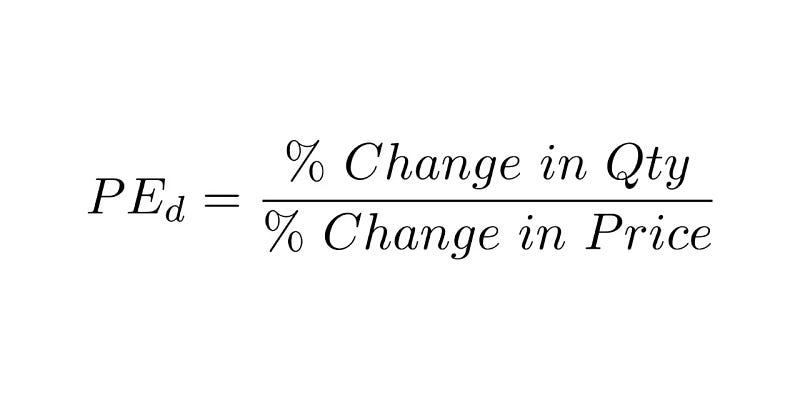
Price Elasticity of Demand

Note: To read more about the Pricing Elasticity of Demand Modeling please refer to —

Optimizer for Price Selection

The optimizer is the brains behind the dynamic pricing system. It takes into account various factors, including segmentation and elastic curves, to determine the optimal price for each product at any given time.

  • Objective: Maximize Revenue (Price * Views * Conversion)
  • Constraints on Margin Percentage, GMV & Competitor Price

While maximizing revenue is essential, it’s equally crucial to maintain profitability. Setting constraints on margin percentages and GMV ensures that pricing adjustments align with the overall financial goals of the business.

We can solve the optimization as the quadratic programming problem using the cvxpy library. cvxpy is a modelling language for convex optimization problems that are incorporated in Python. It gives the user the ability to represent a convex optimization issue in natural terminology. The package allows you to create convex and non-convex optimization problems with and without constraints. It also enables the design of complex, multi-objective optimization problems in which numerous objectives are optimised at the same time.

Note: To read more about cvxpy and its usage please refer to —

Conclusion

Implementing a dynamic pricing system for an e-commerce app involves understanding the nuances of product segmentation, elastic curves, and effective optimization strategies. By incorporating the latest research findings, businesses can stay agile in the ever-evolving e-commerce landscape, maximizing revenue while maintaining profitability. Embracing dynamic pricing not only enhances the customer experience but also positions the business for sustained growth in a competitive online market.

References

  1. https://en.wikipedia.org/wiki/Dynamic_pricing
  2. https://corporatefinanceinstitute.com/resources/valuation/gross-merchandise-value-gmv/
  3. https://www.investopedia.com/ask/answers/012915/what-difference-between-inelasticity-and-elasticity-demand.asp
  4. https://www.investopedia.com/ask/answers/040815/what-are-some-examples-demand-elasticity-other-price-elasticity-demand.asp
  5. https://en.wikipedia.org/wiki/Price_elasticity_of_demand
  6. Code Example https://datascience.oneoffcoder.com/pricing-elasticity-modeling.html

If you have read so far, a big thank you for reading! I hope you find this article to be helpful. If you’d like, add me on LinkedIn!

Good luck this week, Pratyush

Data Science
Machine Learning
Python
Programming
AI
Recommended from ReadMedium