
Mathematicians as Magicians: The Trick Behind their Pompous Formalities
And how positing formal structures helps master the environment
Can everything be expressed mathematically, and if so, would that mean everything consists of quantities and formal structures? Or is mathematics like theology in being a childish game in which you’re free to invent the rules as you go along, so you can never lose?
To a child everything is a playground because the child is eager to project playfulness onto every scenario. Similarly, to a hammer, as it were, everything is a nail. And to a mathematician perhaps, everything is a formal structure that can be accommodated by an infinitely flexible, artificial language.
Notice indeed the crucial difference between a natural and an artificial language. A natural language is rooted in the evolution of a culture’s conventions, whereas an artificial language is detached from history, experience, and intuition, and is thus ad hoc, which is to say this language’s vocabulary and rules are invented to address the problems at hand. When the prevailing mathematical tools prove inadequate for some purpose, the mathematician can just invent new ones.
Similarly, if you don’t want to read a certain fantasy novel that sits on a bookstore’s shelf, you have many more from which to choose, each novel authored by someone who relished the chance to imagine how the world might have worked.
To see what it means to think in formal terms, I’d like to try to formalize an explanation I made elsewhere, about the apparent role of consciousness in nature. In relatively plain English, that explanation is that people are comparable to black holes in preforming a radically transformative role: we take the wilderness and turn it into the artificial domain we call “civilization.” And this transformation is the essence of what we think of as progress.
Now, is that a formal thesis? Can that historical transformation be treated as physical and quantifiable, rather like how for decades mainstream economists treated economies pseudoscientifically as self-governing, Newtonian systems? Let’s see, before elaborating on the trick that lies behind the method of mathematics.
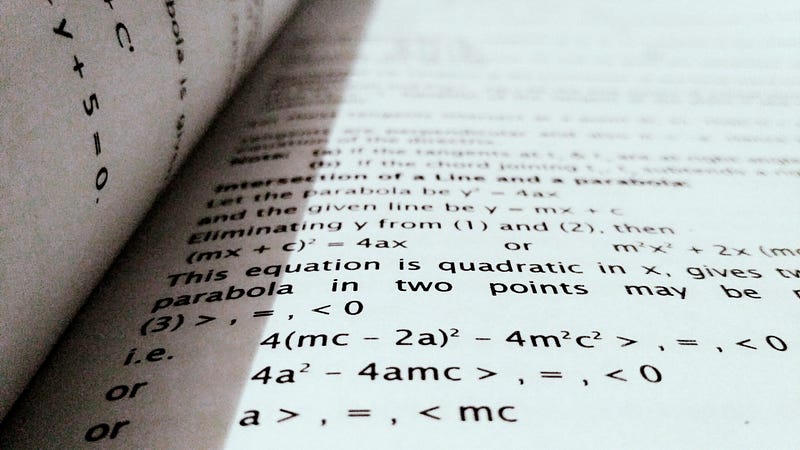
Some questionable formalities
First, I’ll define some relevant terms to make them seem physical, which will invite a formal treatment of their interdependencies. Nature’s wildness is captured with a combination of the principles of plenitude and of wastefulness:
- Principle of Plenitude: □𝒯(◊Φ ⟶ Φ) (Necessarily over time, if something is possible, that thing becomes actual.)
- Principle of Wastefulness: □𝒯(∃Φ 𝒰 ¬∃Φ) (Necessarily over time, something comes to exist until it ceases to exist). Alternatively, □𝒯(∃Φ ⟶ ▷ ¬∃Φ) (Necessarily over time, if something comes to exist, that thing will cease to exist at a future point).
Nature’s wild aspect, then, is due to the power ⊗ that makes both principles universally true. Their union makes nature a perverse plenum 𝕻. Over the course of time nature is full of all possible beings, but those beings are contingent, meaning that nature never fails to waste each of its darlings, as it were. This is perverse in the root sense that nature overturns everything it develops.
The result of this universal overturning or perverse creativity is that nature is wild, so that 𝕻 is typified by two sets of existential characteristics, corresponding to each of the two principles.
From plenitude, you get ℙ, majestic variety, sublime grandeur, awesome scale, and so forth, and from wastefulness, you get 𝕎, godlessness, amorality, absurdity, and monstrousness. Nature fulfills each of the two principles with a lack favouritism towards either of them. To generate all possible beings, you must eliminate those that would interfere with certain others. For instance, you couldn’t have as many mammals as we later had if you still had dinosaurs.
Consider how 𝕻 compares with a state of chaos or of complete, random disorder. Nature is genuinely, indeed divinely constructive in that there is a natural order. For all possible things to come into being, they must at some points cooperate to generate higher orders and emergent properties.
In a state of pure chaos 𝓒, though, there would be no stable patterns, nor a creative power to overcome the disorder with order. This differs from chaos theory, which posits that a chaotic system is self-organizing, due to hidden patterns. That’s just to say that chaos theory deals with impure chaos, or with natural chaotic systems, meaning superficially disordered systems that are saturated at some level with ⊗ (nature’s wild power of plenitude and wastefulness).
If we imagine 𝓒 and therefore exclude ⊗, we must imagine not nothing at all, but a contradictory scenario in which everything randomly comes into being without any pattern or order uniting them. This is contradictory since nothing distinct could pop into being without the coherence that makes up that thing’s properties.
Suppose a frog randomly pops into being in outer space. The frog might be chaotically related to its environment since a frog doesn’t belong in that vacuum, but chaos wouldn’t have reached into the frog itself, as it were. To be a frog, the thing’s parts must be ordered with respect to each other; for instance, the arms must be positioned where they are, relative to the legs, and the eyes mustn’t be where the nostrils are.
Here, then, 𝓒 runs up against ⊗. The notion of pure chaos is self-contradictory since to have disorder as opposed to nothing at all, you need things to be randomly arranged, but each thing will be internally ordered, negating 𝓒. Pure chaos, then, was never a live metaphysical option. The worst-case scenario instead is 𝕻.
We can summarize this as follows:
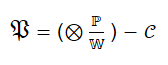
(In English, this equation means that the perverse plenum which is natural existence is the power of dividing plenitude by wastefulness, while negating chaos.)
Now, by way of analogy with blackholes or gravitational singularities, we can imagine an edge of 𝕻 due to the concentration of ⊗. This concentration takes the form of the evolution of life, and crucially of consciousness, resulting eventually in personhood.
In short, there’s the impersonal generation and elimination of forms, and there’s the deliberate version that occurs when organisms struggle against their environment and each other, to be fit enough to reproduce, thereby helping to define future generations. The former, physical interactions concentrate the cosmic power of wild proliferations and ruinations when they enact the latter evolutionary dynamic.
We can draw this distinction by calling the strictly physical level of 𝕻 “𝓐,” meaning that that level is automated in that it lacks mentality and deliberation. And we can call the living level “𝓜,” meaning that some members at this level have such mental properties as autonomy, intelligence, imagination, and ambition. Thus, with respect to the magnitude of ⊗, 𝓐 < 𝓜.
This inequality is demonstrated by the parasitism that 𝓜 makes possible. To wit, as they become more daring and masterful, living things organize a revolt against 𝓐, soaking in stimuli from 𝓐 (as in scientific observations of nature) and erecting extensions of their minds, consisting of the artificialities of civilization 𝓔.
Thus, acting as an operator, 𝓜(𝓐 ⇒ 𝓔), where that thick arrow indicates the potential for a wholesale conversion of the wilderness into a domesticated refuge for minds.
Yet that conversion stems from the broader perversity that’s inherent to nature’s wildness. By domesticating the wilderness, 𝕻 is only continuing to undo itself, or to clear away one type of entity to make room for another.
This is the sense in which 𝓜 concentrates ⊗, rather like how the heart of a black hole concentrates gravity, warping spacetime. Lacking mental capabilities, physical things can undo each other only piecemeal, whereas the plenum’s mental portion can target wild nature as such, using symbols.
From this we might surmise that 𝓜 = 𝓐². Moreover, 𝓜(𝓐 ⇒ 𝓔) is a special, more targeted case of the plenum’s self-overturning, or cosmic perversity.
Questioning mathematical formality
That will do for an illustration, but what exactly was the point of such an attempt at formality? The point wasn’t to prove anything, but to juxtapose the formal discourse with a philosophical one, to raise the question of the context in which mathematical reasoning makes sense. Can you treat any subject mathematically? If so, is that because of the nature of all subjects or the nature of the mathematical method?
Mathematics deals with forms or structures, and the point is to lay bare those underlying features with exhaustive precision, as though you were reverse engineering a natural process or inventing some system with a blueprint. The mathematical language is artificial to avoid ambiguity, and the formal statements build on each other in strict, logical fashion, leaving out none of the steps in a proof. As a result, supposedly, you need merely have the patience to learn the artificial concepts and to follow all the steps to concede that the proof’s conclusion is necessary. There’s no choice but to submit if you want to be rational.
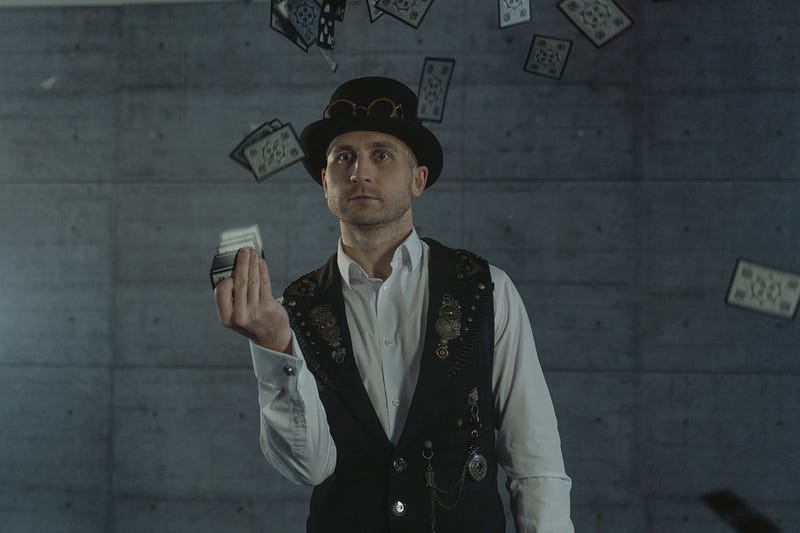
Yet doesn’t that make a mathematical proof rather like a magic trick? True, mathematical presentations are usually far more exacting and laborious than my meager illustration above since I’m no mathematician. Still, the very thoroughness of those presentations might be a case of overcompensation.
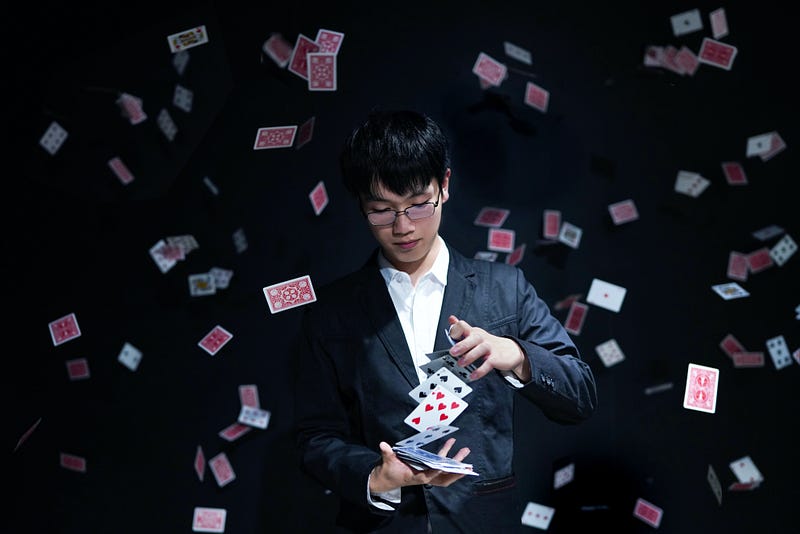
Notice how the stage magician likewise insists that nothing’s out of order or that everything’s aboveboard, so that you can watch each step of the trick as it unfolds and be mesmerized by the result that somehow still defies expectations. Of course, the steps lead to a surprise or a “turn” because the magician is always hiding something despite the protestations that he or she has been forthcoming.
Could the mathematician, too, be hiding something, at least inadvertently?
Think of the set of natural numbers. Once you have the first number, called “1,” it’s clear from the inclusion of a simple rule of addition how you can arrive at the higher numbers. You add 1 to 1 and you get 2, and if you add one more you get 3. Add 2 and 2 and you get 4, and so on. So far all seems to be proper and fair, with no cards up the mathematician’s sleeve.
But what if the natural number series includes zero, as it sometimes does? What’s the rule that shows transparently how you can go from 0 to 1? In other words, mathematically how do you arrive at that first thing, corresponding to “1”? Sure, if there are zero bananas in a room, and you add a banana to it, you’ve gone from zero bananas to one of them. But the room was never fully empty, so “0” would have been a misleading characterization of the situation prior to the addition of the banana. And indeed, it’s not likely an accident that the use of zero as a number was invented in ancient India where the concept of nothingness played a mystical role in Hinduism.
Zero is different from the other numbers since if you add 1 to itself, you get a higher number, 2, whereas if you add 0 to itself you still have 0. Thus, it’s not so clear logically why the rule of addition should apply to 0 such that you could go from 0 to 1.
Here, then, is where a trick is played, where the mathematician’s exhaustive transparency runs out, in the transition from no numbers to some numbers. Clearly, we needn’t solve this cosmological or metaphysical conundrum to be able to use numbers to count things. All I’m suggesting is that the exhaustive, seemingly exacting presentations of formal systems might be facile.
If the goal isn’t to model reality but to explore formal possibilities, you can just invent concepts and rules as you like, making mathematics a game. But what kind of game is as deadly serious and tedious as the one that plays out on the pages of every maths textbook? A misleading game — as in some kind of trick.
That’s been my suspicion, at least, since I was first forced to study maths in school. I had all sorts of pertinent philosophical questions even as a child, but there was no time for any of them in math class. You just had to follow along through all the laborious, seemingly exhaustive steps as they were laid out in the textbook or risk falling behind, as the author insisted that he or she wasn’t hiding anything.
Silly mathematicians: simplifications are for games
This is the root of the problem. The style of mathematical discourse, especially in the pedagogical context, meaning the excruciating attention to detail, the resort to unnatural concepts for the express purpose of eliminating the follies of human subjectivity, and the presumption that no step is being left out in a proof — all of this belies the fact that math is entirely made up!
Sure, some mathematical concepts are based on natural patterns, and lots of other such concepts have proven useful in tracking regularities, expanding scientific investigations, and enriching corporations. But in dealing strictly with forms or structures, every single mathematical idea is a gross simplification. That’s why Plato argued that formal reality is hidden from the natural realm we perceive. The abstract forms are only ideals that are dimly reflected in this shadowy realm in which the real-world complexities make a mockery of the idealizations.
There are two constraints on mathematical inventiveness: the need for useful tools in managing the environment, and the preference for simplicity, known as the “beauty” of “elegant” proofs.
The mathematician can change definitions or add assumptions to generate any desired result, rather like how a government can print as much money as it likes, but if the results are useless, inelegant, or ad hoc (contrived), the system or proof may be discarded.
Clearly, the pragmatic role of applied mathematics is subjective, in that the interest in measuring and tracking things with maths is ours alone, although the tool’s utility depends, to some extent, on what the real environment brings to bear.
The appeal to beauty is even more dubious since, given the supreme nerdiness (and maleness) of the mathematical endeavour, this talk of “beauty” looks like overcompensation. Just as the nerdy magician traditionally keeps a beautiful assistant onstage to insinuate that magicians are sexually attractive, the mathematician claims to be well acquainted with a type of beauty that non-mathematicians can’t appreciate.
Yet in so far as these “beautiful” proofs are supposed to apply to nature, the beauty must be purely subjective, which means it testifies to the mathematician’s decision to ignore some complicating factors. The full, inhuman scope of any natural pattern is always better described in terms featured in horror rather than romance literature. For instance, there may be elegant proofs in arithmetic, but in its existential context, counting is horrific rather than beautiful since there are first and last events that delimit the cosmos, both of which are inexplicable and dismaying.
Show me the math textbook, though, that emphasizes these subjective decisions — the aces up the magician’s sleeve or the hidden trapdoors — rather than the tedious rule-following and exhaustive, stepwise procedures that make it look like the mathematician is just following orders and has no skin in the game. There’s no such textbook in wide circulation. Math is known for what this magician wants you to see, not for what’s hidden to trick you.
Moreover, suppose someone purports to be handing you a stack of ten separate dollar bills, but one of them is a forgery. That would be a case of fraud. Now suppose someone else hands you a similar stack, and none of the bills is forged. You could count the bills and declare confidently that you’ve just received ten separate dollar bills. That would be a paradigmatic case of arithmetic working as it should.
As Friedrich Nietzsche implies, however, in “On Truth and Lies in a Nonmoral Sense,” counting is facile because the presumption that instances are equivalent such that they equally fall under the same type is a subjective imposition. The dollar bills would be equal only in that they’d be good enough for certain purposes. Look more closely at the bills and you’d find differences between them, due to their conditions. One bill might even be torn, making it potentially as useless as a forged bill. When do the differences between instances of any type matter, and when can they be ignored? Only we, the counters, can answer that question since the rest of the world isn’t concerned with our conceptions and inferential tools.
My point, then, isn’t that counting or any other mathematical procedure or concept must be a useless tool. Rather, it’s that we’re liable to fool ourselves if we mistake the effrontery of a formal presentation for a demonstration of flawless objectivity.
Indeed, in this respect, maths might be compared to a snooty social function known as a “formal occasion” such as a wedding, state dinner, or gala. In the context of such a gathering, you must join the pompous attendees in obeying the social conventions or risk being deemed “informal.” You must wear fancy attire, show good manners, make polite small talk, dance tasteful dances, and so on. That formality is the living of a sheer fantasy since those rules, too, are contrivances of human imagination. More specifically, they might be the boasts of an upper class of snobby socialites.
Are mathematical rules just as artificial? That’s not to ask whether they’re vacuous since mathematical tools are demonstrably useful in managing your affairs in the world. Likewise, social niceties have real-world effects in organizing society. The question, rather, is an aesthetic or ethical one. I’m asking whether the exercise of logic can train the formalist to be arrogant so that he or she loses sight of the likelihood that all mathematical concepts and rules are subjective idealizations.
If you’re playing a game, have fun with it, and stop pretending you’re only following orders like a good soldier, rather than pulling a fast one somewhere in the small print.
Indeed, I had fun attempting to formalize that philosophical explanation of mine. I had the same kind of fun as when I once wrote a novel. This is the creative person’s joy of making stuff up and seeing where it takes you.
To directly address the question I posed earlier, I suspect that while it’s possible the world is fundamentally formal or structural, as in the case of Platonism or a metaphysical computer simulation, what’s more likely is that nature itself isn’t formal — at least, not in a way that corresponds to the connotations of that word.
As a mode of inquiry, math is formal, which means that formality is a social stance. In line with what I’ve explained elsewhere, this is the formality you assume if you mean to enslave nature. To speak of a thing’s “physical formality,” then, is to say that the thing is exploitable due to its mindlessness and its lack of rights or other human qualities. In other words, “form” or “structure” is a euphemism for “dumbness” or for some automatism.
The moment scientists fully lay out the structure of the human mind, formalizing every aspect of personal thought, emotion, and behaviour, we’ll have enslaved ourselves, proving — by way of pretending with fancy games — that we’re just natural things that are forced to obey a master’s rules.


