“Master of the Screen: The Artistry of Christopher Nolan, an Oscar-Winning Visionary”
“Delving Deep into the Legacy of Christopher Nolan: From ‘Memento’ to ‘Oppenheimer’”
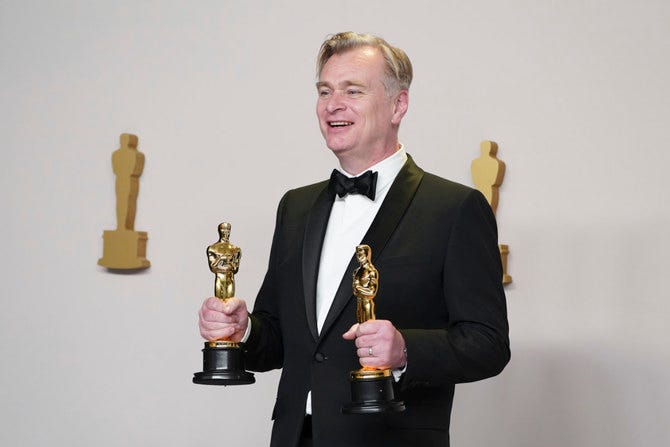
Christopher Nolan has etched his name in cinematic history as a director whose films are not just watched but experienced. Known for his intricate narratives and technical prowess, Nolan has garnered international acclaim and a dedicated fan base. His journey from indie films to blockbuster epics illustrates a filmmaker committed to his craft, constantly challenging both himself and his audience.
Early Inspirations and Breakthrough:
Christopher Nolan’s interest in film-making sparked at a young age, leading him to create short films before stepping into feature film-making with “Following.” However, it was “Memento,” his second feature, that truly put Nolan on the map, showcasing his penchant for non-linear storytelling and complex characters. This film, alongside his early work, laid the groundwork for a career characterized by innovative storytelling techniques and philosophical underpinnings.
Rise to Prominence:
Transitioning to studio film-making, Nolan directed “Insomnia” but truly rose to prominence with “The Dark Knight Trilogy,” which reimagined superhero cinema. “Inception” and “Interstellar” further established him as a filmmaker unafraid to tackle deep philosophical questions while delivering visually stunning and commercially successful films. With “Dunkirk” and the recent “Oppenheimer,” Nolan has continued to explore new genres and storytelling methods, receiving critical and commercial success, including Academy Awards recognition.
Artistic Signatures:
Nolan’s films often delve into themes like epistemology, existentialism, and the nature of time, featuring complex narrative structures and practical effects. His collaboration with family members, such as his brother Jonathan Nolan and his wife Emma Thomas, alongside recurring collaborations with actors and production crew, demonstrates a cohesive vision across his filmography. Notably, Nolan’s commitment to film over digital, his use of IMAX cameras, and his innovative approach to sound design are hallmarks of his desire to create immersive cinematic experiences.
Industry Impact :
Nolan’s influence extends beyond his filmography; he is a vocal advocate for the cinematic experience, championing the importance of theatrical releases and film preservation. His success has proven that audiences crave intelligent, well-crafted stories, encouraging an industry often criticized for its reliance on formulaic content to invest in originality.
All Nolan’s work in chronological order:
Early Career and Breakthrough:
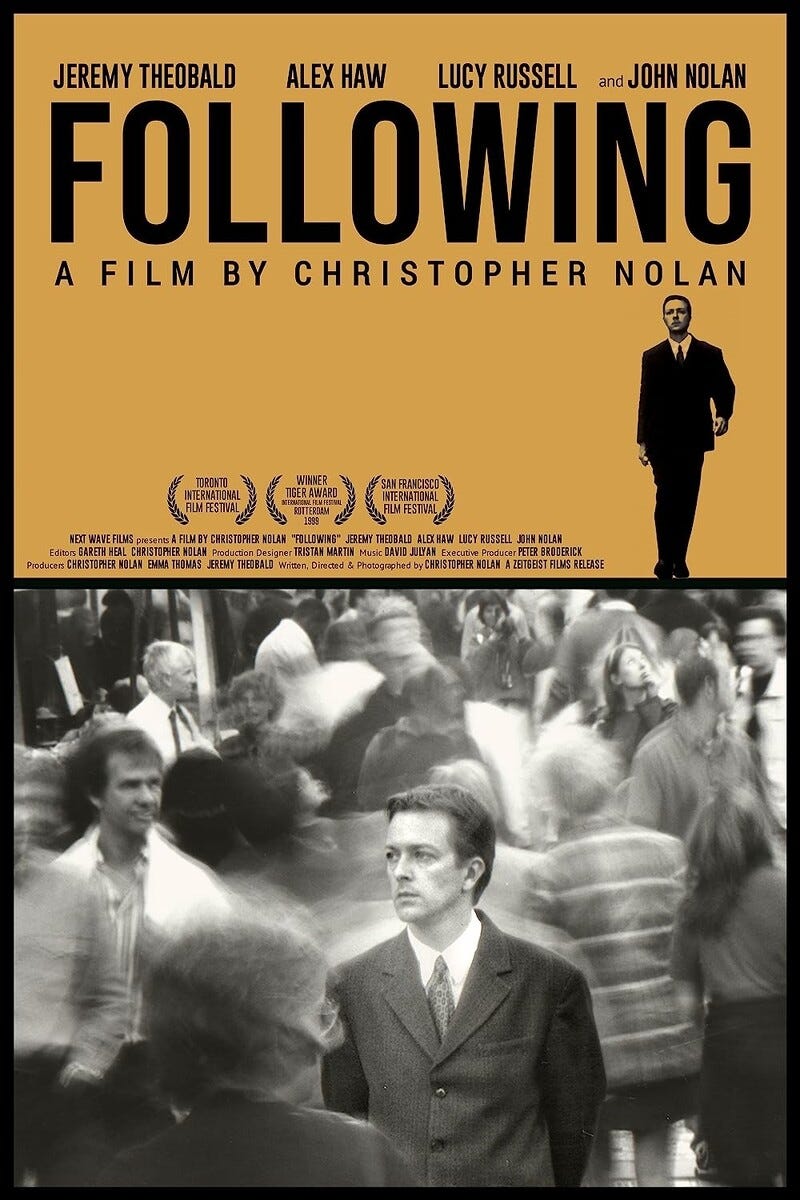
- Following (1998): Detail the making of Nolan’s debut feature, its narrative style, and how it set the groundwork for his thematic interests and visual style.

- Memento (2000): Explore the film’s innovative narrative structure, its exploration of memory and identity, and its impact on independent cinema.
Mainstream Success and Innovation:
- Insomnia (2002): Discuss Nolan’s first foray into Hollywood, how he maintained his artistic integrity, and the film’s themes of guilt and redemption.
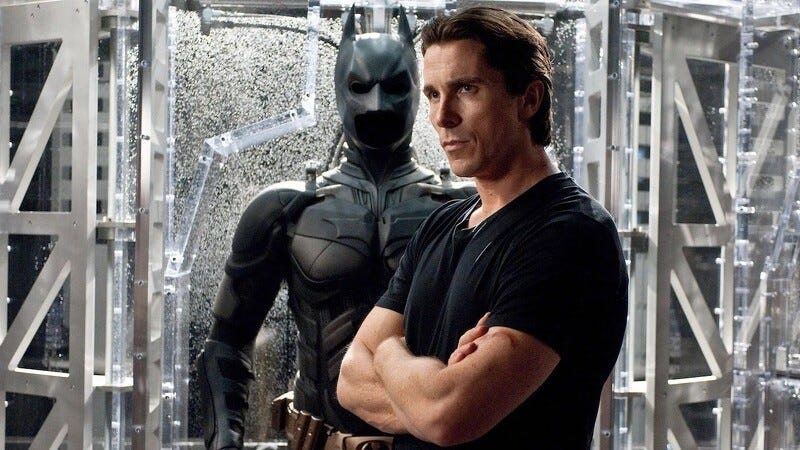
- Batman Begins (2005): Delve into how Nolan redefined the superhero genre, focusing on character development and a more realistic approach.
- The Prestige (2006): Analyze the film’s exploration of obsession, sacrifice, and the thin line between dedication and destructiveness.
- The Dark Knight (2008): Examine how Nolan elevated the superhero movie to a work of high art, blending intense character study with broader social commentary.
- Inception (2010): Discuss the film’s intricate plot, groundbreaking visual effects, and its exploration of dreams and reality.
- The Dark Knight Rises (2012): Explore the conclusion of Nolan’s Batman trilogy, its themes of hope and despair, and its place in the broader trilogy.
Exploring New Horizons:
- Interstellar (2014): Delve into Nolan’s ambitious space epic, its scientific underpinnings, themes of love and time, and its visual and emotional impact.
- Dunkirk (2017): Analyze Nolan’s historical epic, its narrative structure, and how it differs from traditional war films.
- Tenet (2020): Discuss the film’s complex narrative, its exploration of time inversion, and how it fits within Nolan’s oeuvre.
Crowning Achievement:
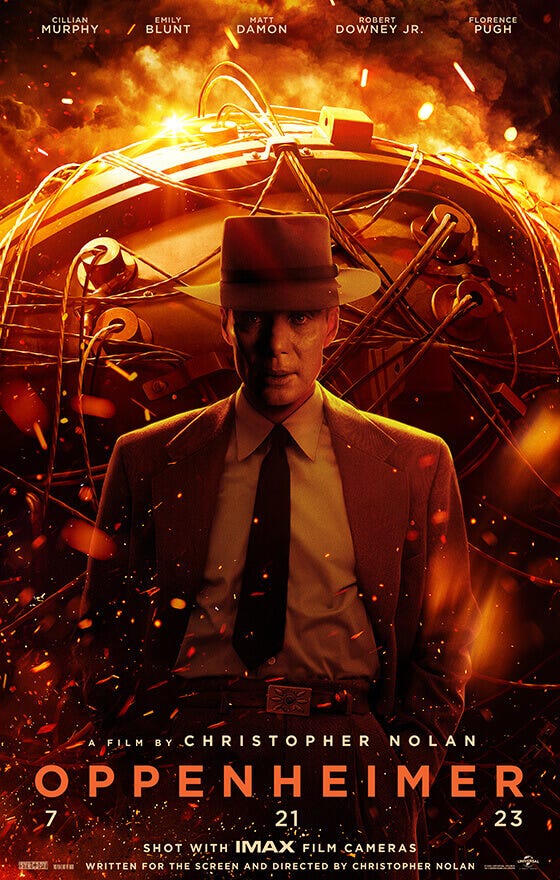
- Oppenheimer (2023): Provide an in-depth look at Nolan’s biographical thriller, its thematic depth, narrative innovation, and its critical and commercial reception, culminating in his Oscar win.