
Master Bao and the Caged Bird
“What she needed and desired was her sovereignty”
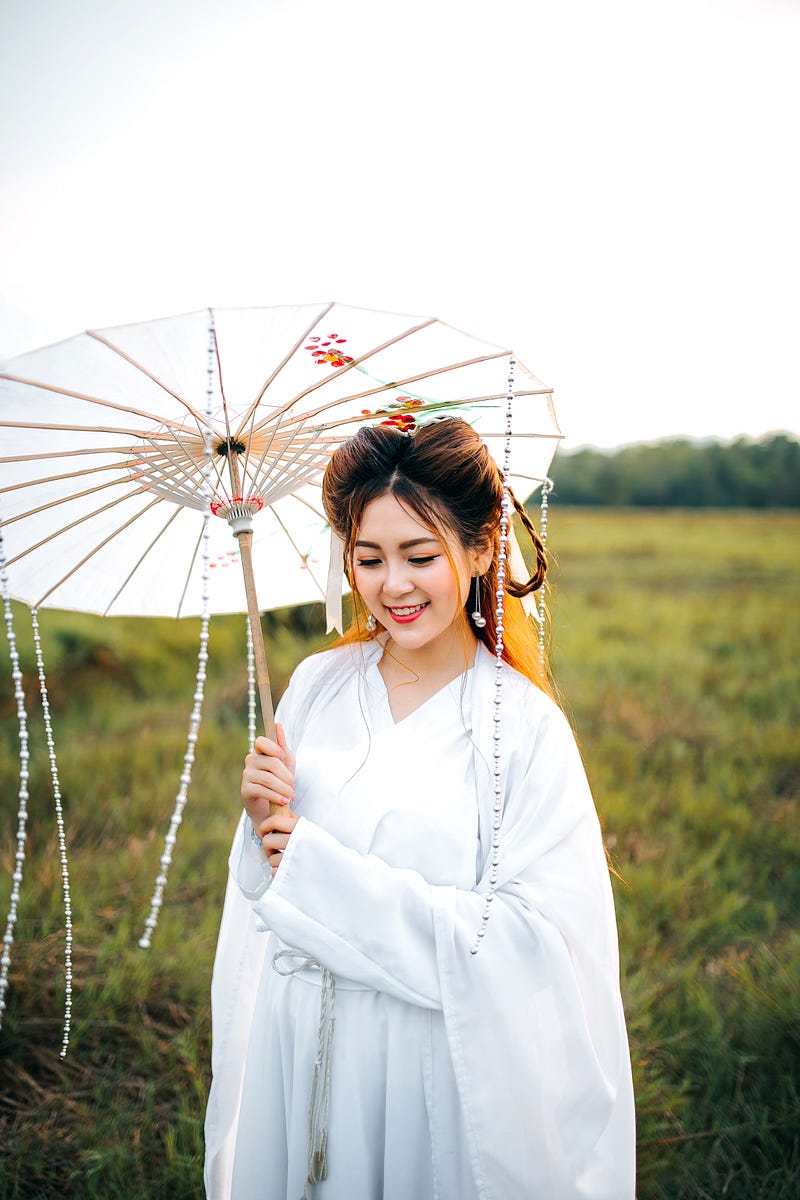
Master Bao and his pupil Ping sat in the rock garden of the White Crane Temple in the Peng Lai district of the Empire. They had finished their morning rice and sipped their Longjing green tea, waiting the return of their host.
This was the third day of their visit to the head monk, Abbot Fang Ho. Tomorrow, the two travelers would be moving on, down from the mountains to the valley of the Yong River.
The Abbot, a tall, thin man with a peaceful smile, returned from conducting an interview with an unexpected visitor. The two guests stood and bowed in greeting to the Abbot, their hands clasped inside their copious sleeves.
“I trust your visitor brought you good news, Abbot Fang,” said Master Bao.
As the Abbot returned Master Bao’s greeting, Master Bao thought the usually placid face of the head monk held a hint of concern.
“The man was a messenger from Magistrate Li who heard of your presence in his district and asked you to call on him at noon today. I must tell you, Master Bao, the Magistrate is known as a kindly man, but a bit overbearing at times. He was most insistent and is sending a palanquin for you and your pupil.”
“It is a major tenant of our Daoist creed to always accept whatever comes one’s way. Ping and I will be honored to visit the Magistrate,” Master Bao replied. “There is little crime and no unrest among the citizens of this district which means the Magistrate is a fair and just administrator.
“However, we will walk to the tribunal. Being carried by other men in a litter is not in keeping with our philosophy.”
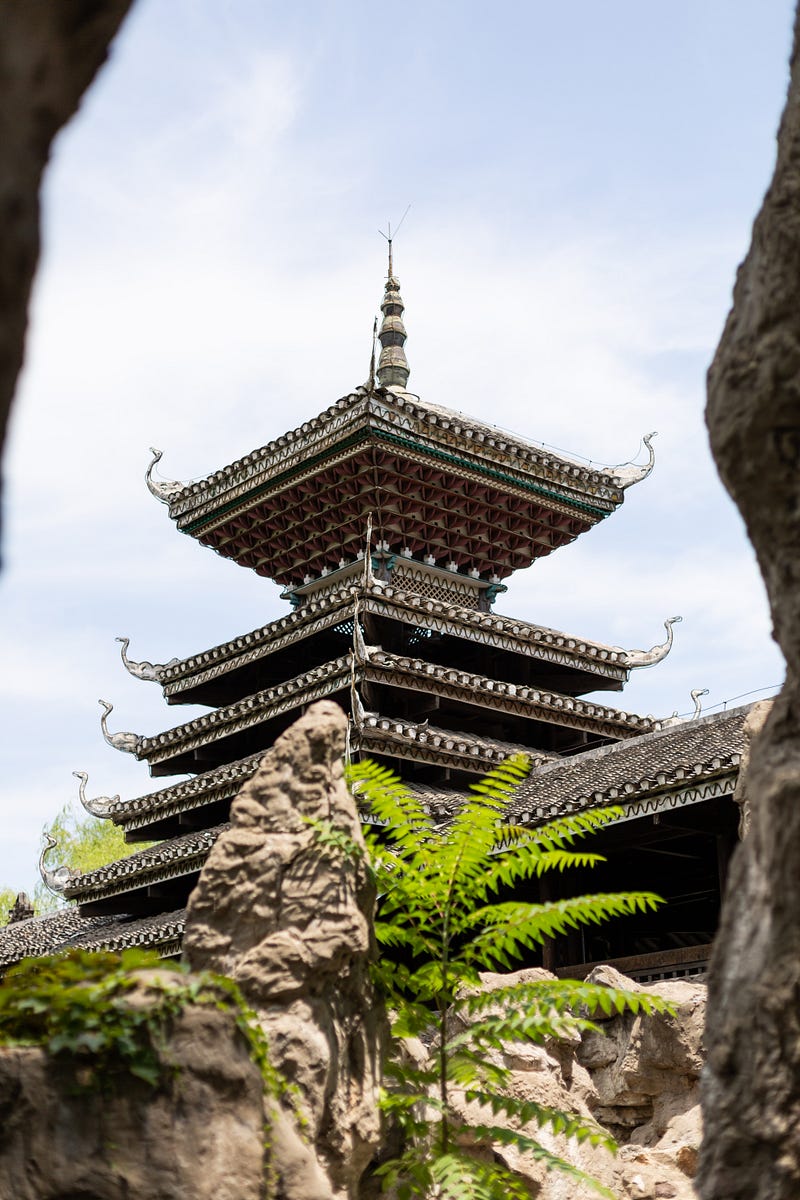
Upon the hour of noon, Master Bao and Ping presented themselves at the gate of the large tribunal building. Master Bao explained the legal procedure to Ping,
“It is a rule in China that anyone with a grievance can strike the large gong in the courtyard at any time, and the Magistrate will immediately open a court hearing. Regularly scheduled sessions are held in the morning, at noon, and again in the early evening. The hearings are open to the public and are a major attraction for many citizens who wish to keep up on the happenings in the district. The guard will strike the gong three times to announce the opening of the noon session
The gong sounded three times just as Master Bao and Ping entered the court room. The Magistrate, a large man dressed in the dark green brocade robe of his office, pushed through a curtain behind an ornate chair at the far end of the room. He sat without ceremony, hammered the desk with a wooden gavel called “the wood that frightens the hall,” and ordered the clerk to read out the cases the court was to hear.
Two young men approached the bench and dropped to their knees. After knocking their heads on the tiled floor three times, one of the men looked up at the judge.
“This miserable person is Koo Meng, the son of the late Koo Pin, and the brother to this disgraceful man next to me. On his death bed, our father insisted we split his property evenly between the two of us brothers. Now this ungrateful cur has taken the best of the land and buildings, leaving me with only a paltry piece of worthless land and decrepit structures. Right this wrong, Your Honor, and force my brother to divide up our holdings evenly.”
The Magistrate looked from one brother to the other. Both were dressed in good quality clothing and appeared well-fed and healthy. He addressed the second brother. “What have you to say to this?”
The second brother looked up at the judge.
“This worthless person is Koo Pang, the younger son of our venerated father, Koo Pin. It’s true our father was a wealthy landowner, but he didn’t leave a will. And it’s also true that on his death bed, he told us to split the property evenly. But my lying brother here has it completely wrong about the land holdings and the buildings. He received the most productive land and the out buildings in the best repair. I was left with barren slopes on rocky mountains with run-down huts, while he took the best for himself. Right this wrong, Your Honor, and force my brother to divide up the holdings evenly.”
Magistrate Li put his chin in his hand, rubbing his short beard, he appeared deep in thought. Finally, he said loudly, “Here is my decision. You, Koo Meng, will give all of the land and buildings your father left you, to your brother Koo Pang. And you, Koo Pang, will give all of the land and holdings your father left you, to your brother Koo Meng. Since you both insist the other has gotten the better of the deal, this should satisfy you both.”
As the brothers knocked their heads on the floor again, the audience in the filled court room roared with laughter. It was a wise settlement for the greedy brothers. Master Bao smiled at the clever way the Magistrate had solved this difficult dispute.
With the resolution to the case, and as no one else came forward, the Judge wrapped his gavel and closed the session.
The Magistrate, recognizing Master Bao in the audience, sent one of his assistants with instructions to bring the monk and Ping to his private chamber through the curtain behind the dais. As he was removing his black cap with stiff wings and the heavy robes of his office, Magistrate Li had the two travelers sit at a low desk. In a few minutes, tea was served and the Magistrate made small talk for several minutes before broaching the subject that troubled him.
He glanced at Ping, decided to let the student remain in the room, and addressed the monk.
“Master Bao, I am a steadfast follower of the teachings of Confucius and believe our dark-haired people are well-served by his writings. One of his most revered instructions, and one I have followed my entire life is, ‘treat others as you wish to be treated.’ But I have run into a problem when I try to apply this sacred wisdom to women.” Here, the Magistrate paused and took a deep breath. “I simply don’t understand them at all.”
“Ah,” said Master Bao. “It is usually one lady in particular that brings this confusion to a learned mind. Can you give me more details?”
The Magistrate leaned back in his chair and let his eyes drift to the ceiling. He blew out a deep breath, then looked at Master Bao before he spoke.
“Two weeks ago, I was out riding in the rural country near the river Lan that borders our neighboring district to the South. At a small village, I came upon the most beautiful girl I had ever laid eyes on. I won’t even attempt to describe her beauty and personality for it is beyond any words.
Sufficient to say, I immediately approached her father, a poor farmer, and purchased the girl, called by the name of Peach Blossom, to be my concubine. As you know, she has the right to refuse, so I think the price I paid was more than her family would make in ten years. The welfare of her kin may have persuaded her to join me. I already have four wives, which is the most a Magistrate can have, but I’m allowed as many concubines as I please.
“You may find it strange that I would buy a peasant girl. Usually, a concubine is a courtesan trained in art, music, poetry, and pleasant conversation, a skilled consort for a man in my position of responsibility. But so taken was I by Peach Blossom’s comeliness and wit that nothing mattered but for her to live in my home and as companion.”
The Judge finished a cup of tea, then another, before resuming his tale.
“I took her to my home in a closed palanquin, gave her two personal handmaidens to dress her in the finest silk, had the most skilled musicians play the most beautiful music for her, and gave her only the most delicious morsels to eat. She never has to work another day in her life.
“After she stayed in her room crying for the first few days, I brought her mother and father in to visit and talk to her, thinking she was homesick for her parents. But her sadness and grief did not abate.
“This beautiful girl has become pale and ill. She refuses to eat and spends time in her room, either weeping or staring out of her window at the clouds in the sky. When I approach her, she clings to me as she weeps. I treated her as I would have wished to be treated, as the August Confucius said, but I have only brought pain to this woman I love.”
Silence filled the room as Magistrate Li, his head hanging down, finished his story.
“I’m sure there is a solution to this problem, Your Honor,” Master Bao said. “Let me speak with Peach Blossom.”
Word was sent to the Magistrate’s personal quarters located in a villa behind the tribunal. It is forbidden for any males to see the wives of a Magistrate except on certain ceremonial occasions, and the women had withdrawn into a special chamber.
Concubines, on the other hand, did not have this restriction, so the three men walked to the villa and, once inside, approached an ornate door at the end of a long hall. After knocking, the Judge entered the chamber of a beautiful young woman who was introduced as Peach Blossom. Her two handmaidens were dismissed and the Magistrate left Master Bao and Ping alone with the concubine.
Tea was elegantly served and Peach Blossom smiled bravely while speaking of her life on the small farm near the river.
“It’s not that I don’t appreciate what Magistrate Li is doing for me. In his mind, he took a young woman from a life of poverty and hard work and placed her in a palace. But I long for the music of the birds and the sound of the river gently flowing over rocks. The food I eat on the farm is from plants I have raised and nourished, prayed over, and cared for like friends. When rain comes, I run out into it to feel the power of the storm. Here, I am confined to my chamber when the weather is anything but sunny.
“My work at home made me strong and full of energy. Here, I am expected to do nothing, not even dress myself. The women here are very nice, but they talk only of men they have lain with, or new colors of fashion. At home, I have sat with a cow all night when she was having trouble giving birth, and rejoiced when the calf came forth into this world.
“My joy is different from that of the women of this house. Digging my hands and feet into freshly dug soil gave me a great pleasure. But now my fingernails grow long and my feet are wrapped in cloth.”
As if too heavy to hold up, Peach Blossom’s head dropped forward and tears flowed onto her silk gown.
“And yet my family was in great debt to the tax collector and we would have lost the farm if Magistrate Li hadn’t found me attractive. So I will stay with him and do my best to please him.” She sighed as her tears coursed down her rouged cheeks.
Master Bao gave Peach Blossom some words of encouragement. He and Ping returned to the Tribunal late in the afternoon and met with Magistrate Li after the evening session of the court.
“I believe I have found a way to bring harmony to both you and Peach Blossom,” Master Bao said.
“The two brothers in court today saw only their lack when compared to their brothers’ holdings,” Master Bao explained. “And you saw only the poverty and a life of labor of this beautiful girl, when compared to the rich life in your mansion.
“As an honorable man, you wanted to repair this injustice. But each of us has a different nature, and Peach Blossom is nourished by the freedom and connection to the Earth, rather then the riches of your world.
“You must honor her nature, the clear spirit that resides inside her. Let the bird out of her cage sometimes. Let her return to her family’s farm every month, and she will return full of energy and strength.”
Magistrate Li smiled for the first time in many days. He stood and clapped his hands. “I’ll do it, Master Bao. Maybe, in time, she’ll come to like it here as well and will spend even more time with me. You are truly a wise man, Master. Thank you for your counsel.”
Later that day, as Master Bao and Ping again reposed in the rock garden of the White Crane Temple, Ping raised his clasped hands above his head and bowed deeply to Master Bao. “Please explain to this ignorant pupil how Magistrate Li caused such pain to Peach Blossom, even though he was following the virtuous rule of treating others as you would wish to be treated?”
“Ah,” replied Master Bao, “but he imposed his will on the young lady. That was something he wouldn’t have wanted done to him.
“What she needed and desired was her sovereignty.
“When dealing with other people, Student Ping, one must assess what is best for their personal nature, not what we would desire.
“It is always the most beautiful bird that we cage,”Master Bao said, “but the bird who flies free, although perhaps plain, is the happiest.”
Thanks to Zhuangzi (369 BCE — 286 BCE) for the idea for this story.
For other Master Bao and Ping adventures,


