
Massacre at Oradour-sur-Glane
Revisiting one of the worst war time atrocities carried out on French soil
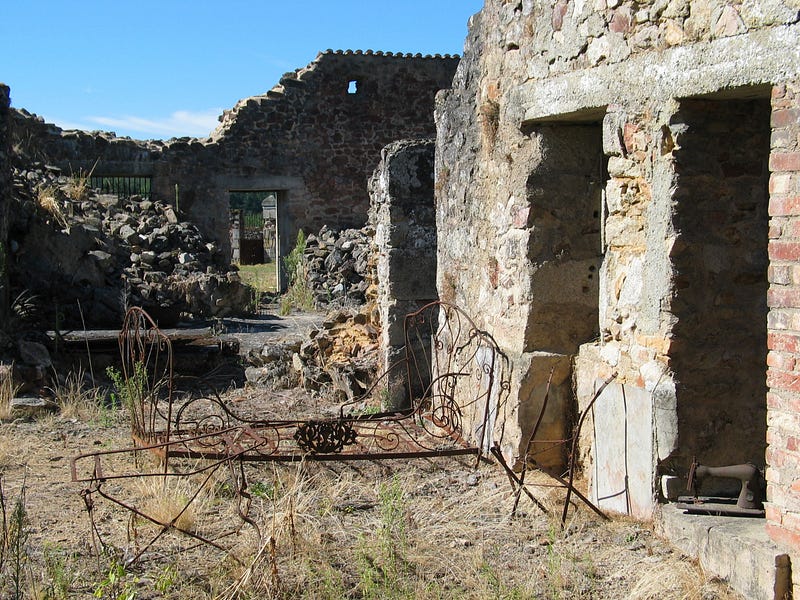
In the small Haute-Vienne department of France stands a ghost town by the name of Oradour-sur-Glane. It’s church and buildings are little more than crumbling ruins. Old bicycles and a child’s pram stand abandoned in the eerily quiet streets. This is not just another town that has fallen into disrepair as residents move away to seek work in larger urban centers. In fact, the town is intended as a deliberate reminder of one of the worst World War II atrocities to take place on French soil.
On the 10th of June 1944, the Second SS Panzer Division Das Reich was based in Valence-d’Agen in preparation for the long expected Normandy landings. One of its commanding officers, SS Sturmbannfuhrer Adolf Diekmann, received information from members of the Vichy regime that an SS officers had been captured and was being held by members of the French resistance at Oradour-sur-Vayres.
Diekmann led his battalion to Oradour-sur-Glane intent on revenge. Whether he deliberately went to Oradour-sur-Glane instead of Oradour-sur-Vayres by intent or whether he muddled the two towns because of the similarity in their names is something we will never know.
What we do know is that when the battalion arrived at the small but bustling village, they quickly rounded up the local residents, including six passing cyclists, and demanded identity papers.
The soldiers then immediately separated the men from the woman and children and forced them into a number of barns and sheds around the town.
The woman and children were then locked into the local church.
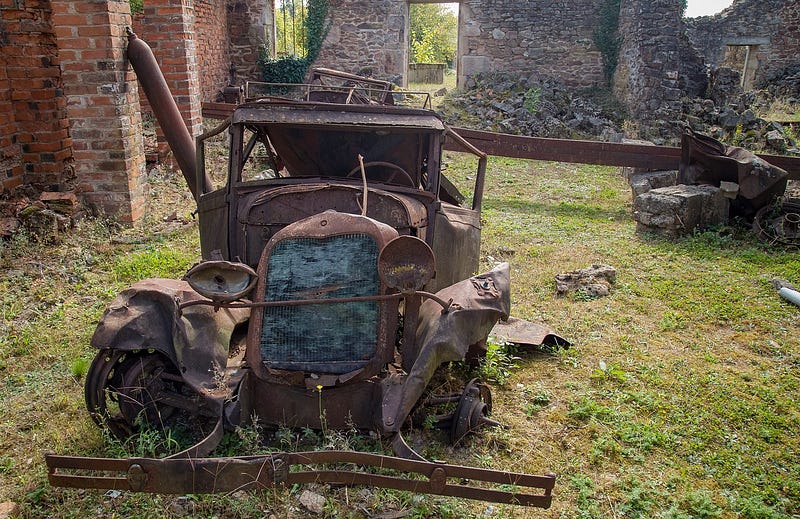
After that, machine gunners, positioned in advance, shot the men in the legs. They were then doused in petrol and set on fire along with the buildings that they had been forced into.
Six of them managed to escape but one of those was later discovered by members of the battalion and was subsequently shot.
The woman and children trapped in the church would undoubtedly have heard the gunfire and screams and smelled the smoke and would have been terrified. That did not prevent members of the battalion from placing an incendiary device which turned the church into a raging inferno. Some of the captives attempted to escape the burning church but were driven back by machine gun fire.
In all, 247 women died in the building along with 205 children.
Just one woman managed to escape through the sacristy, and although wounded, she managed to hide among some bushes until the Nazis had left.
Three of the men that died that day were priests and there have been reports that the church was desecrated prior to being burnt. One American airman who had been hiding out with the resistance visited the scene shortly after the massacre. In his official report he mentions seeing a baby that had been crucified.
Today, Oradour-sur-Glane stands as a living indictment, not just of that particular atrocity, but also of the cruelties inflicted by war the world over.
Charles de Gaulle ordered that the town should never be rebuilt and in 1999, the then president, Jacque Chirac, opened the Centre de la Memoir d’ Oradour (Oradour memorial center). On the 4th of September 2013 President François Hollande visited the town and its memorial center in the company of the German President Joachim Gauk.
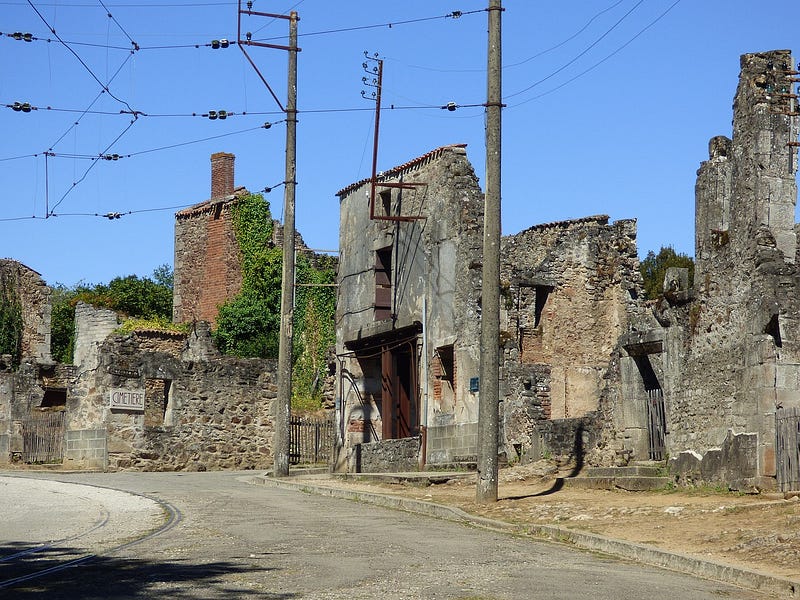
Each year the abandoned town is visited by tens of thousands of tourists and one can’t help but come away feeling deeply moved by the horrors that took place there so many years ago. Unfortunately, not everyone accepts that this historically proven incident ever occurred.
On August 21st of this year, the town was vandalized and the word Martyr were over sprayed with the word Liar.
This incident has caused outrage in France and police are currently searching for the perpetrators. The Minister for the Interior described the graffiti as ‘spitting on the memories of our martyrs’ while President Macron declared the act to be ‘unspeakable’.
Whether those people who committed this act of vandalism will ever be brought to trial remains to be seen. What we do know is that SS-Sturnbannfuhrer Diekmann was not. He, along with many of those from his battalion, died just a few days later trying to prevent the Allies from taking the beaches at Normandy.
There is a worrying subscript to this story. Currently in France there is a growing trend of denial about many incidents that took place during World War II. This is being accompanied by a wave antisemitism that is causing understandable alarm within the Jewish community.