
Physical Media Still Rules
A tech nerd’s romanticised view on physical media, media tech and its meaning in the digital world now and in the future.
We often think of history as books, events, buildings, and paintings or photographs, but depending on perspective, it’s everything. Who gets to say that something wasn’t a relevant part of humanity’s story, the story we have been recording — remember this word — for thousands of years? Sometimes deliberately, sometimes not at all. Sadly, in most schools, the true essence of where we came from and where we’re going is never really taught. We try to condense millennia into a few books, making a generation’s story but a few pages, when in fact it’s worth an entire lifetime of studies. Studies of not history, but stories, devoid of the bad and boring reputation of traditional history.
My weekends tend to be pretty quiet, and if you want to bet on something, then it’s me either taking a walk that inevitably involves me wondering into the LEGO store, or my local Tower Records. What do the two have in common? Well, besides creativity, plastic, lots of plastic. Either in brick form or pancake shaped vinyl records. Amazing, magical places that I can totally get lost in for hours if you let me, that is. On this occasion, I got lost more in my thoughts though than the shop as I was walking home from one of Dublin’s Tower Records, proud of my shiny new Norah Jones — Little Broken Hearts Limited Edition and the She & Him — Melt Away albums. I tried answering myself the question I never truly tried answering before: why collect physical media in the digital age? What’s in it for me? What am I trying to prove?
I’m in my late 30s, a software engineer, tech and LEGO nerd, a big fan of streaming services like Apple TV+, Apple Music, Curiosity Stream and the likes, and yet I find myself filling my apartment to the brim (besides LEGO) with physical media like CDs, vinyl records, Blu-rays and DVDs. What’s wrong with me? Have I been dropped on my head as a child? Is it a compulsive obsession to own things? I mean, for God’s sake, I have every Helene Fischer album and concert in at least two formats. Blu-ray or DVD, iTunes (digital), some CDs and tons of vinyl. Sure, I’m a fan, but still, technically one format should have been enough, right? Except maybe not. What follows is an attempt to convince myself and everyone else in the process that I have not lost my sanity at a young age. Whether I did a good job or not, I’m sure I’ll find out in the comments. 🤣
Flat 7Up is supposed to cure everything. Not this. Not my need for physical media. There’s no cure, no substitute.
Yes, it’s categorically a need…
You can do a Maslow’s hierarchy of anything these days.🤷♂️ Mine is about media. Both digital and physical, but mostly the latter. Because believe it or not, there is a place for digital in a physical media kind of world.
My initial history with physical media is a tad troubled. Growing up in a family where my parents at one point became part of a religious cult, I found myself with all the cassette tapes and records in the house being binned. At the age of 10 you don’t quite know how to react, but seeing my beloved Heidi tape and fairytales on vinyl get dumped into the bin is not a memory I cherish. It took 6 more years to stand up for myself and declare independence, and all it took was hearing “Yellow Lemon Tree by Fools Garden” on a gutted radio that I managed to get into working order. With bare wires hanging all over the place, plugged into the mains, I literally risked my life to listen to that song.
In that moment, I knew that music was something I could not live without. It was the start of my own Maslow’s hierarchy of needs.
In the grand scheme of things, I’m young. I was technically born in the late stages of the regular cassette tape, quickly getting introduced to the magic of audio CDs, DVDs, MP3 players, followed by Blu-rays and finally streaming services. Vinyls were but a distant childhood memory, but that didn’t stop me from longing for something more “analog” than cassette tapes were, so with the resurgence of vinyl records, I hopped on the bandwagon too. By then I had a decent CD, DVD and Blu-ray collection. The MP3 player got replaced by the iPhone and as soon as I was able to afford, I found use of Spotify and Apple Music too.
When it comes to a format hierarchy, though, to me, it’s quite self-evident. The more analog, the more physical, the better, and therefore the more valuable. In strict order of value:
- Vinyl is king. The ultimate royal in the media formats. I make all reasonable effort to own the music I like on vinyl. Physical books are also on this level, but that’s an entirely different story.
- Blu-ray comes next. I have far less trust in this format, but having music and video on a relatively cheap medium in very high definition is not a negligible benefit.
- Audio CDs and DVDs are next down the list. When it comes to video, it’s better than not having anything at all, and in terms of audio, it’s a dirt-cheap format that legally allows me to rip the content for personal use and backup. Which brings me to…
- Digital backups. I’m not too fussed about the actual format like MP3, FLAC, etc, as long as it’s at the very least 192kbps. If I can help it, though, it will be 320.
- Finally, streaming. It’s convenient, but nothing else. Incredibly unreliable, but especially useful for music discovery.
Looking at the above list, you probably understand now why I happen to have some of my favourite artists’ stuff like Helene Fischer, Muse, Amy Macdonald, Robbie Williams and others in multiple formats. Helene Fischer takes the crown though as I have her stuff in every format listed: vinyl, CD, DVD, Blu-ray, digital backups and, of course, streaming.
Music, particularly, got me through the roughest moments of my life. It’s not about ownership, it’s about survival. Survival of my story and a small sliver of extra chance for art’s survival 100 years from now.
Physical outlives digital… somehow
And on that note, probably the biggest reason for sticking so much to physical media, is its chance of survival over time. I look at streaming services and increasingly notice how the sweet solution sold to us as the piracy-killer turned sour and foul. As much as streaming services try to convince us that they have all the media we’ll ever need at our fingertips, it’s but a well marketed lie. Deals, licences, mergers, splits, corporate and shareholder greed, all result in music, movies, and TV series being pulled and migrated away from these services all the time.
Streaming is so ephemeral, there is virtually zero guarantee the song that got you through a breakup today, will still be there tomorrow to ease your pain.
In sharp contrast to streaming, certain formats seem to just live on, some even having a resurgence, like vinyl records. If you walk into a music shop these days, about 70% of it features records, the other 30% is all the other formats like CD, DVD and Blu-ray. That, if you want to get stuff that’s brand new.
If you’re a bargain-hunter, the charity shops are full, at least with devices that play these back. I have yet to find one that doesn’t have at least half a dozen dusty record players available for as little as 10 bucks, and no, I’m not talking about those horrible cheap suitcase record players. Sure, they’ll likely need a belt changed and possibly a new stylus, but those are cheap to source as well and readily available anywhere online. Get a few of them and you’re set for life.
While you won’t necessarily get the same deals when it comes to Blu-ray players, they’re still easy to find brand new and not very expensive either, so you can always pick up a few and again, you’re set for life.
Classic and vintage tech doesn’t disappear as quickly as people think, and it’s quite easy to ensure you’re set for at least your own lifetime.
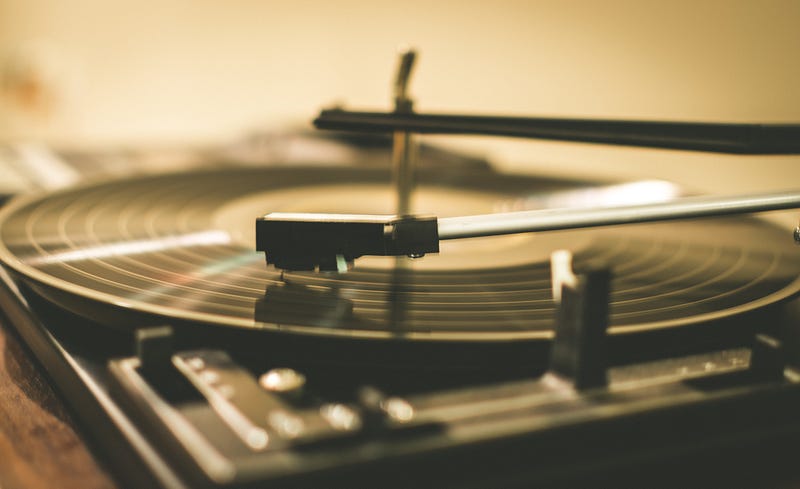
When it comes to the media itself, well, vinyl is practically unbeatable. If stored and played with the bare minimum of care, its lifetime is in the hundreds of years. Remember, vinyl records are 100% analog. They’re essentially plastic pancakes where the sound waves are etched into the material as grooves. Believe it or not, a vinyl record can even be played without any electricity, if you’re looking at an apocalypse type scenario.
Blu-rays, CDs and DVDs are a bit more exposed to the unforgiving nature of time. CDs in particular do have some tendency for disc rot, but it’s less a widespread issue than some might think. I tend to check my discs every year or so for disc rot, and so far, I seem to remember only one showing signs. The rest, like my 2003 Atomic Kitten — Ladies Night album that I remember buying for like a buck in a sale, is still in pristine condition. Blu-rays and DVDs have an even better chance of survival due to the difference in the manufacturing technology and me not throwing them around like frisbees.
A type of philosophical ownership
It’s definitely not about the incessant need of owning stuff to prove one’s status or worth in society. It’s a different kind of ownership, of a much more philosophical nature, where it’s all about ensuring your right to enjoy the media you paid money for, for as long as you or the medium itself lives.
As much as I like Apple and their tech, buying stuff from iTunes, particularly movies and TV series, means you’re purchasing content that can only be played for as long as you play them on Apple registered devices, due to DRM. Now, suppose one day Apple dies a fiery death, legally speaking, all the media you bought and downloaded, will cease to play. That is not ownership, that is long-term digital rental riding on a wing and a prayer.
As if that weren’t enough of a concern already, digital products like music, movies, and TV series that you buy, more often than not, are also licensed to certain countries. When I moved to Ireland from the UK, I had to literally download all the TV series I bought on iTunes in the UK, because in Ireland Apple has no licence to sell TV shows, only movies and music.
With physical media, I have zero worries about stuff being pulled from the streaming platform overnight, regional licences being changed or companies going belly up, making me lose all my purchased content. All the physical media I have, is mine, and I have to care about literally nothing else. In fact, vinyls nowadays often come with digital DRM-free download options too for free, so I instantly get a high-quality digital version as well, in case I ever need it.
Owning physical media is about a lifetime of limitless enjoyment. Your lifetime or its lifetime, whichever is longer. As long as you can play it, you get to enjoy it.
Money still doesn’t grow on trees…
I would not do justice to myself if I didn’t briefly bring up the investment aspect. But again, not in a capitalist, Scrooge McDuck kind of way, but rather in a pragmatic, sensible adult way. Because collecting physical media does come with some cost, it’s not really a negligible decision. Vinyl records, for instance, are quite expensive. On average, 20 bucks an album. Blu-ray isn’t cheap either, though not quite as bad as vinyl. The good news is, over time it likely pays for itself as you’ll rewatch things, and listen to albums over and over, without the need to pay again.
That’s not all, though. The funny thing with physical media is that it never really becomes worthless. In its first 10–20 years, you can typically make back 50–200% of the money you spent on it, depending on format. So, in a major personal financial crisis, you’re always sitting on a bit of a gold-mine. Looking at my Discogs collection of vinyl records, I can already see that I’d get more for the entire collection than I spent, and my collection is about as old as COVID-19, roughly four years.
Summing up all the value that physical media offers, it really seems like the most financially prudent approach to media consumption. Compare that with streaming, where money is spent, to be ultimately left with nothing.
The ultimate tale of my generation
It’s difficult to predict just how much of my music and movie collection will survive my death, hopefully many decades from now, but regardless of when it happens, anyone who will get that collection, gets more than a media collection. Far, far more than that. They get my story. If they sat down to watch all the movies, TV series, spend every evening an hour listening to every album, watching every concert I owned, they will have learnt the essence of who I was. They will have read my story in an entirely different way than we read history books.
They’ll wonder what I was doing or thinking when I first listened to Leonard Cohen’s You Want it Darker, or Thanks for the Dance albums, or why was I so fascinated by Helene Fischer, a half German, half Siberian pop-schlager star, the complete antithesis of the late Leonard Cohen. Who was I really, and why is half my movie collection classic movies from before 1980? But the more they’ll listen, the more they’ll watch, the more they’ll understand, and what they won’t… well, like with every good story, they’ll just fill in the gaps with imagination.
But beyond my story, they’ll learn about my generation in a unique and entertaining way. We’re the millennials, a generation that never truly found its place, stuck between our parent’s ways and the new digital world. We’re the generation, probably the only generation, that was caught right in the middle of such a radical shift as we were growing up. We’re bound to be struggling with our identity, but we have a story regardless, and how better to tell it than through round discs containing themselves other stories?
A friend (looking at my vinyl and LEGO collection): Attila, you have a problem.
Me: Yes. A small house problem.
I need a bigger house. My story is barely half-written…
Attila Vago — Software Engineer improving the world one line of code at a time. Cool nerd since forever, writer of codes and blogs. Web accessibility advocate, LEGO fan, vinyl record collector. Loves craft beer! Read my Hello story here! Subscribe and/or become a member for more stories about LEGO, tech, coding and accessibility! For my less regular readers, I also write about random bits and writing.