
Masculinity and the Stigmas of Facing Mental Health Issues
Masculine culture is in serious need of a revamp, and conversations like these are necessary to change some perspectives.
I’m not entirely sure how to start this piece, but essentially, I’d like to use my experience of masculinity over the course of my life to talk about the very real issues around men’s mental health. My experience as a dude also intersects with being a person of color, so there are a few things that I’ll try to integrate as I write this. My aim is to share some of the concepts that most profoundly impacted my journey.
If you’re like me, you can probably trace your conceptualization of masculinity and femininity back to your earliest memories. Regardless of your assigned or identified gender, you likely grew up consuming a pre-constructed narrative about gender and cultural norms. You know, blue is for boys, pink is for girls, boys play with cars and guns, and girls play house, that kind of thing. In my case, these norms were reinforced throughout my childhood with phrases like “Don’t cry like a girl” or “The men are talking now.”
At a really young age, I was taught that boys acted a certain way and that if we didn’t, we were being like girls. And god forbid you were a boy who acted like a girl. This narrative was further perpetuated by my community’s cultural and ethnic background, along with their religious disposition. Looking back, I don’t think there was any part of my upbringing that didn’t lead to a finite concept of what it was to be a boy.
My Mental Health
If you’ve followed my story, you’ll have read that I’m a recovering addict, and I’m figuring out my shit as best as I can. I’ve been sober for nearly 8 years now, and even in that, I really was out here white-knuckling it, thinking I was fine for most of it. I only started seeing a therapist and psychiatrist in 2020 and got diagnosed with Borderline Personality Disorder and ADHD at age 32.
I’m now 37, but I started using and drinking heavily when I was about 15 or 16. There’s a lot of math here, but it adds up to a long time of raw-dogging life with only the opinions of other men and a body full of drugs to guide me.
I spent my early adult life playing in hardcore and metal bands, romanticizing the “sex, drugs, and rock ‘n roll” lifestyle. I thought I was the king of the underworld in the Cape Town scene, and I acted that way. I was a menace with no remorse. Any time I felt an emotion, I would shove it so far down my throat and bury it in booze and drugs. Believe me, that life took its toll.
Mental health was only something “mad” people dealt with in my upbringing. Like you belonged in an institution, and there was something fundamentally wrong with you. You had a cureless disease, and you were meant to be locked away. I’d be so fucked if I was diagnosed back then.
Hell, I didn’t even really know what drugs or addiction were. All of it was taboo. We never spoke about any of it. My aunt suffers from schizophrenia and has done so since I can remember, but I only found out about her actual diagnosis the other day. Not a word was ever spoken of it. So, when I finally had a breakdown in 2020 and saw a psychiatrist for the first time, you can imagine my surprise when I was introduced to a whole new world. As if I had been on a magic carpet ride.
One of the biggest blessings I’ve ever received was understanding more about my brain and figuring out how to navigate my malfunctions and try to live a life that works for me. Learning more about my mental health has honestly brought me so much clarity. It hasn’t all been the best realization, but even with the shit ones, I have a better understanding of my past and how my mental illness has shaped the trajectory of my life.
My perception of society has developed to where I am able to take responsibility for my life and my actions and I am more aware of how my life and actions affect the world I live in. I’ve found purpose, goals, wants, and needs. I have a better sense of who I am and why I’m that way. I have values that I stand up for. I have morals that I live by. Do you get where I’m going with this?
I’m not dead because I choose to live with myself despite my past, my failures, faults, and disabilities. I can only make this choice because I accepted help and learned to value myself in ways that aren’t defined by societal norms and cultural indoctrination.
The Downfall of Men’s Mental Health
To be clear, I’m not approaching this from a “woe is me” perspective. I’ve seen a lot of discourse about how men are coming into their adult lives and struggling with the reality that life is hard and it’s not quite like they were told it would be. I was there too. But this isn’t an excuse to act like absolute dickheads.
The fact that men still fear facing their mental health issues is insane in itself. What’s worse is that there are still men out there who romanticize the idea of repressing emotions as being stoic and promote antisocial behavior as strength. Men like Jordan Pieterson defend violence, saying you can’t be a good man if you don’t have the capacity to be a violent man. What utter bullshit.
If you feed into this culture, you’re not an “alpha,” mate. You’re an idiot with a very fucked up view of the world. Schools get shot up across America because boys don’t know how to deal with their emotions. Nearly 80% of all successful suicides are men because they don’t know how to deal with the pressures of life. Globally, 30% of women have been subjected to sexual violence because men think that they’re entitled to take whatever they want, even if by force.
Stigma Resulting from Patriarchy and Toxic Masculinity
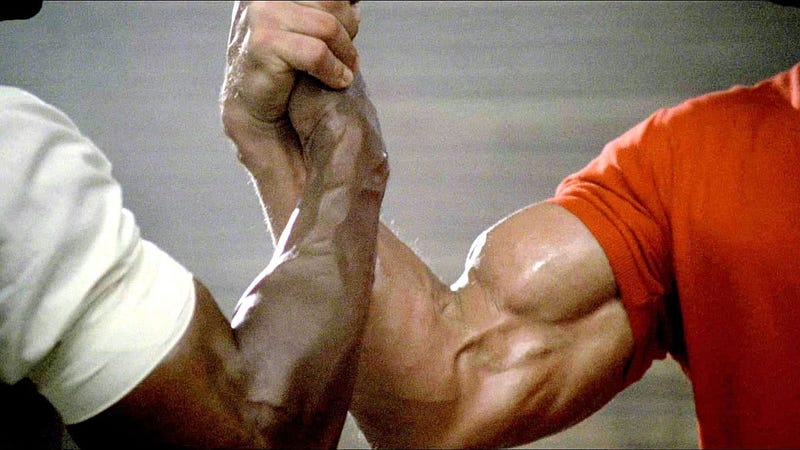
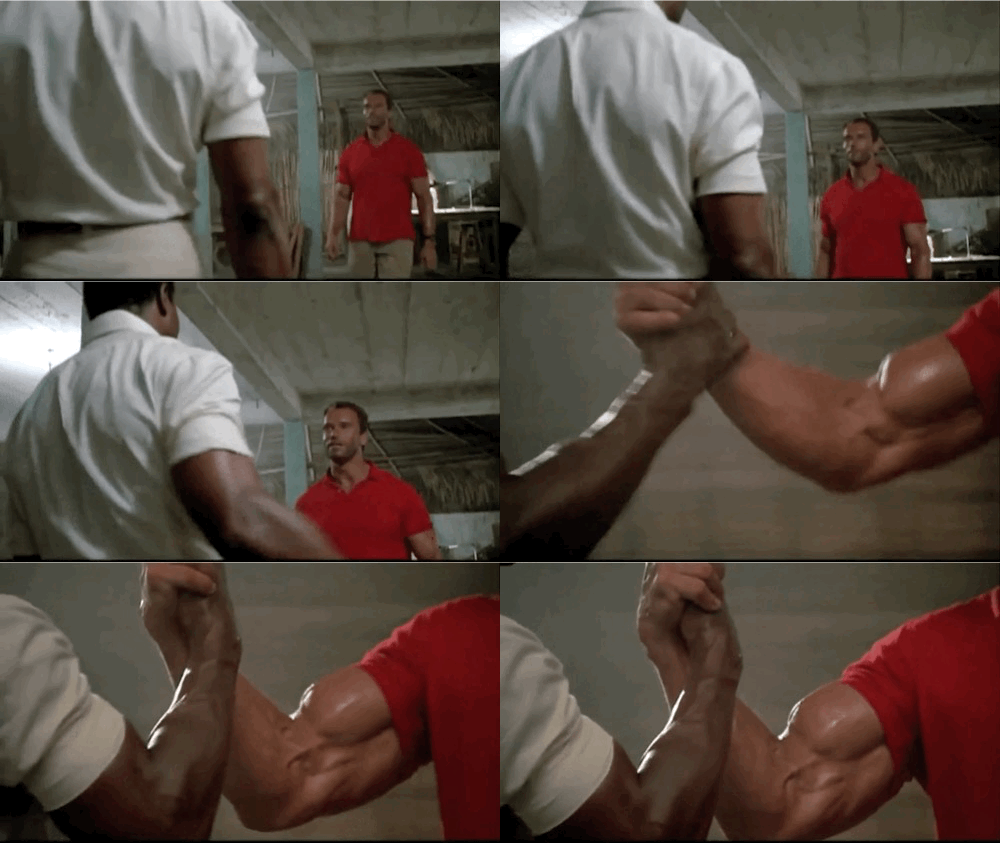
Being a dude is arguably one of the most complicated and contradicting expressions of existence. We’re taught to suppress or ignore emotions, yet we’re taught to protect those we love. We’re taught to be tough while receiving no training on how to do that. We’re taught to “man up,” while we receive no education about what a man is. Patriarchy subjects us to a culture where our views of masculinity are literally killing us and everyone around us. It’s ridiculous.
I found a really good article by PulledApartFlatWhite that takes a look at how deeply ingrained these concepts are, even in the TV shows we grew up with. They provide an amazing analysis of the Incredible Hulk’s duality with Bruce Banner, even referencing the story of Dr. Jeckel and Mr. Hyde. It’s well worth the read.
Our ideas of masculinity are incredibly warped. Thanks to patriarchal structures, we believe that only the strong survive, but we have no idea what strength is. We don’t even get to decide who the strong are, and it almost always ends up leaning toward able-bodied, upper-class white men who think they own the world. The definitions of strength laid out in hegemonic masculinity are measured by sex, brutality, and our ability to assert dominance over others whom we deem not of the same cloth. Any diversion from this idea of masculinity invites punishment by those same measures.
I had tried everything in my power to be a tough guy but I still found myself miserable and suffering inside. I drowned myself in booze and drugs because of it. I tried to off myself countless times because of it. So many men are pushed down this path in the name of stoicism, prioritizing this false sense of strength and suppressing any form of emotion in fear of being emasculated for showing weakness. Well, as the global stats clarify, this leads to 12 per 100,000 men deleting themselves in 2019 (the last quantitative report). That’s a total of 523,883 men prioritizing strength in 2019. What the fuck are we doing? I can’t even imagine what the current stats are, post-covid, and given the state of the world we currently live in.
Lack of Resources and Support
The lack of resources and support for men seeking help for mental health issues is a disaster in itself. We are already isolated, we already feel helpless and miserable, and on top of that, there’s no easily accessible way to even learn about it in that isolation. This lack of resources and support can lead to a lack of understanding from family, friends, and society as a whole and often leads to further judgment and stigmatization. The overall lack of understanding of mental health issues ultimately acts as a hindrance to men who actually want to find help.
Intersecting Stigmas In People of Color
I grew up in Cape Town, South Africa, just as the country was coming out of Apartheid. I’m from a colored family who, at the time, was still very subjected to Apartheid-induced socioeconomic and cultural norms. Before the Americans come at me, the term colored is used by an ethnic and cultural group of people descended from interracial reproduction between the Khoisan natives, Malay slaves, and colonial European settlers. There’s a great book by Tessa Dooms and Lynsey Ebony Chutel on how this racial classification was adopted by the culture it was meant to oppress. I guess it’s similar to the adoption of the N-word in African American communities
Apartheid spawned countless human rights violations against people of color, and besides the notable physical violence in the imposing of white minority rule, medical and psychiatric violence came under the scrutiny of many international regulatory organizations. Surgeons were found to be complicit in the unethical treatment of patients. Mental health policy was directly aimed at inflicting damage on black and colored communities.
We even had our very own Dr. Death (Wouter Basson), who headed up biochemical warfare on anti-apartheid groups and was instrumental in introducing illicit drugs into black and colored communities to break down their quality of life and reinforce a culture of crime and violence. Somehow, this guy has still been allowed to practice in South Africa decades later.
I bring this up to illustrate how, on top of this weird stigma around male mental health issues, people of color are even more fearful in this regard. With this in mind, it’s easy to understand why there is a mistrust of healthcare systems and a dismissal of mental health issues in marginalized communities. Why open up the can of worms when the worms will eat you alive?
There is a similar collective mistrust of healthcare and medical providers among people of color in the US. This mistrust is linked to the abuse these marginalized groups have historically experienced under the guise of medical testing and advancement in the US Public Health system.
This includes experiments like the syphilis study at Tuskegee, where penicillin was withheld from black people infected with syphilis in order to study the progression of the disease. Patients were given no effective treatment, and many died, went blind, and experienced a range of other severe health issues. There was also an unethical study sponsored by the US government in Guatemala, where nearly 700 people were intentionally infected with syphilis and other sexually transmitted diseases (without their knowledge or consent) to test the range of penicillin’s effects as a treatment or cure.
Life is Hard for Boys Being Boys
Many dudes would have you believe the rise of feminism and equality is why life has become a struggle. But if you say this in the mirror three times, you’ll realize how stupid you sound. Life is hard because of the societal constructs we live in. Late-stage capitalism, war, racism, poverty, patriarchy, etc., are just a few things that shape our society and force how we have to navigate the world. And it’s been this way for centuries.
In the past, men thrived because of the oppression of others, and it’s still carried on today. They just hide it better. Other men are in control of the systems that oppress you and make life hard for you. They put new systems in place that would keep it that way. Do you think men like Donald Trump or Joe Biden care about your best interests? Do you think Elon Musk or Andrew Tate have your back? Fuck no. They’re filling their pockets while you stay in line.
The thing is, life is hard, and while it’s not our fault that we haven’t been prepared for it, it is our responsibility to figure it out without being a fucking asshole. Taking it out on everyone around you just perpetuates this dumb ideology in a world where people are now more aware that you’re wrong. You’re fighting a losing battle, and you’re hurting everyone around you in your blame game. You are the sum of all your own decisions. No one else’s.
The Importance of Addressing Men's Mental Health
Men’s mental health issues need to be addressed, masculinity needs a new perspective, and manhood needs to be redefined. We need to facilitate a transformation of our culture to include spaces where men are more comfortable with expressing themselves and more open to receiving help. It’s the only way forward.
It is important that we work together to increase access to resources and support so that men feel comfortable seeking the help they need without fear of judgment or ridicule. We must create an environment where men feel safe and supported in seeking the help they need in order to maintain their mental health.
There are a few amazing resources out there that provide accessible knowledge about these issues. I’ve found, in all my research writing about mental health and substance abuse, that knowledge truly is power. But I know how hard it can be to thrash through medical journals and academic articles. It doesn’t have to be intimidating. Here are a just few resources to check out:
- headsupguys.org: A program by the University of British Columbia dedicated to breaking the stigma around men’s mental health and aiding in suicide prevention.
- mantherapy.org: An evidence-based community resource platform by Grit Digital Health, vetted by researchers across the US and backed by the CDC.
- mentalkfeminism.com: A platform aimed at destigmatizing the relationship between feminism and men, collecting stories from men explaining why feminism is in favor of men too.
- workplacementalhealth.org: A resource from the American Psychiatry Association focused on sharing information and support around workplace mental health.
- healthline.com: A publication associated with Psych Central and Medical News Today, focused on promoting health and wellness across the spectrum.
- verywellmind.com: A publication focused on promoting emotional and psychological health.
As always, I aim to promote awareness around mental health and substance abuse issues, and I try to do it in a way that stays accessible. If you want to receive updates on posts like these, please subscribe to my blog. Feel free to leave a comment, reach out, or share this article who might need to see it.
It’s a privilege to be able to talk about my journey in a way that hopefully provides some other perspective to anyone who feels stuck. Mud doesn’t have to be quicksand when you have the right tools. I could’ve really used a friend in some of my toughest times. Hopefully, by sharing my story, I can act as that for someone out there.


