
Maryland Welcomes Entomophiles This Spring
Insect lovers look forward to emerging Cicada Magicicada.
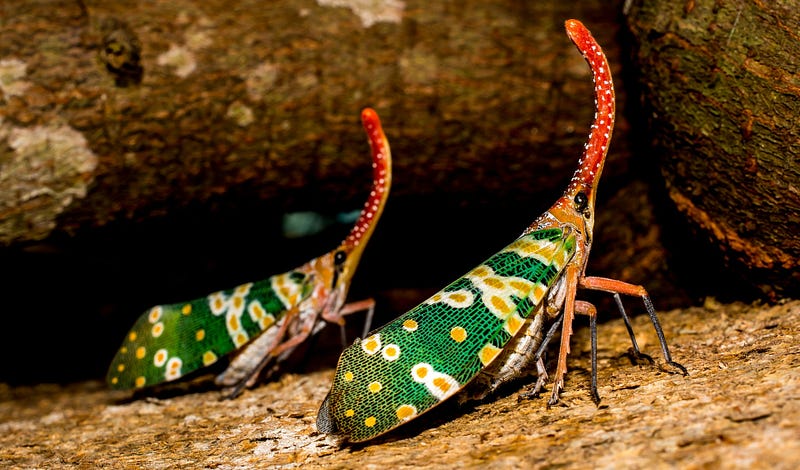
These Canthigaster Cicada are found in Asia, so we don’t have to worry about these ones appearing in Maryland this spring.
They’re fascinating and anyone that loves to study insects would be thrilled to see one.
Entomophiles are people who love the study of insects.
They’re anticipating an exciting spring in Maryland this year.
The Class of 2021 Cicada is expected to rise out of the earth in large numbers.
They’ve been living and thriving underground for 17 years, sipping the sap of roots as they mature.
They’re almost ready to emerge and begin their reproduction cycle.
Cicadas are often confused with locusts, but they’re not the same species.
Locusts are from the grasshopper family, while cicadas are cousins of crickets.
It’s a small technicality but important in the insect world.
Humans have confused cicada with locusts because they share similar characteristics. The most visible ones are their loud chirping and their tendency to swarm or fly in large clouds.
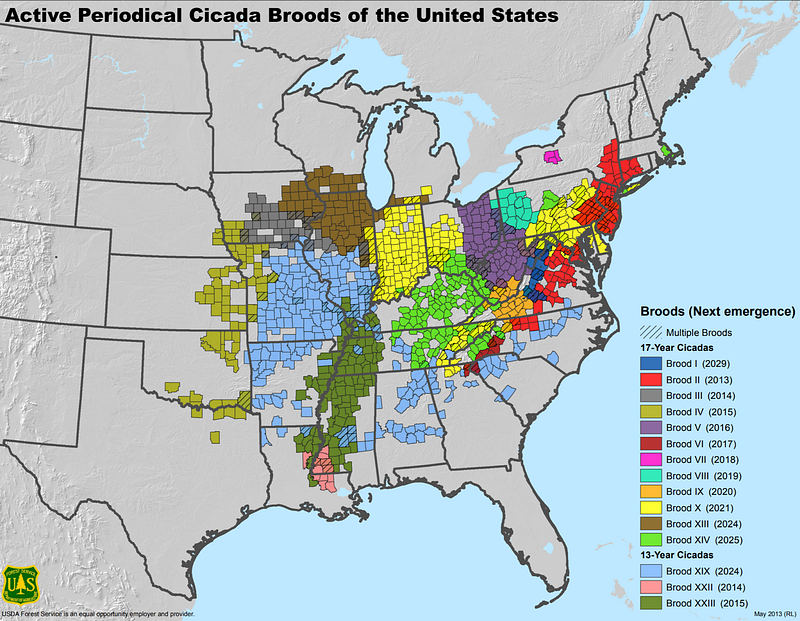
When colonists arrived in North America, they discovered periodical cicadas, which emerge in large numbers every 13 or 17 years.
The large swarms were unpredictable.
The only thing the colonists could compare them with were the stories of locusts from religious stories.
- Moses warned the Pharaoh that one of the coming ten plagues would be a plague of locusts.
- These locusts were expected to arrive in numbers great enough to cover every tree and plant, eating everything in its path.
- That would cause a great famine in the country.
- The colonists were afraid the arrival of the cicadas was somehow punishment and they would destroy all of their food.
Luckily for them, that wasn’t the case, and cicadas weren’t the destroyers that they expected.
Cicadas don’t actually eat plants.
Their mouths are designed to sip the juices of plants instead of devouring them completely, which is less destructive.
That puts them in the Homoptera order of insects, a family of insects that sucks juices, like aphids.
Their bodies are typically stout, and their eyes are large, even for their broadheads. Their wings are also easily identifiable because the membranes running through them are clear. Periodical cicadas are typically black or darker colored than their annual cicada relatives.
Locusts look a lot like a grasshopper.
The one difference is in their horns or main feelers. A locust has horns that are much shorter than a grasshopper.
Locusts are found all over the world, and they are the insects that gather in a swarm, potentially destroying crops or other plants they land on.
This is devastating to the people who rely on the crops for food.
Desert locusts can swarm in a group of 80 million insects that can stretch over an area of more than four hundred square miles.
Swarming is a behavior that is stimulated by a group impulse for feeding. In other words, they’re hungry all at once.
Periodical cicadas are unique in that they are only found in North America.
This year’s species is the Magicicada group and they spend almost all of their lives living underground.
They emerge as nymphs to mate, reproduce and then the adult cicada eventually die. The eggs hatch and eventually the offspring return underground, repeating the cycle.
This on the surface part of their lives lasts between four and six weeks.
The loud chorus we hear is created by the male cicada, as they search for their mates.
Others are affected by these periodic insect appearances.
These large groups of insects coming to the surface affect other animal populations as well as plant populations.
The year before a large periodical brood appears trees have slower growth. This is due to the increase in feeding on their roots by the nymphs.
Moles, a burrowing mammal that lives underground, feeds on the nymphs. Their population increases the year before the large brood emerges.
It’s a classic study in cause and effect.
The year after a brood emerges, the mole population suffers because of a reduction in the food supply.
At the end of the cicada cycle, wild turkeys take advantage of a large number of dead cicada on the ground, gorging on their bodies.
Even the communities on the forest floor benefit from the uneaten decomposing bodies of the cicadas, as they provide a boost of nutrients into the cycle.
There are downsides as well.
Crop damage affects many species, from the Eastern gray squirrels who are affected by reduced acorn and other crops, all the way up to the human population who rely on crops for their sustenance.
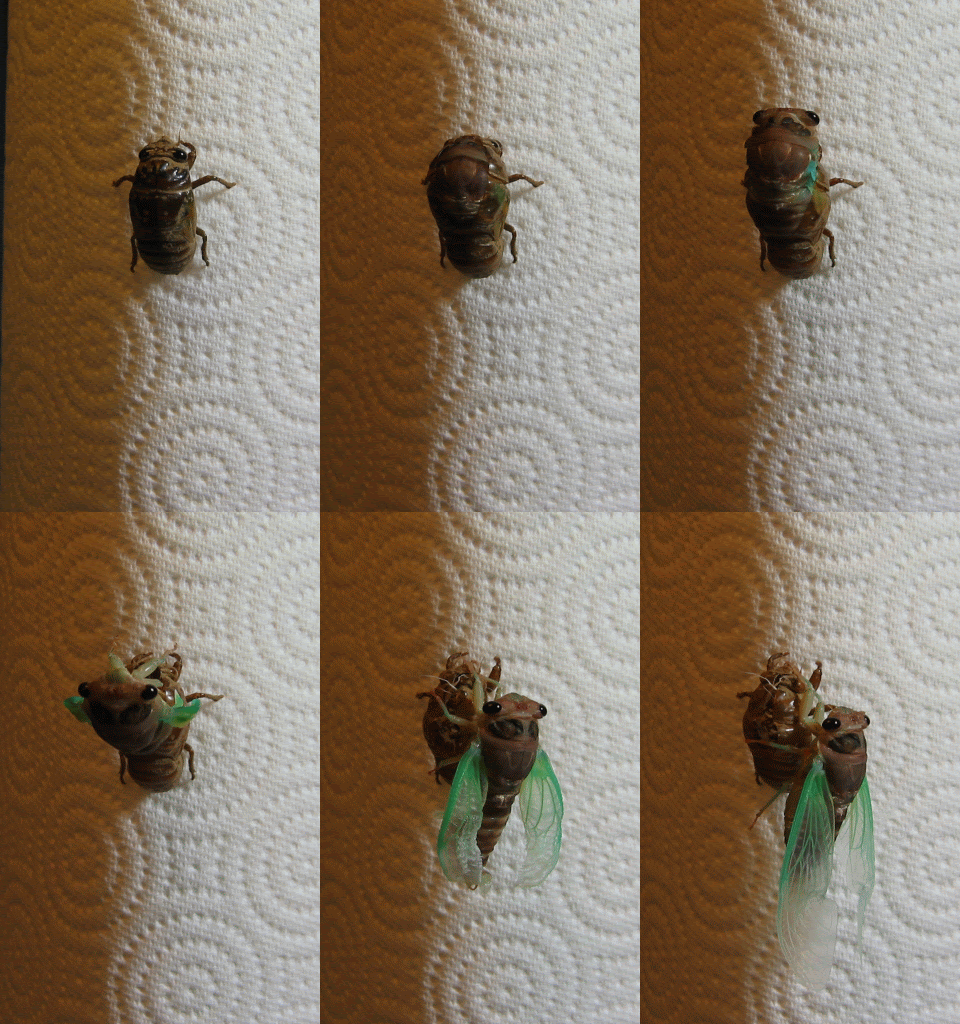
Cicadas molt as they grow, shedding their outer shells which are constantly being replaced.
“Animated Gif of a Cicada Molting. Taken by T. Nathan Mundhenk, in Centerville, Ohio USA July 30 2007. Each frame taken at 1 minute intervals. 30 minute gap in middle while cicada rested. The Cicada takes about 2 hours to complete the process.”
Previously published by the author on Newsbreak.
Sources:
https://animals.mom.com/locust-vs-cicada-7455.html
https://en.wikipedia.org/wiki/Periodical_cicadas#Impact_on_other_populations