
Mary Shelley: The Persistence of Everywoman
The extraordinary life of Frankenstein’s creator
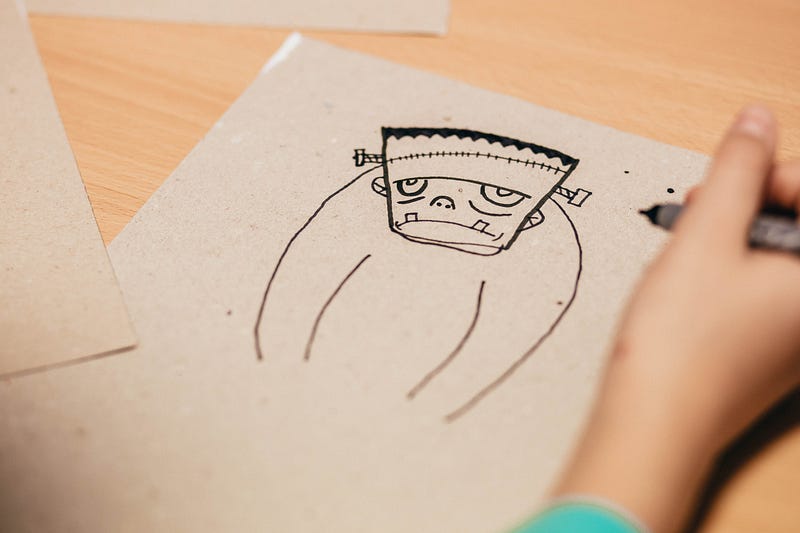
If pain can purify the heart, mine will be pure.
It started out merely as a game. An amusing way to pass the time during the dreary summer of 1816.
That summer Mary Shelley (then Godwin) was summering with Percy Shelley, Lord Byron, her step-sister Claire Clairmont, and Byron associate, Dr. John Polidori. They had gathered in Lake Geneva with hopes of enjoying fun in the sun.
Instead, they were met with what has since been termed, The Year Without a Summer. That summer is remembered by abnormally low temperatures most likely as a result of a volcanic eruption in Indonesia.
For Shelley and company, the summer was chilly and rainy. To keep themselves entertained, a contest was created. Members of the party were to write a horror story and see who could do it the best.
Here is where Mary Shelley’s Frankenstein: The Modern Prometheus was conceived.
An Extraordinary Woman
Life, although it may only be an accumulation of anguish, is dear to me, and I will defend it.
Often, Mary Shelley is remembered in terms of her relationships. She is the only child of feminist trailblazer, Mary Wollstonecraft (most famously the author of A Vindication of the Rights of Women) and political philosopher, William Godwin.
Wollstonecraft tragically died a mere eleven days after her daughter’s birth. Mary never knew her mother but she was brought up to revere her memory.
Growing up as the daughter of William Godwin, Mary was exposed to the numerous philosophers and literary figures that flocked to meet Godwin. Samuel Coleridge and William Wordsworth were frequent visitors.
Eventually a young Percy Bysshe Shelley also became a frequent visitor.
The Shelley Love Story
Although I may not be yours, I can never be another’s.
Sixteen year old Mary met twenty-two-year-old Percy in 1814. The budding poet was an Oxford student who was an admirer of both Wollstonecraft and Godwin. He quickly turned his attention to the young Mary and soon found his romantic feelings for her reciprocated. The attraction between the two was nearly instant and they quickly commenced a hidden romance.
Famously they declared their love for one another on Wollstonecraft’s grave. It is also rumored that they consummated their love there as well.
William Godwin disapproved.
Percy Shelley was already married. When he and Mary, accompanied by her step-sister, Claire, eloped to Europe, Percy’s wife was pregnant with their second child. Percy left his wife behind.
Godwin disowned his daughter.
Besides Godwin’s rejection, Mary’s elopement with Percy Shelley led to her further rejection by society. She was a fallen woman and social outcast.
It was not until Percy Shelley’s first wife, Harriet, died did Mary and Percy Shelley marry. Upon her marriage, Mary regained some of her respectability as well as the acknowledgment of her father. However, the damage was already done. There was no going back.
A complex creation
Dream that my little baby came to life again; that it had only been cold, and that we rubbed it before the fire, and it lived… Awake and find no baby.
Frankenstein was borne out of the complexities of Mary’s life. It is a culmination of the various dramatic experiences that she endured.
Her mother passed away when she was just an infant. Her father disowned her. Her half- sister, Fanny, and then Percy’s first wife, Harriet committed suicide.
By the time she began her novel, she had already lost her first child and was pregnant with her second. She dreamt often of her first child coming back to life.
It is within this backdrop of tragedy, rejection, and profound loss that the teenager began her horror story. While considered to be one of the first works of science fiction for its fantastic notions of bringing the dead back to life, it is also clear that it is a reflection of the real-life horrors that Mary faced.
An Everyday Woman
Life, although it may only be an accumulation of anguish, is dear to me, and I will defend it.
As extraordinary and tumultuous as her life was, Mary’s life is also representative of many of her female peers’ lives.
She was left motherless at such a tender age. Considering how high the maternal mortality rate was at the time of her birth in 1797, it was not that unusual for a child to have lost her mother.
Mary gave birth to four children. Unfortunately only one of those children lived to adulthood. Just as the maternal mortality rate was high at the time, so was the child mortality rate.
The loss and bereavement that Mary experienced during her lifetime was not uncommon.
Moreover, despite her status as the love child of two imminent 18th century thinkers, she was not immune to the harsh cultural judgments leveled at women who did not conform to gender norms regarding propriety.
She was not only judged but she was punished. One of those punishers was her own father, even though William Godwin is famous for his opposition to marriage. He married Mary’s mother only because Mary Wollstonecraft was pregnant. Having lived through the social ostracization of single motherhood already (Mary’s half-sister, Fanny was the child of Wollstonecraft and another man), Wollstonecraft and Godwin married to avoid social repercussions.
Nevertheless, she persisted
Beware; for I am fearless, and therefore powerful.
Like William Godwin, Percy Shelley did not entirely live the ideas that he espoused. Even though he fervently believed in the idea of equality, including gender equality, his behavior towards Mary does not portray him as an equal partner.
Rather, while Percy worked hard on his own literary achievements, he left the bulk of parenting and household management work to Mary. He supported Mary’s literary endeavors. Nonetheless, he did not do the actual work that would have made achieving those objectives.
And so, Mary tended to her children and managed her household. She also happened to write Frankenstein while juggling her various duties.
In other words, she got her shit done despite it all. Isn’t that the story of womanhood? We get shit done. If we have to do it on our own, we will. If we have to do it holding a baby, we will.