
Mary Poppins was a Slytherin
And three other unexpected Disney x Wizarding World combinations
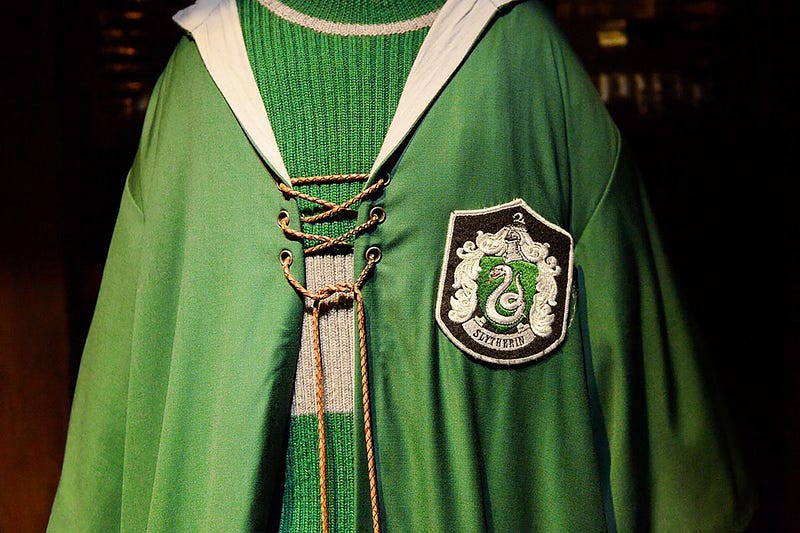
Why is Hogwarts house sorting so compelling?
It’s not even just the fun of holding up a mirror to your own personality or writing yourself into the story, because it’s just as satisfying to create cross-universe mashups.
Let’s have some fun with some Disney/Wizarding World crossovers!
But first, we should make sure we’re on the same page with our Hogwarts house sorting baseline.
I appreciated the perspective on this owlcation.com article because it included not only the strengths of each house’s character attributes, but also the corresponding weaknesses. It’s a detail you don’t tend to see often.

Hufflepuff
Strengths: dedication, honesty, humility
Weaknesses: low self-esteem, naivety, lack of ambition

Gryffindor
Strengths: courage, daring, chivalry
Weaknesses: hotheadedness, recklessness, arrogance

Ravenclaw
Strengths: intelligence, curiosity, creativity, individuality
Weaknesses: disconnectedness, arrogance, isolation

Slytherin
Strengths: ambition, cunning, resourcefulness, determination
Weaknesses: Machiavellianism, power hunger, discrimination
As any Harry Potter knows, each house has its own stereotypes, both in canon and fandom. But remember that awesome Sirius Black quote from The Order of the Phoenix film?
“We’ve all got both light and dark inside us. What matters is the part we choose to act on. That’s who we really are.”
Mirroring real life, each individual’s tendencies start out neutral and take on good or evil character based on decisions. While it’s true that a surrounding culture has a pervasive influence on its members, there are always opportunities to be an outlier.
That said, let’s bust some Hogwarts house stereotypes.
Maleficent to Hufflepuff
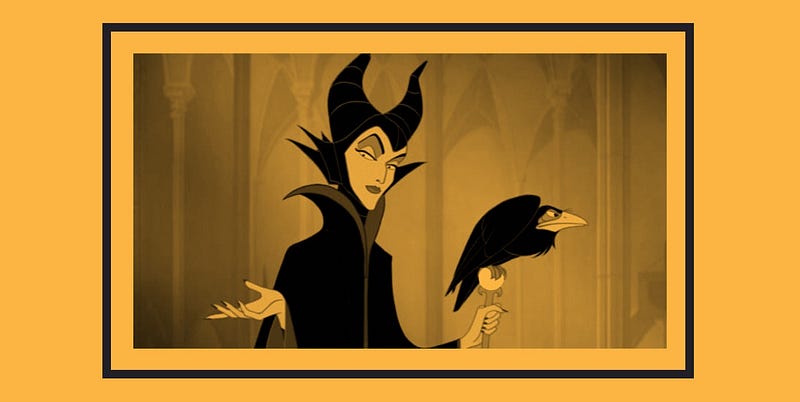
What happens when a Hufflepuff goes bad
See that one coming? Me neither.
Hufflepuffs are almost invariably portrayed in the books and movies as benevolent at their best (Newt Scamander) and benign at their worst (Cedric Diggory).
But they’re people, too, right? So what happens when they live a life full of increasingly bad decisions?
She’s a totally evil sorceress, yes, but that doesn’t mean she’s automatically a Slytherin. When you line up Maleficent of the 1959 animated film Sleeping Beauty with the characteristics of Hufflepuff, it clicks into place pretty well. (I’ve never seen the live-action version, so I can’t speak to that portrayal.)
I’m thinking particularly of her ambitions. She’s got her little hellish castle, plenty of minions, and a sapient crow for a pet. She doesn’t ever convey that she wants anything else.
She’s not even a jealous villain. The catalyst of the story is that she’s just miffed because she didn’t get invited to Princess Aurora’s baby shower.
On top of that, she’s naive about safeguarding her curses and evil plans.
After Maleficent curses Aurora and paces out, Merryweather magically tones down the spindle finger-pricking consequences from death to deathless sleep, with the possibility of a true love’s kiss stimulant. At the end of the film, the three fairies also easily sneak into Maleficent’s dungeon to free Philip, who proceeds to make pretty short work of dispatching her. (Seriously, where the heck are the guards?)
She’s a formidable villain, but her Hufflepuff weaknesses spell her undoing.
Cinderella’s Fairy Godmother to Ravenclaw
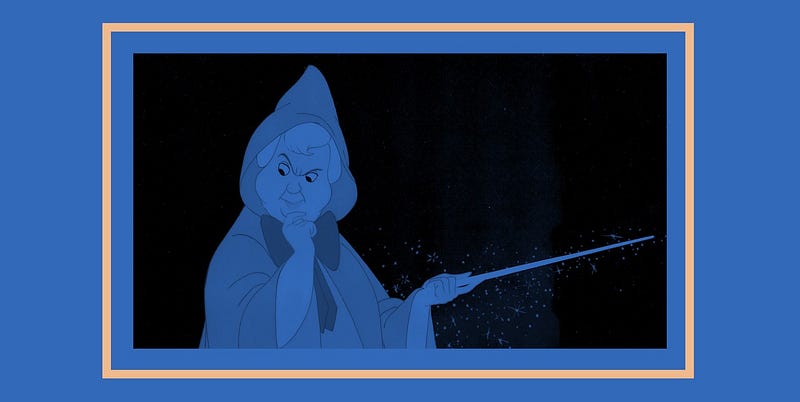
What happens when a Ravenclaw has your back
If you had to do a knee-jerk house sorting for Cinderella’s fairy godmother, where would you put her?
I’d probably say Hufflepuff. She’s amiable and kind, and she’s got the adorable granny/Professor Sprout green thumb vibe.
But examine a little farther and she starts lining up a lot more with the bookish tower crowd.
Her solutions to Cinderella’s transportation problems are creative, most obviously in the example of the pumpkin carriage. Check out all that rococo ornamentation! She shows more out-of-the-box thinking as she species-swaps the mice into horses and the horse into the carriage driver.
All the while, she’s so narrowly focused on getting Cinderella to the ball that she overlooks Cinderella’s ragged dress. I don’t see that absentmindedness baked into any other house.
Finally, only a Ravenclaw would make sure to stress the midnight-expiration-date fine print of her spells.
Merryweather to Gryffindor
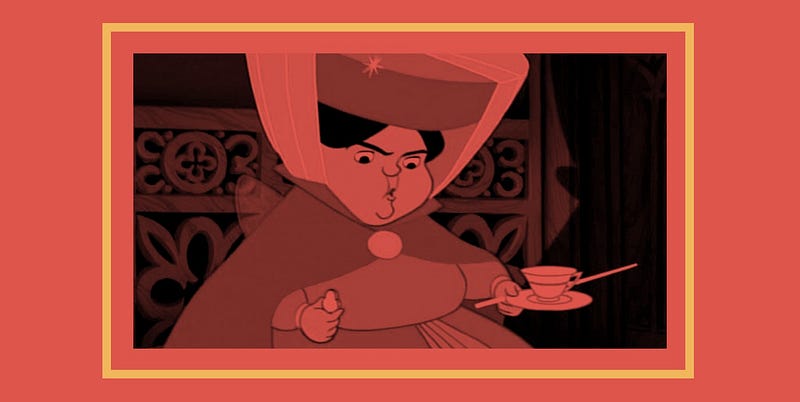
What happens when a Gryffindor isn’t in charge
This is the easiest sorting of the bunch.
Merryweather, like Neville Longbottom, is the constantly outshined comic relief side character. But also like Neville, watch her when stuff is going down: she’s always the first to put up her fists, never mind the consequences.
Unfortunately, she’s also got the Gryffindor tendency for impatience when there’s something that needs done, which leads her to rush in without forethought.
A great example of this is when she and the other Good Fairies are preparing a celebration for Aurora’s 16th birthday. To evade Maleficent’s curse, they’ve been in hiding since the princess was a baby, which included living without using magic in order to keep a low profile. The party prep goes horribly wrong because they have no idea how to make a dress or bake a cake. Merryweather insists that they dust off their wands and fix it all magically, which gives away their hiding spot to Maleficent.
Don’t be fooled by her preference for blue — this lady’s red and gold all the way through.
Mary Poppins to Slytherin
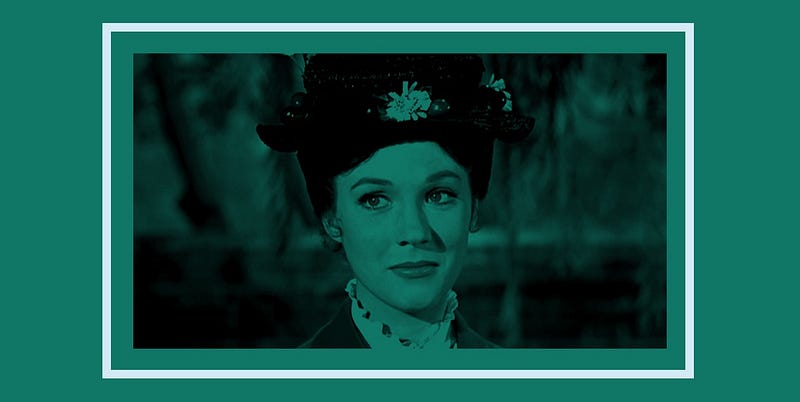
What happens when a Slytherin makes good choices
All right, time for the controversial one. I’m placing our beloved whimsical nanny in the house that produced the greatest amount of dark wizards in the history of Hogwarts.
But hear me out!
Underneath her cheery disposition, Mary Poppins is a determined lady with a plan and she doesn’t mind bending the rules to see it to completion.
The most glaring example is that she doesn’t have any qualms whatsoever about manipulating Mr. Banks. It’s justified in the film because he’s way too far gone to listen to reason, so she dupes him into making choices that benefit his children. When Jane and Michael call her on it, she totally denies it.
And she totally accomplishes the impossible. By the end of the film, Mr. and Mrs. Banks have removed their heads from their own butts and have started finally paying attention to their kids. As Bert watches her float away into the clouds, he smiles with an expression that says I don’t know how you do it, but you fixed another family.
Don’t you think Slytherin could use a few more like Mary Poppins?