
Politics
Martyrdom for a Piece of Land?
Lesson I learned in the most unlikely places.
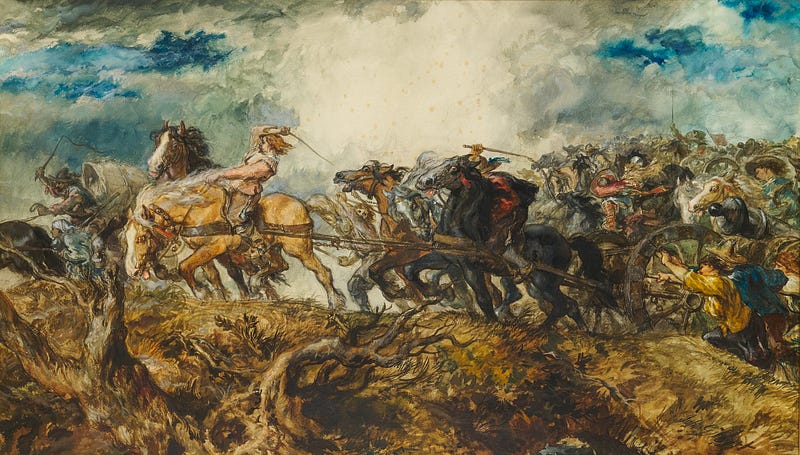
Early in the school days, one of the most famous topics in Urdu that we were required to write on was “Hubb-e-Wattan”. Written as حب وطن, that roughly translates to Patriotism. Literally, the love for the homeland. I can easily say that it was one of my favorite topics. I could write without thinking about my love for Pakistan — my home country. No doubts. Clarity. Cohesion. Nice Urdu vocabulary. Good reference Ashaar (verses) from wartime songs. But I never really thought about what I actually wrote. The hectic academic life, the stupid competition consumed all the time and energy. No time to pause and reflect. After all, good grades mean quality essays, right?
Is a piece of land worth dying for?
Where does this honor come from? Who taught us the sanctity of martyrdom? And why does death suddenly become martyrdom? I avoided the question whenever the idea of patriotism came across my mind. What’s the point of standing in the assembly at 7:30 hrs under the sweltering sun and singing the national anthem? What’s the point of celebrating the partition of a piece of land when thousands gave their lives for what they called independence? And then the history teacher, your parents, your school, your media, your everybody tells you that it was for you.
“For me?”, I ask. Trust me I want to believe, and yet I feel that no answer is good enough. So, a parallel complacent voice says “No, shun these thoughts. People died then, people die now. And they move on anyway.”
But it kept coming back, and this time I gave up on giving up on my thoughts.
Winter 2018, week 5 of an online course called The Modern World, Part One: Global History from 1760 to 1910, I turned to the discussion forum to initiate a purely academic debate absolutely relevant to the topic Professor was discussing. This is what I wrote:
Is Nationalism a hoax?
Zainab Jafri
“As an individual living in a globalized world, why should one identify themselves with a single nation? What is it that motivates a soldier to give or take life for their State? Is nationalism just another way to provide an individual with a vague sense of purpose that man has always been searching for? I’m afraid, I just know the questions.”
It was the first time I gave my dormant thoughts words. Two reasons. First, as I described earlier was the Week 5’s stress on Nationalism. Second, I was too invested in wartime movies that winter because of all the spare time I had after leaving my very patriotic job. One of those movies was Full Metal Jacket that was a satire on war. No spoilers. Watch yourself!
Need some inspiration? Read what Crazy Eral has to say about Vietnamese he wasted.
“These are great days we’re living, bros. We are jolly green giants, walking the Earth — with guns. These people we wasted here today are the finest human beings we will ever know. After we rotate back to the world, we’re gonna miss not having anyone around that’s worth shooting.”
We’re gonna miss not having anyone around that’s worth shooting. Feel it yet?
Yes, most of my inspiration comes from these genius scenes and random online lectures no one forced me to take.
Finding Wisdom in the Most Unlikely Place
Coursera! I was not expecting a moral discourse over the discussion forum. But a wise lady was there to tell me that it’s okay to have questions and no definite answers.
Ruth replied:
“Hello, Zainab
Asking questions is essential to learning. I am an American in my 80’s and still pondering questions to which old answers seem inadequate. I think that by asking these questions you have shown your openness to learning about other points of view, other cultures, other countries. I hope other learners will join this discussion.
Your question about a global or a national identity reminds me of a song I have heard sung to the tune “Finlandia.” A theme of the words is:
“This is my home, the country where my heart is;
here are my hopes, my dreams, my holy shrine:
but other hearts in other lands are beating
with hopes and dreams as true and high as mine.”
From This Is My Song by Lloyd Stone and Georgia Harkness”
Maybe, what I was missing was home in the homeland as I was stressing more about the land the whole time. Maybe, the question itself is the answer. We need purpose. We need a sense of belonging. And if a Stateless future is a possibility, then human specie will devise newer or maybe more ancient ways of belonging.
I knew that this answer was familiar, and yet it felt right. If the homeland is not what’s worth dying for, then what is? So, I wrote:
“Hello, Ruth!
Thanks for an elaborate and interesting reply. I listened to Finlandia.
“Let Christ be lifted up
till all shall serve Him,
And hearts united,
learn to live as one.”
It’s beautiful! I asked my father the same question, and as a religious man he is, he quoted a verse from Qur’an,
O mankind! Lo! We have created you (from) male and female, and have made you nations and tribes that ye may know one another….
I think with experience, we make our peace with some questions. Thanks again.”
Although by now, I have listened to multiple versions of This Is My Song, I loved the one hyperlinked the most. I don’t relate to the traditional choir because of the cultural differences, and yet I feel the same as if I listened to my local national songs. The songs that make us all feel content with our biases for our nations.
Sure, what feels right is not necessarily true. It can be a hoax. But we have chosen for ourselves this way of belonging. Then all we can do now is to be true to our choices. All we can do is to know more about each other.
Note: The discussion forum is still active after one and a half years.


