
“Marriage Story” is an Incisive, Brilliantly Acted Examination of Divorce
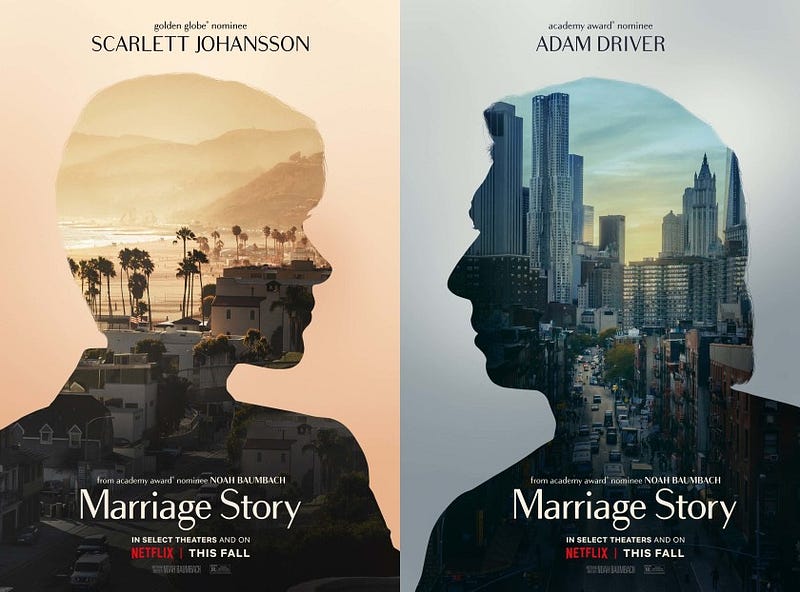
The new film from writer/director Noah Baumbauch premiered on Netflix yesterday following a brief theatrical run. It is garnering rave reviews and huge Oscar buzz and it’s easy to see why. It is a devastatingly sad (but surprisingly funny) film with a razor-sharp script, a dazzling ensemble, and just a little bit of excess and pretension.
Writer/director Noah Baumbach is known for off-beat, typically low budget films that mix quirky comedy and heartfelt drama. These include acclaimed films like 2005’s The Squid and the Whale (which earned him an Oscar nomination for Best Original Screenplay), 2013’s France Ha (which he co-wrote with romantic partner/Lady Bird mastermind Greta Gerwig), and 2017’s The Meyerowitz Stories (a film that failed to make an impression during awards season despite an all-star cast and sterling reviews). With his 12th directorial feature, he has crafted his highest profile feature yet — a carefully observed portrait of a disintegrated marriage.
The buzz for Marriage Story has been mounting for many months, as it played at a host of film festivals earlier this year, had a brief and limited theatrical run last month, and then premiered on Netflix this past Friday (December 6). In addition to getting notice for its terrific ensemble of highly respected actors, it was identified early on as a likely awards season juggernaut. Now that it has reached the streaming sphere, typical film fans (as in, those who don’t have access to film festivals or those who live outside of NY and LA where awards films usually have their limited runs) have a chance to see if it lives up to the buzz.
In my opinion, it does live up to its buzz…for the most part.
The story Marriage Story tells is a familiar one. It chronicles the demise of a romantic relationship between two white heterosexual people that are affluent, intelligent, young, and talented. It plays into familiar tropes about the sexes (e.g., he’s aloof to her interior life, mothers are held to higher standards than fathers) and recycles the exceedingly tired New York vs. Los Angeles debate. But it delivers all of these familiar elements with raw emotion, sharp insights, and fresh perspectives.
The movie memorably opens with voiceovers from Charlie Barber (Adam Driver) and Nicole Barber (Scarlett Johannson) in which they describe the things they love about the other. This could have been a saccharine device, but instead it plays authentically and movingly and is a fantastic introduction to the central characters. It is quickly revealed that these narratives are being written for a mediator who is going to help them navigate their separation and eventual divorce. So what went wrong between these two people who loved each other so? Well, Nicole was a young film and TV actress from Los Angeles who became enamored with Charlie the theater director’s offbeat genius. They had a son together. She longed to return to her roots in L.A. He assumed they were a N.Y.-based family for life. They drifted apart. It’s all fairly straightforward.
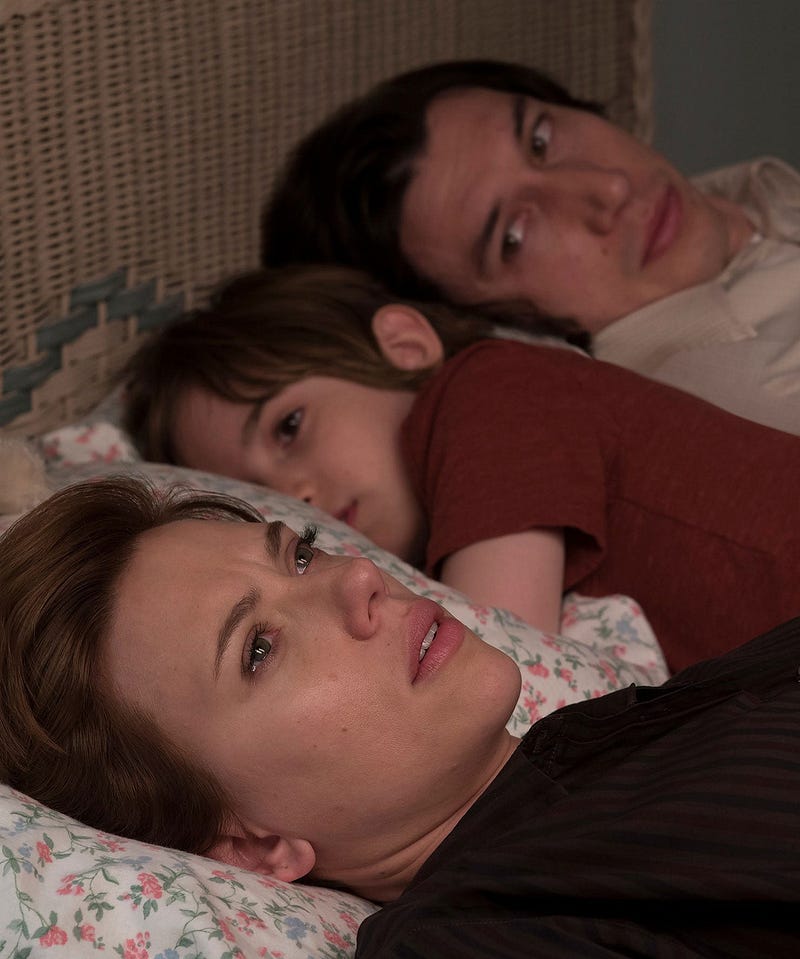
As the central couple, Driver and Johansson deliver truly powerhouse performances. Driver, whose star has been a meteoric rise these past few years, is particularly impressive. He is commanding, endearing, heartbreaking, and at times infuriating. He nails every moment from the light comedy with the divorce lawyers to the Sondheim karaoke to the devastating climactic fight with precision and believability. Johannson, an actress whose work I have often been lukewarm on, nearly matches him. She is emotionally raw, utterly believable, and finds fascinating nuances and contradictions in her character.
But the film is hardly a two-person show. The ensemble is spectacular. Most attention has gone to Laura Dern, who plays Nicole’s charismatic and brilliant divorce lawyer who is alternately savage and supportive. (Some have complained her performance is too similar to the one she gives as Renata Klein on HBO’s Big Little Lies, but as that is one of my favorite television performances of the past decade, it is hard for me to see that as a detriment.)
As Charlie’s divorce lawyers, Alan Alda has a superb dry wit and Ray Liotta has the ferocity you would expect. As Nicole’s mother, veteran comedian Julie Hagerty (Airplane, What About Bob?) is an utter delight, adding texture to what could have easily been a caricature. As Nicole’s sister, two time Emmy winner Merrit Wever doesn’t get much to do, but she makes an impact every time she is on screen. The same can be said about veteran comedian Wallace Shawn as an actor in Charlie’s Theater company. And then there’s Azhy Robinson as Charlie and Nicole’s son, Henry. He is great, but the film never focuses on him excessively, a decision that goes a long way toward preventing it from being maudlin.
The film has several powerful dramatic scenes and nails them all. These include the wrenching climactic fight, the courtroom showdown, and a spectacularly awkward visit from a social worker. But it is at its most poignant and clever in the quiet, subtle moments. As the divorce proceeds, dynamics between the family members shift in carefully observed, heartbreaking ways. And herein lies the success of Baumbach’s screenplay. Interestingly, many viewers (well, those on social media at least) have debated whose “side” the film takes. The fact that it’s even a question given that it’s loosely based on the writer-director’s own divorce seems to me to be a good sign that he was fairly evenhanded.
The movie has other great qualities, including a memorable score by Randy Newman and lovely cinematography by Robbie Ryan. But it is not perfect. The film is a bit too long and meanders at times, something a sharper editing process could probably have fixed. (See his partner Greta Gerwig’s brilliant Lady Bird for an example of how to avoid these pitfalls.) It also veers toward the pretentious in ways I found a bit unnecessary. Having Charlie be a MacArthur grant winning avant-garde direct was unnecessary — would this story be any less powerful if it was about two humans that weren’t world renowned creative geniuses? And count me among those who found the Sondheim karaoke numbers to feel a bit forced (even though Driver nails his).
Rating for “Marriage Story”: 4.5/5 stars
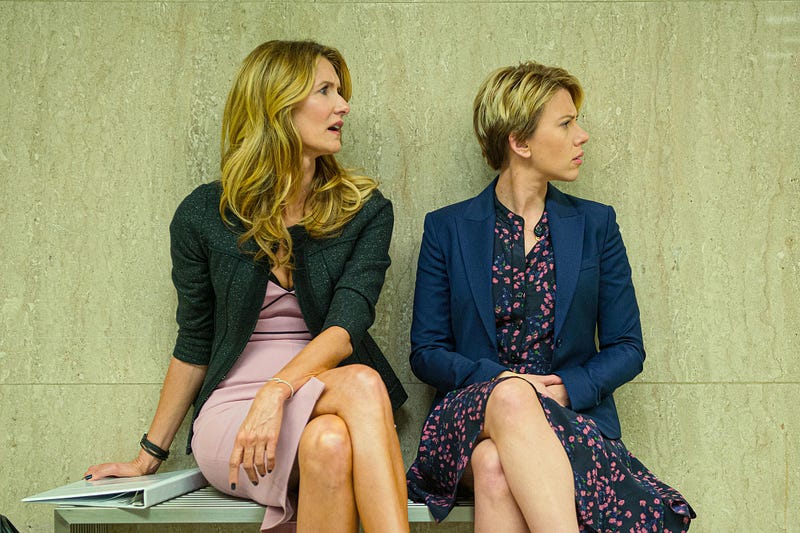
Awards Prospects: Marriage Story seems like a surefire player in at least four major categories at the Academy Awards: Best Picture (it will play very well with actors, who make up the largest voting bloc), Best Actor (Adam Driver is increasingly admired and his performance is impossible to ignore), Best Supporting Actress (Laura Dern is an actress that Hollywood feels is overdue for recognition and her performance is electric), and Best Original Screenplay (although that category is quite tough this year). Scarlett Johannson will likely join them with a Best Actress nomination, but the never-nominated actress has made a number of public relations gaffes in the past year and many will feel she is outshone by Driver. Baumbach could also make it into Best Director, but the Academy tends to pick ambitious productions (e.g., epics, historical dramas, technical marvels) over intimate character dramas in that category. Its power as an awards season player will become much clearer after the Golden Globe and Screen Actors Guild Awards nominations are announced over the next few days.
Read recent film reviews by this author:


