
Marketing Strategy in 10 Minutes
Build a holistic view of marketing at its core.
You have a product, whether it’s something physical, a service, or a piece of writing, and you want to make it sell. This is where marketing comes in — it brings awareness to our product and leads our customers to the buying moment.
Marketing tools are great, but without understanding the fundamental principles, no tool will get us far.
In 10 minutes, I’ll share with you the fundamental principles of marketing management, so you can form your own marketing strategy and plan to market your products in a way that sells.
There are three phases in marketing, planning, implementation, and control. Here’s a road map before we dive in:
Planning
- Define mission & objectives
- Conduct situation analysis
Implementation
- Identify the target market (STP)
- Implement the marketing mix (4 Ps)
Control
- Use marketing metrics to evaluate performance
Three phases, five steps — this is the backbone of marketing.

I’ll walk you through this process step by step.
In the interest of time, I’m aiming for it to be complete over comprehensive. It’s designed to give you a holistic understanding of marketing as a whole. I’ll go more in-depth on specific topics in the future if there’s interest.
Step 1: Business Mission & Objectives
Here, you need to define your strategy on a higher level. This will guide your entire operations, not just marketing.
It starts with your mission statement, where you answer: who are you, and what are you in business to accomplish? The mission will be your guiding north star in all future decisions.

Then, you need to set objectives — what specifically do you need to accomplish to achieve your mission? These are medium-level goals that could be looking a few weeks, months, or years down the road. They take the mission to a more tactical level and give it clarity — unlike the mission, you either meet your objectives or you don’t. Examples are achieving X amount of market share, satisfaction, or sales.
Once a mission and set of objectives to support this mission are defined, everything that follows should strategically align — this is crucial, or else pulling in the wrong direction will get us nowhere.
Step 2: Situation Analysis
Before we go into any of the “marketing”, we need to conduct a situation analysis to understand the business environment we’re operating. Before we play, we need to understand the playground.
Just like how we divide economics into “micro” and “macro”, we can do the same when analyzing the business environment. In the micro-level analysis, we look at factors directly related to our business, and at the macro level, we look at those that impact everyone.

3 frameworks are typically used here.
SWOT — Strengths, Weaknesses, Opportunities, Threats
Understanding what we’re capable and not capable of doing internally, and matching this understanding to decide how we’ll react to external opportunities and threats.
3 Cs — Company Capabilities, Competition, Corporate Partners
Micro-level analysis that focuses on what we can do with our current people, technology, and financial resources, our direct & indirect competitors, and the people and organizations we work with.
CDSTEP — Culture, Demographics, Social Trends, Technology, Economic, Political/Legal
Culture, demographics, and social trends influence consumer buying behavior, preferences, and values. They determine what, why, how, and where they buy. Prominent social trends today are sustainability, data privacy, time-saving, and health.
Technology is important in all parts of marketing, from product development to communication and to distribution. They bring great opportunities to reduce costs and increase marketing effectiveness. Emerging technologies in AI, robotics, and IoT will play a major role in the future of marketing.
The Economic situation looks at inflation, interest rates, foreign exchange fluctuations, disposable income, unemployment, and economic implications of crises like Covid-19.
The Political/Legal component looks at politics and laws and how they promote or restrict marketing and economic activities. Consumer protection and competition laws are of special interest to marketers.
Step 3: Segmentation, Targeting, Positioning (STP)
We enter this step with a good understanding of our business environment and leave with a clearly defined target market we believe is attractive.
This is completed through a three-step process called STP.
1st, Segmentation — classify consumers into segments
We classify everyone who might buy our product into segment profiles on the basis of things like demographics, on what occasions they buy/use our product, where they live, how they live, etc.
2nd, Targeting — select the best segment
We use Targeting to determine which segment is most attractive to us using four criteria:
- Identifiable — they have unique attributes, and we can define them
- Profitable — is this segment big enough? do they have enough purchasing power for us to make a profit off of them?
- Reachable — can we effectively get ahold of them with our promotions & we effectively get our products into their hands either through stores or delivery?
- Responsive — will they respond positively to what we have to offer? will they see value in our offering?
Sometimes businesses target one segment, and sometimes multiple. It depends on the nature of the product and the type of company. These are targeting strategies— we can concentrate all our efforts in one segment to start, differentiate our products and offer them to multiple segments, distribute to the masses, or even focus on fully personalized one-to-one relationships.
3rd, Positioning
Finally, we need to place our brand and product in an attractive position in the customer’s mind compared to our competitors. There are different ways to do this — typically marketers start with perceptual maps, where they evaluate their attributes against competitors to see where they have the best opportunity to position themselves.
This step ends with a clear positioning statement that outlines the target market and the point of differentiation of our offering against competitors.
Step 4: The Marketing Mix (4 Ps)
With a target market and point of differentiation, it’s action time.
This is the core of marketing. You’ve probably heard of the 4 Ps of marketing—Product, Price, Place, Promotion—we make those decisions now.
1 — PRODUCT
a. Products
The product is a lot more than the physical product itself. There are 3 components to a product.
- Core value proposition — the core benefits customers get from it.
- Actual product — the product itself; its features, brand, design, packaging, etc.
- Augmented product — extending to all product-related support & services, including delivery, after-sale support, and warranty.

There are two types of products, B2B and B2C — the difference is whether they’re sold to businesses or end consumers. The marketing strategies for business and consumer markets are quite different, but we won’t get into that today.
Zooming into the consumer side, depending on the type of product — specialty, shopping, convenience, or unsought — marketers need to use different strategies to reach their customers.
b. Branding
A brand encompasses a lot: the name, sounds, slogans, logos, characters, associations, and more.
Branding is the way companies differentiate their products from competitors to stand out. It’s one of the most important assets to a company since when you build awareness and loyalty to your brand, marketing your products and getting sales is much easier.
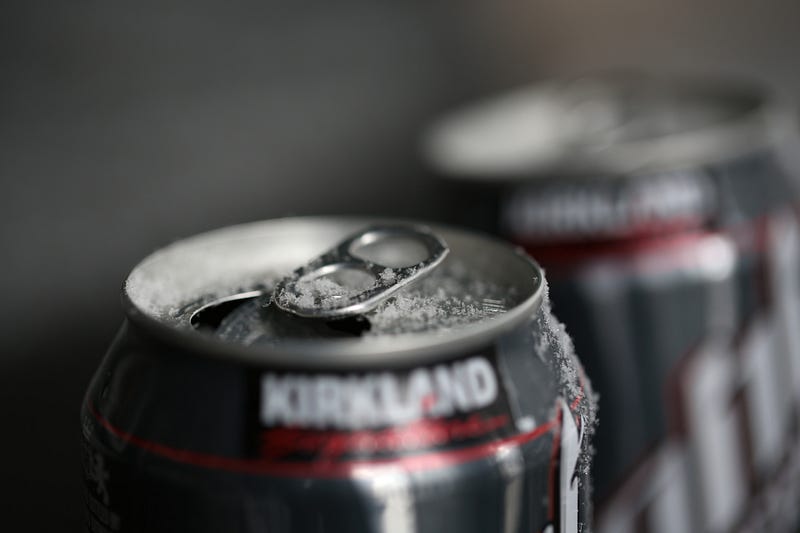
Even for generic products, there is usually an advantage to establishing a brand. Large retailers like Costco with Kirkland are creating their own private-label brands to compete with manufacturer brands.
When everything else is similar, the consumer decision comes down to the brand — which makes it an essential component of marketing.
c. Services
We live in an increasingly service-oriented world. Services are products, but four characteristics distinguish them from traditional products. They are intangible, inseparable (produced & consumed at the same time), inconsistent (quality varies), and perishable (cannot be held in inventory).

Services are challenging to market for these reasons, but here’s how:
- Use atmosphere, symbols, and cues to convey benefits & value to consumers.
- Lower the risk for consumers by offering satisfaction guarantees and more information on the service itself.
- Train personnel, standardize services, customize to specific needs, and leverage technology to maintain consistent quality.
- Match demand to supply by scheduling promotions and staffing accordingly.
Why do services fail?
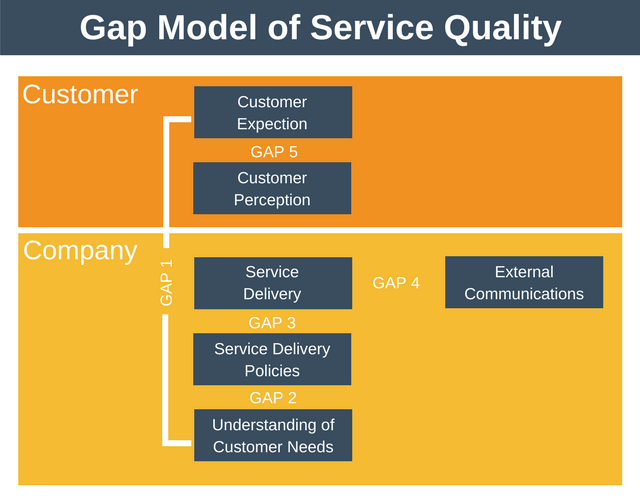
The Gaps model gives four reasons:
- Wrong perception of customer expectations (Knowledge Gap)
- Standards failing to address expectations (Standards Gap)
- Actual delivery failing to meet standards set (Delivery Gap)
- Communicated quality not fulfilled by delivery (Communications Gap)
2 — PRICE
Research suggests price is the most important factor in buying decisions. It is the overall sacrifice consumers are willing to make in exchange for a product. Pricing can be used to signal the value of a product to customers since it impacts the perception of quality.

When pricing, it’s important to consider how sensitive consumers are to price changes for the particular product type and their purchasing power.
3 Pricing Methods
- Price based on cost (cost plus margin pricing)
- Price based on competition (what competitors charge)
- Price based on customer value (how much customers are willing to pay)
There are many specific pricing strategies and tactics marketers use in both business and consumer markets, but we won’t go into them now.
3 — PLACE
We have a product and a price, now we need to figure out how to get it into the hands of our target customers. Place is not just the physical location. It encompasses everything we, as the producer, have to do to get our product into the hands of customers. This becomes Supply Chain Management.
There are two components: distribution channels and logistics

a. Distribution Channels
This is when we choose partners to add to our downstream supply chain to help us distribute our products to the end consumers.
Firms can distribute directly to consumers, indirectly through intermediaries like wholesalers and retailers, or do a mixture of both — this is the channel structure decision.
They also decide their distribution intensity — do they want as many people to have access as possible (like Coke), or do they want to be exclusive to a small group of customers (like Gucci)?
The degree of ownership and involvement of a firm in its distribution, and how much it wants to outsource, depends on its size and capability.

How intermediaries support distribution
There are three ways supply chain intermediaries support distribution.
- Participate in the transaction—buy for resale, take over outdated inventory, promote to customers, etc.
- Support logistics through transportation & inventory handling
- Facilitating the exchange of information & funds between channel members
As a firm, it’s important to ensure our entire distribution channel is in alignment by communicating clearly and building trust, or else channel conflict happens and it becomes very problematic for our sales, brand image, and timely fulfillment.

b. Logistics Management
The other part is logistics, which concerns two flows:
the flow of information + the flow of merchandise
With technology, firms can better communicate with channel partners like distributors and transportation companies and gather more insights directly from consumers to guide future decisions. There are many approaches like Just-In-Time delivery to add value to this process.

4 — PROMOTION
Promotion can be thought of as Integrated Marketing Communications—where many communication mediums come together to reinforce a consistent message that conveys our brand/product value.

There is a lot of noise throughout the communication process, which means what consumers perceive isn’t always what firms intend. This makes it important to select the appropriate channels and content to communicate the value proposition clearly.

Which Medium to Use
Companies decide between mass (television) vs. niche (fashion magazine) media, depending on the product. Media options can be divided more specifically into 3 types: paid, owned, and earned.
Options Available
There are many ways to promote a product. The six main options are advertising, personal selling, digital media, direct marketing, public relations, and sales promotions, each with its own pros and cons.
And the purpose?
To excite and educate customers, let them experience the product, and engage them in taking action.

Integration is essential — we must design a promotion strategy that:
- We can afford with our budget & execution capabilities
- Is internally consistent to reinforce the same message
Our promotional efforts must come together to work effectively.
That’s the 4 Ps — and now you understand marketing at its core.

Step 5: Evaluation with Metrics
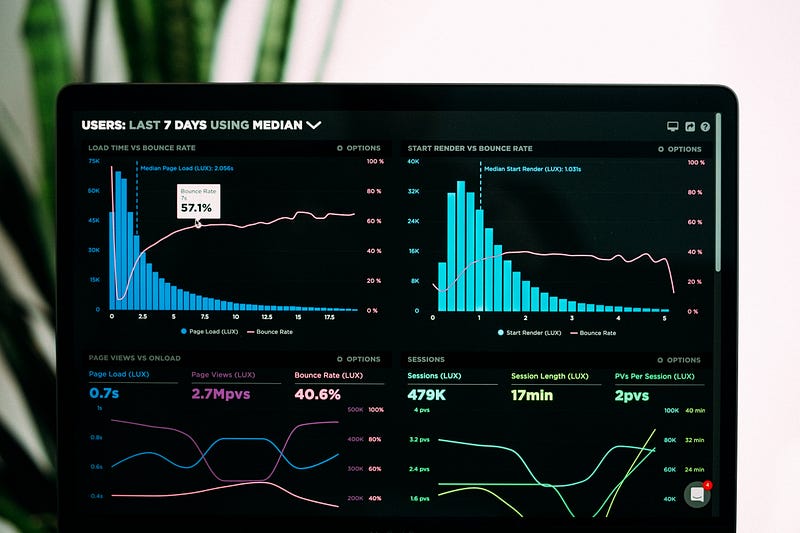
The final step is evaluation. It’s often overlooked but crucial for continued success in the business world.
Implementing our strategy isn’t the end — we need to continuously monitor how we’re performing so we can:
- Identify and address problems before they become escalate
- Adapt to changing consumer preferences, competitive dynamics, and economic conditions in the marketplace
- Find opportunities to improve our offering and innovate
That’s all for marketing strategy.
If you made it this far, you now have a holistic understanding of the principles of marketing — that will get you a lot of places.
Quick Recap — 5 Steps of Marketing Strategy
Step 1: Define mission & objectives
Step 2: Conduct situation analysis
Step 3: Identify the target market (STP)
Step 4: Determine the marketing mix (4 Ps)
Step 5: Monitor performance
Thanks for reading! You might benefit from my other business articles:
Not a Medium member yet? Consider joining 60+ million active readers with unlimited access. I’ll receive a small fee at no added cost to you.