
Mark Zuckerberg: How I Built a Trillion Dollar Company?
They Don’t Want You to Know This!
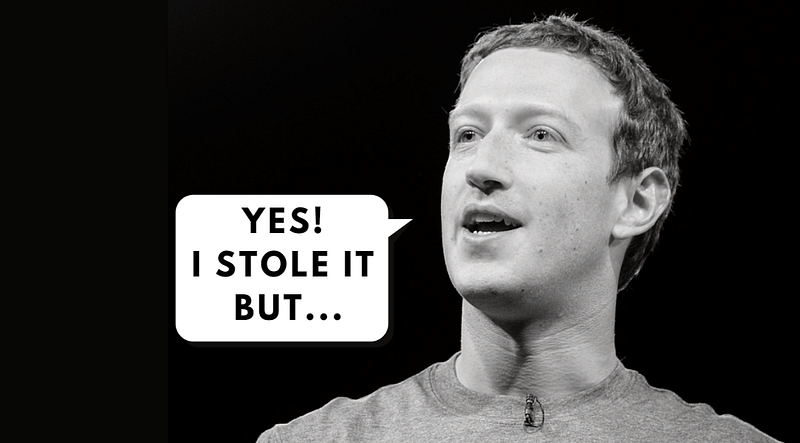
At age 23, Zuckerberg became the world’s youngest self-made billionaire.
Just a year before that he was sitting in his dorm room, building a website to connect the fellow students at the university.
It wasn’t anything fancy.
Just his stupid little side project.
Little did he know that his website would explode into a trillion-dollar empire.
Many others tried to do the same thing, but none of them succeeded.
So, what’s behind his success?
How did a guy with no business experience reach the top, building a trillion-dollar empire?
Was it a stroke of luck or the result of relentless hard work?
There are many questions.
Answers to these questions hold the secrets to unlocking our own potential.
Let’s borrow what we can.
Perfect is The Enemy of Good
Mark: “If I had to understand everything about connecting people before I began, I never would have started Facebook.”
One evening, two friends decided to make some money by selling fish.
The first guy showed up the next day with a simple stick and a hook.
He caught a few but soon figured he needed a roller for the thread. The next day, he added a roller. But as luck would have it, his stick snapped with the weight of a heavy fish.
Realizing he needed something sturdy — he came back with a metal one.
Yet, catching fish one by one was slow.
The next day, he fashioned a net mesh.
By now he knew well that the middle held more fish.
The problem was it was out of reach.
So, he got a boat.
And caught a boatful of fish and sold them.
Then, a realization hit him — he can’t exploit it forever. So, he started fishing culture, turning the pond into a factory.
All in the first month.
Meanwhile, the other guy spent the whole month searching for the perfect fishing stick. When he finally got to the pond, it was sold. His friend now owned the entire place.
A month, two tales — one of success, the other of missed chances.
The best never asks how to start.
They start, then they ask how to get better.
Be quite decisive in planning but very aggressive when it comes to executing those plans.
Zuckerberg knows the power of taking action. He put his ideas into motion, even if they are not fully formed. He focuses on getting started and doing the work, instead of just planning and thinking about it.
This is how it works!
This is what allowed him to learn and grow.
You can apply it to all areas of life, not just business.
If you are a writer, for example, action means putting words on the page, while reflection means evaluating what you’ve written the next day.
Trying to do both at once? That’s a recipe for writer’s block!
Act first and reflect on it later, especially when you’re getting started with something. Otherwise, you will be stuck in the same place forever.
Understand that successful people don’t learn everything and then start.
They just start and as they go…they learn things on the way.
The baby steps you take today will create an entire path which will leave a legacy behind you for others to follow.
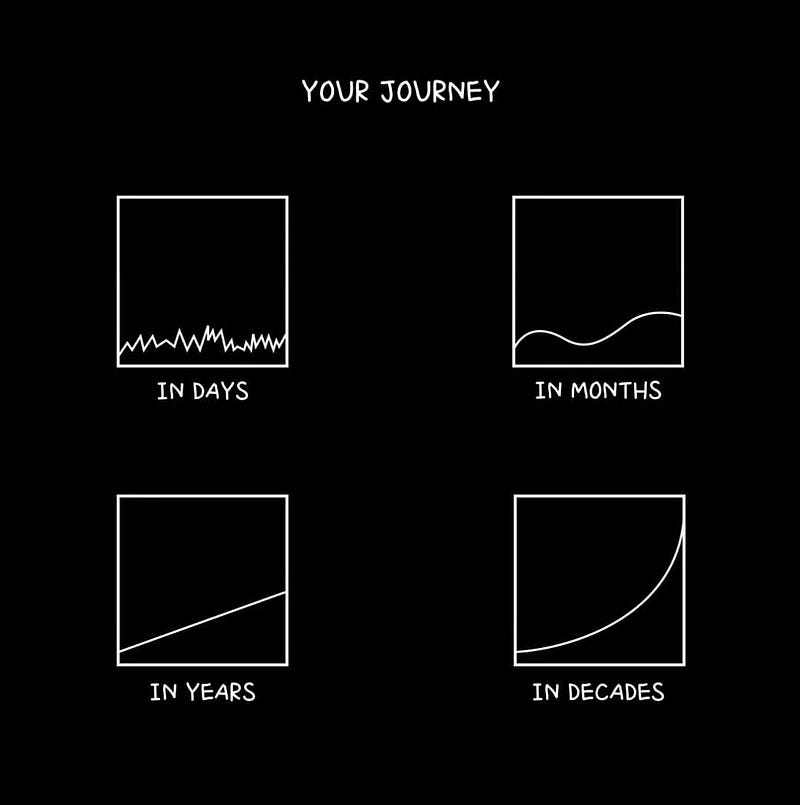
First Step is the Last Step
Mark: I know, you’re probably thinking I don’t know how to get a million people involved in anything. But let me tell you a secret: No one does when they begin. Ideas don’t come out fully formed. They only become clear as you work on them. You just have to get started.”
Your million-dollar idea is not going to fall out of the sky.
Marriott hotels started as the root beer stand.
American Express delivered the parcel by horse.
Samsung started first by selling noodles.
Taco Bell started as a hot dog stand.
To win in business you don’t have to get it right — You just have to get started.
One useful way to accomplish this is the three-act structure.
In the three-act structure, you divide your idea into its beginning, middle, and end.
In the beginning, Facebook was a digital meeting space where anyone could create their page.
Its middle act was that each person could decide who was allowed to access the page, creating an interconnected web of contacts.
Now, in its end phase, people can communicate and share anything they want through a worldwide community of friends.
You don’t need to be rigid about what you are making is going to be. You can simply adjust according to the demand of the time.
Facebook has 3 billion monthly users (with a 7.18% increase year over year). Do you think Mark understood all of the complexities of developing an app that could scale to billions of users when he first started?
HELL NO!
He just started.
Once you start and work on something incessantly — things start to fall into place.
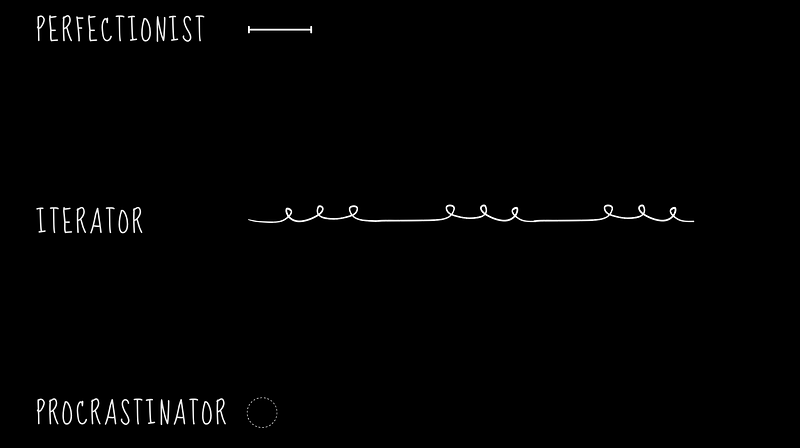
What Do You Mean 10,000 hours?
Mark: Facebook wasn’t the first thing I built. I also built games, chat systems, study tools, and music players. I’m not alone. JK Rowling got rejected 12 times before publishing Harry Potter. Even Beyoncé had to make hundreds of songs to get Halo. The greatest successes come from having the freedom to fail.
Thomas Edison once said, "I didn’t fail but I learned 1000 ways of doing the thing”.
Gaining knowledge without consistently putting it into practice can breed arrogance, lacking the crucial feedback loop that keeps us grounded and continually learning.
Building multiple things not only expands your skills but each iteration imparts lessons you can apply in future projects. In this way, iteration is crucial — it compels you to put your existing knowledge into action.
The fastest way to iterate is to learn from others.
Learn from those who’ve done it. Absorb their wisdom. Have a chat with them. Read their works.
Before making a large project, make several small ones.
Before starting a business, make a lot of small products
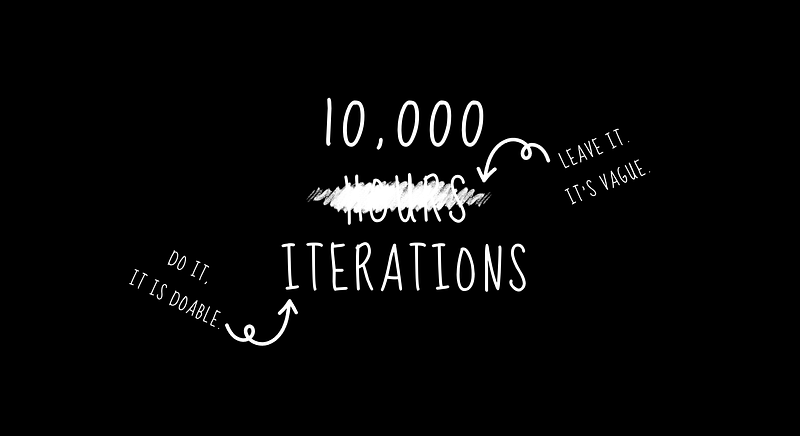
You Are in the Wrong Room.
Mark: I think most smart people like learning. That’s one of the thrills of starting a company. The learning curve can be so steep. And if you can set up a team dynamic where you’re constantly learning from the people around you, then, I mean, what’s better? These are the people I wake up every morning and I want to go learn from and work from.
Building a business is an infinite set of problems that are being thrown at you. And there comes a day when you can’t even look at every problem your company is facing — let alone solve every one of them.
You need people who can solve problems without even being asked to solve the problem. They don’t necessarily have to update you every step of the way nor should they be asking trivial questions.
They should be just coming up with solutions.
There is a saying, “If you feel like the smartest person in the room, then you are in the wrong room”. You need to have people who are smarter than you and more importantly to make them work together. Naive people can work together easily, smart people can’t.
Surround yourself with people who bring out the best in you!
A good definition of a team is a group of people that can make better decisions as a whole than they can individually. Everyone is good at what they do. They know their job. They do it. They don’t complain. They’re not egotistical about it.
If your team constantly needs correction or guidance, it’s a red flag. Successful teams thrive on autonomy and trust in each member’s judgment.
The output of any company is the vector sum of people within it.
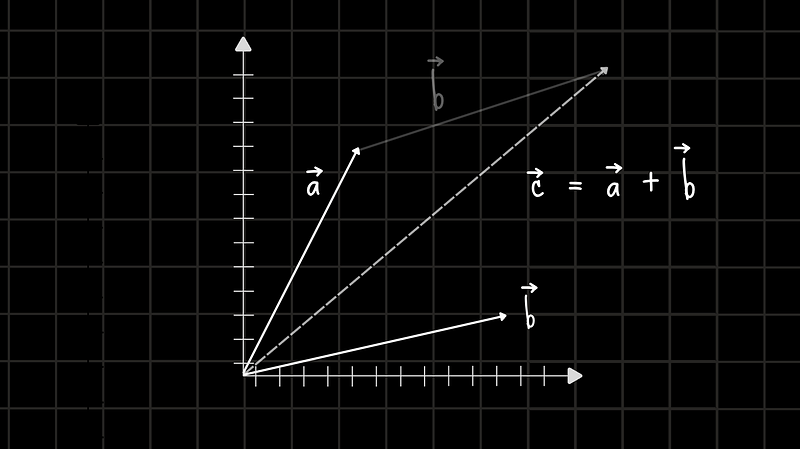
Someone may be a strong vector, but negatively affect those around them to such a degree that they are a net negative.
What you work on and with whom you work are far more important than how hard you work.
People who have no goals, vision, or ambition will create drama and bring down others.
Avoid them as if your life depends on it — because it does.
Zuckerberg spends at least three hours a day with his core team. He also spends 25% of his time recruiting and finding good people, both inside and outside the company.
It’s not just him — Steve Jobs, Tim Cook, Jeff Bezos, and Elon Musk are all known to do the same.
Great companies are all about the people and nothing but the people.
Choose your team wisely.
Ambition is Overrated — Be Bigger Than Yourself
Mark: One of my favorite stories is when John F Kennedy visited the NASA space center, he saw a janitor carrying a broom and he walked over and asked what he was doing. The janitor responded: “Mr. President, I’m helping put a man on the moon”.
The purpose is what gives us a feeling that we are part of something bigger than ourselves. That we are needed. That we have something better ahead to work for.
The purpose is what creates true happiness.
You either do something to make a living, or because it is your bloody job, or because you see the bigger picture.
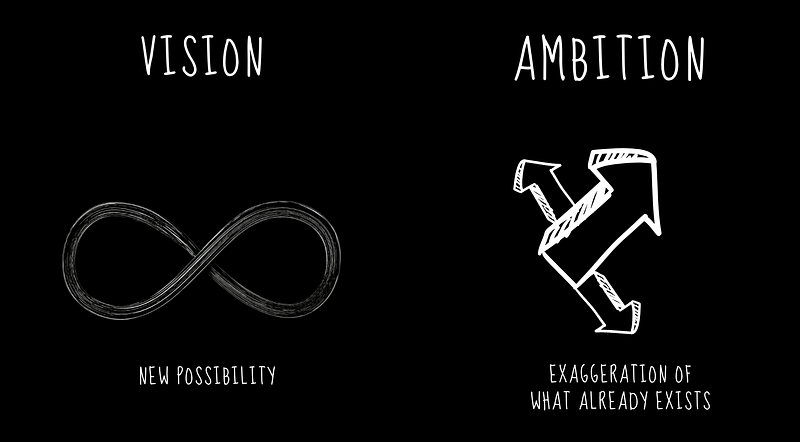
Each one of us — every moment of this life, could be doing whatever we are doing — in any of these three contexts.
All those people whom you read about, and who work incessantly day and night, are not propelled by any motivation or ambition but a vision.
They are trying to do something far bigger than themself.
The simplicity or complexity of an activity does not influence the quality of your life. The quality of our life will be determined by the context, not by what we are doing. In what context do you do something — that changes the quality of your life.
Life is a Single Player Game
Mark: It’s good to be idealistic. But be prepared to be misunderstood. Anyone working on a big vision will get called crazy, even if you end up right. Anyone working on a complex problem will get blamed for not fully understanding the challenge, even though it’s impossible to know everything upfront. Anyone taking the initiative will get criticized for moving too fast because there’s always someone who wants to slow you down.
Far too often, people go against their own gut feelings simply to meet perceived societal or community standards.
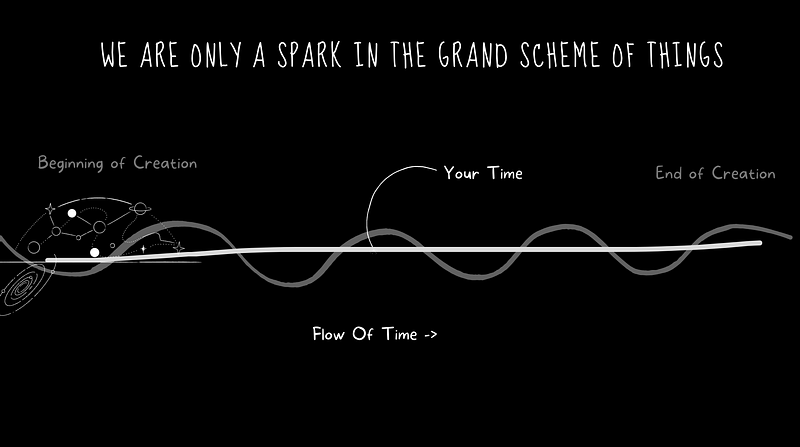
True failure isn’t when you try, and it doesn’t work out. It’s when you are young, have little to lose, yet are scared of doing something different and “risky.”
You have to be in tune with your own instincts and do what you can do. Otherwise, you will wake up in a few decades, wondering why so many people who were not smarter than you ended up so far ahead.
We often don’t do things because we’re so afraid of making mistakes.
The truth is that Every action has a consequence.
Either you do something, or you don’t do something — both will have consequences.
If you think the weight of the work is too high, wait till you get the pain of regret.
It’s better to have tried and failed than to go through life wondering what might have happened if I had!
It is also important to never obsess over the outcome.
The secret lies in understanding that rushing won’t fast-track your journey — in fact, it can backfire. The joy of the ride is lost when you burden yourself with excessive imagination. And when you finally arrive, it will dawn on you that the journey is everything you once yearned for — the essence was woven into the journey itself.
Make sure you enjoy what you do — we are here just for a brief period.
More in the series:
Conclusion
“Everything around you that you call life was made up by people that were no smarter than you and you can change it, you can influence it, you can build your own things that other people can use.
Once you learn that, you'll never be the same again”
— Steve Jobs.
Zuckerberg has failed more than he’s succeeded. It’s made all the difference.
For the problem solvers, the world is bursting with opportunities — it’s on you to reach out and seize them. Life unfolds with boundless possibilities — just start somewhere, and where you’ll end up, nobody can predict!
Who could have imagined that a simple side project would eventually be worth trillions?
I see a lot of chatter in the tech sphere, but most of them miss the essence of problem-solving.
Our world is brimming with challenges waiting for someone to step up.
Those who dive into solving real-world problems not only contribute to a better world but also find their way to fortune.
Who knows, you could be the one to build the next big thing and change the world.
Note of Gratitude
I wanted to take this last opportunity to say thank you.
Thank you for being here! I would not be able to do what I do without people like you who follow along and take that leap of faith to read my post.
I hope you’ll join me in my future blog post and stick around because we have something great here.
And I hope I will help you along in your career for many more years to come!
See you next time. Bye!
In Plain English 🚀
Thank you for being a part of the In Plain English community! Before you go:
- Be sure to clap and follow the writer ️👏️️
- Follow us: X | LinkedIn | YouTube | Discord | Newsletter
- Visit our other platforms: Stackademic | CoFeed | Venture
- More content at PlainEnglish.io


