
Marcus Aurelius is Winning
Why is Stoicism gaining market share in the self-improvement industry?
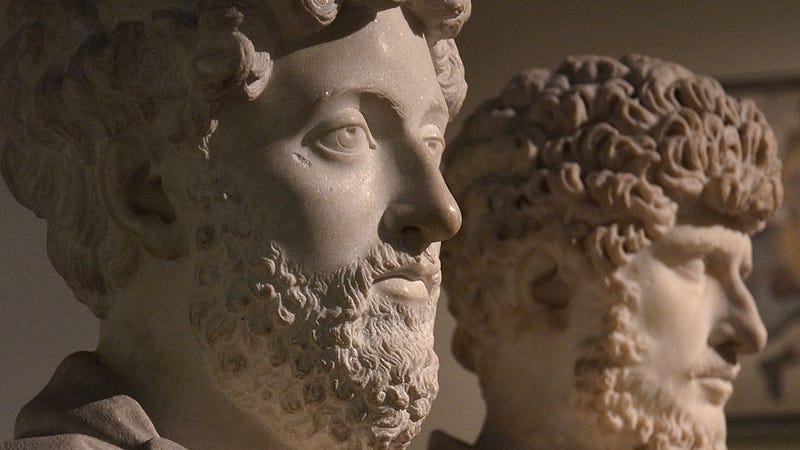
Stoicism is enjoying a twenty-first century renaissance. Type “Stoicism” into the Amazon search bar and you will discover more than 5,000 book possibilities, most of which have been published in the last five years. We can learn “How to Think like a Roman Emperor” or read a “Beginner’s Guide to Stoicism” which will theoretically provide “Tools for Emotional Resilience and Positivity.”
Websites have blossomed around the topic: a Google search returns more than fifteen million hits. Stoicism is a staple of both self-help and entrepreneurial sites: epigrams from Marcus Aurelius can help you become a better person while simultaneously offering six hacks to better serve your customers.
This rapid growth is mirrored here on Medium: the Stoicism tag has been associated with more than 5,600 posts, completely overshadowing the other great Hellenistic philosophy, Epicureanism (57 posts). Like creeping ivy, Stoicism is sending shoots spreading through Medium’s topics.
Why is this ancient Hellenistic philosophy suddenly so popular again? What is driving its resurgence?
And more importantly, in a world that embraces the idea of “You only live once” why has Stoicism eclipsed its philosophical brother, Epicureanism?
An ancient coping strategy
Stoicism was forged in the fires of political and intellectual disruption. In the fourth century BC, two Macedonian war lords — Philip II and Alexander — conquered Greece and Persia. After Alexander’s death in 323 BC, his generals divided his conquests, founding the new Hellenistic kingdoms that ruled until the advent of the Romans. Greeks living in these new kingdoms were brought into contact with other ancient cultures: Persians, Mesopotamians, Israelites, and Egyptians. They experienced culture shock: the world was suddenly larger and more frightening than formerly imagined. Greek confidence and their sense of superiority over other races was challenged by the loss of Greek freedom and subjugation under their Macedonian rulers.
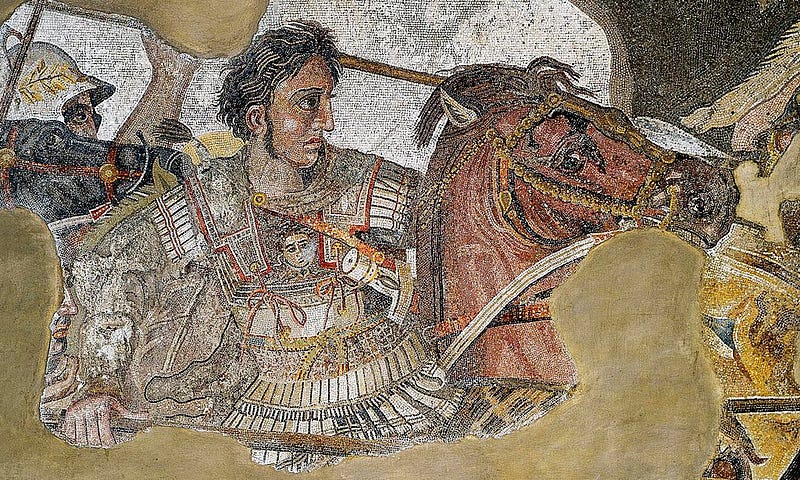
Near the end of the fourth century, two Athenian philosophers, Epicurus and Zeno, formulated coping strategies for dealing with the loss of long-established psychic anchors. Epicureanism and Stoicism were created to help people navigate the uncertainty of life in the Hellenistic world.
Epicurus’ system emphasized randomnicity: there is no guiding superior power to give meaning to our world. The universe exists by chance; we exist by chance; everything that touches our lives (good or bad) happens by chance. All of our actions, hopes, dreams, and desires are produced by chance.
When the implications of Epicurus’ idea are traced to their logical conclusions, it becomes evident that, in a world governed by chance, nothing we do has any lasting significance. Those who work hard may prosper, but it is equally likely that they will wear themselves out with fruitless toil. And even if chance smiled upon you, you will soon die and all that you have accomplished will soon be forgotten in the effacement of time. Nothing endures, all is fleeting and transitory. Will the titans of today, the Gates, Musks, and Buffets, be remembered in a thousand years? Why would anyone struggle and strive for rewards that do not last?
Our best option is to acknowledge the transitory, random nature of our existence. On a cosmic scale we exist for a mere eye blink. Why should we waste our brief moment of conscience on what does not endure? The only rational strategy is to make the best of a hopeless situation. Epicurus advised his followers to withdraw from this confusing and confused world in order to enjoy pleasures for as long as chance permits us to live.
Like modern billionaires who buy bolt holes on distant islands in case there is a social meltdown, Epicureanism advocates washing your hands of the human mess and seeking to embrace whatever pleasure is available.
To frame his thought in the modern idiom: you only live once. Enjoy the good while you may, for tomorrow the turn of a random universe may bring disaster upon you and subtract the transitory pleasures that are available today. Spread your arms wide: chance giveth and chance taketh away. You never know when the dice will favor or destroy you.
Enjoy what you have while you may.
Epicureanism offers little for the person intent on self-improvement. Why would you pour your energy into a side-hustle, build an online presence, learn Python programming, write 1,000 words each day, if there is no realistic possibility of a future payoff? In a random world where all events proceed from chance, hard work does not inevitably pay off. You can expend your energy writing books, building products, launching startups, but without the blessing of chance, you will languish in obscurity.
Meanwhile, your next-door neighbor writes a half-dozen illiterate blog posts that catch the eye of a literary agent and propels her dreck to the top the New York Times bestseller list.
In the Epicurean view, it is not that the system is rigged; Epicurus maintains that there is no system.
So, although Epicurus might provide a very realistic model for how the world works, and YOLO philosophy seems very popular right now in our culture, social withdrawal and deliberate inaction offend the sensibilities of a striving generation.
Enter the Stoics
Zeno, the creator of Stoicism, placed humans in a deterministic universe. Nothing happens by chance; all proceeds from design. Underpinning the universe is a divine conscience, the logos. The logos has shaped the material world from creation to its end, and nothing that occurs in the heavens or earth happens by accident. Humans are caught in a chain of cause and effect, unable to alter anything that the logos has already willed to happen.
Epicurean randomness was philosophically challenging: if everything happens by chance, then ultimately life has no meaning. Zeno’s universe in which everything that happens has been predetermined by a higher force is also problematic: why should we struggle and strive if the logos has already set our destinies in stone, and nothing we do can change this preordained outcome?
No philosophical system is perfect. And while thinkers like Cicero found much to criticize in the metaphysics of Stoicism, like most Romans he was attracted to practical, pragmatic side of the philosophy.
Unlike the Epicureans, who believed that the highest good was to break from the world and pursue pleasure, Zeno and the Stoics advocated plunging in. Self-improvement was the primary task of the sage. We must bring ourselves into accord with the rational spirit (the logos) that underpins the material world.
If the inner compass that guides us remains aligned with Nature, then it will always adapt to the possibilities and opportunities that life brings us.
— Marcus Aurelius, Meditations, 4.1
The life of the Stoic was the life of constant self-improvement. The best way to make progress was to place yourself on the battlefield, to experience, yet not succumb to the hardships that fall upon all humans. The Epicureans sought to avoid trouble through withdrawal, the Stoic embraced trouble as a way to grow stronger.
Here is the main difference between the Epicurean and Stoic schools: our sage feels the attacks of trouble but conquers them; the Epicurean wise man does not even feel the trouble.
— Seneca, Epistle 9
A philosophy for difficult times
Why is Stoicism gaining market share in contemporary discourse? The obvious reason is that it is a useful helpmate in difficult times. Our world strikes most observers as more insane and erratic with each passing day. Approaching disasters, whether from pandemic, environmental, or political meltdowns raise dust clouds on the horizon as they gallop toward us. Although history teaches that most humans feel they live in a unique age of crisis, the long view offers little consolation to those who are experiencing what feels like unprecedented times.
Stoicism’s surging popularity is grounded upon its creation in a period of disruption and its ability to offer coping strategies for uncertain times. The Stoic sage aims at a life of perpetual self-improvement, cultivates the serenity of a quiet mind, and finds herself unshaken and undisturbed by the nightmare parade of stories that float by on cable news in the evening.
The practical guidelines for building internal strength and a resolute character that attracted early followers in Athens and Rome still resonate in a disordered, turbulent age.
Marcus Aurelius has never been more relevant.
Note: All translations from Greek and Latin sources are my own.