
Mapping Out Your Content Strategy: The Role of Content Pillars and Sub Pillars

When you map out a content strategy, it’s important to have a clear understanding of what you want to communicate to your audience. This is where the concept of content pillars and sub pillars comes in. Content pillars are the overarching themes or topics that represent the main focus of your content, while sub pillars are the more specific areas within those themes that you can explore.
In this article, I will dive deeper into what content pillars and sub pillars are and how they play apart inside a content strategy.
Understanding Content Pillars
Definition and importance of content pillars
Content pillars are what makes a successful content strategy. They represent the broad topics or themes that encompass your business’s key messaging and values. Content pillars help to ensure that your content is consistent, relevant, and aligned with your business’s overall goals and objectives. By defining your content pillars, you can focus your content creation efforts, streamline your messaging, and build a more cohesive identity.
The importance of content pillars lies in their ability to provide structure and direction to your content strategy. Without content pillars, your content may lack focus and direction, making it less effective at reaching and engaging your target audience. Content pillars help to ensure that your content is relevant and valuable to your audience while also reinforcing your brand identity and messaging.
In addition to providing structure and direction, content pillars can also help to improve your content’s search engine performance. By creating high-quality content within each pillar, you can establish your business as a thought leader in your industry, boost your website’s authority, and improve your visibility in search engine results pages. This can ultimately lead to increased website traffic, higher engagement rates, and more conversions for your business.
Examples of content pillars
Let’s consider the examples of content pillars for Real Estate and Web3.
For real estate businesses, the content pillars might include:
- Homeownership Tips and Advice: Offering valuable tips and advice on buying, selling, and maintaining a home, as well as navigating the real estate market.
- Neighborhood Spotlights: Highlighting different neighborhoods and communities, including their history, amenities, and local attractions.
- Lifestyle and Home Design: Sharing content that speaks to the lifestyle and design preferences of the target audience, including tips on home decor, landscaping, and outdoor living spaces.
- Real Estate Investment: Providing valuable insights and advice on real estate investment, including property management, ROI calculation, and long-term planning.
For Web3, The content pillars might include:
- Industry News: Sharing news and updates on the latest developments in blockchain technology, including new projects, partnerships, and regulatory updates.
- Technical Education: Offering in-depth educational content on blockchain technology, including coding tutorials, whitepapers, and technical documentation. Continuum can help with this.
These examples show how content pillars can be used to guide content creation and ensure that messaging is consistent, relevant, and valuable to the target audience. Each and every business might have different content pillars and you have to define them on your own.
How to define your content pillars
To define your content pillars, you should start by identifying your business’s core values and key messages.
Once you have identified your business’s core values and key messages, the next step is to consider your target audience. Who are you creating content for, and what are their needs and interests? Use this information to brainstorm potential content pillars that align with your brand values and speak to the interests of your target audience.
When defining your content pillars, aim to keep them broad. You want to give yourself enough room to create a variety of content within each pillar while still staying true to your brand messaging. Aim for around 3–5 content pillars, as this provides a good balance of focus and flexibility. By defining your content pillars, you can ensure that your content strategy remains cohesive and effective.
The Role of Sub Pillars in Content Strategy
Definition and importance of sub pillars
Sub pillars are a more detailed breakdown of the broader content pillars. They represent more specific themes or topics within each content pillar that you can use to create even more focused content.
The importance of sub pillars lies in their ability to help you create more targeted and valuable content for your audience. By breaking down your content pillars into smaller, more specific themes or topics, you can create more focused content that speaks directly to your audience’s needs and interests. This can help to increase engagement and drive conversions.
Examples of sub pillars
Let’s consider the examples of sub pillars for Real Estate and Web3 like we discussed earlier:
For real estate businesses, some examples of sub pillars could include topics like:
- Emerging Markets: Focusing on up-and-coming real estate markets and investment opportunities, including exploring trends and shifts in the market.
- Commercial Real Estate: Exploring the commercial real estate sector, including topics like office space, industrial real estate, and retail real estate.
- Investment Strategies: Providing detailed insights and analysis on investment strategies, including discussions of risk, return, and diversification.
For Web3, some examples of sub pillars could include topics like:
- Smart Contracts: Providing educational content on the use and implementation of smart contracts, including their benefits and limitations.
- Decentralized Finance (DeFi): Exploring the world of decentralized finance, including decentralized exchanges, lending platforms, and other DeFi applications.
- Blockchain Development: Providing educational content on blockchain development, including discussions of programming languages, tools, and best practices.
These examples demonstrate how sub pillars can be used to create more targeted and specific content within each content pillar.
How to identify and define your sub pillars
When identifying and defining sub pillars, it’s important to keep your audience in mind. Start by understanding the needs and interests of your target audience, and then use that information to create sub pillars that align with their preferences.
One way to identify potential sub pillars is to conduct keyword research. Use tools like Google Keyword Planner or Ahrefs to identify search terms that are relevant to your business and industry. Then, group these terms into sub themes or categories to create your sub pillars.
Another approach is to review your existing content and identify common themes or topics. Look for patterns in the content that you’ve already created, and use that information to create sub pillars that align with those themes. This approach can be especially useful if you have a large library of content that you want to organize and optimize.
Once you’ve identified potential sub pillars, it’s important to define them clearly and concisely. Each sub pillar should represent a specific theme or topic that is relevant to your audience. Use descriptive language to define each sub pillar and provide examples of the types of content that would fit within that sub pillar. This will help you to stay focused and consistent in your content creation efforts.
How Content Pillars and Sub Pillars Work Together
The relationship between content pillars and sub pillars
Content pillars and sub pillars are closely related. Think of content pillars as the foundation of your content strategy, providing a high-level view of the topics and themes that you want to focus on. Sub pillars then serve as the building blocks that help you to create more targeted and valuable content within each content pillar. By breaking down your content pillars into smaller, more specific themes or topics, you can create a more comprehensive and effective content strategy that speaks directly to your audience’s needs and interests.
The relationship between content pillars and sub pillars is important because it helps to provide structure and organization to your content. By creating a hierarchy of content themes and topics, you can ensure that your content is focused, relevant, and valuable to your audience. By leveraging the relationship between content pillars and sub pillars, businesses can create a more robust and effective content strategy that drives results.
The benefits of using content pillars and sub pillars together
Using content pillars and sub pillars together can provide several benefits for businesses that are looking to create a comprehensive and effective content strategy.
Here are 3 benefits:
- Improved Organization: Content pillars and sub pillars help businesses to organize their content around core themes and topics. This makes it easier to create and manage content, and ensures that the content remains focused and relevant to the target audience. This can improve the user experience and make it more likely that users will engage with the content.
- Better Content Creation: By breaking down content pillars into sub pillars, businesses can create more targeted and specific content that speaks directly to the interests and needs of their target audience. This can help to improve the quality of the content and make it more valuable to users. It can also help to increase engagement and drive conversions.
- Consistency: By creating a clear framework for content creation, businesses can ensure that their content is consistent in terms of tone, style, and messaging. This can help to build brand recognition and trust, and make it easier for users to recognize and engage with the content. Additionally, a consistent approach to content creation can help businesses to establish themselves as thought leaders within their industry, which can lead to increased visibility and authority.
Mapping Out Your Content Strategy
Using content pillars and sub pillars to map out your content strategy
Creating a content strategy using content pillars and sub pillars is a powerful way to organize your content and ensure that it is aligned with your business goals.
Developing a content calendar using content pillars and sub pillars
Once you have identified your content pillars and sub pillars, you can use them to develop a content calendar. Start by determining the frequency of your content publishing and then assign each sub pillar to a specific time slot. This will help you to ensure that you are creating a balanced mix of content that covers all of your key themes and topics. You can also use your content calendar to plan for special events, promotions, and campaigns that align with your business goals.
Aligning your content strategy with your business goals
To align your content strategy with your business goals, it is important to consider your target audience and what they need and want from your content. Think about what actions you want your audience to take after consuming your content and how you can use your content to drive those actions. For example, if your goal is to increase sales, you may want to focus on creating content that highlights the benefits of your products or services and provides valuable information to potential customers.
By using content pillars and sub pillars to map out your content strategy, develop a content calendar, and align your content with your business goals, you can create a comprehensive and effective content marketing plan. This will help you to provide valuable information to your audience. Additionally, by regularly reviewing and updating your content strategy, you can ensure that it remains relevant and effective over time.
Best Practices for Creating and Implementing Content Pillars and Sub Pillars
Key considerations when defining content pillars and sub pillars
When defining content pillars and sub pillars, it is important to consider your audience, your business goals, and your brand identity. Your content pillars and sub pillars should align with the needs and interests of your target audience, while also supporting your overall business objectives. Additionally, your content should reflect the values and personality of your brand, and be consistent in tone and style across all channels and formats.
Tips for implementing content pillars and sub pillars effectively
To implement content pillars and sub pillars effectively, it is important to have a clear plan in place. Start by identifying your core themes and topics, and then break each theme down into smaller, more specific sub pillars. Then, create a content calendar that outlines the frequency and type of content you will publish for each sub pillar. This will help you to ensure that your content is diverse, engaging, and well-organized.
How to measure the success of your content strategy using content pillars and sub pillars
When measuring the success of your content strategy using content pillars and sub pillars, there are several key metrics to consider. These may include website traffic, social media engagement, email open and click-through rates, and conversion rates. To effectively track these metrics, it is important to use analytics tools that allow you to monitor the performance of your content over time. This will help you to identify areas of strength and weakness in your content strategy, and make adjustments as needed.
Conclusion
Content pillars and sub pillars are an essential part of any content strategy. By defining your content pillars and breaking them down into smaller, more specific sub pillars, you can create a more structured and cohesive content plan that aligns with your brand’s core messaging and values. Remember to stay focused on your brand and audience, and use data and insights to inform your content pillars and sub pillars. With a well-defined content strategy, you can create unique and valuable content that resonates with your audience and sets you apart from competitors.
Do you want to support me?
I am currently building a global vocational school for the next generations of digital workers and creating content on the side. I would be grateful for any support you can provide. (A tip via my link in bio)
If you are planning to travel soon, please consider booking your next trip with Trip.com using my link. You can also follow me on my Instagram for more travel related video content! I created marketing playbook for new marketers, get full access to it here.
Build a Content Strategy that Converts
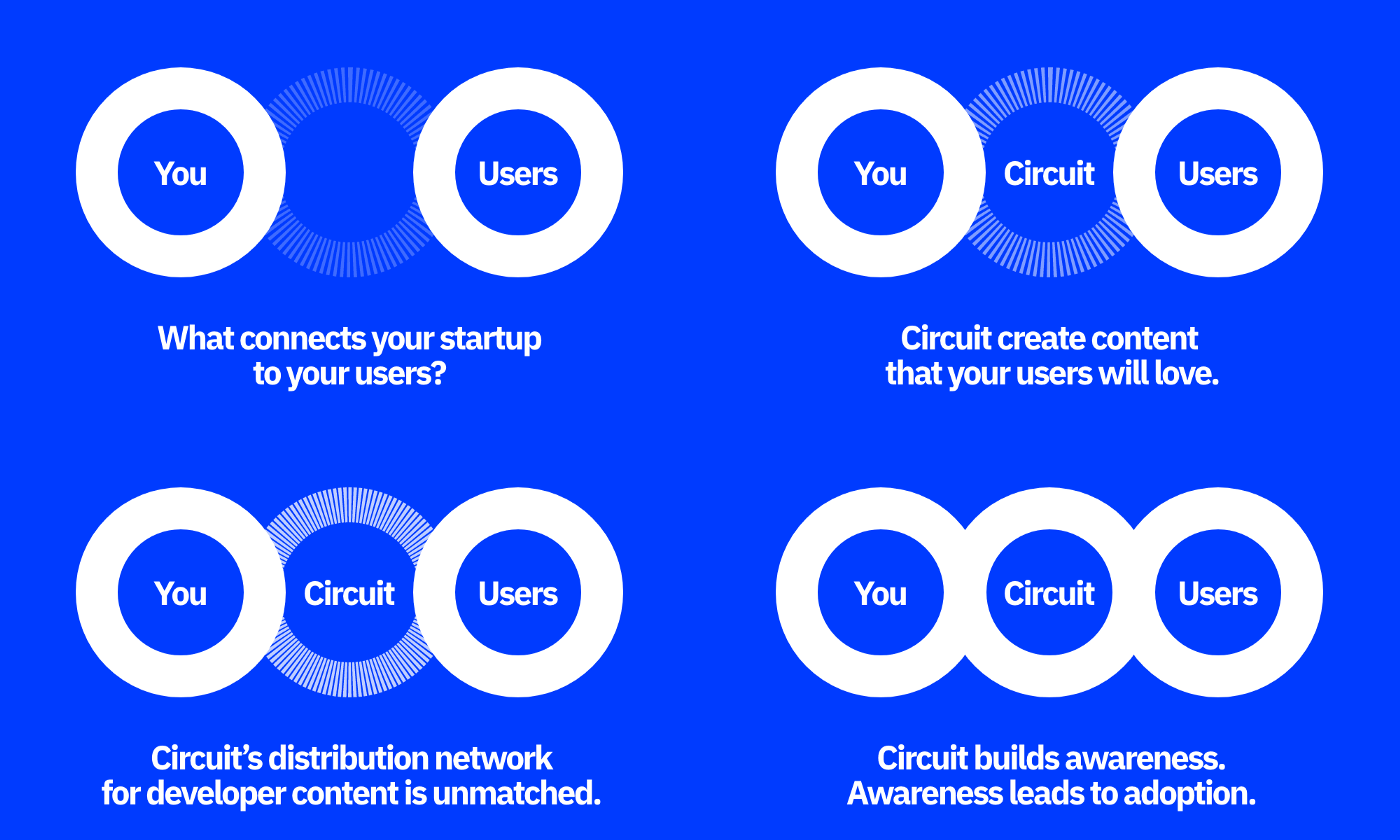
Circuit is a strategic growth company founded by the team behind In Plain English — a tech media company that we created and grew from 0 to 4 million monthly views.
If you want to build a better content strategy, scale content operations, increase product awareness and adoption, and grow a community, we can make all of this happen.