
ARTICLE
Manipulation Of Mass Human Psychology Highlighted In ‘The Social Dilemma’
and some elaborated notes
‘If You’re Not Paying, You’re The Product.’
A famous saying in Silicon Valley
By this time, most of us the following media or Netflix already know about ‘The Social Dilemma.’ It is a Netflix documentary, released on September 9, 2020. The scenario and the current attachment described on the show is pretty scary. And it escalates a question, whether it is too late to be disconnected or any way to regain control.
Let me share the ‘spoiler-full’ notes to summarize the critical points of the documentary. (Source*)
The addiction.
Social Media addiction is real, similar to the dependence of drugs, where both of the driven forces see the people as ‘users’.
The product.
Ads driven business was the priority and still is. So the time users are using is the currency. The primary motivation is to influence the duration and the digital experience we have in social media. We are the product, not the consumer, in this case.
A/B testing.
Similar to A/B testing, different tools and methodologies were used to test numerous hypotheses on how the additive tools can work (i.e., news, emojis, messengers, games, likes, comments, tagging, connection approaches, face recognitions in pictures, etc.). Then software engineers put in place the successful ones for the long term.
Narrators.
Although many big players are involved, two are the biggest: Google and Facebook. The narrators were either worked in these two organizations or connected with other big-giants (twitter, Pinterest etc.).
Senate hearings.
Governments asked many organizations to explain their algorithms and their usage. Organizations also had to provide evidence for proving that user information is safe in their hands. As they might not disclose how they attract consumers’ data to place the ads, it will be a blurring place to identify how they defy user rights.
The legal system and law incorporation.
Not a very strict law is incorporated in our legal system to monitor social media platforms. In most cases, they are immune to legal proceedings. It is difficult to impose regulations based on the tech industry’s logarithmic growth, as the law will not be able to cope with rules. People vetted those regulations (whose minds & capabilities do not improve on a logarithmic scale like computers & A.I.). So, it won’t be easy to keep up with the progression. Most people who will be creating rules and regulations for the platforms do not understand how these platforms work.
Information surveillance.
Our interactions on these platforms are recorded, monitored, and assessed continuously to promote the ads in front of us.
Predictability model.
Whoever has used the internet or social media network has a virtual psychological profile. Those profiles are depicting their behaviors, attitudes, impressions, etc. And based on that, predictability models run inside the algorithm to feed us what’s best for us (to consume, observe, and move forward). Alarming is, the profile might not serve individuals’ purpose, rather than those who are controlling it.
Subtle changes.
Seeding the ideas gradually into our minds can and will impact our predictability and attitudes. For now, whatever we are opting might have been a delusion or urge created by the applications we are using. As the platforms’ changes are subtle, the individuals who are using it will not notice the shifting of their minds and attitudes.
‘How do you wake up from the Matrix when you don’t know you’re in the Matrix?’ — Tristan Harris, Former Design Ethicist
Social, economic, and political spectrums.
Social injustice, tension, and negative pressures are everywhere, which the narrators are implying mostly to social media addictions. A couple of sensational issues came in, like the last US presidential election, the Myanmar tragedy, political and social unrest in different countries, etc. The narrators predict that these are the direct influence of those big giants running the whole show and can influence billions of people, even without suspicion or notice. They are indicating that Changing political spectrum, the polarization of people’s views and standpoints are taking place due to the amplification. Fake news is also spreading through these platforms. The truth is boring but fake news is exciting, always spreading faster, causing more damage to society.
Losing real values.
We are losing the ability to chose or not to chose social media. Gradually, we assign social values into likes, comments, emojis, and connections, which are elusive and not actual value, while the younger generations are becoming more anxious and depressed. The documentary showcased some statistics in this regard. However, it was not validated that these changes were the social media platforms’ direct product.
A lot to take, right! It means that the information ecosystem is broken; surveillance capitalism is in the driving seat, rather than taking care of the mass peoples’ interest. The scary part is, the extent is unknown to most people.
Because of these tools, we are connected more than ever before. These vast connections are pushing us towards more social approval, based on unreal, virtual values. These tools are causing excessive dopamine releases into our brain-cells, impacting to have chemical imbalances. Although humans are a social being, we were not accustomed to maintaining vast connections and networks simultaneously. Our millions-of-years of age-old body and brains have changed gradually, whereas these changes are faster to adhere. So, when we have to maintain vast connections, we have to assign and practice the virtual social values attached to these platforms, hence spending more time in the virtual world.
The interaction time with the real physical world is reducing, and the virtual world’s interaction time is increasing. We are now detaching ourselves from nature. We are now separating ourselves from our inner spiritual journey.
Surveillance capitalism is on the full-rise because of the platforms.
The machine learning has increased the capability to predict and to maintain a psychological profile of users. Because of the machine’s continuous learning (based on the algorithms and equations in place), our virtual profiles are getting more accurate, based on the accumulated information. The advertisement industry is riding on the predictive models to feed us what is required for us, supported by these platforms.
Silicon Valley giants are working with the governments in harmony in these cases.
Because of the speedy improvements and adjustments being taken place in the technology industry, most of the people working in Governments do not have an accurate idea of how these things work and how to control these platforms. Only a few people behind the media know how these algorithms work and how to monetize these platforms in different ways. As most economies are operating under the ‘Laissez-faire’ model, it is challenging to control technological organizations’ monopolistic nature, while the change in regulation is minimal.
Although the documentary has provided lots of insights on the alarming trend and usage of the tools, it has several loopholes:
One-sided narration: The other side of the story might have been fascinating to hear and also to judge whether these allegations are correct or not.
Hypocrisy: The narrators who provided information and inside stories were doing similar things when they were in charge and now acting like benevolent sages.
A.I. dominance: Although somewhere touched on the significant increase in computerized and internet powers (although mentioned about the singularity of A.I.), it only elaborated the human aspect of power-control (to me, the Internet and A.I. currently has grown to unfathomable and unimaginable powers (even the founders and drivers of the platforms might be unaware about the fact), so we might never know whether A.I. has already started to take the lead, as a single power source;
Actual algorithms: The human inventors are creating algorithms run by the organizations. However, the problem is, algorithms are with biases too, as founders and the software engineers are writing those algorithms (who are human, with biased opinions). So, there is no way to regulate the digital and social media without knowing the algorithms they are using.
Other giants: The documentary should have come with other giant tech companies’ names too.
Counter-logic: Facebook also issued another statement where they have slammed the documentary to provide a distorted look on the social media platforms and denied selling customer information. They have mentioned that the users choose the users, and every user has the right to remove these preferences, which means — they have a choice. They have also mentioned that Netflix uses its algorithm to suggest the documentary to the people, based on their history and preference. (**)
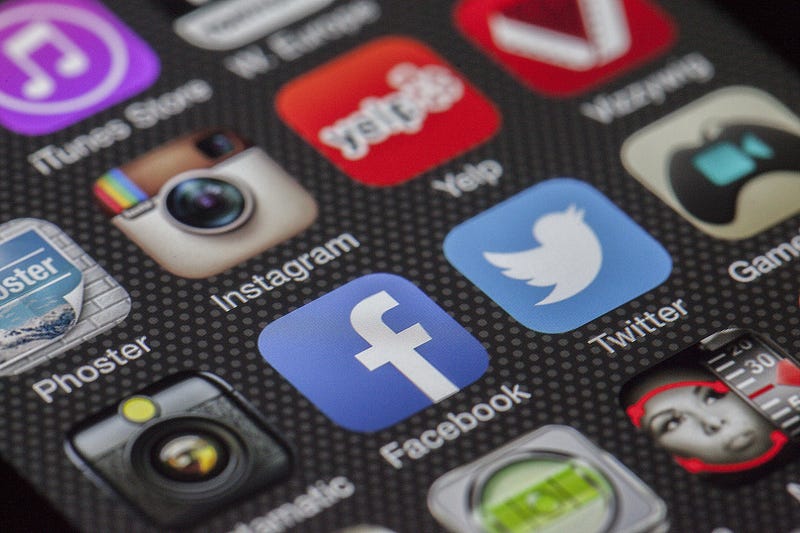
Social Media platforms are tools for humans, and for thousands of years, we have used and adapted many tools to shape our civilizations.
On a positive note, these platforms are helping human society to progress and grow.
On the negative side, no other tools had the power to connect billions of people to track their psychological predictability, which might be terrible in the future.
What should we do?
The choice is in your hands (or should I say palms).
- more sensible usage of the platforms
- dedicated time for using the platforms
- turning off the notifications we don’t require
- delete unnecessary applications from your phone or laptop
- rather than making vast connections, make small group impactful connections
- transforming some of the pleasure parts of the social media by spending more time in the real, physical world
- to understand whether all stimulated needs are required or not.
If you are interested in watching the documentary, here goes the trailer for you. Along with that, there are several other documentaries on the internet on a similar topic; you can watch ‘The Creepy Line,’ which is one of those.
Stay safe and well, stay sensible, and live in the real world.
Sources: * ‘The Social Dilemma’- a Netflix Documentary. Official Link ** CNET. Official Link


