POETRY
Mangrove Supremacy
And a Sad Conclusion
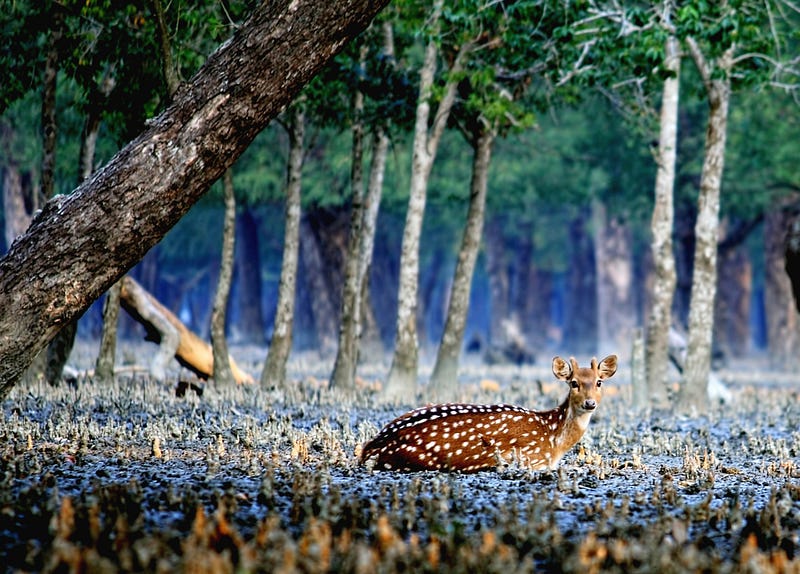
They took a long walk, feets sour, mouths dry, Body in sweats, maps in the hands to find the jungle route seems to be a never-ending motion. As they lost the track and their patience, In the mangrove forest, in between the giant trees, Along with the salt-tolerant roots, rising above the lake water — sharply coming out from the soil, announcing life’s eagerness to overcome odds.
A royal Bengal tiger roars somewhere, probably just adjacent to its den, Oh! Discovery — a deer’s broken bones, rotten flesh, A tiger’s mark in the mud, Unclear in view, but marks fear into those travellers’ minds. Where are they?
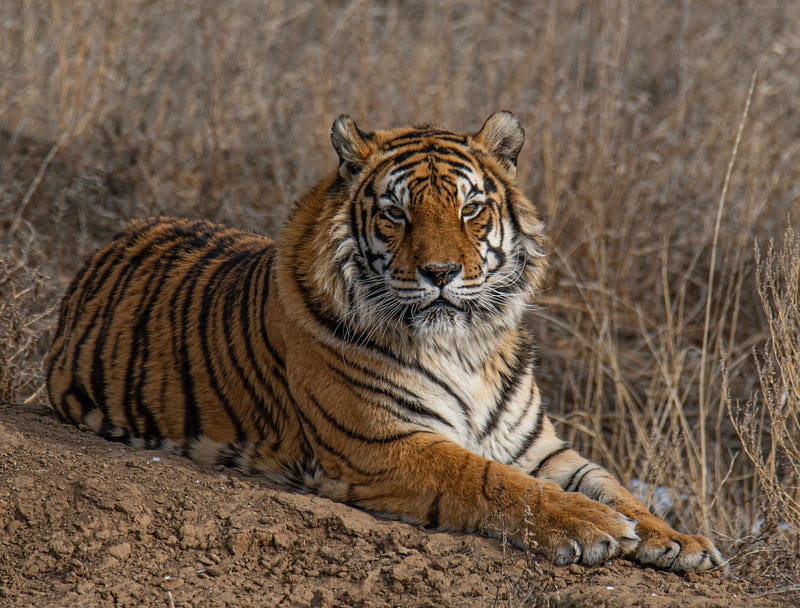
In the Sundarbans. The mangrove forest supremacy in the world, Within its magnificent Sundari trees, inside the dense green shade plants, Crocodile roamed watery lakes in between, Tidal waterways pass by, in the delta of the Bay of Bengal, kissing the feet of the dense shadow, Whispering wind carries bird’s tweet from one corner to another; monkey catches some attraction with their noise, With the regal Royal Bengal tiger in its majestic beauty — yellow, black stripes- sharply looking for Chitra deers to be in their food cycle. Probably for today, travellers are in its food cycle too!!!
25 years later
Another day in the Sundarbans, another group of explorers, A boat touches the tiger’s nest point. No roaring sound, no tigers roaming around, no crocodile movement in the dry lakes, only remains - sowed plants without dense feeling, - a fake den of a tiger, - an artificial crocodile fossil. Is it a forest even? Where is the mangrove supremacy?
Vanished! By human aggression, greed, and hunger. The name remains in pages, The forest is far gone from reality, No one can hear, but - The ‘Bonbibi’ is crying, cursing humanity.
©️ Suntonu Bhadra. Rights reserved, but the happiness is not.
Footnotes: The Sundarbans: The largest mangrove forest in the world. It covers an area of about 10,000 km. The forests provide habitat to 453 faunal wildlife, including 290 bird, 120 fish, 42 mammals, 35 reptiles, and eight amphibian species. (Source: Google and Wikipedia)
Bonbibi: The lady of the forest, also Bandevi, Bandurga, and Byaghradevi is a guardian spirit of the woods worshipped by both the Hindu and the Muslim residents of the Sundarbans. (source: Google and Wikipedia)
** The Sundarbans’ is dying; due to climate changes causing cyclones, storms, landslides, along with human aggression to spread within the forest. Recently, a proposed coal-powered electric station called The Rampal Power Station is being in the establishment in the adjacent area. It will hit hard the mangrove forest by its discharged wastewater and toxic elements along with coal-powered emissions. This station is a joint venture of the neighbourhood country governments, and even though several big protests were taken place, the respective Govt. is moving forward with its inauguration in the coming days.